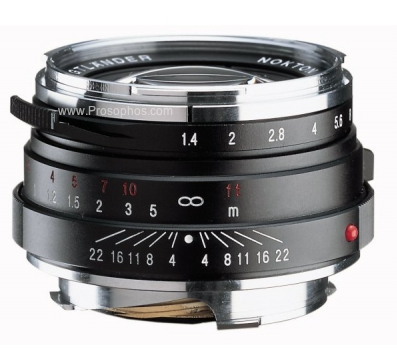
I just updated my Voigtländer 40mm Nokton Review.
Enjoy!
[EDIT: images added]
[EDIT #2: more images added]
—Peter.

I just updated my Voigtländer 40mm Nokton Review.
Enjoy!
[EDIT: images added]
[EDIT #2: more images added]
—Peter.
I ordered these modified film reels to make it easier to load film.
They are compatible with the Patterson tank system.
(Just sharing, for those of you doing in-home film developing… in case you weren’t aware of their existence.)
—Peter.


I had someone ask me today how I like the Epson V600 scanner. A few more of you have asked the same question since my last set of images were posted, so I thought I’d resurrect this previous discussion:
https://prosophos.com/2014/02/07/epson-v700-vs-plustek-120/
The same observations for the Epson V700 hold true for the V600, except that:
All in all, I am pleased with it and would recommend it to anyone scanning medium format film. For 35mm film, I use the Plustek 8200. Both of these scanners can be purchased for less money than the Epson V800, which is the current equivalent to the now discontinued V700.
The Plustek 120 is also no longer available, but a next generation model is anticipated.
—Peter.
Due to semi-popular demand, the following are back and available for purchase:
The links are in the main menu above, near the top of the page.
Thanks,
—Peter.
Photography has always been driven by technology.
So why is it that the further we go, the more we lose our way?
Maybe that’s why HCB (in 1968) abandoned photography and returned to his first love… painting.
—Peter.
These two photos have something in common.
What is it?
(Whoever guesses correctly will have all the glory of getting full credit on this blog, for as long as I pay my annual fees to WordPress.)
—Peter.


Top Panel: As previously posted.
Bottom Panel: Film Simulations Applied.
EDIT: I just replaced the bottom panel with the updated versions (you may have to refresh your browser to see the changes). The differences are now more subtle, but the bottom panel definitely retains a more film-like appearance.
—Peter.

I decided to create this composite image using photos I’ve taken over the past year.
As you can see, the first (from last year) was created with the Nikon D850 + 105mm f/1.4. The other two (from this year) were created with the Fuji GFX 50R + 110mm f/2.

I share the above information purely for your interest and not for the purpose of making comparisons, as there are simply too many variables in effect in each image (for example, subject’s natural skin tone, time of day, natural vs. artificial vs. mixed lighting, etc.).
Suffice it to say, both systems produce wonderful image quality, though I would give the edge to Fuji (you cannot, however, discern that from the small-sized images I’ve posted).
With respect to weight, the Fuji also has a slight advantage:
However, the Nikon is without a doubt the more versatile system.
—Peter.
A couple of years ago, I updated my review of the Konica Hexanon 60mm 1.2 by deleting the entire discussion and replacing it with the statement:
“I no longer recommend this lens.”
Do you know why I did that? Because:
“I no longer recommend this lens.”
Since then, I’ve had a handful of people (including one in the comments section of what remains of the “review”) write to ask me whether I did this to drop the price of the 60/1.2, so that I could buy it again.
Well… no. That would be unethical.
Part of the reason for the downgrade was the price-to-performance ratio had become too great, and part of it had to do with a change in my preferences. Simply put, I am no longer interested in lenses that impart too much of a specific “look” to a photograph.
So for those individuals who paid an insane amount of money to own one, I’m sorry that its price has dropped, though I really don’t think I had anything to do with it.
—Peter.
–
Aaron writes:
Thanks again!
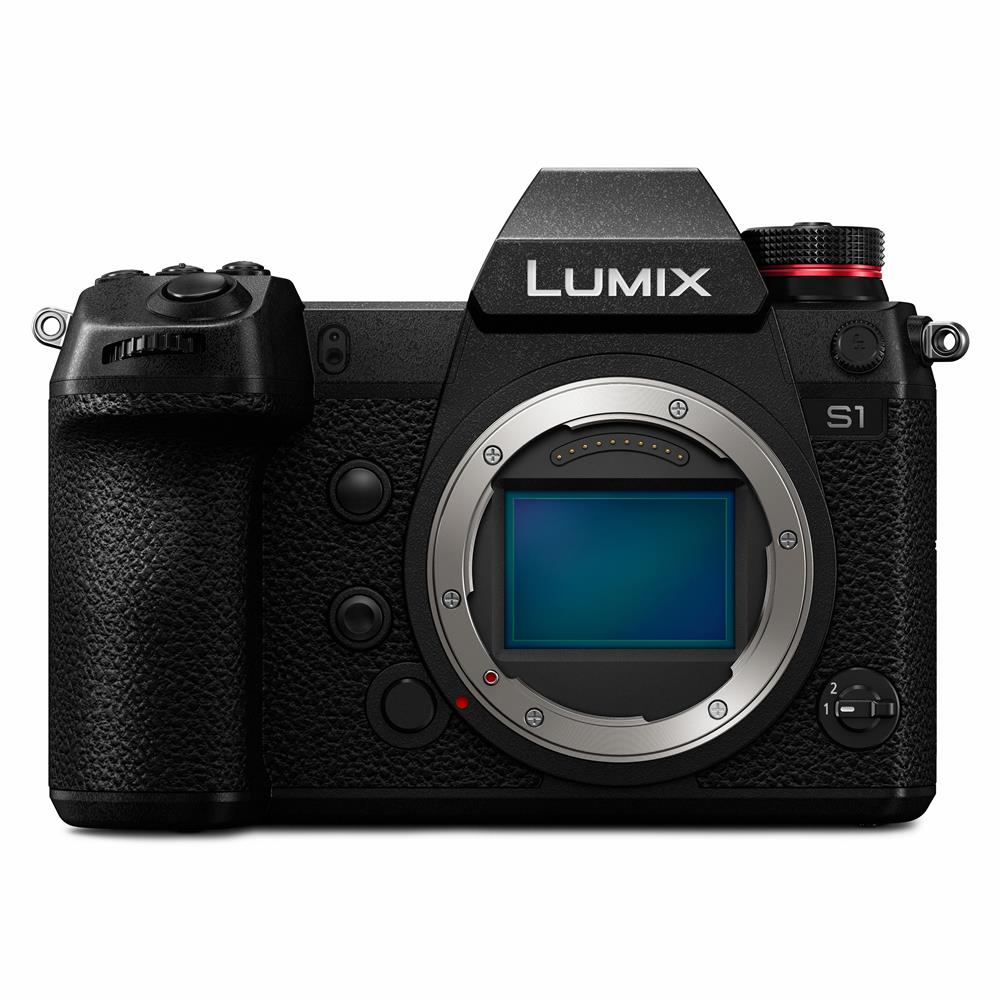
I just got around to reading Steve Huff’s review of the Panasonic S1, and I must say that two things really, really impressed me:
Generally speaking, the sample images have a special look – I can immediately tell that there is something different (in a good way) going on there.
I am not interested in the camera per se (because I prefer rangefinders), but I am interested in working with sensors like this.
—Peter.
Recently, dpreview interviewed three top-level Nikon executives, and one of them said:
—Nikon (March, 2019).
It’s refreshing to see someone from a major camera manufacturer speak the truth.
On the other hand, many camera reviewers have erroneously made claims over the last few years that EVFs are now just as good (or almost as good) as optical viewfinders.
Although there’s no doubt that EVFs will continue to improve, I’m sticking with OVF-equipped cameras (for now) so that I can continue to see the world clearly and in real-time.
—Peter.
With a lens like the 7Artisans 50mm 1.1, I’m seriously asking myself whether I should keep the Leica 50 Summilux ASPH.
Technical:
—Peter.

↑ Leica M10 + 7Artisans 50mm f/1.1.
This Fujifilm GFX 50R test shot #2 is consequent to an initial discussion here and subsequent discussion here.
The truck was moving when I photographed it.
The full-res file leaps off the screen. You can get a sense of that effect here, even at this (much smaller) size.
—Peter.

↑ Fujifilm GFX 50R + Fujifilm 63mm f/2.8 R WR.
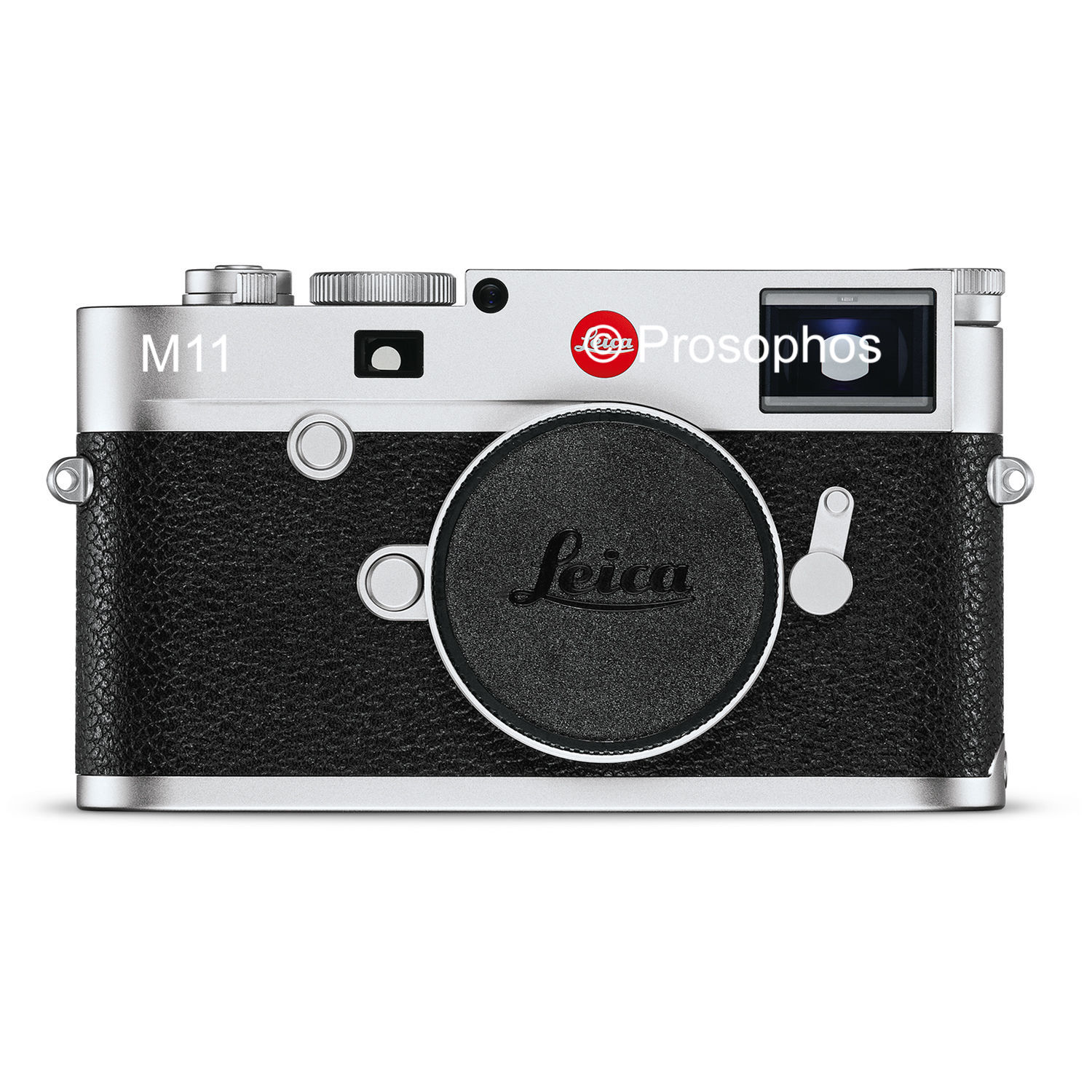
The Leica M11 will have >40 MP.
That will really reveal focus errors when using fast lenses wide open. Technique will therefore matter more than ever.
It would be nice if the new sensor achieves greater dynamic range and colour accuracy (which admittedly is already quite good with what we have).
Leica, please just keep the optical viewfinder (that’s a personal request).
—Peter.
This image is in follow-up to the discussion here.
—Peter.

↑ Fujifilm GFX 50R + Fujifilm 63mm f/2.8 R WR.
I’ve been getting a lot of questions about wide open performance of the The 7Artisans 50mm f/1.1 (Leica M mount), since revealing that it is my Undisclosed Lens #7.
So, I thought I would show another example image, followed by a central crop.
The last time I did this was when I was comparing this lens to the Leica 50mm Summilux ASPH. Despite making that comparison, I don’t believe there is any value in such head-to-head tests when considering this lens, because it is not an optic that one purchases for checklist attributes. Instead, the 7Artisans 50/1.1 should be regarded much like the Leica Noctilux f.1 and the Zeiss Sonnar f/1.5 lenses, which are coveted for their artistic rendering.
Having said that, the 50/1.1 is often mistakenly labelled as “soft” when used at f/1.1. Though it is not razor sharp wide open (and can be “glowy” at near distance — see the aforementioned comparison), it is certainly sharp enough for me. I would, in fact, caution anyone who believes that this lens is “soft” at f/1.1 to make sure they have calibrated it correctly (or are practicing good technique).
Case in point, here is another image taken at the time of the Night Light photo I recently posted, photographed at f/1.1:

↑ Leica M10 + 7Artisans 50mm f/1.1.
–
Now, here is the magnified central portion of the frame (focus is on the eyelashes of the near eye):

–
I will let you decide if it is sharp enough for you and whether — in the case of an f/1.1 lens — it really matters.
—Peter.

–
The comparison test I posted yesterday revealed something unexpected: the minimum focus distance is greater than the advertised 0.7 m (either that or my Leica 50mm Summilux ASPH focuses closer than 0.7 m, which is unlikely). I hadn’t noticed it until I ran the head-to-head comparison and found that I couldn’t get as close with the 7Artisans as I could with the Leica.
Other than that (disappointing) surprise, I have been satisfied with the 7Artisans 50mm f/1.1. It’s an interesting lens that has polarized photographers’ opinions of it (although some have passed judgment without actually laying their hands on one). The mini-controversy surrounding it was the main reason I wanted to post images without first identifying the lens.
Those who criticize this 7Artisans lens I think miss the point. In my case, I bought it hoping for a dreamy look (for lack of a better phrase) that the technically more capable 50 ‘lux does not as readily provide.
Moreover, having previously owned the Leica f/1 Noctilux (a lens also known for its dreamy look), I would say that the 7Artisans 50mm f/1.1 compares quite favourably and it would, in fact, be my choice between the two.
—Peter.
–
Examples of recent images: