The Graduates.

2019, Favourite, Fujifilm GF 110mm f/2 R LM WR, Fujifilm GFX 50R, Inspiration, Nikon 105mm f/1.4 E, Nikon D850, Portrait, Q&A, Teaching point

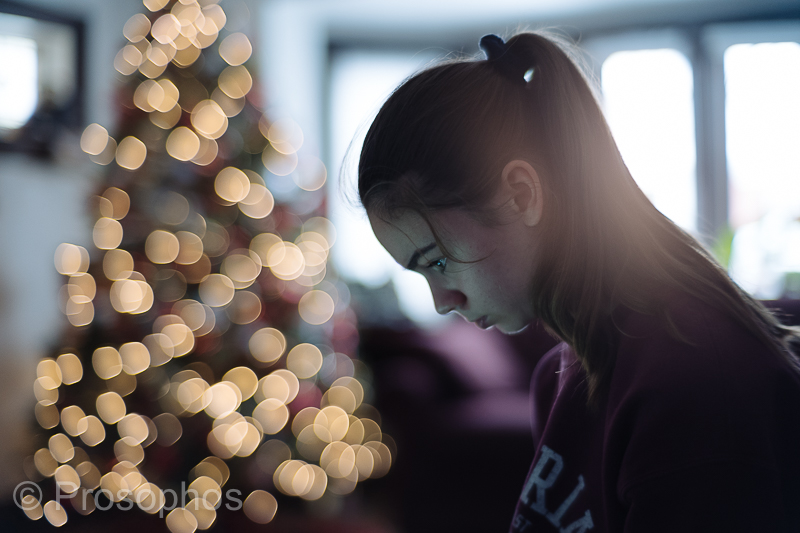
I decided to create this composite image using photos I’ve taken over the past year.

As you can see, the first (from last year) was created with the Nikon D850 + 105mm f/1.4.  The other two (from this year) were created with the Fuji GFX 50R + 110mm f/2.

I share the above information purely for your interest and not for the purpose of making comparisons, as there are simply too many variables in effect in each image (for example, subject’s natural skin tone, time of day, natural vs. artificial vs. mixed lighting, etc.).

Suffice it to say, both systems produce wonderful image quality, though I would give the edge to Fuji  (you cannot, however, discern that from the small-sized images I’ve posted).

With respect to weight, the Fuji also has a slight advantage:

  • Nikon D850 (1, 055 g) + 105/1.4 (985 g) = 2, 040 g.
  • Fuji GFX 50R (775 g) + 110/2 (1010 g) = 1, 785 g.

However, the Nikon is without a doubt the more versatile system.

—Peter.

The Konica Hexanon 60mm 1.2.

Inspiration, Q&A, Teaching point

A couple of years ago, I updated my review of the Konica Hexanon 60mm 1.2 by deleting the entire discussion and replacing it with the statement:

“I no longer recommend this lens.”

Do you know why I did that?  Because:

“I no longer recommend this lens.”

Since then, I’ve had a handful of people (including one in the comments section of what remains of the “review”) write to ask me whether I did this to drop the price of the 60/1.2, so that I could buy it again.

Well… no.  That would be unethical.

Part of the reason for the downgrade was the price-to-performance ratio had become too great, and part of it had to do with a change in my preferences.  Simply put, I am no longer interested in lenses that impart too much of a specific “look” to a photograph.

So for those individuals who paid an insane amount of money to own one, I’m sorry that its price has dropped, though I really don’t think I had anything to do with it.

—Peter.
[Guest Post] Aaron C Greenman and the Mamiya 6.

Film, Guest Post, Inspiration, Mamiya 6, Q&A, Street, Teaching point

Aaron writes:

“Peter, as you know I have been a Leica M shooter for most of the past 15 years….. until the past three years, when I have been wrestling with the (as of now somewhat false) promise of portable mirrorless digital (the Hasselblad X1D). Back and forth, it has been a struggle to decide between the wonderful image quality and color fidelity of the Hasselblad with the obvious handling, fluidity and OVF advantages of the Leica
Anyway, I have neither now, as I await an X2D equivalent, and I’ve found and am using what I pray every night for exactly in digital – the Mamiya 6, along with its 75mm and 50mm lenses (approx. 50mm and 28mm equivalent).
For any Leica M enthusiast, the Mamiya 6 (or 7, if you want to shoot 6×7), is a wonderfully familiar experience: a big nice optical coupled rangefinder, compact design for its 6×6 image size, a collapsible lens mount, and quality, lightweight lenses with sharp and characterful rendering. I have also always wanted to shoot square natively, and it is a simple joy in a square, uncluttered viewfinder – never having to turn the camera takes one more variable out of the composition equation. 
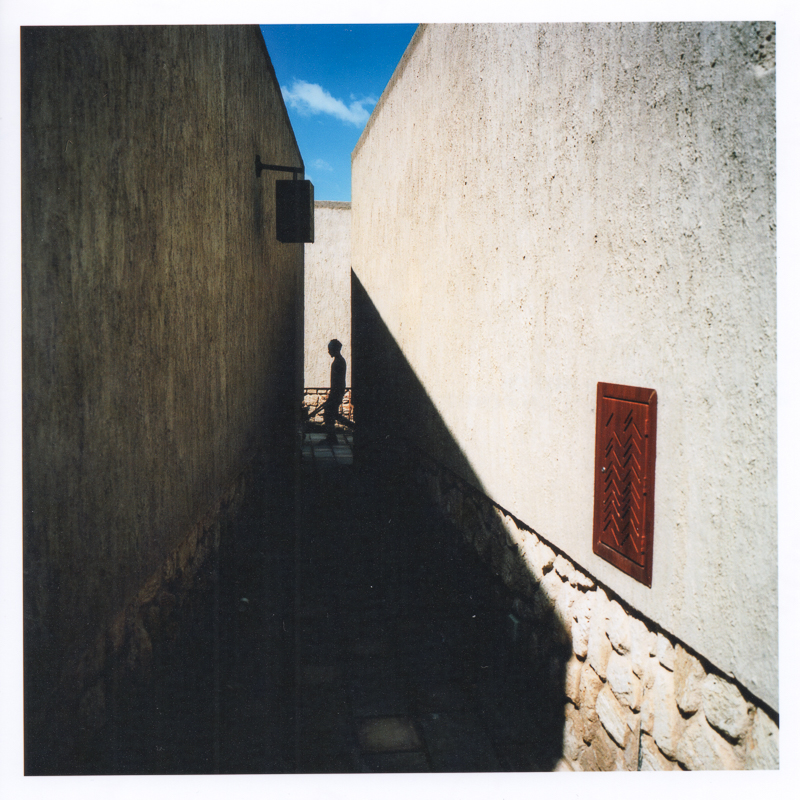
The accompanying photo was taken with the 6, the 50mm and Ektar 100 on a recent trip in United Arab Emirates, and shows the Mamiya excels in the most key area – an instantaneous shutter that allows its owner to precisely capture the moment. 
All in all, it is an experience of pure photographic bliss…… just be mindful of the limits of 12 shots per roll! 😉”
Aaron, thank you for your thoughts, which I’m sure will be helpful to photographers out there contemplating getting the Mamiya 6.  As an aside, I never thought I’d see you shooting film, and it’s nice to see you indulge in some colour photography!  Keep up the great work.
For my part, I have really wanted to get back to film (and almost did so recently) but the constant announcements of film stock discontinuations and ever-tightening shipping restrictions on chemicals for developing have made me hesitate to (re-)commit.  It’s images like this, however, and what I see over at Mark’s site that keep the idea of film photography alive for me.
Lastly, regarding your comment…
“…it has been a struggle to decide between the wonderful image quality and color fidelity of the Hasselblad with the obvious handling, fluidity and OVF advantages of the Leica.”
…much like you, my ideal camera would be designed like a Leica M with a proper (OVF) rangefinder, but would contain a medium format sensor, in a body no larger than a Mamiya 6 (or Hasselblad X1D).
Leica, if you’re interested, we can help you do it!
(one can hope…)
—Peter.

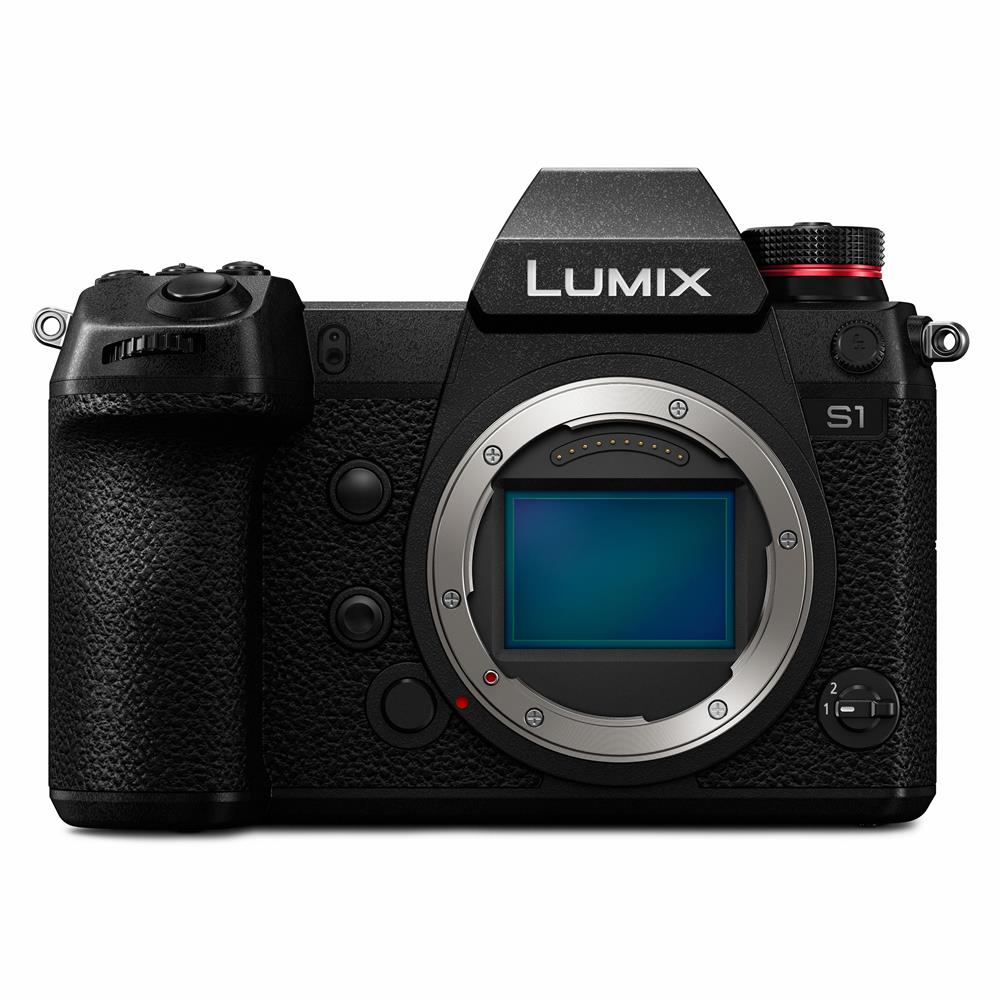
The Panasonic S1.

Inspiration, Q&A, Teaching point

I just got around to reading Steve Huff’s review of the Panasonic S1, and I must say that two things really, really impressed me:

  1. The colour reproduction at high ISO.
  2. The dynamic range.

Generally speaking, the sample images have a special look – I can immediately tell that there is something different (in a good way) going on there.

I am not interested in the camera per se (because I prefer rangefinders), but I am interested in working with sensors like this.

—Peter.


Nikon: “We cannot beat the optical viewfinder”.

Inspiration, Nikon, Q&A, Teaching point

Recently, dpreview interviewed three top-level Nikon executives, and one of them said:

“In terms of hardware, it is likely that mirrorless will catch up with DSLR.  But one thing that is a challenge is the time lag of electronic viewfinders. Even though we have a great mirrorless [solution], we cannot beat the optical viewfinder.”

—Nikon (March, 2019).

It’s refreshing to see someone from a major camera manufacturer speak the truth.

On the other hand, many camera reviewers have erroneously made claims over the last few years that EVFs are now just as good (or almost as good) as optical viewfinders.

Although there’s no doubt that EVFs will continue to improve, I’m sticking with OVF-equipped cameras (for now) so that I can continue to see the world clearly and in real-time.

—Peter.

Boy, Portrait.

2019, 7Artisans 50mm f/1.1, Favourite, Inspiration, Leica M10, Lighting - Westcott Ice Light, Portrait, Prosophos Custom Lightroom Presets, Q&A, Teaching point, Within 200 feet of My House™

With a lens like the 7Artisans 50mm 1.1, I’m seriously asking myself whether I should keep the Leica 50 Summilux ASPH.

Technical:

  • Lighting:  Westcott Ice Light.
  • Processing:  My Leica M10 presets for Lightroom.

—Peter.

Leica M10 + 7Artisans 50mm f/1.1.

Truck-sized.

2019, Beyond 200 feet of My House™, Favourite, Fujifilm GF 63mm f/2.8 R WR, Fujifilm GFX 50R, Inspiration, Print, Q&A, Street, Teaching point

This Fujifilm GFX 50R test shot #2 is consequent to an initial discussion here and subsequent discussion here.

The truck was moving when I photographed it.

The full-res file leaps off the screen.  You can get a sense of that effect here, even at this (much smaller) size.

—Peter.

Fujifilm GFX 50R + Fujifilm 63mm f/2.8 R WR.
The Leica M11.

Inspiration, Leica M11, Q&A, Teaching point

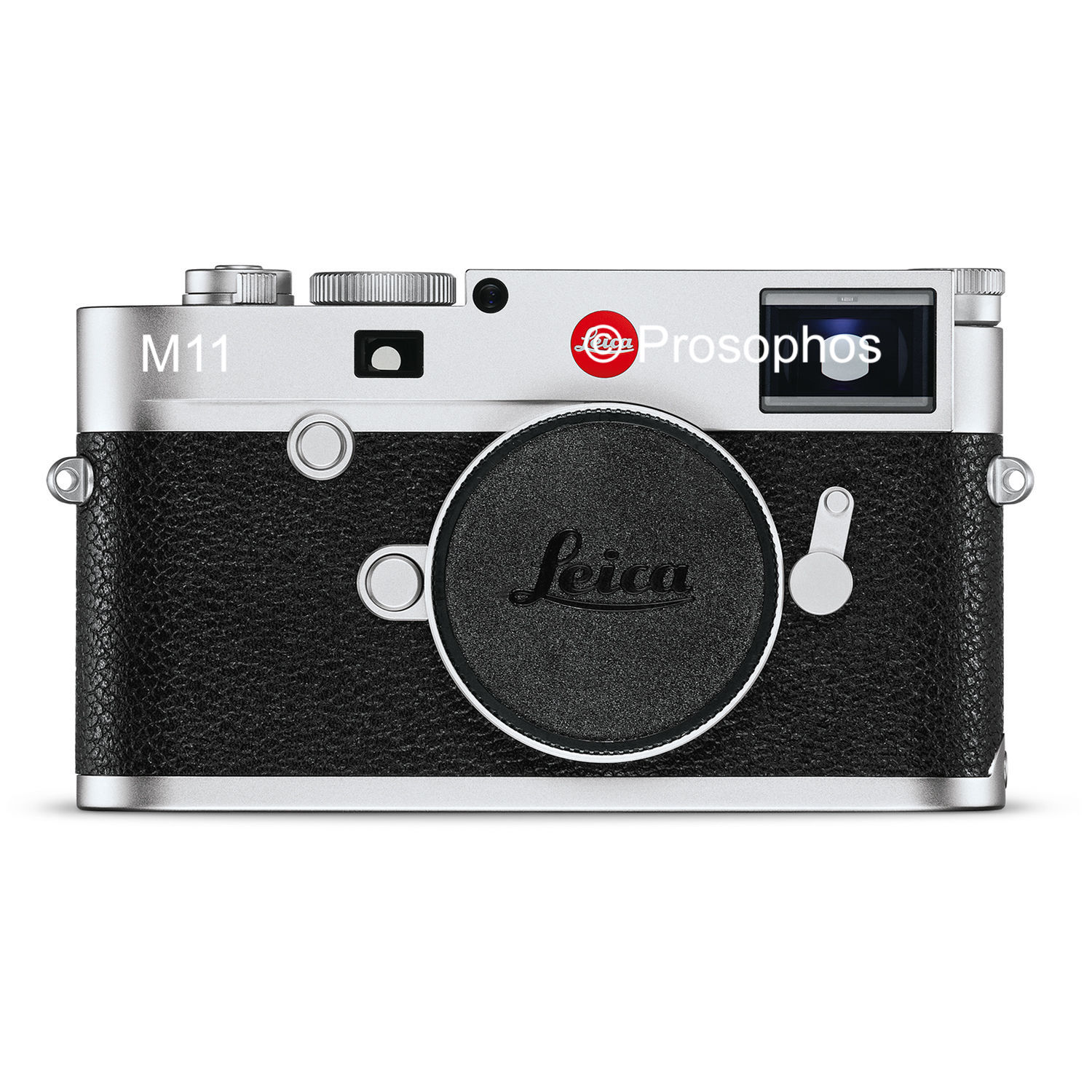
The Leica M11 will have >40 MP.

That will really reveal focus errors when using fast lenses wide open.  Technique will therefore matter more than ever.

It would be nice if the new sensor achieves greater dynamic range and colour accuracy (which admittedly is already quite good with what we have).

Leica, please just keep the optical viewfinder (that’s a personal request).

—Peter.

7Artisans 50mm f/1.1 (cropped image).

2019, 7Artisans 50mm f/1.1, Favourite, Inspiration, Leica M10, Portrait, Prosophos Custom Lightroom Presets, Q&A, Teaching point

I’ve been getting a lot of questions about wide open performance of the The 7Artisans 50mm f/1.1 (Leica M mount), since revealing that it is my Undisclosed Lens #7.

So, I thought I would show another example image, followed by a central crop.

The last time I did this was when I was comparing this lens to the Leica 50mm Summilux ASPH.  Despite making that comparison, I don’t believe there is any value in such head-to-head tests when considering this lens, because it is not an optic that one purchases for checklist attributes.  Instead, the 7Artisans 50/1.1 should be regarded much like the Leica Noctilux f.1 and the Zeiss Sonnar f/1.5 lenses, which are coveted for their artistic rendering.

Having said that, the 50/1.1 is often mistakenly labelled as “soft” when used at f/1.1.  Though it is not razor sharp wide open (and can be “glowy” at near distance — see the aforementioned comparison), it is certainly sharp enough for me.  I would, in fact, caution anyone who believes that this lens is “soft” at f/1.1 to make sure they have calibrated it correctly (or are practicing good technique).

Case in point, here is another image taken at the time of the Night Light photo I recently posted, photographed  at f/1.1:

Leica M10 + 7Artisans 50mm f/1.1.

Now, here is the magnified central portion of the frame (focus is on the eyelashes of the near eye):

I will let you decide if it is sharp enough for you and whether — in the case of an f/1.1 lens — it really matters.

—Peter.

The identity of Undisclosed Lens #7.

2018, 7Artisans 50mm f/1.1, Inspiration, Leica M10, Print, Q&A, Teaching point

Undisclosed Lens #7 is:

The 7Artisans 50mm f/1.1 (Leica M mount)

The comparison test I posted yesterday revealed something unexpected: the minimum focus distance is greater than the advertised 0.7 m (either that or my Leica 50mm Summilux ASPH focuses closer than 0.7 m, which is unlikely).  I hadn’t noticed it until I ran the head-to-head comparison and found that I couldn’t get as close with the 7Artisans as I could with the Leica.

Other than that (disappointing) surprise, I have been satisfied with the 7Artisans 50mm f/1.1.  It’s an interesting lens that has polarized photographers’ opinions of it (although some have passed judgment without actually laying their hands on one).   The mini-controversy surrounding it was the main reason I wanted to post images without first identifying the lens.

Those who criticize this 7Artisans lens I think miss the point.  In my case, I bought it hoping for a dreamy look (for lack of a better phrase) that the technically more capable 50 ‘lux does not as readily provide.

Moreover, having previously owned the Leica f/1 Noctilux (a lens also known for its dreamy look), I would say that the 7Artisans 50mm f/1.1 compares quite favourably and it would, in fact, be my choice between the two.

—Peter.

Examples of recent images:


Test: Leica 50mm Summilux vs. Undisclosed Lens #7.

2018, 7Artisans 50mm f/1.1, Inspiration, Leica 50mm Summilux ASPH f/1.4, Leica M10, Q&A, Teaching point

Leica 50mm Summilux ASPH vs. Undisclosed Lens #7.

(EDIT January 4, 2018 I have revealed the identify of Lens #7 here.)

  • Both lenses mounted on a Leica M10
  • @ f/1.4
  • @ minimum 0.7 m focus distance (nonetheless, notice the field of view difference)
  • Identical default sharpening settings in Lightroom
  • No post-processing (nonetheless, notice colour differences)


Entire scene (please click on image to enlarge):

100% centre crop (please click on image to enlarge):

Which one is “superior”?:

Clearly the Leica 50mm Summilux ASPH.

Will I still continue to use Undisclosed Lens #7?:

Yes.  I value this lens for its “flaws”.

—Peter.

Film Photographers Rejoice! New Plustek OpticFilm 120 Pro Film Scanner.

Inspiration, Q&A, Teaching point

I’m sure a few of you already know this, but for those of you who don’t, Plustek is introducing an updated version of its OpticFilm 120 film scanner.  The new scanner is called the Plustek OpticFilm 120 Pro.

I asked for an improved version of the 120 a year-and-a-half ago and it looks like Plustek has come through.

Having owned several Plustek dedicated film scanners, I can say that I have been satisfied with their products (and consider them superior to flatbed scanners) but would of course welcome improvements in ease of use, precision, speed, resolution, and dynamic range.

Therefore, I am really looking forward to seeing this new scanner in action.

EDIT (September 14, 2020):  Well, here we are, almost two years later, and no scanner is to be found.  I guess Plustek abandoned their plans?

EDIT (September 20, 2020):  Ha ha!… I should have waited 6 more days before that first edit.  It’s here!  See the comments section!

—Peter.

Oh the irony.

2018, Favourite, Inspiration, Leica 50mm Summilux ASPH f/1.4, Leica M10, Portrait, Prosophos Custom Lightroom Presets, Q&A, Teaching point

Today I finally figured out how to properly process my Leica M10 files (the irony is that last weekend I announced the end of this blog).

After months of experimentation, I created a custom preset in Lightroom that strikes a nice balance between punching up the contrast and colour, enhancing skin tones, and preserving detail.  The overall effect is subtle, which is what I want.

Most of the commercial presets I’ve tried result in cartoonish effects (specifically, with respect to colour shifts and detail obliteration) that are painted over with digital “grain”, so I’ve avoided using them.

Here is an example of my preset in action:

(click for a larger view)

Here is another example:

(click for a larger view)

I can’t wait to work with this (and possibly fine-tune it some more).

By the way, I want to thank all of you who took the time to write to me, both on this site and via email, with words of encouragement.  I am very grateful for your kindness.

—Peter.

Follow-up to last week’s post: The Leica 50mm Summilux ASPH Black Chrome (Special Edition).

Inspiration, Q&A, Teaching point

Last week I questioned whether the production run of the Leica 50mm Summilux ASPH Matte Black Chrome lens was limited to only 500 units, given the continued availability of this lens (brand new) several years after its introduction.

George, one of the participants in that discussion, wrote to me today with some follow-up commentary I thought was worth sharing (with his permission):

Peter, here is what I found out through Steve Huff’s and Thorsten Overgaard’s sites and the Leica Store in SoHo—all of which is very confusing.  I sent this post to Steve Huff for comment thinking that he might have some insights and have been waiting.  But I haven’t heard from Steve, so I thought I would post it on your site, and if I hear from Steve, I will let you know.

In January, 2016  Ken Hansen sent Steve Huff the LHSA black chrome limited special edition 50 mm Lux lens, of which there were 500, to review.   On his website, Steve mentioned that he bought this same lens for $3600 in the M8 days when it was in black paint and also a LHSA limited special edition.  He said he sold the lens for $8,000.  Thorsten Overgaard in reviewing the 50 mm Lux black chrome limited special edition lens on his website also mentioned the earlier version black paint limited edition and its appreciation from $3600 to $8,000 as a good reason for him to hold on to his black chrome limited special edition.  Clearly both Steve and Thorsten believed that only 500 of the black chrome 50 mm Lux limited edition lens were produced and that it would similarly appreciate.   Interestingly enough, Steve mentioned that the only identification of the 50 mm Lux black chrome lens as a limited edition was the Leica Historical Society (LHS) name on the box.   And he mentioned that Ken Hansen had a few lenses remaining, but B&H was also selling them.  However, said Steve, “there were only a few available [remaining] in the world.”

Now when I bought my lens from B&H shortly after Steve received his lens (in fact, I learned about the lens on Steve’s website), there wasn’t the LHS name on my box, which makes me wonder if there were two productions of this lens at the same time—the LHSA so called limited edition as well as another production not associated with LHSA.  It seems the only thing that made this lens a limited edition is its association with the Leica Historical Society of America (LHSA that amounted to simply a name on 500 boxes.  

Nevertheless, B&H continues to this day to use the original LHSA limited edition advertising for all black chrome 50 mm special edition lenses for sale since essentially it is the same identical lens albeit for the LHS name on the box, which is really false advertising by B&H although you can understand why they might be confused.

Leica SoHo said that they believe that Leica produced another 500 lenses (who knows when) after I purchased my lens but will not know for sure until they see production numbers.   When such production numbers will be available, they don’t know. The SoHo store has two of the lenses for sale and is not selling them as limited edition lenses.  I don’t know how many B&H has, but they do state in their description that it is a limited edition of 500.

Therefore, it appears to me that the problem is with B&H and Leica.  While Leica apparently continues to produce and sell this lens, B&H continues to use the advertising associated with the LHSA limited edition of the lens.  It seems (again who knows for sure) that Leica has not been clear with its customers that this lens was not in fact going to be limited to 500 produced and that the only thing making it limited is the LHS name on a box.  Also, it seems to have even fooled Steve Huff and Thorsten Overgaad.  In fact, Overgaard doesn’t even mention LHSA but simply describes the lens as a limited edition.  If this lens is truly not limited in production like the black paint edition that Steve Huff owned in his M8 days, I don’t see how it could possibly experience a similar appreciation.  I didn’t purchase the lens as an investment, but I did think that I had purchased a “limited edition,” which it appears I don’t have.  In fact, my box doesn’t even say Black Chrome Special Edition on it, although it has the correct serial number.

Nevertheless, here is what Leica said about this Special Edition lens, which B&H includes in its advertising: “As part of a limited edition of 500 pieces, this black-chrome finish Summilux-M 50mm f/1.4 ASPH lens features a matte black exterior as well as an outer design that resembles the first edition of this lens from 1959.”  Are “pieces” boxes or lenses?


Borrowing from the famous movie, Cool Hand Luke, “what we [may] have here is a [serious if not egregious] failure to communicate.”

The problem with digital photo archiving.

2018, Favourite, Inspiration, Q&A, Teaching point

The New York Times published an article this week, discussing the practical difficulties with long-term storage and tracking of all of the digital photos we create:

This is an issue I’m sure we’ve all thought about.

My working solution has been to store cherished photos on two back-up external drives, one that saves them in real-time and another that I use for a yearly back-up (but that remains in a safe the rest of the year).   I also have many images uploaded to a cloud-based storage service.

I’m not saying this method is the best, or even good, but for me it’s the solution that best balances a sense of (false?) security with practical considerations.

In contrast to many individuals, I tend to avoid taking photos with my iPhone because, although they too are uploaded automatically to Apple’s servers (i.e. the Cloud), I don’t often make back-up copies on my external drives, so I feel less in control of them.  Also, I prefer photographing with a dedicated camera anyway.

A few years ago, I read an article in The Telegraph where a top-tier Google executive predicted that all of our digital photos will likely be wiped out, if we don’t figure out a better way to preserve them.

Thinking about that further, I guess the best thing I’ve done to preserve our family’s images was to create photo books which were distributed, annually, to family members.  The problem with this is that it’s very time-consuming and expensive (especially when you are making half a dozen copies of each book).  Hence the last time I did it was in 2014.

Nonetheless, I guess I better start making books again… maybe next year.

Addendum:  I almost forgot — the other thing I’ve done is to intermittently photograph with the anti-digital medium: film.

—Peter.