One of the more frequent questions I receive is:
How do you post-process your images?
My short answer is:
I don’t follow a recipe.
What follows is a more detailed response. I’ve previously presented some of this information on this site, but this post will serve to amalgamate and edit the content.
—Peter.
–
—
The Software I Use
I use the latest version of Adobe Lightroom (LR). Within LR, I often use Nik plug-ins (Silver Efex Pro, Color Efex Pro, Viveza).
–
The Concept of Pre-Processing
Almost all photographers post-process (i.e., make image-enhancing adjustments, after a photograph is taken). What many novice photographers fail to recognize is the importance of pre-processing (my term). Pre-processing involves identifying and harnessing — before an image is taken — naturally-occurring enhancing elements in a scene, such as good light, perspective, etc., that cannot be altered after the fact:
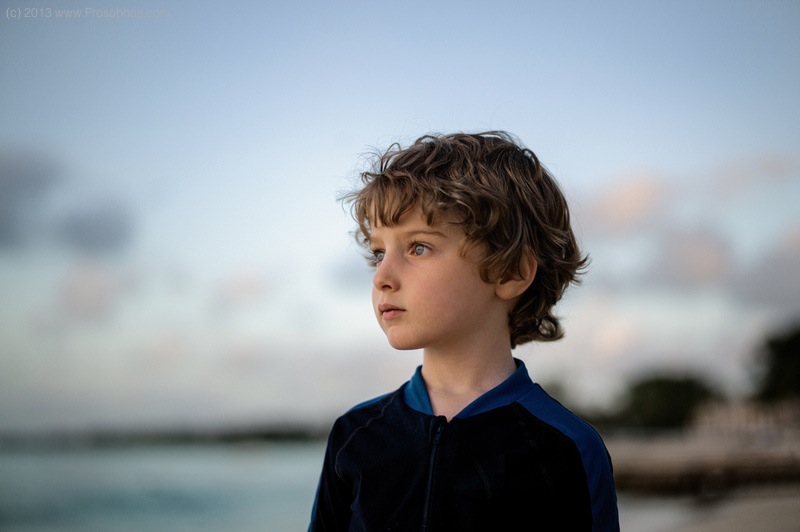
In the case of this image, Boy, the soft light that was present after the sun set was harnessed to achieve a rich palette of colours and tones. This cannot be achieved in post-processing. The perspective I’ve chosen to photograph this image from is from down low; this too cannot be achieved in post-processing.
–
My Cameras and My Camera Settings
I tend to favour cameras with limited menu options, or no menu options (film cameras). I prefer to adjust camera settings using external dials/controls. I limit the variables with which I concern myself to only three: Aperture, Shutter Speed, and ISO. Hence, I always shoot in Manual mode. Modern camera “features” such as scene recognition, smile detection, etc., and even not-so-old features such as exposure compensation serve only to clutter my mind and sabotage my shots.
I don’t even use auto-focus (eliminating another variable), choosing instead to manually focus.
Generally speaking, I believe that camera features — even sophisticated ones — can never substitute for photographic vision.
–
Post-Process, not Over-Process
Many images on the web today appear “over-cooked” to my eye. Therefore, I always try to exercise restraint when post-processing. In fact, as time has gone by, I’ve toned down my manipulation of images.
My goal is to make my post-processing invisible.
On a related note, shooting film helps keep me grounded with respect to what I am trying to achieve with my digital images.
–
Finally, My Post-Processing “Process”
I photograph in RAW mode.
Each image is post-processed by eye. Occasionally I spend many hours honing a single image. Each photo is processed individually, depending on the subject matter, lighting, and mood.
The adjustments are small, and incrementally applied. My method now differs from what I was doing last year… this will also be true next year — in other words, my approach is constantly evolving.
It is a very personal process, dictated in good measure by artistic license; it is not open to “cookbook” interpretation.
–
—Peter.
–
Further Reading:
My Photography Workflow – 5 Items I Consider When Creating Images.
My Photography Workflow – Inspiration.
My Photography Workflow – Infusion of Self.







 Prosophos