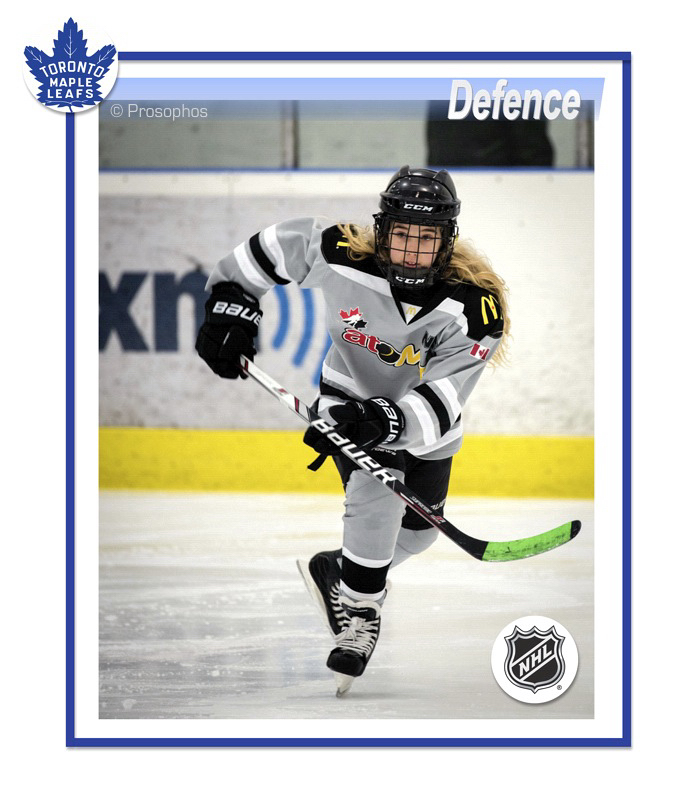
H’s Hockey Card.

2016, Favourite, Hockey, Inspiration, Nikon, Nikon 300mm f/4E PF ED VR, Nikon D810, Portrait, Q&A, Sports, Teaching point

This image is from this morning’s game.

(I decided to turn it into a “hockey card” for my daughter.)

On a technical note, it was nice having a 300mm lens today.  Telephoto reach was one thing I’ve missed while using my rangefinder cameras all of these years.  As my children have gotten bigger, so have the playing venues… hence the need.

On another note, I’ve gone from begrudgingly accepting my Nikon D810 to deeply appreciating it.  I can’t say that I’m passionate about it (yet) like I am with my Leica M3 (or, previously, my M9), but I am shocked to state that I actually enjoy photographing with it.  I’ll be damned.  It’s interesting how the incremental improvements over the D800 (the quiet shutter being one of the obvious changes) have transformed the user experience.  Good work Nikon.

Also, I’ll have to comment more on the Nikon 300/4 lens (used for this image) on a future post.  I’ll say this much now though:  I’m very pleased with it.

—Peter.

H's Hockey Card

Sparkle.

Inspiration, Nikon, Nikon D810, Portrait, Q&A, Sigma 35mm f/1.4 ART, Teaching point

There’s something about the way the Sigma 35mm f/1.4 ART renders… photos from it just sparkle, for lack of a better word.

At this point, I think I may even prefer it over the Sigma 50mm f/1.4 ART, but I haven’t shot enough with either to draw any definite conclusions (though the fact that I might be favouring a 35 over a 50 is saying something, given I’ve traditionally been a 50 shooter).

Either way, both of these Sigma ART lenses are phenomenal.  I can’t wait until springtime to get outside in good light and really play with them.

—Peter.

Sparkle

Test Shot Portraits #1 and #2.

2016, Favourite, Film, Inspiration, Kodak Tri-X 400, Leica - Black Chrome Special Edition, Leica - Kanto, Leica 50mm Summilux ASPH f/1.4, Leica M3, Portrait, Q&A, Scanner - Plustek 120, Teaching point

Test shot portraits: the first in harsh artificial light last night; the second in natural light earlier today.

The focus is where I wanted it in the first, but I can’t say that about the second image (it is slightly front-focused).  Perhaps I’m out of practice, perhaps my eyesight is starting to fail me, perhaps the rangefinder (or lens) is off.

I have no idea, because this is film.

And that’s the beauty of it.

—Peter.

Kanto Leica M3 50mm Summilux Black Chrome Test Shot 1 Prosophos

Kanto Leica M3 50mm Summilux Black Chrome Test Shot 2 Prosophos

Close Connection.

Film, Inspiration, Kodak Tri-X 400, Minolta Autocord CDS III 75mm Rokkor f/3.5, Print, Q&A, Rolleinar 2, Scanner - Plustek 120, Teaching point

There’s another close connection going on here…

I’ve attached a Rolleinar 2 close-up lens kit to the Minolta Autocord to get this shot.

This is the first test image with the combination.  The buttery-smooth bokeh of the Rokkor f/3.5 is impressive, given the concomitant sharpness in the in-focus areas.  It’s one of the reasons I sought out the Autocord in the first place.  It’s rare to find such sharp-but-smooth rendering — often you only get to have one of these attributes in a lens.  The only other lenses I know of that are as well balanced are the Leica 50mm Summilux ASPH and the Mamiya RZ 110/2.8.

—Peter.

Close Connection

The return of the Minolta Autocord TLR.

Film, Inspiration, Minolta Autocord CDS III 75mm Rokkor f/3.5, Q&A, Teaching point

Minolta Autocord Prosophos (crop)

That’s my actual Autocord ↑

As many of you know, I recently purchased a Minolta Autocord.

Unfortunately, I quickly realized (well, not so quickly… I ruined two rolls of film in realizing) that the shutter was not releasing.  I had a dead camera.  This despite the fact that it had been advertised as “fully repaired and fully functioning” by the seller in Japan (for the record, I’ve dealt with many Japanese dealers over the years, and have always found them to be reliable and honest, so this experience was an exception).

After getting over the initial disappointment , I started searching on the ‘net for someone who could fix it.

Fortunately, it didn’t take long to find the name of a highly recommended serviceman:  Karl Bryan.

I contacted Mr. Bryan, and he responded immediately; after several email exchanges he confirmed that it needed to be sent in.

So off it went and now I’m happy to report that my camera is back.

In the interest of sharing, here is the itemized list of inspections/adjustments/repairs performed, as communicated to me by Karl:

“Hi Peter,

I recvd your camera today and have performed the following services on it:

  • checked shutter, made/installed cocking lever pin
  • checked flash
  • checked film advance
  • checked frame counter
  • cleaned/lubricated focus helix
  • reset focus of taking and viewing lens
  • cleaned outer surfaces of lens groups
  • cleaned mirror/ground glass/Fresnel lens
  • installed Fresnel lens correctly
  • straightened waist level finder so magnifier pops up properly
  • replaced aperture/shutter viewing window
  • lubricated film rollers and film advance drive gear
  • tightened pressure plate screws
  • replaced shutter control lever
  • installed missing grub screw on focus lever
  • installed missing grub screw on meter on/off switch
  • replaced waist level finder lift button
  • installed battery and battery adapter in battery housing


…I have included a CD of Autocord information in the box with your camera.

The camera shutter had been CLA’d, but the camera tech forgot to put lacquer on the shutter cocking lever pin. Without the lacquer the pin will fall out. I made a new pin and installed it. I lacquered the pin and the 2 aperture control plate screws (camera tech also forgot to lacquer the screws). It was a real pleasure to work on your camera, a very clean camera. As recvd the focus was very very stiff (temp was 1 C) and infinity focus was when the focus lever was set to 50’ (camera tech probably didn’t have an autocollimator for setting focus). I cleaned/lubricated the focus helix and then I reset the focus, a very sharp lens. I also straightened the waist level finder so that it would open smoothly and the magnifier would not droop (can’t focus if the magnifier isn’t parallel to the ground glass). I also replaced the damaged rear waist level finder lifting button and the badly damaged aperture/shutter viewing window. You will find the old parts in the upper film spool area of the camera.

I tested your meter, the CDS meter works and appears to be accurate. To use the meter…”


As you can see, Karl took care of everything an now my Autocord has been restored to its former glory.

It is operating beautifully.

Suffice it to say, if any of you reading this are interested in having a Minolta Autocord skillfully serviced, do not hesitate to contact Karl (he is located in the USA and can be found easily via an internet search — or you can contact me and I’ll forward you his email) and you will be taken care of by a true gentleman.*

Thank you Karl!

—Peter.

*NOTE:  As always, the recommendations I make on my site are based on my experiences as a paying customer.  I am not affiliated with, nor do I earn any money (advertising or otherwise) from any third party photography-related products, services, or website links.

Lens Reports.

Inspiration, Q&A, Teaching point

I’ve re-instituted some of my Lens Reports from a few years back.

They can be found on the “Instruction” page of this website (see above), but I’m also posting the links below for your convenience:


Thanks for reading,

—Peter.

State of the musings.

Inspiration, Q&A, Teaching point

(or, Gear Update 2016).

At this time each year, moments of photographic doubt seem to plague me — doubt about the work I’ve produced, and doubt about the gear I’m using,

The annual condition is not so much secondary to the realization that yet another year has slipped by, and therefore the “frames” of our existence have measurably diminished (though this too carries a great weight).

No, it’s more to do with the winters here:  the lack of light and warmth tend to encourage an introspective existence.  And when a photographer does a considerable amount of thinking (and not much photographing), it usually leads to trouble.

So, here’s the trouble I’ve gotten myself into.

I made the decision to walk away from my Leica gear.  All of it.  This was, in fact, decided last month.

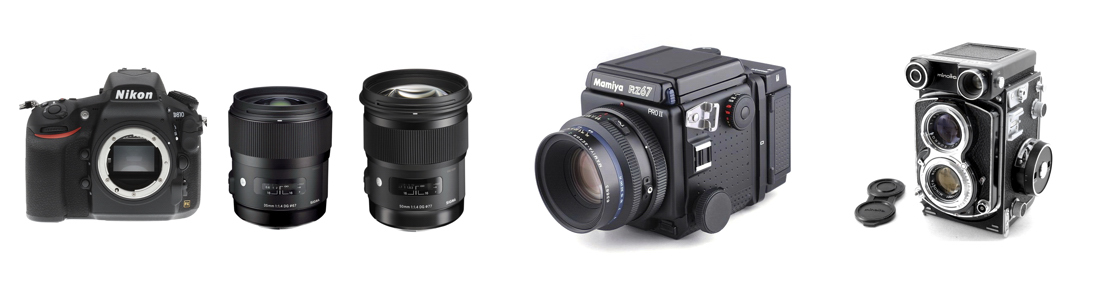
I made the decision to pick up a Nikon D810, and photograph with Sigma 35m f/1.4 Art and (Edit December 29, 2014:) Nikon 85mm f/1.4G Sigma 50mm Art lenses.

I made the decision to stay with film — the only photographic medium that matters (my opinion of course… but I’m right and you know it).  To see this through, I’ve decided on a Minolta Autocord as my “walk around” camera.  I’m waiting for it to arrive.  I can’t wait for it to arrive.

Finally, I made the decision to return to the mighty Mamiya RZ67+110/2.8, the best portrait-producing combination I’ve ever used.  Why did I sell it?  You’d have to ask somebody who knows.  I no longer have the RZ67, but I will.

So there.

Prosophos Cameras and Lenses 2016

Edit (December 29, 2015):  The Nikon 85/1.4G has been replaced with the Sigma 50/1.4 Art and the image above has been updated to reflect this change.  The Minolta Autocord arrived not functioning, so it has been sent for CLA.

—Peter.

Tomato-Face™ Technology Alive and Kicking in the Leica SL.

Inspiration, Q&A, Teaching point

Prosophos - Tomato Face
The Leica SL continues to garner attention — understandably.  The images from this camera are quite remarkable with respect to micro-contrast, sharpness (“bite”), and tonality.

I unhesitatingly concede this, even though my original post about the SL postulated that this camera might actually kill Leica.

I no longer believe this to be the case, though I still have to question who the intended customer for the SL is (hint: it’s not the professional photographer, no matter what the marketing and some review sites may say).

Now, I will admit, I may be wrong about this too, but getting back to the topic of this post…

The more output I’ve seen from this camera, the more I think that Leica is using their (patented?) Tomato-Face™ technology, first quietly introduced on the Leica M (Type 240).  It’s a more refined version though, with a more subtle tomato rendering.

What is Tomato-Face™ technology?  It’s the high tech advancement in digital imaging processing that converts — on-camera — natural Caucasian skin tones to a red-speckled La Tomatina (Spain’s Tomato Festival) participant’s complexion.

La Tomatina - Courtesy of Latomatina org

↑image courtesy of LaTomatina.org

You aren’t convinced that this is possible?  Have a look at some of the online images and then get back to me.

Once again, Leica, I’m advising you — for your own good:  please bring back an updated CCD sensor for your next Leica M camera (see My Open Letter to Leica – over 600 photographers agree).

—Peter.


Q&A: for Mads (regarding Sigma lenses for Nikon).

Inspiration, Q&A, Teaching point

Sigma 35mm 1.4 ART - Prosophos

On an earlier post, Mads asked if I had to test several copies of my recently acquired Sigma 35mm f/1.4 ART lens, before deciding on the one I own.

The answer is: no.   The first one I evaluated was perfect.

My camera dealer’s Nikon D810 has been calibrated (by Nikon) and the Sigma 35 I tried was focusing perfectly at near focus, mid-distance, and infinity.  On my D810, which is not perfectly calibrated, I need to set the camera to +5 micro-focus adjustment.  This is the same adjustment I need to make to my Nikon 85mm 1/4G (which is also functioning perfectly), in order to achieve proper focus on my camera-lens combination.

I additionally tried out a used copy of the Sigma 50mm f/1.4 ART, and it was focusing perfectly.   My dealer also had a new copy of the same lens, but it was unfortunately front-focusing by about an 3 cm (this shouldn’t dissuade people from buying Sigma lenses… the first few Nikon 58/1.4G lenses I tried were also a little off, and — as already stated above — so is my Nikon D810).

I hope that helps, Mads.   By the way, if you ever plan on visiting Toronto, let me know and it will be my pleasure to welcome you to my city.

—Peter.

Resolution: Sony A7RII vs. Leica SL vs. Nikon D810 vs. Canon 5DS R.

Inspiration, Q&A, Reader Smackdown, Teaching point

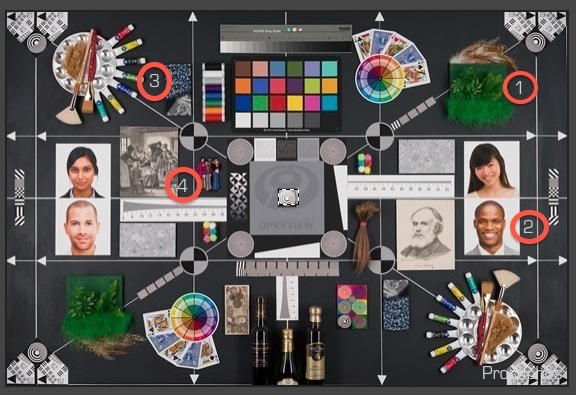
I’ve always found DPREVIEW‘s studio comparison tool useful when evaluating cameras for resolution.

Here is the entire scene (I’ve added the numbers with red circles):

Studio Scene

↑studio comparison tool © DPREVIEW.


Now here is the comparison I ran with four cameras of interest (using RAW files).

I specifically focused on the numbered areas above.

Let me know what you think…

(1):

1

(2):

2

(3):

3

(4):

4

—Peter.

Related:  Leica M9 sharpness vs. Sony RX1R, Nikon D800E, Fuji X100s.

Blue.

Inspiration, Nikon 58mm f/1.4G, Nikon D810, Portrait, Q&A, Teaching point

This image was taken at the same time as all of my other recently posted images, before I realized that my 58/1.4 lens was front-focusing.

The intended focus here was the near eye, but the actual focus ended up being on the front of the hat.

Still, I like this image.

(Andreas: the background buildings are the same yellow-ish buildings 🙂 )

—Peter.

Blue