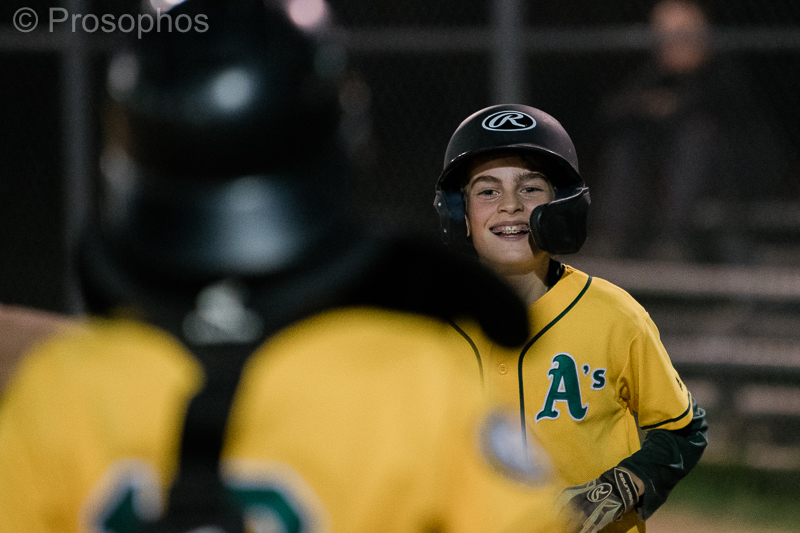
Lens testing, run amuck.
–
UPDATE: December 19, 2019.
Another copy (a.k.a. Lens #2) of the same lens:
–
Proving that even the pro-level zooms are not immune from sample variation.
—Peter.
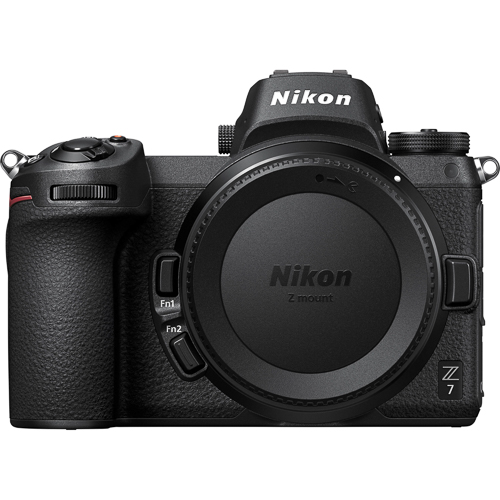
I’ve long avoided switching into mirrorless but I’m now photographing primarily with the Nikon Z7 (though I’ve kept the D500 for my baseball work).
The reluctance to go into mirrorless was consequent to a few things:
So what’s changed?
Well, I warmed up a little to EVFs after using the Fuji GFX earlier this year, and obviously mirrorless cameras have been progressively evolving with respect to both their ergonomics and speed. Though what really won me over was Nikon entering the market with the Z6 and Z7.
For the first time, a mirrorless camera felt like I a real camera (to me). Ergonomics — check.
And I don’t know the resolution or refresh rate of Nikon’s EVF, but in use it feels more natural than the others I’ve tried (including some of the “best in class”). I still prefer the window of an optical rangefinder, but I have little to criticize in the Z7‘s EVF.
The Z mount has also been a positive and significant development. It has freed up Nikon’s engineers to design truly outstanding lenses while balancing size and cost. Win, win, win.
Lastly — and this has simply been a revelation to me — though the tracking ability of the AF has been much maligned (and is overblown), the precision and accuracy of focus on stationary subjects have been noticeably improved over DSLRs. Whether using a single focus point or the “eye-tracking” function, critical focus on a person’s eyes at wide apertures is easily achieved. Critical focus at wide apertures was one of the reasons I preferred rangefinders over DSLRs, but now mirrorless has improved upon even that.
Mirrorless?
I’m in.
—Peter.
I’ve teased Ken Rockwell before, but I’ve mostly agreed with him on his assessment of gear.
And I’m now loving Ken’s YouTube channel. Check it out if you haven’t, just so that you can hear his enthusiasm.
—Peter.
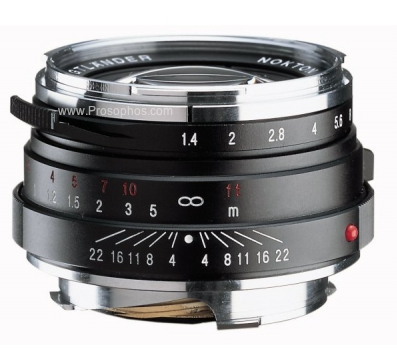
I just updated my Voigtländer 40mm Nokton Review.
Enjoy!
[EDIT: images added]
[EDIT #2: more images added]
—Peter.
I had someone ask me today how I like the Epson V600 scanner. A few more of you have asked the same question since my last set of images were posted, so I thought I’d resurrect this previous discussion:
https://prosophos.com/2014/02/07/epson-v700-vs-plustek-120/
The same observations for the Epson V700 hold true for the V600, except that:
All in all, I am pleased with it and would recommend it to anyone scanning medium format film. For 35mm film, I use the Plustek 8200. Both of these scanners can be purchased for less money than the Epson V800, which is the current equivalent to the now discontinued V700.
The Plustek 120 is also no longer available, but a next generation model is anticipated.
—Peter.
Yes the M9 was introduced 10 years ago today, on 9/9/9.
It is the last of the great CCD cameras, and in its wake lies a mountain of corroded sensors.
Come on Leica, make another CCD-based M camera.
Dare to be different again.
—Peter.
Due to semi-popular demand, the following are back and available for purchase:
The links are in the main menu above, near the top of the page.
Thanks,
—Peter.
Photography has always been driven by technology.
So why is it that the further we go, the more we lose our way?
Maybe that’s why HCB (in 1968) abandoned photography and returned to his first love… painting.
—Peter.
Top Panel: As previously posted.
Bottom Panel: Film Simulations Applied.
EDIT: I just replaced the bottom panel with the updated versions (you may have to refresh your browser to see the changes). The differences are now more subtle, but the bottom panel definitely retains a more film-like appearance.
—Peter.

I decided to create this composite image using photos I’ve taken over the past year.
As you can see, the first (from last year) was created with the Nikon D850 + 105mm f/1.4. The other two (from this year) were created with the Fuji GFX 50R + 110mm f/2.
I share the above information purely for your interest and not for the purpose of making comparisons, as there are simply too many variables in effect in each image (for example, subject’s natural skin tone, time of day, natural vs. artificial vs. mixed lighting, etc.).
Suffice it to say, both systems produce wonderful image quality, though I would give the edge to Fuji (you cannot, however, discern that from the small-sized images I’ve posted).
With respect to weight, the Fuji also has a slight advantage:
However, the Nikon is without a doubt the more versatile system.
—Peter.
A couple of years ago, I updated my review of the Konica Hexanon 60mm 1.2 by deleting the entire discussion and replacing it with the statement:
“I no longer recommend this lens.”
Do you know why I did that? Because:
“I no longer recommend this lens.”
Since then, I’ve had a handful of people (including one in the comments section of what remains of the “review”) write to ask me whether I did this to drop the price of the 60/1.2, so that I could buy it again.
Well… no. That would be unethical.
Part of the reason for the downgrade was the price-to-performance ratio had become too great, and part of it had to do with a change in my preferences. Simply put, I am no longer interested in lenses that impart too much of a specific “look” to a photograph.
So for those individuals who paid an insane amount of money to own one, I’m sorry that its price has dropped, though I really don’t think I had anything to do with it.
—Peter.
Thanks again!
I just got around to reading Steve Huff’s review of the Panasonic S1, and I must say that two things really, really impressed me:
Generally speaking, the sample images have a special look – I can immediately tell that there is something different (in a good way) going on there.
I am not interested in the camera per se (because I prefer rangefinders), but I am interested in working with sensors like this.
—Peter.