The final image of the series.
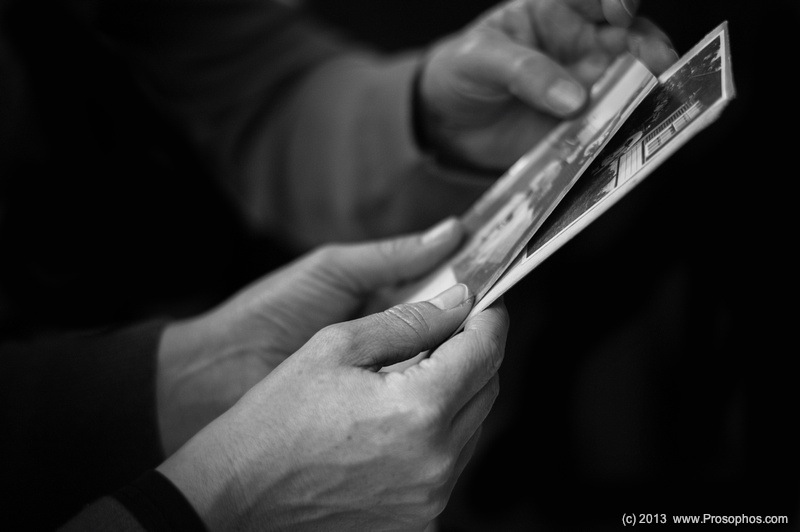
↑Leica Monochrom and Leica 90mm Summicron APO @ f/2.
____
Note: The images in this series were not staged.
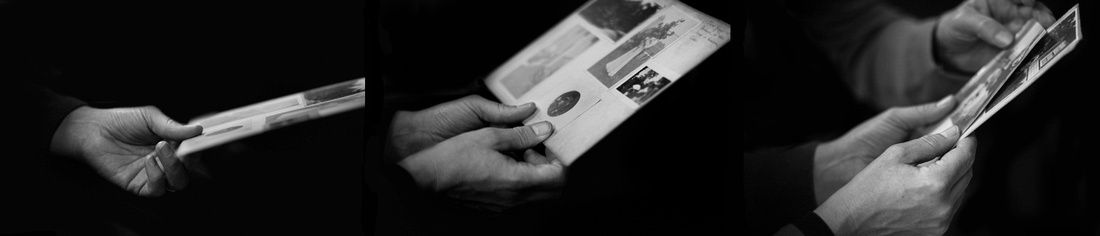
—Peter.

The final image of the series.
↑Leica Monochrom and Leica 90mm Summicron APO @ f/2.
____
Note: The images in this series were not staged.
—Peter.
Well, the Leica Monochrom is living up to its reputation for exquisite tonal rendering, high ISO capabilities, and sharpness (please see the 100% crop below).
However, it’s also living up to its reputation for requiring a radically different approach to processing files (vs. the M9). So far, I’ve played with only a handful of images, but I’m thinking it’s going to be a long time before I even get anywhere near where I want to be.
This all underscores what I’ve previously written: with a new camera there is often an initial drop in photographic output.
Please bear with me while I sort this out.
—Peter.
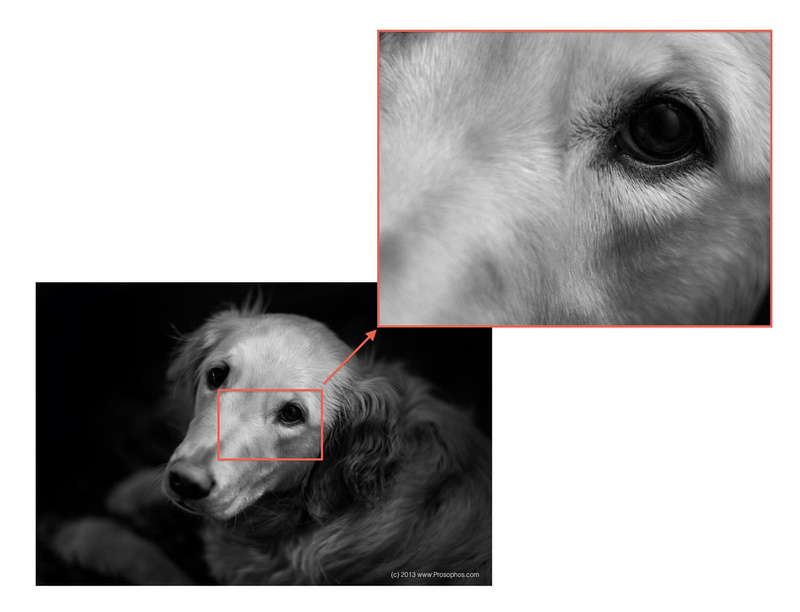
↑Leica Monochrom and Leica 90mm Summicron APO @ f/2.
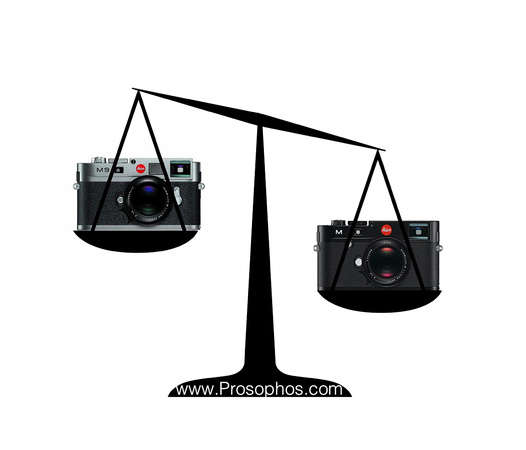
Is there anybody else out there who is just a little bit disappointed that the new M weighs more than the outgoing M9?
The Leica old-timers used to lament that the the M9 (and the M8 before that) weighed more than the preceding film M cameras, and disapproved of the general pudginess of these digital reincarnations of the legendary film classics (if you think they were/are being picky, try holding the iconic M3 in your hands, and you’ll quickly concede the point).
It is ironic that in an era when DSLRs are being dropped en masse for smaller and lighter mirrorless cameras, the M — which has always run counter-current to the “bigger is better” mindset of the SLR world— is getting, well… fatter and heavier.
(Have you seen the new M decked out with all of the accessories? It’s sort of umm… un-Leica M-like.)
In future M models, I hope advances in technology are harnessed to reduce the size and weight of the body (I also hope that emphasis is placed on simplicity, i.e., reducing buttons and menu items, and that they stick with manual focus lenses — but that’s another story).
As far as I’m concerned, when it comes to the M system, less is more.
—Peter.
This is my first time using this lens.
It completes my current triad of lenses: 28/2.8, 50/1.4, and 90/2.
Not a very original set-up, but I finally conceded that I’m a 50 shooter and everything else revolves around it.
—Peter.

↑Leica M9 and Leica 90mm Summicron APO @ f/2.

____________
Just over a week ago, I posted my “Final Verdict” on the new Leica M (aka Leica M240).
The post itself was rather benign, but many people were not happy with my conclusion (or my title). And there has been at least one thread that I know of, started on a major Leica forum, attacking me for my view (I even had a moderator from that forum try and post a provoking comment on this very site. I didn’t bite.).
One of the main criticisms against me is that I haven’t photographed with the new M, so I am not in a position to comment on its image quality.
Nonsense.
The fact that I haven’t photographed with the new M precludes me from commenting on handling/ergonomics, but it does not prevent me from judging image quality. I do that with 100% of the cameras I don’t buy… that’s called common sense.
Having stated the above, I have viewed and extensively handled RAW (DNG) files from the new M(240), and I do believe that the files have more “depth”, slightly more dynamic range, and render better at high(er) ISO levels. But I still prefer the files out of my M9 (and the M8 before that) at base ISO.
It may be difficult to understand, but that’s my belief.
You know, it’s funny…DXO recently concluded that the M9 has the worst FF sensor they’ve ever tested. This was previously known, at least to those who track such metrics. The Leica faithful have historically derided such conclusions, stating that there’s something special in the M8/M9 files that is just not being captured by DXO’s methodology, and the proof was in the images. Well, many of those same individuals are now criticizing me for using my own eyes to pass judgment on the new M(240).
You have to ask yourself: What’s my motive?
Am I a Leica “hater”? No, of course not… I only shoot with Leica cameras.
Am I trying to sell you something? No, there are no sponsor links on this site. I never “hype up” the latest and greatest and call it the “BEST camera EVER!!!” until the next one comes along.
Am I trying to be negative? No, life’s too short for that.
The answer: I’m stating my opinion.
That’s all.
The irony is that one day I may pick up the new M, because it will be the best solution for somebody who appreciates a high(er) ISO colour-capable camera with rangefinder coupling in an M form factor. It’s currently the only game in town for that combination of features.
And as I’ve written countless times, none of this silliness has anything to do with creating great images.
So people, relax. It’s just a camera.
—Peter.
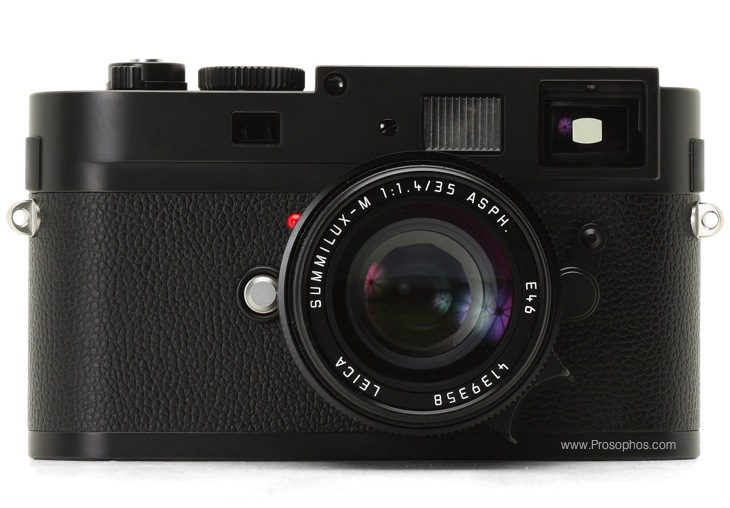
My Leica dealer informs me that the replacement for my defective Monochrom is on its way.
It looks like the waiting time for these unique cameras has decreased.
Hopefully this one will be okay.
—Peter.

–
–
Picture a young mother, sitting on a park bench on a beautiful and sunny early Autumn morning, with her two year old daughter by her side. The little girl is presenting a bouquet of dandelions to her mommy, who is intently watching her with an adoring smile.
Less than a month later, that young mom passes away.
–
She was my wife.
–
You’ll never see the photograph I took of her and my daughter that day… I’ll never show it.
It was taken on a cheap cell-phone camera, and it’s blotchy and blurry and the faces are barely recognizable. But it’s one of the most important photos I have.
You see, photographs for most of us are iconographs. In other words, they are only symbols that collectively represent and remind us of our loved ones and our experiences. They don’t need to be sharp on a screen or technically perfect, they only need to be clear in our minds and emotionally meaningful.
—Peter.
____________
Related posts:
Frames and
Let it Be and
Norway, 1965 and
–
This is the second test shot (the first is here).
It may seem crazy to conduct “test shots” on well established Leica lenses, but the last lens I tried was front-focusing by several inches.
In this case, everything looks to be okay:
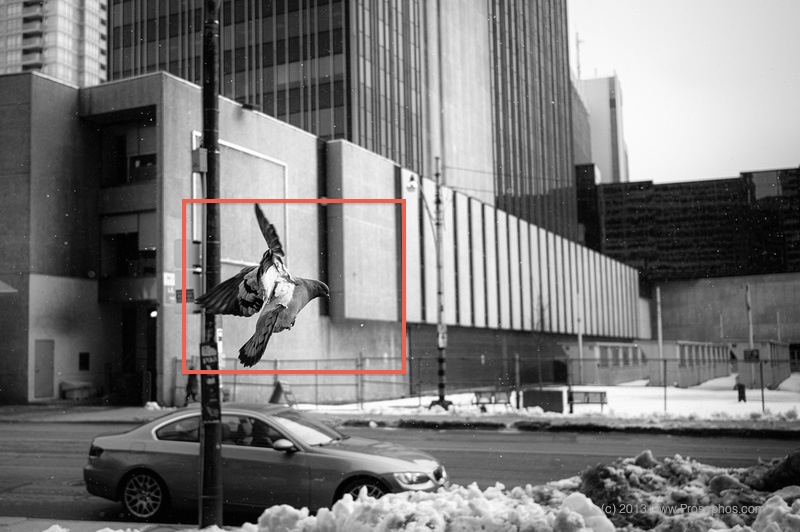
↑Leica M9 and Leica 28mm Elmarit ASPH @ f/2.8.
–
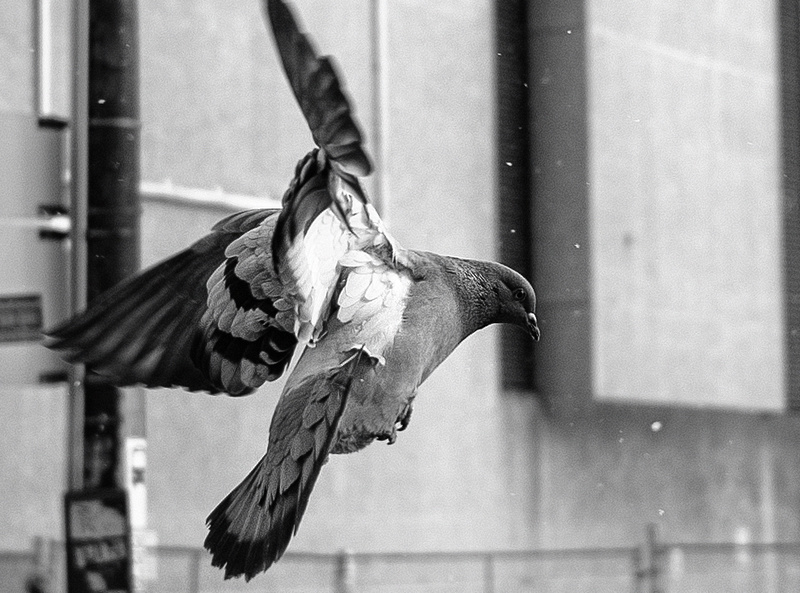
100% central crop of above image:
(please click on the image to view at MAXIMUM size and sharpness)
–
This 100% magnification clearly demonstrates just how sharp this lens is wide open at f/2.8.
Incredible really.
—Peter.
When I acquired my first rangefinder in late 2007 — the iconic Leica M8 — the two Leica lenses I purchased were the 50mm Summilux ASPH and the 28mm Elmarit ASPH.
Well, at some point along the way, I sold that little 28/2.8. That was a mistake.
It’s now back in the fold… and I’ve come full circle.
(I was wiser then than I am now.)
—Peter.

↑Leica M9 and Leica 28mm Elmarit ASPH @ f/2.8.
↑Leica M9 and Leica 50mm Summilux ASPH @ f/1.4.
_______
I’m often asked how I post-process colour in my images.
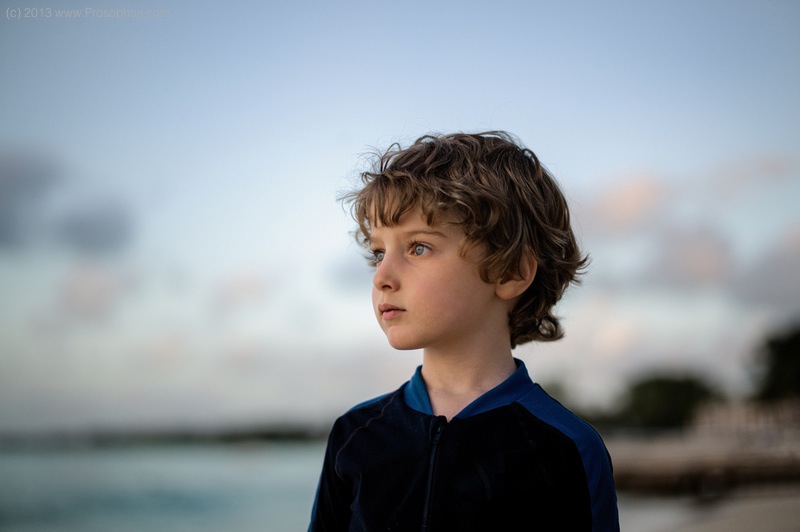
Well, more often than not, I don’t. I pre-process (my term). Let me explain…
Almost all photographers post-process (i.e., make image-enhancing adjustments, after a photograph is taken). What many novice photographers fail to recognize is the importance of pre-processing. Pre-processing involves identifying and harnessing natural enhancing elements in a scene, such as lighting, perspective, etc., before an image is taken.
In the case of this image, Boy, the soft light that was present after the sun set was harnessed to achieve a rich palette of colours and tones. This cannot be achieved in post-processing.
—Peter.
↑Leica M(240) CMOS sensor (image courtesy of CMOSIS).
_____
I’ve seen enough images now to finally go out on a limb.
My long-standing suspicions here, here, and in several other posts (too many to cite at this point) have been confirmed: the new M produces CMOS-like images.
Not a profound statement, I’ll admit. But true.
What do I mean by CMOS-like?
I mean smoother, more marshmallow-y, more… plastic vs. the crisper/more microcontrast-y CCD rendering from the M9/M-E/MM/M8. This is not necessarily a bad thing, but it is different. As expected.
(However, the banding I’m seeing in the early M(240) images is disconcerting. On a positive note, the files look richer, thanks to an increase in dynamic range.)
Now, in the end, does it really matter? This film image I posted a few days ago demonstrates that such technical considerations ultimately sub-serve content/emotion so…
No. None of the above really matters.
But, we all are free to choose our gear as we see fit. And I’ve made my choice(s).
—Peter.
—
If you haven’t already done so, please consider signing my open letter to Leica.

___
Related posts:
I spotted him from a distance and, seeing the golden light reflecting off him and the Bajan clouds behind him, literally chased him down the beach as he walked.
Never once did he ask me what the hell I was doing.
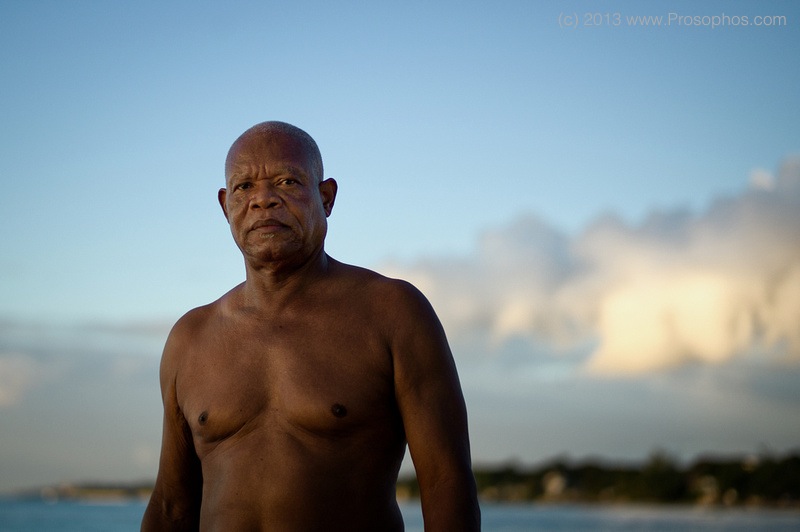
↑Leica M9 and Leica 50mm Summilux ASPH @ f/1.4.
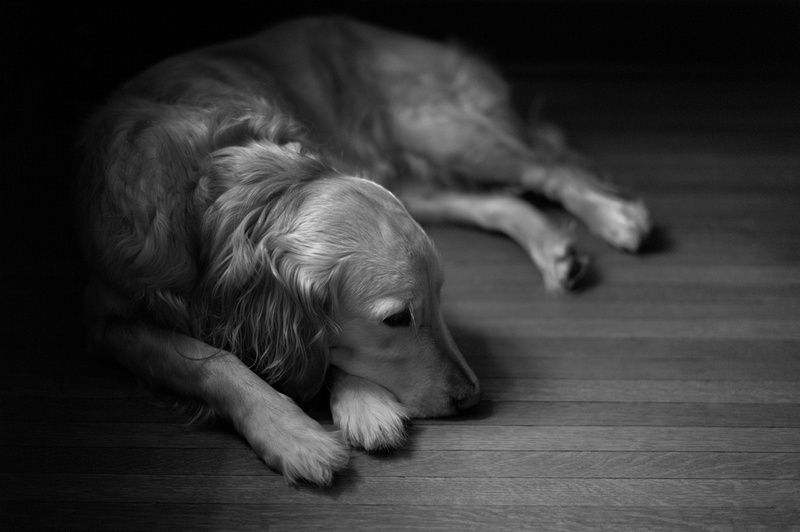
↑Leica Monochrom and Leica 50mm Summilux ASPH @ f/1.4, ISO 2000.
______________________
–
I finally had an opportunity to evaluate a Monochrom. I can’t say I was surprised with the output, as it delivered what I expected: the goodness of the CCD sensor found in the M9 (with more “bite”) and the ability to shoot at high ISO. Of course, all of this goodness comes in only one flavour: B&W.
The other thing I expected and observed was that the output is not like B&W film. It really is different — not better or worse, just different.
Having said that, there was one surprise with this particular camera:
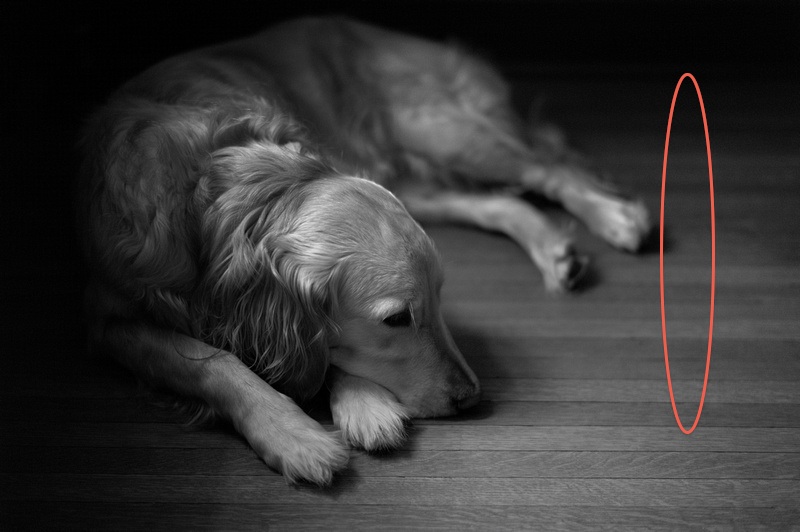
–
Don’t see it?
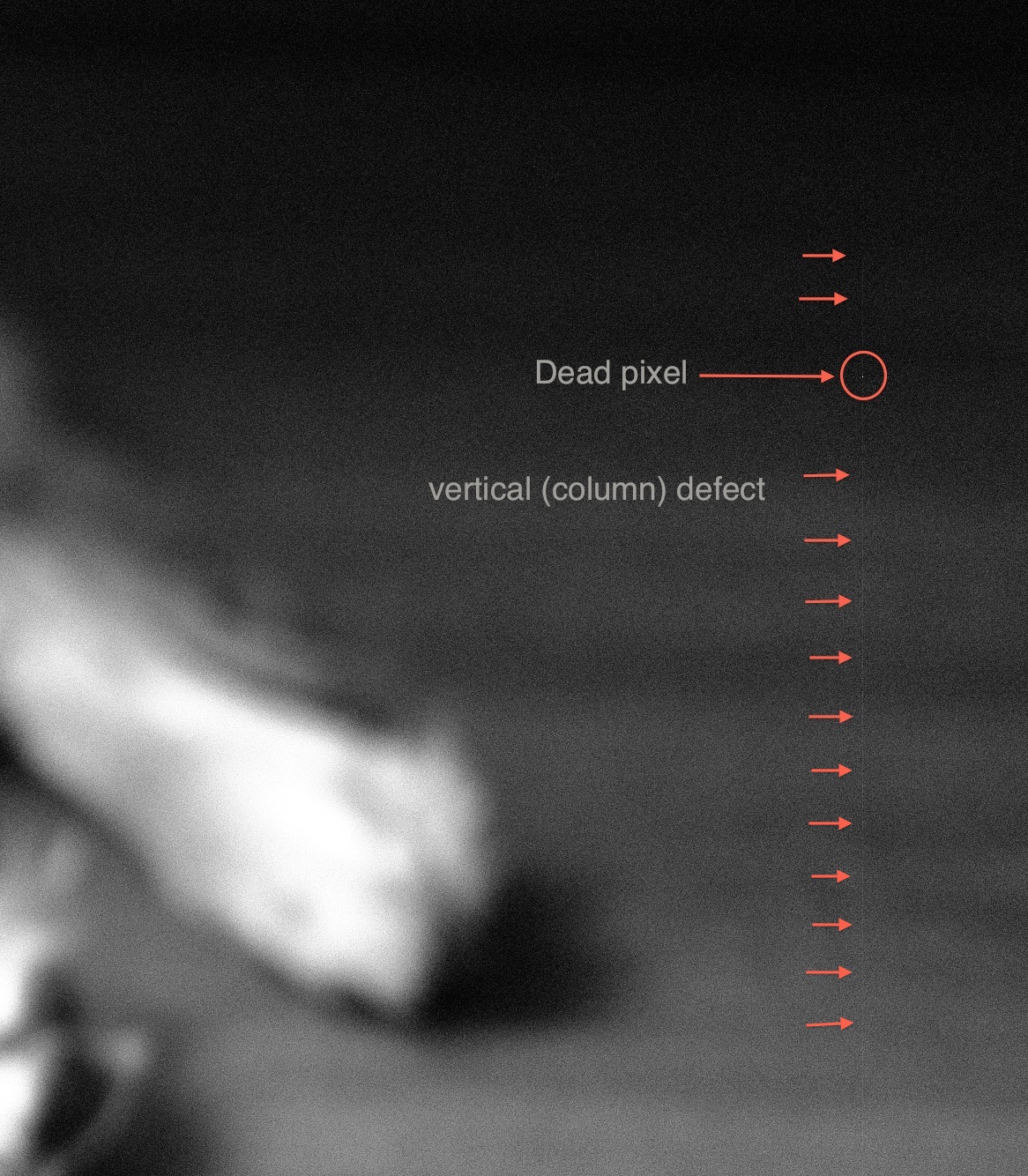
Let’s look a little more closely:
(click on the image to view at MAXIMUM size and sharpness)
–
That’s a dead pixel on the sensor with an associated column defect. It won’t show up in web-size images but will show up on large prints.
Ouch.
Did I say there was one surprise?
Actually, there was a second:
(please click on the image to view at MAXIMUM size and sharpness)

–
Yes, that’s a second dead pixel.
The camera is currently in transit, back to Leica.
—Peter.
–
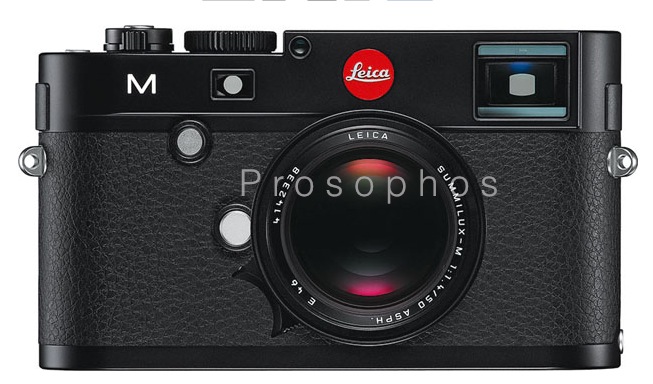
I’m posting this now because I’ve had a number of people email me today asking my opinion of the sample images provided in Ming Thein’s review of the new Leica M (240). Thus far, I’ve been responding to the questions individually, but given my previous comments about the whole CCD vs. CMOS issue I thought I should at least go on written record on this site.
First of all, full credit should go to Ming for posting (as always) a well-written and polished review. If you haven’t previously checked out his website, you should.
Now, about the images.
These are the first set of images coming from the M(240) that I actually like. I don’t know whether early versions of this camera (with early firmware) lacked a certain je ne sais quoi in the files, but either way Leica should take note for future product launches: call Mr. Thein first to generate your sample image gallery.
Finally, the dynamic range looks to have expanded relative to the M9, making for very “rich” files. All good stuff. Still to be sorted out are colour issues and banding (seen in some other reviews) at higher ISO values.
In any case, it looks like things are moving in the right direction.
—Peter.
Do you have a vintage Leica lens or camera and are interested in finding out its age?
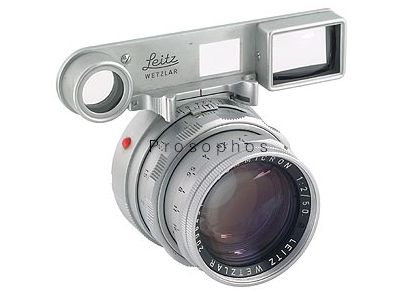
This French site allows you to enter the serial number of your item and it will provide you with the date it was manufactured.
I’ve found it useful over the years.
—Peter.
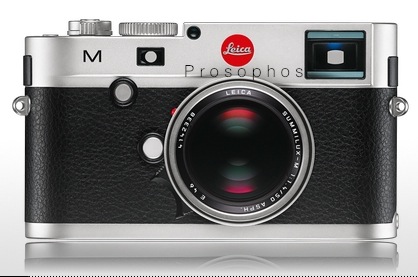
So by now everybody knows Leica released more official photos taken with the upcoming M (240). I write “more” because they had previously released sample images on their website.
Looking at the new sample images, it seems that what I wrote months ago still applies:
I see people are being careful — as I have been up until now — to not draw any premature conclusions about the new M‘s image quality. Essentially, many are pointing out that the newly-released images, as images, are not very inspiring and this, in turn, may be adversely biasing perceptions of image quality.
Yet when I look at M9 (or M8) images, even at web sizes, they have a crispness and vitality to them that the new sample images from the M (240) seem to lack.
This is undeniable.
—Peter.
To all the naysayers:
I’m sticking with Leica rangefinders for 100% of my photography.
In the meantime, I’ll be eating this.
🙂
—Peter.
Focus is on the letter “O” of the word “SOLEIL”.
Shot handheld, wide open, at f/2.8.
The overall scene:

–
100% crop from above:

↑Pentax 645D and Pentax 150mm f/2.8 @ 2.8 (100% crop).
 Prosophos