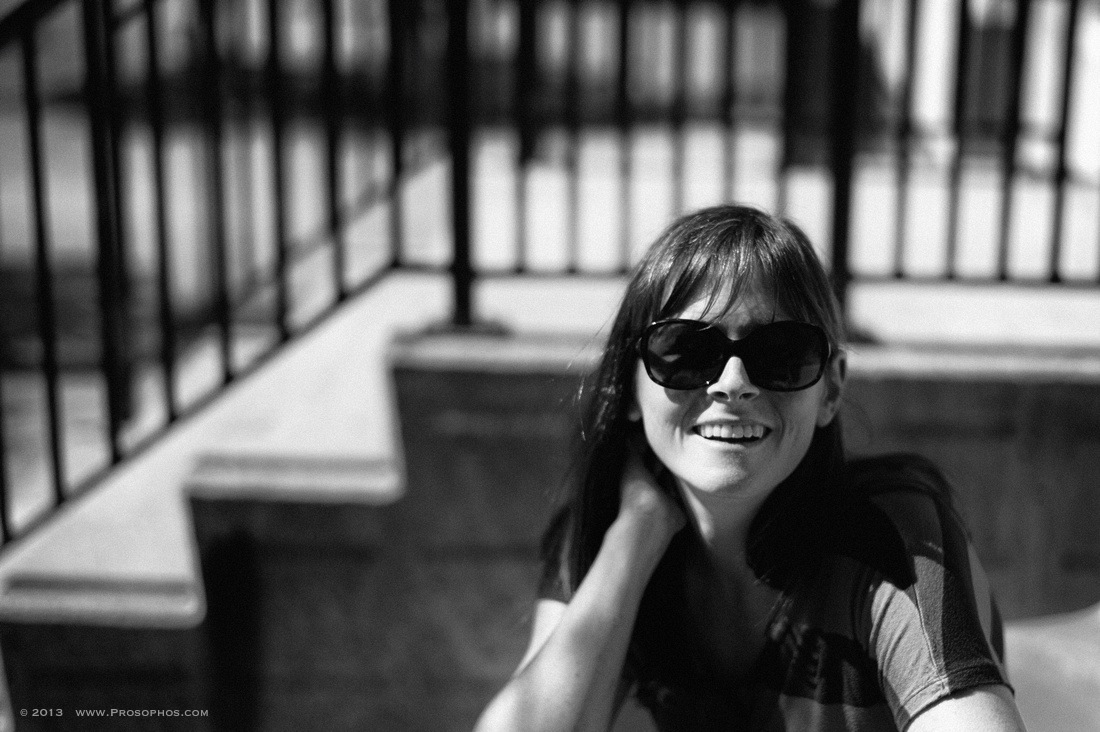
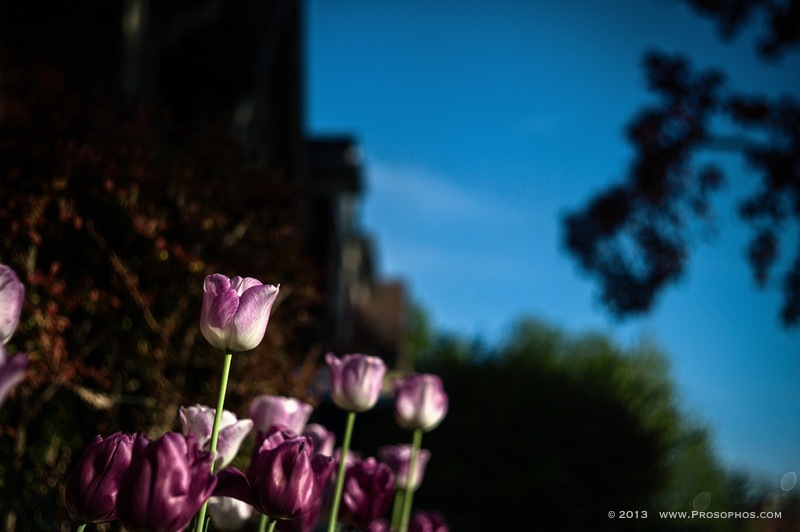
The composition here works on a few levels (literally and figuratively).
I’ll leave it up to you to figure out why.
(please click on the image to view at MAXIMUM size and sharpness)
↑Leica M9 and Leica 50mm Summilux ASPH @ f/1.4.
–
The newly released Leica X Vario has “it”.
What’s “it”?
…Image quality.
This camera has image quality in spades. All of the sample photos I’ve seen just ooze micro-contrast, sharpness, jaw-dropping colour, etc.
The Leica M8 had”it”.
The Leica M9 had “it”.
Heck, the Sony RX1 has “it”.
The Leica M240 will never have “it” (sorry, I couldn’t resist).
Am I tempted to get this camera?
Surprisingly, yes.
Will I get this camera?
No.
All the documented shortcomings — slow zoom lens, slow auto focus, no built-in viewfinder (forget the price for now, I mean, this is Leica so you know what you’re in for) — ultimately conspire against this camera, at least for my kind of shooting. I’m too addicted to the “decisive moment” and the rapidity of rangefinder shooting.
But, man, have you seen the sample images? The colour?
Wow.
—Peter.
↑Leica M3, Kodak Portra 400 NC, and Leica 50mm Summilux ASPH @ f/1.4.
–
At least, on Prosophos.com.
Inspired by former-student-turned-film-processing-Master, Mark Ewanchuk (he’s even developing colour film at home — check out Mark’s guide for developing colour film).
Having said that, several “errors” were committed in the making of this image:
Still, you can’t help but be amazed at how forgiving, and beautiful, film can be.
A lovely photographic medium for the lovely people in your life.
—Peter.
I just found out my Hide and Seek image was stolen by this other blog. No written request for permission, no compensation, no… nothing.
I know what I want to do, but I’d appreciate any advice from you, the loyal visitors of my site (unless you’re the one who stole my image :)).
[UPDATE: I’ve just left a comment on the other site requesting that my image be removed.]
[UPDATE #2: The image has now been removed.]
—Peter.
Recently, the trend amongst some Leica shooters has been to purchase vintage lenses and mount them on modern digital camera bodies.
There’s no doubt about the appeal of many of these old Leica lenses: they offer an alternative visual fingerprint, are more compact, and may be had at a low purchase price as compared to their modern counterparts.
Given all this, why did I “buck the trend” and return the 1937 50mm Summar Collapsible f/2 I had in my possession last week, after only 24 hrs of use?
Because there’s always a trade-off.
In the case of the 50mm Summar, the problem is its jarring bokeh:
–
More and more these days, I seek out lenses that help me to tell my story, not ones that (unpredictably) impose their own.
In the examples above, the lens is interfering with the visual narrative by drawing attention away from the (intended) subjects and onto its vertiginous background blur.
Admittedly, when conditions are right, the 50mm Summar performs acceptably — perhaps even admirably:
↑All images: Leica M9 and Leitz (Leica) 50mm Summar Collapsible f/2 (1937).
–
Even when this old 50mm Summar exhibits relatively tame bokeh, when I compare other aspects of its performance (including microcontrast) to, say, my 50mm Summilux ASPH, there’s just no contest.
—Peter.
__________
Back in September 2012, on the day Sony announced the revolutionary RX1, I weighed in with my opinion and made a prediction concerning its image quality. Of course, I was as uninformed as anybody else, but I went on record based on a hunch.
Months and months later, after analysing countless images produced with this camera, I can safely remark that the RX1 produces the best image quality of any “full frame” camera I’ve seen. Yes, that includes any full-sized and conventioanl DSLR, and even my beloved Leica M9.
And yes, the RX1 sports a CMOS sensor. Sony gets full credit for taking this CCD diehard and making him “see the light”.
The fact that this camera is also tiny is a testament to the technical prowess of Sony‘s engineers.
Putting aside size considerations, if the new Leica M(240) sported this Sony sensor, I’d be all over it in a heartbeat. I’d like to be able to use my Noctilux 50mm f/0.95 with this sort of sensor, and I’d accept a larger-than-RX1 camera if I could do that. But in this brave new world of lenses and sensors being customized for each other (and where both, ultimately, are destined to be disposable), it remains to be seen whether any manufacturer other than Leica would, in the future, bother optimising a sensor for Leica M lenses (yes, I know Ricoh did it with the Ricoh GXR with A12 M Module, but it was in the context of a small APS-C sensor).
I’ll tell you one thing though, I’m very tempted to pick up the RX1. What Sony and Zeiss (let’s give credit to the lens designers too) have accomplished with respect to image quality is simply inspiring: the dynamic range, the sharpness, the micro and macro contrast… ohhh!
(I write this from the perspective of a photographer, not a techno-geek.)
I realise the RX1 is not a rangefinder, and thus cannot mesh with my brain the way rangefinders do, but I really want to reward Sony (and Zeiss) for what they’ve done. Who knows, maybe I’ll be rewarded too.
Suffice it to say, I know Sony has a full frame interchangeable camera in the works.
It’s only a matter of time.
Hmmm…
—Peter.
Last year, I abandoned Apple‘s Aperture after it crashed while I was editing a client’s images. I couldn’t restart it no matter what I tried and I spent the better part of a day trying to make it work to no avail. As a last ditch effort, I installed the copy of Adobe‘s Lightroom that shipped with my Leica M9 and it worked like a charm. Despite some of the operational differences I had to get accustomed to, I haven’t looked back.
Well, today while evaluating Lightroom‘s slideshow abilities for a client’s needs, I realized that there is only one image transition feature available. Besides being limiting, it’s boring too because all it does is transition from one image to another in a static fashion (I guess they’re not lying when they refer to it as a slideshow — it’s simply just that).
So, off I want to the App Store to find the latest copy of Aperture (CAN$79.99) and — sure enough — it was there. However, my iMac‘s older operating system didn’t support it! I had to update the OS to Mountain Lion (CAN$19.99) which took me a few hours (it’s over 4GB in size and then there’s the installation time on top of that).
Don’t you just love computers?
When all was said and done, however, my beloved Aperture (with all its enhance slideshow features!) was back.
And, it’s working perfectly with my Nik plug-ins. As an added bonus, the new OS runs quickly despite my aged iMac. Finally, the enhanced features Mountain Lion brings to the desktop are a welcome addition.
The only thing I have to get used to is the “opposite direction” mouse scrolling for navigating page content.
—Peter.
–
I continue to be underwhelmed with M(240) images.
[See: M240: Final Verdict.]
[See: M9, M(240), DXO… and smoke and mirrors.]
I know, I know, the shutter is quieter, and the buffer is larger, and the LCD is better than what we had with the M8/M9/Monochrom.
But… who cares, if the images all look like Canikon… sorry, like Canikoleica?
Oh yes, I forget, we have to wait for updated firmware, for the correct raw converter “profiles”, for people to get used to working with the new files, etc. The problem I have with these sorts of statements, and other statements from many M owners, is that it all sounds like mass rationalization.
Yes, the new “box” is shinier, the new box is newer.
But… I prefer to let the images do the talking. So far, they are inferior to anything I’ve seen out of the M9 or M8 (not to mention the Monochrom).
Sorry, but I’m calling it as I’m seeing it.
Perhaps my long-held view that CCD has something that CMOS lacks is simplistic.
But it appears to summarize things nicely.
—Peter.
—
If you haven’t already done so, please consider signing my open letter to Leica.
___
Related posts:

–
This is meant to be lighthearted — and instructive 🙂 …Enjoy!
—Peter.
________________
–
–
–
This was actually taken last month, when we were technically still in winter. It felt like spring.
Since then, our actual spring has been awful. It’s been raining for days on end, and over the last 24 hrs we’ve been pelted by ice pellets. Outside, it’s all black and white.
So today, I’m focusing on (happy) colours.
—Peter.
[Incidentally, the bokeh of the 90/2 APO is really something special.]
↑Leica M9 and Leica 90mm Summicron @ f/2.
↑Today, this site celebrates a 2nd birthday!
_____
–
Thank you all for your contributions here each and every day!
I’ll try to keep posting an image a day, for as long as I’m able, but Prosophos.com is entering the terrible twos so, who knows? 🙂
—Peter.
–
–
–
I seldom engage in street photography, because moments like this are few and far between.
However, if one is able to capture an instance like this — a moment of serendipity — and manage to frame it in a nice way, it’s a euphoric experience.
—Peter.
↑Leica Monochrom and Leica 28mm Elmarit ASPH @ f/4.