My “Open Letter to Leica” … 325 signatures, so far.

Inspiration, Q&A, Teaching point

I’d to like see an updated CCD sensor in future Leica M because I believe CCD is superior to CMOS with respect to image rendition at base ISO.

Do you agree?

Please consider signing my Open Letter to Leica.

—Peter.

(Edit: 339 signatures so far… )

Prosophos Open Letter to Leica

___

Related posts:

Hockey Girl, in action.

Hockey, Inspiration, Leica 75mm Summarit f/2.5, Leica M9(P)/M-E (CCD Lives!), Portrait, Q&A, Sports, Street, Teaching point

This was photographed through the arena glass and under poor lighting, using the Leica M9/M-E and 75mm Summarit (see my review here).  Not exactly “sports gear” but good enough to get this shot of my daughter.

Technical considerations:

  • f/2.5 | 1/350 sec | ISO 1250
  • The DNG file was “pushed” two stops in LR for an “effective” ISO of 5000.
  • White balance was manually set during post-processing.

—Peter.

Hockey Girl

Recent insight: M8 vs. M9 for B&W, and the negative “Efex” of Silver Efex Pro.

Inspiration, Teaching point

Conventional internet wisdom states that the Leica M8 is a better camera than the M9 for B&W file conversion — True or False?

The answer:  True… but barely.

My old B&W conversions with the M8 were more pleasing than the ones I subsequently obtained with my M9/M-E, but now I realize that the less pleasing M9/M-E conversions were mostly secondary to my use of Silver Efex Pro.  Lately I’ve been doing straight de-saturation of my M9/M-E files, and they look more natural and almost as good as my M8 files.  The M8 still wins because of its greater IR sensitivity — this allows for slightly better B&W output.

For all practical purposes, however, the M8 and M9 sensors behave almost identically (for both B&W and colour).  This shouldn’t be too surprising, given how the sensor in the latter evolved from the former.

Which makes me want to re-state something I’ve been saying for years:  the M8 was the most under-appreciated and underestimated digital camera ever.

If there’s anyone from the original Kodak KAF-10500 (APS-H 10.3-megapixel) CCD sensor development team reading this, I sincerely thank you for your fine work.

—Peter.

[Upcoming Insight:  Film vs. Digital].

Photography truths/rules I’ve learned over the years.

Inspiration, Teaching point
  1. The 35mm format is the ideal format for recording Life’s Little Moments.
  2. Rangefinders are the ideal camera platform for recording Life’s Little Moments.
  3. Photography is the art of exclusion (painting is the art of inclusion).
  4. Newer generation lenses perform better optically than old classics.
  5. Buy the gear you really want.  Do that once.
  6. The bond between you and your camera is more important than what the spec sheet suggests.
  7. When it comes to cameras and lenses, less is more.
  8. Internet photography fora, beyond the first year of participation, are generally a waste of time.
  9. You only get better with practice.
  10. CCD rules; Film rules CCD…  both are dying.
  11. Use prime lenses.  They lead to better photographs.
  12. Robert Capa was correct: “If your photographs aren’t good enough, you’re not close enough.
  13. To increase your chances of success, shoot in Manual mode.
  14. Focus with manual lenses.  This too will increase your chances of success.
  15. The Rule of Thirds is a pretty good rule.
  16. One good idea is better than 100 frames per second.
  17. Have a healthy respect for those making a living via photography.  It’s difficult to do.
  18. Record video of your loved ones as well… you’ll regret it if you don’t.
  19. Photography is the most democratic form of art… all of us are capable of creating a masterpiece.
  20. Never bet against Leica.

—Peter.

Zeiss 35mm f/1.4 Distagon T* ZM.

Inspiration, Q&A, Teaching point

Zeiss 35mm f_1.4 ZM

It comes in black and silver, of course.

A very intriguing lens.

If the Zeiss 35mm f/1.4 Distagon T* ZM truly surpasses the performance of the Leica 35mm Summilux FLE, it will be impressive.  Even if the published Zeiss MTF graphs are misleading and this lens “only” comes close to the FLE, it will still be impressive, given it’s 50% the price of the Leica equivalent.

However, it’s larger than the FLE (but has less distortion).

Looking at the few sample images on the ‘net, it renders very similarly to my 50 Summilux ASPH and the Zeiss 21mm f/2.8 ZM (two lenses I love), at least with respect to the way it draws the (in-focus) subject.  Bokeh is not the same.

Did I mention I’m intrigued?

—Peter.


A night on the town, Part 2.

2014, Favourite, Inspiration, Leica 50mm Summilux ASPH f/1.4, Leica M9(P)/M-E (CCD Lives!), Portrait, Street, Teaching point

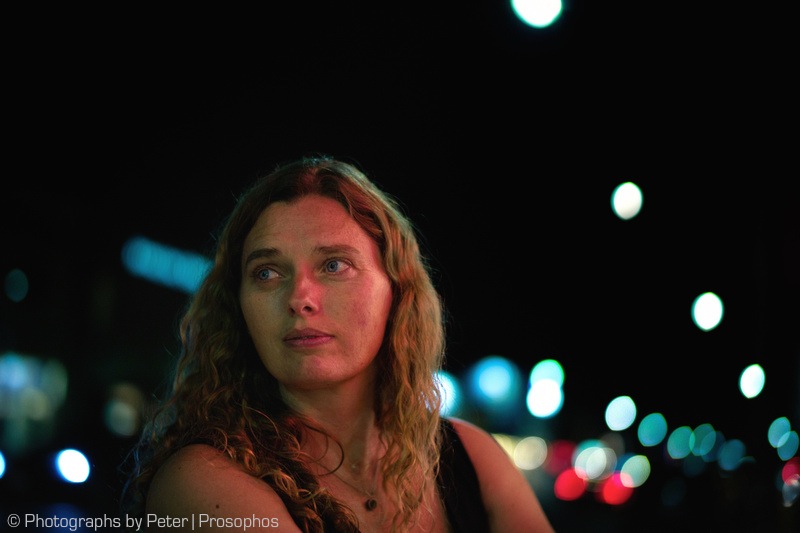
The reddish skin rendering may make you believe this was shot with a Leica M240, but she was in fact sitting in front of a large illuminated red sign.

So now I know how to achieve the M240 look, with respect to skin tones anyway.

However, I don’t know how to produce the muddy rendering of the CMOS-crippled Leica M240, as all I can get out of my Leica M9/M-E are those lovely CCD crisp files with superior tonality and colour reproduction, at base ISO.

For those of you who haven’t already done so, perhaps you may be interested in signing My Open Letter to Leica.

(over 280 signatures so far…)

—Peter.

A night on the town, Part 2

“Medium-format Quality” 35mm camera systems? Not really.

Inspiration, Q&A, Teaching point

Not too long ago, 36MP digital sensors were introduced into 35mm cameras.  Not too long after that, many photographers (including some well respected ones) proclaimed that these pixel-rich 35mm cameras could produce “medium-format quality” images.

I don’t subscribe to this view, at least when it comes to portrait photography.

If you examine the images I’ve taken with the Mamiya RZ67 (6 x 7 medium format film), you will note that they look more “true to life” as compared to images from 35mm cameras (digital or film).   The tonal transitions are subtler, the separation of subject matter from the background is more natural, and the overall rendering is somehow “more grand” than 35mm camera images (like these ones from the Nikon D800E + Zeiss Otus – a supposed “medium-format-quality” producing combination).

Even the Pentax 645D, a camera that possesses a digital sensor that is only a little bit larger than the one in the D800E, somehow produces “grander” images (but not as “grand” or true-to-life as the larger 6 x 7 film “sensor” in the Mamiya RZ67).

As I’ve written before, sensor size matters:
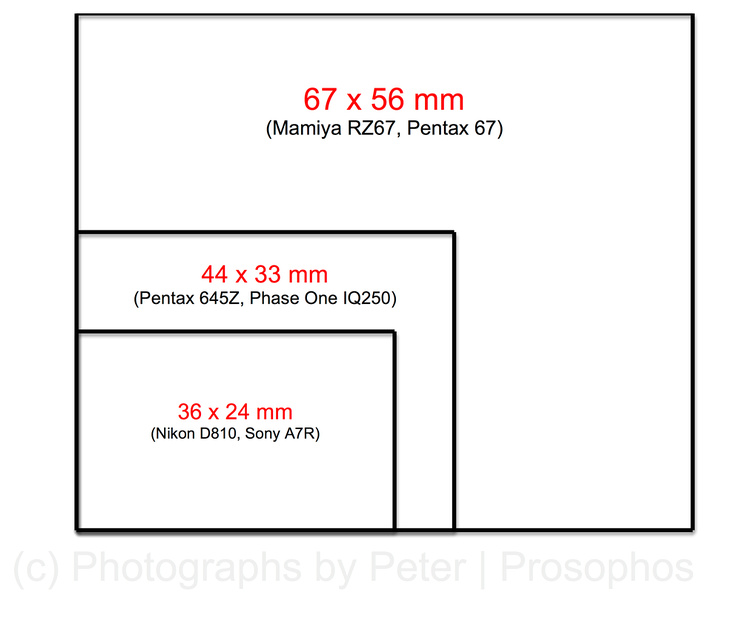
 

Sensor Size Comparison - Photographs by Peter Prosophos

So, if you’re looking for a medium format look (at least with respect to portraiture), you will not get it from a Nikon D800E/D810, or Sony A7R, etc.

If you’re looking for medium format resolution, that’s another story…

—Peter.