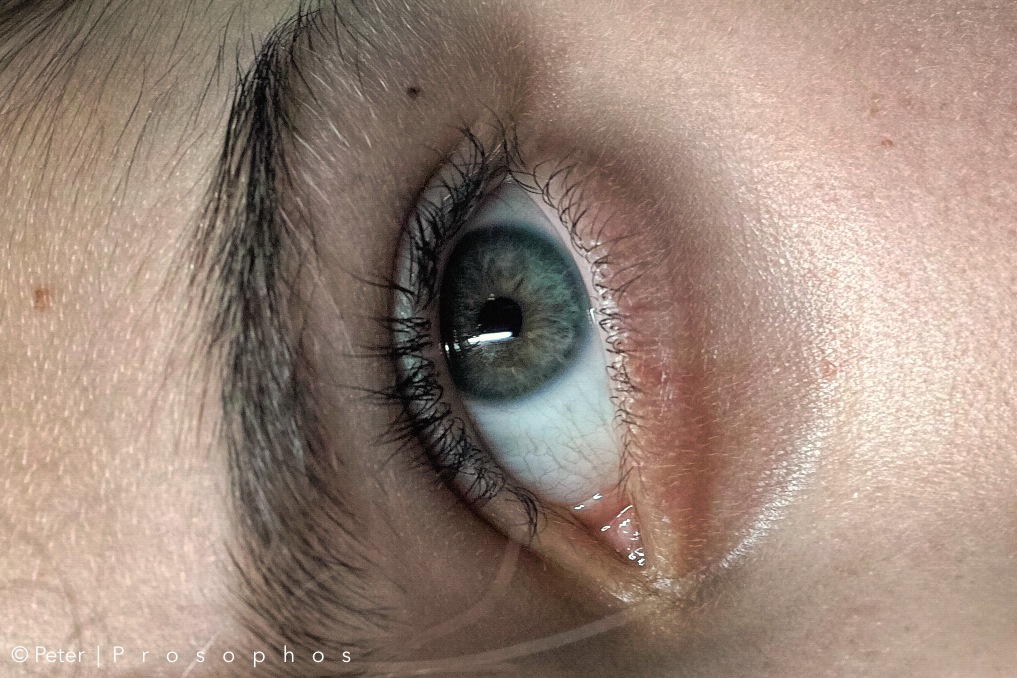
Just your typical Sunday afternoon in Toronto (in February).
This shot required the removal of my gloves… and I paid for it (I was not made for Canadian winters).
But it was worth it.
—Peter.


Just your typical Sunday afternoon in Toronto (in February).
This shot required the removal of my gloves… and I paid for it (I was not made for Canadian winters).
But it was worth it.
—Peter.
… when I started a thread about My Open Letter to Leica in the Leica User Forum.
And yes, I violated Rule #8 of My Photography Truths again.
On a related note, let’s re-visit this previous post (just for fun).
—Peter.
I’m slowly refining my processing of Sigma Merrill files.
—Peter.

–
The world’s longest-running (and most intense) Open Letter to Leica has reached a milestone:
It’s true, 400 photographers, enthusiasts, and artists agree: we love CCD!
Specifically, we believe that the CCD sensor — at base ISO — offers superior image quality.
We also believe that an updated CCD sensor in a future Leica M camera would be in keeping with Leica‘s philosophy of providing out-of-the-mainstream elegant yet powerful photographic tools for discerning photographers.
So help keep the pursuit of high image quality alive by allowing CCD to develop and thrive.
Keep the momentum going! Encourage others to PLEASE SIGN THIS LETTER.
—Peter.

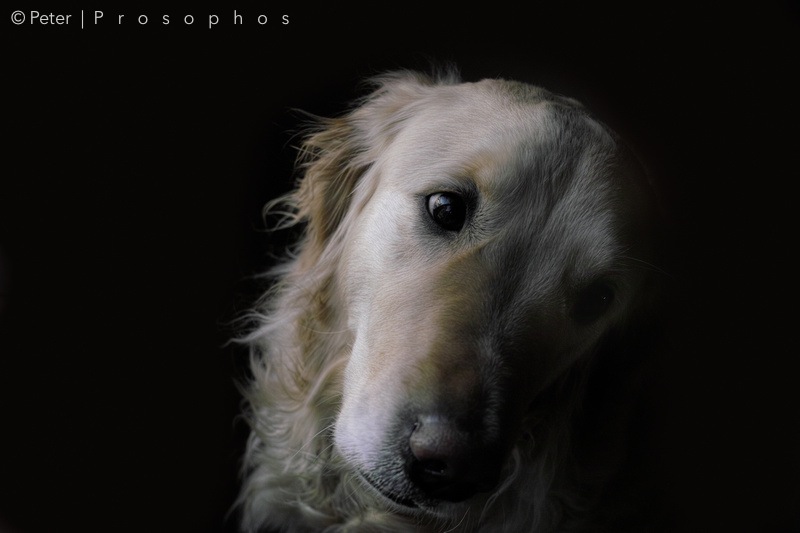
I’m quickly learning how to process Sigma DP3 Merrill files.
For example, I’m constantly resisting the temptation to apply sharpening, since the images have an abundance of sharpness and micro-contrast (two qualities that are not necessarily flattering for portraits).
Yet, this particular image proves one thing: it is possible to post-process DP3 files to produce a sharp and smooth portrait.
Oh, and the tonality possible with the Foveon sensor… wow.
—Peter.

↑ Sigma DP3 Merrrill: 1/15 sec (hand-held, but braced), f/2.8, ISO 200.
This literally represents Test Shot #1 from my Sigma DP3 Merrill.
It arrived yesterday.
I charged the battery up, and fired some shots without even glancing at the manual or camera settings.
I’ve already decided whether I like the DP3.
(I do)
—Peter.

Cozy and hidden from the cold.
On another note, if there’s a better way to digitally record such Life’s Little Moments, then I’d like to know.
As it stands, the Kodak CCD inside the Leica M9/M-E remains my sensor of choice.
Won’t you please sign My Open Letter to Leica, if you haven’t already done so?
—Peter.

This is an example of the image output from the original Sigma DP series camera, the DP1:
(28mm equiv, F4 lens)

–
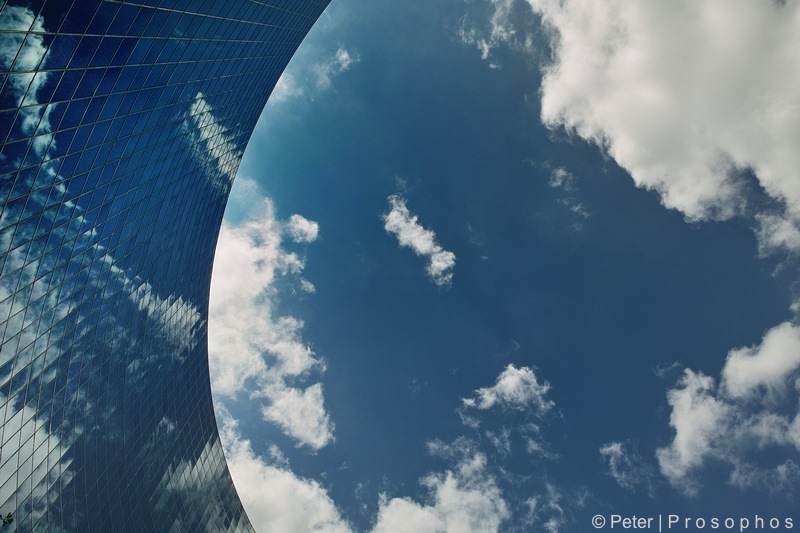
The DP1 was an excruciatingly slow compact camera, but it helped me capture one of my favourite images, Planet Earth:
–
The camera and software from Sigma were both challenged (and continue to be), so much so that I never purchased any of the subsequent DP offerings. Still, the image quality from the Fovean sensor has always called out to me, like a Sirens’ song
The Siren that’s been singing the sweetest song over the past 18 months: the DP3.
–Peter.
And the children were tracking Santa.
—Peter.

—
Technical Commentary:
The sun was quickly setting as this scene was unfolding and the the vestigial rays of light coming in through the window were creating a pink, gold, and red speckled glow on the wall behind our trio of Santa trackers. The glow of the smartphone screen also helped set the mood.
Despite the fact that I use M9/M-E and M8 cameras, I’ve resisted applying noise reduction to my images for years.
I’ll take noise over loss of detail and texture any day.
On a related note, I’m happy that Leica doesn’t force in-camera noise reduction on us either.
—Peter.
Right now, My Open Letter to Leica has garnered 370 signatures from photographers like you who see and appreciate the wonderful qualities of CCD sensors.
Leica‘s announcement of ongoing support of the current CCD sensor has been welcomed by many in the Leica community.
However, if you are a fan of the “magic” of CCD, please join me in asking Leica to also introduce an updated CCD sensor in a future M camera.
Thank you,
—Peter.
I have two observations about the use of flash and zone focusing, as they pertain to rangefinder photography:
—Peter.

I’ve studied many images created with this lens — on the Leica M240, M9/M-E, and M8… and even on non-Leica cameras.
The verdict:
This is an optically astounding lens that, in the right hands, is capable of impressive results in combination with any camera (contrary to popular belief, the results are not only evident in large prints of images produced with high megapixel cameras).
It’s all the more impressive when you consider how small this lens is. It’s the combination of optical excellence and compact size that is the hallmark of the Leica ethos.
—Peter.
In 2011, I wrote an article called:
In 2012, I wrote a follow-up article called:
I wrote them because — back then — many DSLR users considered rangefinders too “slow” for photographing action, even though I (along with several others) had been creating images that consistently proved otherwise.
To this day, I prefer rangefinders over DSLRs for photographing sports.
Today, I decided to take my Leica M8 to photograph my daughter’s hockey game. Of course, given everything I’ve written above, I knew I would get some keepers… provided I could get close enough to the action.
I did.
I’ll be posting a few of the images over the next few days.
I hope you find them of interest.
—Peter.
Technical consideration:
This was photographed at ISO 640 and “pushed” in LR for an effective ISO of 2500.
—Peter.
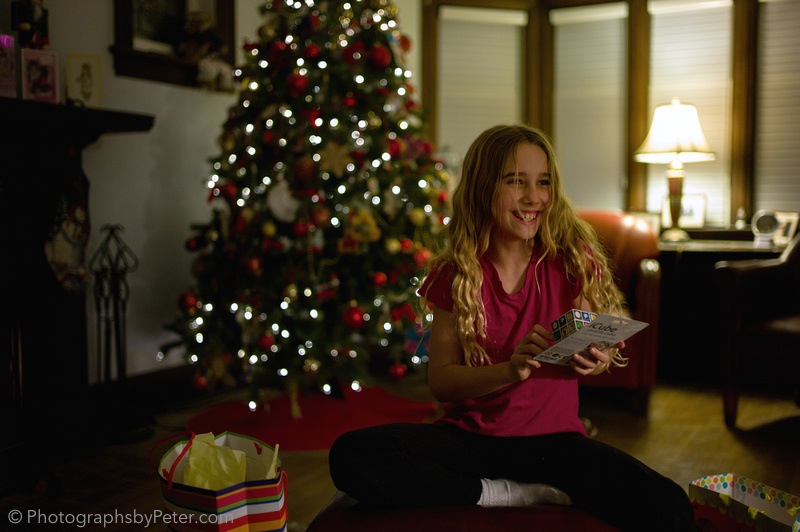

I was casually photographing my daughter unwrapping her birthday gifts this evening in our (very) dark living room, in front of the Christmas tree. I wasn’t expecting much (photographically speaking).
However, every single frame turned out to be wonderful.
I previously purchased and used the Sony A7S, Leica M240, Nikon Df, Sony RX1R, and Nikon D800E because I thought I would need them in situations like this. However, my Leica M-E consistently produces images that surpass any CMOS camera — even in low light.
Thank goodness Leica has committed to supporting the M9/M-E sensor.
Please, Leica, please… consider placing an updated CCD sensor in a future M camera.
—Peter.