Her last gift to her 2 year old daughter.
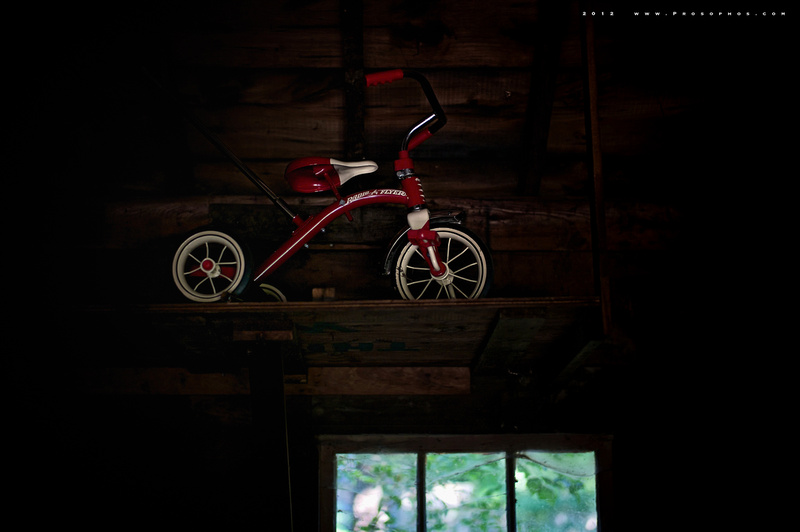
↑Leica M9 and Leica 50mm Summilux ASPH @ f/1.4.

Her last gift to her 2 year old daughter.
↑Leica M9 and Leica 50mm Summilux ASPH @ f/1.4.
[Note: I don’t accept advertising on this site. This is therefore a personal endorsement, and not a paid advertisement.]
_

–
Popflash is a California-based authorized dealer of camera equipment that is owned and operated by Tony Rose. I have dealt with Tony for many years now for most of my photographic purchases and felt compelled to write about his business.
Why?
Simply put, the service at Popflash is unparalleled. Whether it’s responding to questions or requests via e-mail or over the telephone, the Popflash team is unfailingly friendly, knowledgeable, and efficient. In particular, I’d like to recognize a specific member of the Popflash team, Alex, who is responsible for the day-to-day fielding of questions and orders.
And, despite the great service, which normally comes at a price premium in most businesses, the prices at Popflash are very competitive. In fact, I’ve gotten some of my best deals on Leica equipment there.
Last week, for example, I was informed that Popflash was expecting delivery of a lens I had been seeking for some time. This particular lens has been in high demand and in short supply, so I promptly placed an order for it.
Sometime later, well after placing the order, Popflash sent me an email informing me they were in a position to offer a discount on the lens and that they would be applying that discount to my order.
Can you believe it? They could have easily sold this very popular lens at the retail price but they chose instead to pass on their own savings to a customer.
Knowing them, I can’t say I’m surprised, though I’m always impressed.
Give Popflash a try, they deserve your business.
—Peter.
And the red-orange glow.

↑Leica M9 and Leica 50mm Summilux ASPH @ f/1.4.

It is rumoured that the M10 [Edit: M (Type 240)] will be announced by Leica on Monday.
Supposedly, it will sport a CMOS sensor, which will allow for high ISO and video capabilities. If true, I’m sure it’ll be a hit.
However, I can’t help but feel a little sad about the demise of the CCD sensor, and its unique rendering. To this day, I believe digital images captured at base ISO with CCD sensors look different — and more appealing — than images from CMOS sensors.
It’s only my opinion of course.
If CMOS is part of Leica’s future, then I’m sure the venerable German company will have figured out a way to retain the fabled “Leica look”. But I’m equally sure that the rendering of an M10 [Edit: M (Type 240)] with CMOS will be different from the M9/M8 CCD experience.
Whether better or worse is open to debate, but it will be different.
So — if you’re like me and you value the look of CCD images — you better grab one of those heavily discounted brand new M9 cameras, while you still can.
—Peter.
Taken yesterday.
Who says you can’t get timely and reliable B&W film processing these days?… do it yourself ;).

↑Leica M3, Kodak Tri-X 400, and Leica 50mm Summilux ASPH @ f/1.4.

Today I noticed an unusual spike in traffic to this site, mainly because of increased interest in my write-up of the Konica Hexanon 60/1.2.
I was a little confused as to why an article that I posted almost a year ago was suddenly popular again (normally it’s my write-up of the Voigtländer Nokton 40/1.4 that gets the most attention). Then I visited the website of my good friend Steve Huff. Steve is about to host a photo cruise and he’s managed to secure a copy of the Konica 60/1.2 to use during his time away. One mention of this lens on his site and suddenly everybody is interested in it (that’s the Steve Huff Effect :)).
It’ll be interesting to see how well the Konica Hexanon 60/1.2 fares mounted on the Fuji X-Pro 1 that Steve is taking with him.
—Peter.

↑Leica M9 and Leica 135mm APO f/3.4 @ f/3.4.
To the soul.
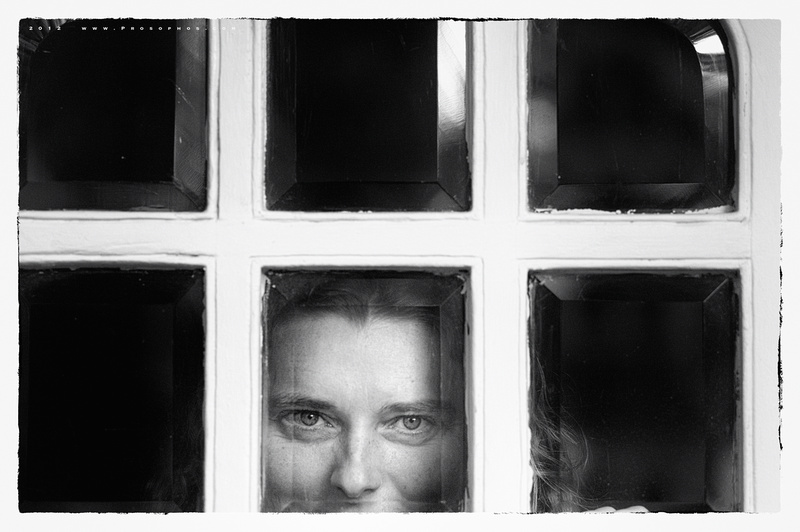
↑Leica M9 and Leica 135mm APO f/3.4 @ f/3.4.

I rarely comment about camera equipment, other than when I post one of my Lens Reports. But, I sometimes make an exception.
Interestingly, the last time I made an exception was for another Sony product (see The Sony NEX-7 — I’ll take a pass for now)… probably because, when it comes to cameras, Sony is doing a great job pushing the proverbial envelop. The major shortcoming of the NEX-7, for somebody like me with legacy lenses, was the cropped sensor. As I wrote back then:
The first manufacturer, other than Leica, who places a 24 x 36 sensor in a mirrorless interchangeable lens camera can count me in as a customer. I have no doubt that at some point, somebody will do it.
Well, what a difference a year makes. The “buzz” this morning is all about the Sony DSC-RX1.
What’s so special about it?
It boasts a new, cutting edge, full frame 24 MP sensor packed into a body not much larger than a large compact.
Simply put: Wow.
And, it sports a fixed (i.e. not interchangeable) Carl Zeiss Sonnar 35mm f/2 lens (think: Fuji X100, but with a full frame sensor).
So, they’re getting closer to the “ideal”. The only thing missing is the “interchangeable lens” part of the equation.
However, it cannot be denied that this camera is revolutionary. The image quality-to-camera size ratio bests any current digital camera. As a feat of engineering, the RX1 deserves all the credit it can get. And, if your preferred focal length is 35mm, it may very well be the only camera you’ll ever need. To be honest, it may very well be the only camera most of us will every need.
Already, however, people are complaining about the price, lack of a built-in optical viewfinder, the lack of weather sealing (think: M9 ;)), etc. But for those of us who already own lenses, this camera brings us one significant step closer to the ideal mirrorless camera.
(Did I previously write to ignore Photokina?… oh, well ;)).
And, besides, the incredibly diminutive size of this camera was likely accomplished precisely because the lens is fixed. Moreover, if the X100 is any indication, having an optimized — designed from-the-ground-up — sensor-lens combination seems to ultimately benefit image quality.
So congratulations Sony. I hope you folks sell a lot of these.
My only other requirement (or, at least, preference) of any interchangeable full frame mirrorless camera, which I never stated in my original NEX-7 post, is that it should function like camera and not a computer. As a photographic tool, it must get out of the way and I shouldn’t have to dive into menus to make changes to the shutter speed, aperture, etc. It’s the one thing Leica has understood all along… I hope this continues.
I really don’t know enough about the RX1 to comment about whether it, too, excels in ergonomics. Unfortunately, Sony has a history of building cameras that, well, don’t operate like cameras.
But I do know enough about the RX1 to give Sony full credit for starting a revolution.
—Peter.

↑Leica M9 and Leica 21mm SE f/3.4 @ f/4.
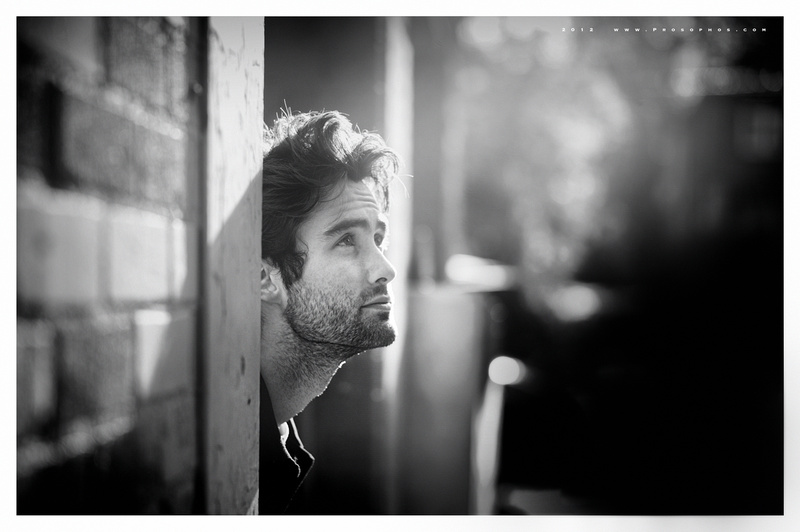
↑Leica M9 and Leica 75mm Summicron @ f/2.

↑Leica M9 and Leica 75mm Summicron @ f/2.
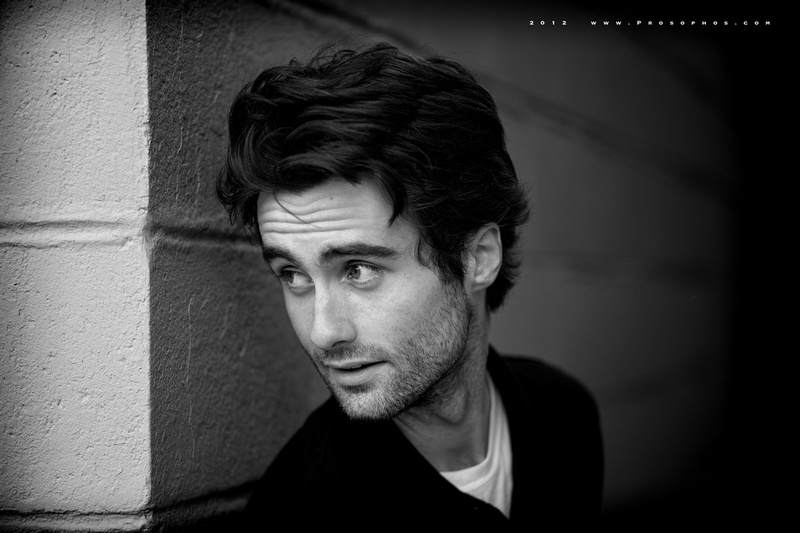
↑Leica M9 and Leica 75mm Summicron @ f/2.
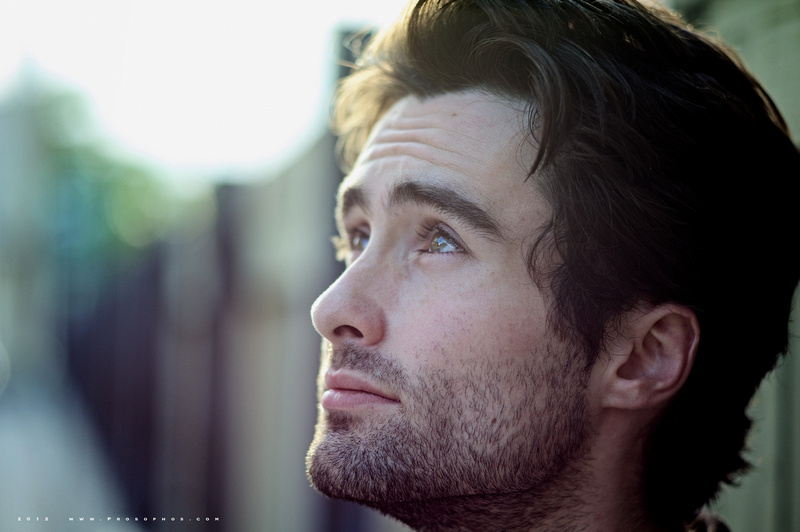
↑Leica M9 and Leica 75mm Summicron @ f/2.
The nuanced colour palette of a cloudy morning at the beach.

↑Leica M9 and Leica 50mm Summilux ASPH @ f/1.4.

↑Leica M9 and Leica 50mm Summilux ASPH @ f/1.4.
–
I’m pleased with this image… the light, the mood.
And — curiously — her profile mirrors the contours of the lighthouse:
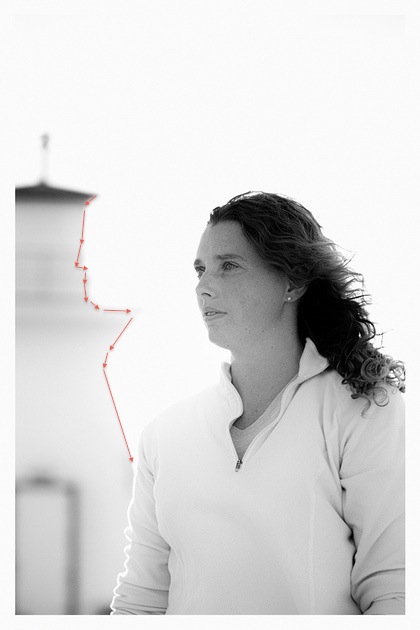
I hadn’t noticed it until my wife pointed it out.
Admittedly, our brains are always seeking to make order of the world around us, but the two main elements in this image — photographically speaking —complete each other. This sort of harmony ultimately resonates with the viewer, whether they know it or not.
—Peter.
Unfortunately, no one can be told what the Matrix is. You have to see it for yourself.
—Morpheus, The Matrix.
Fans of the movie The Matrix will no doubt understand my reference to it in the context of this image.
This is a technically difficult shot, not so much because of the action (I pre-focussed on the plane of her anticipated trajectory), but because of the extremes of light and dark populating this scene… accurately judging the exposure was quite a challenge.
And capturing her form in this most interesting pose — at the moment she entered the slice of space illuminated by a shaft of sunlight — was accomplished with the aid of good timing and a hefty dose of luck.
This photo was chosen as a Leica Fotografie International (LFI) Master Shot.
—Peter.
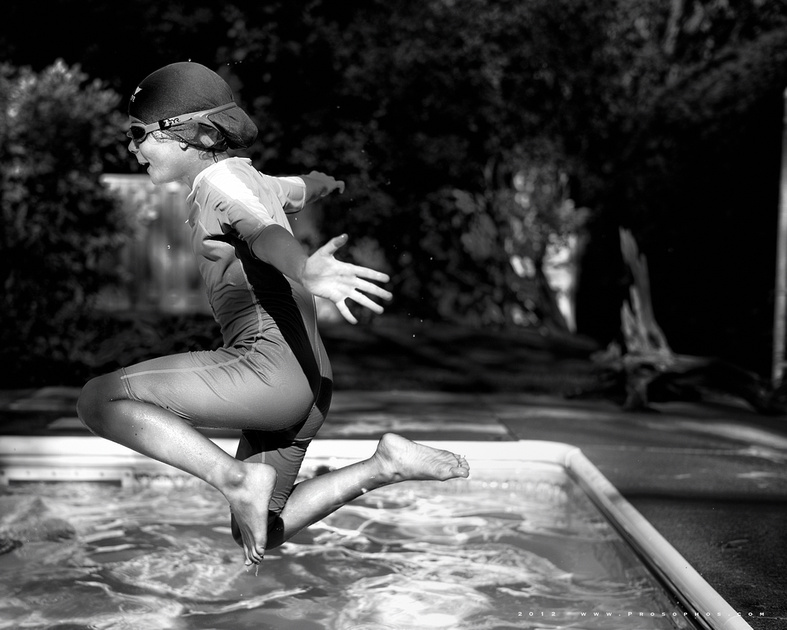
↑Leica M9 and Leica 50mm Summilux ASPH @ f/1.4.
Protect your children ;).

↑Leica M9 and Leica 50mm Summilux ASPH @ f/1.4.
 Prosophos