Test Shot [2]: 28mm Elmarit ASPH.

Inspiration, Leica 28mm Elmarit ASPH f/2.8, Q&A, Teaching point

This is the second test shot (the first is here).

It may seem crazy to conduct “test shots” on well established Leica lenses, but the last lens I tried was front-focusing by several inches.

In this case, everything looks to be okay:

28mm Elmarit ASPH Test Shot 2

↑Leica M9 and Leica 28mm Elmarit ASPH @ f/2.8.

100% central crop of above image:

(please click on the image to view at MAXIMUM size and sharpness)

28mm Elmarit ASPH Test Shot 2 (100% crop)

This 100% magnification clearly demonstrates just how sharp this lens is wide open at f/2.8.

Incredible really.

—Peter.

Test Shot: 28mm Elmarit ASPH.

Inspiration, Leica 28mm Elmarit ASPH f/2.8, Q&A, Street, Teaching point

When I acquired my first rangefinder in late 2007 — the iconic Leica M8 — the two Leica lenses I purchased were the 50mm Summilux ASPH and the 28mm Elmarit ASPH.

Well, at some point along the way, I sold that little 28/2.8.   That was a mistake.

It’s now back in the fold… and I’ve come full circle.

(I was wiser then than I am now.)

—Peter.

28mm Elmarit ASPH

↑Leica M9 and Leica 28mm Elmarit ASPH @ f/2.8.

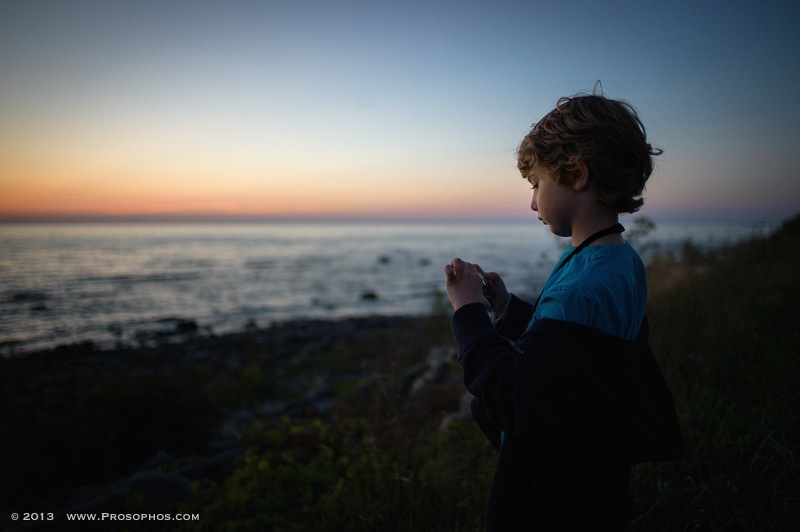
Boy (and the concept of pre-processing).

2013, Barbados, Favourite, Inspiration, Leica 50mm Summilux ASPH f/1.4, Portrait, Q&A, Teaching point

Boy

↑Leica M9 and Leica 50mm Summilux ASPH @ f/1.4.

_______

I’m often asked how I post-process colour in my images.

Well, more often than not, I don’t.  I pre-process (my term).  Let me explain…

Almost all photographers post-process (i.e., make image-enhancing adjustments, after a photograph is taken).  What many novice photographers fail to recognize is the importance of pre-processingPre-processing involves identifying and harnessing natural enhancing elements in a scene, such as lighting, perspective, etc., before an image is taken.

In the case of this image, Boy, the soft light that was present after the sun set was harnessed to achieve a rich palette of colours and tones.  This cannot be achieved in post-processing.

—Peter.

Leica M (240): final verdict.

Inspiration, Q&A, Teaching point

Leica M(240) CMOSIS sensor

↑Leica M(240) CMOS sensor (image courtesy of CMOSIS).

_____

I’ve seen enough images now to finally go out on a limb.

My long-standing suspicions here, here, and in several other posts (too many to cite at this point) have been confirmed:  the new M produces CMOS-like images.

Not a profound statement, I’ll admit.  But true.

What do I mean by CMOS-like?

I mean smoother, more marshmallow-y, more… plastic vs. the crisper/more microcontrast-y CCD rendering from the M9/M-E/MM/M8.  This is not necessarily a bad thing, but it is different.  As expected.

(However, the banding I’m seeing in the early M(240) images is disconcerting.  On a positive note, the files look richer, thanks to an increase in dynamic range.)

Now, in the end, does it really matter?  This film image I posted a few days ago demonstrates that such technical considerations ultimately sub-serve content/emotion so…

No.  None of the above really matters.

But, we all are free to choose our gear as we see fit.  And I’ve made my choice(s).

—Peter.

If you haven’t already done so, please consider signing my open letter to Leica.

Prosophos Open Letter to Leica

___

Related posts:

Featured Photographer: Aaron C. Greenman.

Guest Post, Inspiration

Aaron Greenman - Self Portrait

“…I consider photographs records.”

—Aaron C. Greenman.

__________________________________________

Aaron C. Greenman

__________________________________________

About.

41 yrs old.  Lives in Brussels, Belgium, and has previously lived and worked on four continents.  With a Bachelors of Art in Art and Architectural History from Amherst College, and an earlier career in newspaper journalism, Aaron has always been interested in photography’s unique balance between its technical and artistic sides, and his aesthetic sense is deeply informed by his journalistic training.

Cameras and lenses.

Leica M9 with the following lenses: Leica 24/2.8 Asph, Leica 28/2.0 Asph, Leica Asph, 35/1.4 Asph, Leica 50/1.4 Asph and Leica 90/2.8. Aaron uses the 35mm the vast majority of the time, with a little 50mm every once in a while for better reach or portraits.

What’s important.

“Perhaps because of my respect for the old tenants of journalism, I like living in relative ignorance about the capabilities of the digital darkroom. I do adjust exposure and sometimes levels, but I consider photographs records. My goal is to represent the three ingredients that I consider most important − acuity, color, and grain (the name of my website and, of course, my initials). The common striving for technical perfection I find boring, and it often drains the emotional value from an image.”

Interesting fact.

“I read constantly about both the technical side and artistic aspects of photography, and about my favorite photographers − Sebastião Salgado, Willy Ronis, Marc Riboud, Vivian Maier, among others. That being said, I have a very difficult time describing my own photography, and often find that I’m annoyed by others (over)describing their work. I’m content to let others either see or not see value in it, and interpret it as they see fit.”

__________________________________________

Today, I am very pleased to feature the distinguished work of Mr. Aaron C. Greenman.

Aaron is a passionate photographer whose work is heavily influenced by his previous experience in newspaper journalism and his interest in the graphic arts.  Although he approaches his craft with discipline and dedication, he eschews the quest for technical perfection and heavy post-processing, choosing instead to place paramount importance on witnessing and recording content.   It’s that content, captured spontaneously and without preconceived notions, that both guides and defines his work.

Also, Aaron employs black and white imagery to communicate his vision, to reveal the layers of everyday life, and to highlight the shades of grey embedded in a given moment.

Without further ado, I present several images from Aaron’s body of work.   Please visit acuitycolorgrain to see and learn more.

[Also, his first retrospective may be purchased at acuitycolorgrain (US itunes).]

—Peter.

_

__________________________________________

Images courtesy Aaron C. Greenman.

AcuityColorGrain 001

AcuityColorGrain 002

AcuityColorGrain 003

OLYMPUS DIGITAL CAMERA

AcuityColorGrain 005

AcuityColorGrain 006

OLYMPUS DIGITAL CAMERA

AcuityColorGrain 008

AcuityColorGrain 009

AcuityColorGrain 010

AcuityColorGrain 011

AcuityColorGrain 012

OLYMPUS DIGITAL CAMERA

OLYMPUS DIGITAL CAMERA

My sincere thank you to Mr. Aaron Greenman for providing me with the privilege of sharing his work.

—Peter.

__________________________________________

[Previous Featured Photographers may be found here.]

Moon and Rainbow over Barbados.

2013, Barbados, Favourite, Inspiration, Leica 50mm Summilux ASPH f/1.4, Life's Little Moments, Print

Moon and Rainbow over Barbados

↑Leica M9 and Leica 50mm Summilux ASPH @ f/4.

This was taken in the early morning, at first light.

The scene was beautiful enough, with the moon over the palm trees, but as I was setting up to photograph, a rainbow appeared and stayed long enough for me to fire off a few shots… and then it disappeared as quickly as it had emerged.  It never came back.

Definitely one of Life’s Little Moments.

—Peter.

Leica Monochrom – test shot surprise(s).

Leica 50mm Summilux ASPH f/1.4, Q&A, Teaching point

M1

↑Leica Monochrom and Leica 50mm Summilux ASPH @ f/1.4, ISO 2000.

______________________

I finally had an opportunity to evaluate a Monochrom.  I can’t say I was surprised with the output, as it delivered what I expected:  the goodness of the CCD sensor found in the M9 (with more “bite”) and the ability to shoot at high ISO.  Of course, all of this goodness comes in only one flavour:  B&W.

The other thing I expected and observed was that the output is not like B&W film.  It really is different — not better or worse, just different.

Having said that, there was one surprise with this particular camera:

M2

Don’t see it?

Let’s look a little more closely:

(click on the image to view at MAXIMUM size and sharpness)

Defective Monochrom sensor (dead pixel 1)

That’s a dead pixel on the sensor with an associated column defect.  It won’t show up in web-size images but will show up on large prints.

Ouch.

Did I say there was one surprise?

Actually, there was a second:

(please click on the image to view at MAXIMUM size and sharpness)

Defective Monochrom 2nd dead pixel

Yes, that’s a second dead pixel.

The camera is currently in transit, back to Leica.

—Peter.

The Leica M(240) – Ming Thein’s review.

Q&A, Teaching point

Leica M.

I’m posting this now because I’ve had a number of people email me today asking my opinion of the sample images provided in Ming Thein’s review of the new Leica M (240).  Thus far, I’ve been responding to the questions individually, but given my previous comments about the whole CCD vs. CMOS issue I thought I should at least go on written record on this site.

First of all, full credit should go to Ming for posting (as always) a well-written and polished review.  If you haven’t previously checked out his website, you should.

Now, about the images.

These are the first set of images coming from the M(240) that I actually like.  I don’t know whether early versions of this camera (with early firmware) lacked a certain je ne sais quoi in the files, but either way Leica should take note for future product launches:  call Mr. Thein first to generate your sample image gallery.

Finally, the dynamic range looks to have expanded relative to the M9, making for very “rich” files.  All good stuff.   Still to be sorted out are colour issues and banding (seen in some other reviews) at higher ISO values.

In any case, it looks like things are moving in the right direction.

—Peter.