Illuminata.

Favourite, Inspiration, Leica 50mm Summilux ASPH f/1.4, Life's Little Moments, Portrait, Teaching point

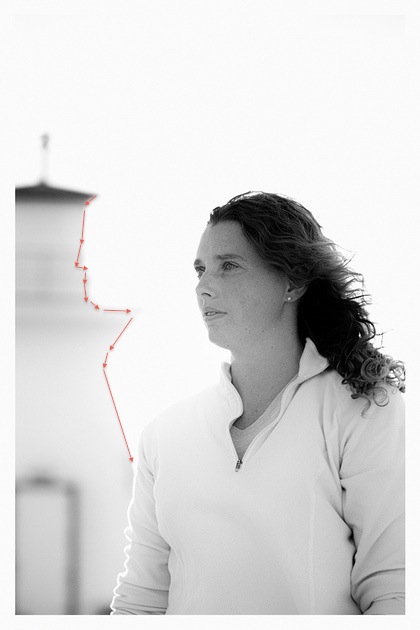
↑Leica M9 and Leica 50mm Summilux ASPH @ f/1.4.

–

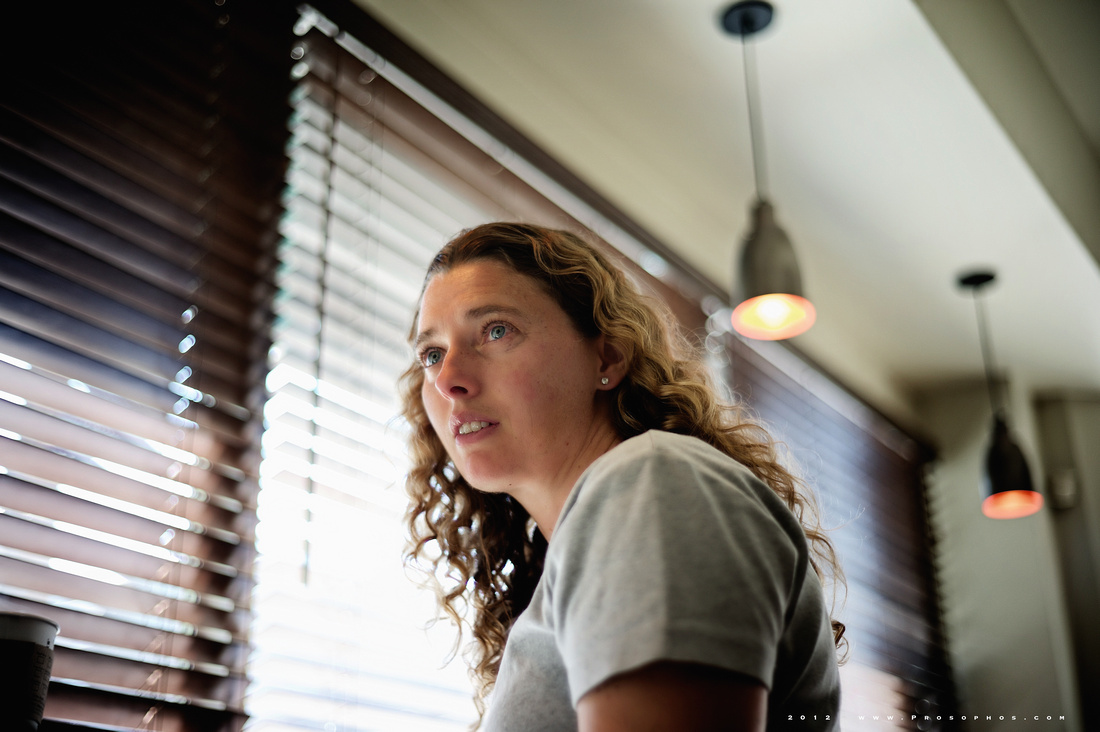
I’m pleased with this image… the light, the mood.

And — curiously — her profile mirrors the contours of the lighthouse:

I hadn’t noticed it until my wife pointed it out.

Admittedly, our brains are always seeking to make order of the world around us, but the two main elements in this image — photographically speaking —complete each other.  This sort of harmony ultimately resonates with the viewer, whether they know it or not.

—Peter.

Poolside (the Matrix).

Favourite, Inspiration, Leica 50mm Summilux ASPH f/1.4, LFI Master Shot, Portrait, Sports, Teaching point

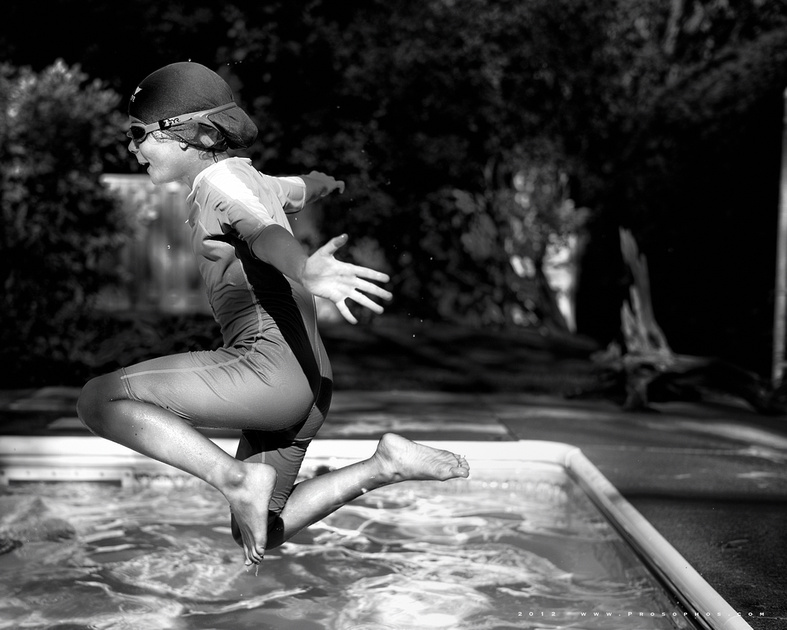
Unfortunately, no one can be told what the Matrix is.  You have to see it for yourself.

—Morpheus, The Matrix.

Fans of the movie The Matrix will no doubt understand my reference to it in the context of this image.

This is a technically difficult shot, not so much because of the action (I pre-focussed on the plane of her anticipated trajectory), but because of the extremes of light and dark populating this scene… accurately judging the exposure was quite a challenge.

And capturing her form in this most interesting pose — at the moment she entered the slice of space illuminated by a shaft of sunlight — was accomplished with the aid of good timing and a hefty dose of luck.

This photo was chosen as a Leica Fotografie International (LFI) Master Shot.

—Peter.

↑Leica M9 and Leica 50mm Summilux ASPH @ f/1.4.

End of summer (bye bye).

Favourite, Inspiration, Leica 50mm Summilux ASPH f/1.4, Portrait, Teaching point

Unofficially anyway.

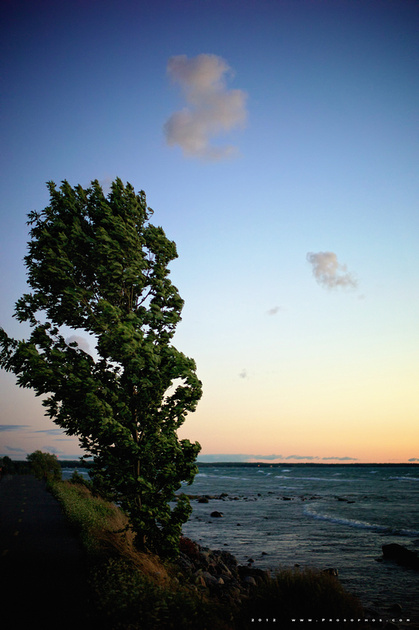
As an aside, after judging for the moment, lighting, composition, and post-processing, I’m always most pleased with an image of mine if it makes me believe — even for a moment — that I’m staring at a painting.

It’s too soon to know if this one qualifies, but that’s my early impression.

↑Leica M9 and Leica 50mm Summilux ASPH @ f/1.4.

Chasing the ball, revisited [2].

2012, Inspiration, Leica 50mm Summilux ASPH f/1.4, Portrait, Sports, Teaching point

It’s not easy nailing this kind of close-range shot at f/1.4 with a manual focus rangefinder camera, but when I’m successful, it’s always worth it.

In this case, there is a problem with the image in that the horizon is not level (a photographic “no-no“, most of the time), and fixing this will result in her foot being cut off at the bottom edge of the frame (a bigger photographic “no-no“).

I’ve therefore decided to keep things as they are… hopefully the viewer will think that I meant to shoot it this way — intentionally slanting the image so that it takes on a more dynamic look. 😉

[Incidentally, the other Chasing the Ball images may be found here, here, and within this article about using the M9 for sports here.]

↑Leica M9 and Leica 50mm Summilux @ f/1.4.

Photokina: New cameras coming! (try to ignore them)

Inspiration, Teaching point

Photokina is:

“…the world’s largest trade fair for the photographic and imaging industries.” 

—Wikipedia

…and all the photographic fora are abuzz with rumours and speculation about what new cameras and lenses are about to be unveiled.

Why “try to ignore them”?

If you’re visiting this site you probably already own a camera, so your time would be better spent learning how to use it properly!

Constantly “upgrading” equipment is not only costly, it’s counter-productive:  you never hold on to it long enough to get any good at using it.  Moreover, when you’re first getting acquainted with a new camera the quality of your photographic output is at an all-time low because you’re too busy trying to figure out all the operational nuances (all those buttons, menus, quirky behaviours, etc.) to actually concentrate on the basics like composition and lighting.

How do I know?

I’ve made the same mistake — over and over again. 😉

My advice?

Buy the best camera equipment you can afford (see my previous article here) because — all other things being equal — a good image will always look better when created with high-quality equipment vs. cheap equipment.  Then, practice, practice, practice (there are no shortcuts!) and make that camera an extension of your brain… the photos will follow.

On the off-chance you don’t “bond” with your gear (and this sometimes happens when the camera isn’t the right size or shape, etc.) you’ll probably be able to sell it and get most of your money back… good equipment is always in demand.

Did I mention, practice, practice, practice?

[Disclaimer: This is a bit tongue-in-cheek, but mostly true.]

—Peter.

The tree cloud.

2012, Favourite, Inspiration, Leica 50mm Summilux ASPH f/1.4, Print, Teaching point

The light was gorgeous and the clouds were perfectly placed to make this composition harmonious.

Something not readily apparent in this image: it was very windy (look carefully at the leaves).  I took a second image a few moments later and promptly deleted it… the clouds had already shifted.

(please click on the image to view)

↑Leica M9 and Leica 50mm Summilux ASPH @ f/1.4.

The jaunt.

2012, Inspiration, Leica 50mm Summicron f/2, Portrait, Sports, Teaching point

Capturing a walker/jogger/runner in mid-stride is always desirable, as it adds a dynamic component to the image, and it opens up the figure for a more pleasing composition.

In this case, when I zoom in, I can see that both of his feet are off the ground… this serves no real purpose (for this particular image), but it’s an example of the sort of “freezing” of time that photography does so well.

(please click on the image to view)

↑Leica M9 and Leica 50mm Summicron @ f/2.

***Answer*** to: “Smooth” [Which Lens?].

2012, Inspiration, Q&A, Teaching point, Voigtländer 40mm f/1.4 Nokton

Yesterday, I posted this image, taken with my Leica M9…

(please click on the image to view)

…and asked you to guess which lens was used.  Many of you were generous with your time and responded.

I appreciate the effort (and guts!) of all of you who took the time to record your best guess.

Moreover, reading the analysis behind each choice was very interesting and educational (I urge those of you who haven’t read through the comments of the original post to please do so).

So now, without further delay — the answer.

And the answer is…

_

(a) Voigtländer Nokton 40/1.4.

(b) Leica 50 Summicron.

(c) Voigtländer Nokton 35/1.2.

(d) Leica 50 Summilux ASPH.

(e) Leica 35 Summilux FLE.

_

Yes, the little Voigtländer Nokton 40mm.

(If you want to read an old write-up of mine on this lens, please see here.)

Thanks for playing :),

—Peter.

Voigtländer 75mm f/2.5 Color Heliar LTM (hmmm….).

2012, Inspiration, Teaching point, Voigtländer 75mm f/2.5 Color Heliar LTM

I’m beginning to see some magic from this Voigtländer 75mm f/2.5 Color Heliar… I may have to revise my opinion that the Leica 75mm Summarit bests it.

If this lens is even close to its Leica equivalent, I would call it a remarkable achievement at 25% of the price.

It’s a shame it’s discontinued.

—Peter.

Voigtländer 75mm f/2.5 Color Heliar LTM (test crops).

2012, Inspiration, Teaching point, Voigtländer 75mm f/2.5 Color Heliar LTM

As I mentioned in yesterday’s post, this lens is pretty impressive — beginning wide open @ f/2.5.

For my own comparison purposes, I shot this test scene to evaluate central sharpness.

Focus is on the leaves inside the red box:

[Note: these are DNG files converted directly to JPG using Aperture 3, with no sharpening added.]

(please click on the image to view)

↑Leica M9 and Voigtländer 75mm f/2.5 Color Heliar LTM.

_

Here is the 100% crop of the above @ f/2.5:

(please click on the image to view)

↑Voigtländer 75mm f/2.5 Color Heliar LTM @ f/2.5 (100% crop, no sharpening).

_

And here is the 100% crop @ f/4:

(please click on the image to view)

↑Voigtländer 75mm f/2.5 Color Heliar LTM @ f/4 (100% crop, no sharpening).

Amazingly sharp, don’t you think?

—Peter.

Debut of the 75/2.5 Color Heliar.

2012, Inspiration, Print, Teaching point, Voigtländer 75mm f/2.5 Color Heliar LTM

____________________________

The test image below marks the debut of my Voigtländer 75mm f/2.5 Color Heliar LTM.

The lens was discontinued a while ago, but I was fortunate enough to find a “new-old stock” one, which arrived yesterday.

Over the years, I’ve read quite a bit about this lens and how it compares quite favourably to the Leica 75mm Summarit (a wonderful lens in its own right — please see my user report here).

What piqued my interest was the reported performance-to-size ratio — I’m always looking for small and lightweight lenses that are capable of powerhouse performance (which, as far as I’m concerned, represents the ethos of the Leica M system).

Having now seen it, I can definitely state that the Color Heliar is indeed incredibly light and and incredibly small.  Some performance trade-off must have been made in order to achieve this state of airiness, but in my limited time with it, I just don’t see it.*

In a word, the Color Heliar’s performance @ f/2.5 is impressive.

I’ll try and post another test shot — including 100% crops — tomorrow.**

—Peter.

(please click on the image to view)

↑Leica M9 and Voigtländer 75mm Color Heliar @ f/2.5.

_

*More often than not, the more sought after — and more expensive — Leica counterpart lenses will excel in the areas of build quality, micro-contrast, flare resistance, sharpness wide open, corner performance, etc… but sometimes the differences are very subtle and some of those qualities, for my type of shooting, are not critical.

**Please note that I have no intention of writing a review, I’m just sharing the information I gather during my evaluation of this lens.

Blue.

2012, Inspiration, Leica 50mm Summilux ASPH f/1.4, Print, Teaching point

Monochrome floral.

Incidentally, this image was processed in Lightroom 4, because my copy of Aperture 3 crashed and wouldn’t re-start when I was processing images for a client.  It’s the first time I’ve used LR4 (the first image I processed with it was this one) and the experience has been positive.

My copy of Aperture is finally back up and running, but Lightroom has earned a permanent place in my post-processing toolbox.

(please click on the image to view)

↑Leica M9 and Leica 50mm Summilux ASPH @ f/1.4.

Halo [Flare].

2012, Favourite, Inspiration, Leica 50mm Summilux ASPH f/1.4, Life's Little Moments, Portrait, Teaching point

I’m of course referencing the ring of light found in religious and literary iconography.

The dramatic halo effect in this image is courtesy of the optical “flaw” known as lens flare — something I’ve harnessed in the past to convey my view of life as a dream.

(please click on the image to view)

↑Leica M9 and Leica 50mm Summilux ASPH @ f/1.4.

Alex’s teaching session.

2012, Guest Post, Inspiration, Nikon, Portrait, Teaching point

Today’s image comes from Alex, who signed up for a one-on-one teaching session with me.

Isn’t this image great?… It’s an impromptu street portrait taken yesterday, while we were on our photography lesson walkabout.

Now, I can’t promise that everybody will be able to take as nice a shot as this after spending 2 hrs with me (Alex is a natural), but I do promise that I’ll try to improve your photography skills to the best of my ability.

So, if you’re interested in signing up for a no-pressure, one-on-one photography shooting session with me, please click here.

Thanks Alex!

—Peter.

(please click on the image to view)

↑Nikon D40 with Nikon 35mm f/1.8 DX AF-S @ f/2.

Thank you Tom Smith, Leica Akademie.

2012, Inspiration, Q&A, Teaching point

I’d like to thank Mr. Tom A. Smith, the Events & Education Manager of Leica Akademie NA, for inviting me to be guest speaker at the Toronto workshop this past weekend.

I thoroughly enjoyed the experience, and was able to meet John Parkyn, a frequent comment contributor to this site, as well several other passionate photographers.

Thank you all!

—Peter.