Good light is good (…and high ISO is often overrated).

Inspiration, Q&A, Teaching point

Good Light is Good (…and High ISO is overrated)

A number of years ago, Nikon introduced the flagship D3 and changed the face of photography by allowing us to capture images in near darkness.   I remember taking an image indoors late one evening in 2007 and marveling at how clean the image looked at ISO 6400.

Yet, these days when I photograph, I preferentially seek good light, and my ISO requirements with an f/1.4 aperture lens rarely exceed 1600.  Anything more than this, and I’m basically turning nighttime into daytime — which is often undesirable, as it destroys the ambiance of nighttime scenes.

I’ve learned the obvious: good light is good, and no amount of ISO boosting overcomes the disadvantages of poor light or poor lighting.

Good light reveals nuances in colours and textures, and generally confers depth to those flat representations of the world we call photographs.

That same ISO 6400 image from six years ago, when viewed now with a more critical eye, falls a little short on an aesthetic level, not because the lighting was dim, but because the lighting was poor.

Poor light is not necessarily the same as weak light.  For example, the scant light available after a sunset is “good light”, if one harnesses it properly (with the aid of a tripod and slow shutter speed).  The same thing may be said of incandescent lighting, if it is arranged on your subject in a pleasing way. 

Good light is not necessarily the same as bright or plentiful light.  For example, midday sunlight is often too stark to be desirable for portraiture, but may be perfect if the goal is to capture the interplay of light and shadow. 

Admittedly, high ISO capabilities are desirable for specific applications — for example, astrophotography, where the goal is to “see” the faint light emitted by distant stars but the exposure time is kept to a minimum to “freeze” the stars’ movement (so that stars remain “points” of light in the final photograph).  Or, if the goal is to capture action in dim light, or to record a memory for posterity and lighting considerations are secondary or beyond one’s control, then yes, a high-ISO-capable camera is vital.

If the goal, however, is to create an aesthetically pleasing photograph — even at night — then seek good light.

—Peter.


Q&A: Matteo asks about the Leica M (type 240).

Inspiration, Q&A, Teaching point

Matteo writes:

“Dear Peter,

I hope all is well with you!

Finally this 2013 is going to an end… I’ve spent this year mostly in London, with little time for photography.

Far from home and committed to work, I’ve been having a hard time developing my ‘artistic’ side.

However, in a strong effort to keep my eyes trained, I’ve dedicated a bit of time to explore film and rangefinder photography.

Now I’m thinking to jump into digital again (time and flexibility are the main reasons), but I have to save a bit before getting a new camera.  I’m very interested in hearing a little more from you about your experience with the new M240.  It seems you don’t consider it on par (sensor wise) with the new [Sony] Alpha7R and Nikon Df, and I’m curious about that.  I’m still a bit puzzled about the available options, as I never had the chance to test extensively an M9 or any of these new models. I think I will stick to film for a little more 🙂 .

—Matteo”

Thank you very much Matteo for writing.

Well, it turns out I may have an opinion about the Leica M240… 🙂

As many of the readers of Prosophos.com know, I’ve written much about it:

…And I have even written an open letter to Leica asking for an updated CCD sensor on a future Leica M model.  So far, over 130 individuals have signed it.

However, to answer your question in a concise manner, I’ll note three things I don’t appreciate about the Leica M240 sensor:

  1. Colour signature The native Leica M240 colour signature is suboptimal for skin tones, and one has to constantly fight against the default settings to achieve acceptable results.
  2. Colour Tonality Colour transitions are rendered more coarsely by the M240 vs. the M9.  The M9 renders tones in a more subtle and delicate fashion.
  3. Microcontrast Although the M240 sensor (24 MP) will objectively out-resolve the Leica M9 sensor (18 MP) at 100% magnification, the M240 files as a whole are more “muddy” and “flat” as compared to the more “crisp” and “3D”-like images generated by the M9See here for two examples (see various photo-sharing sites, photography fora, and generally the entire internet for more 🙂 …).

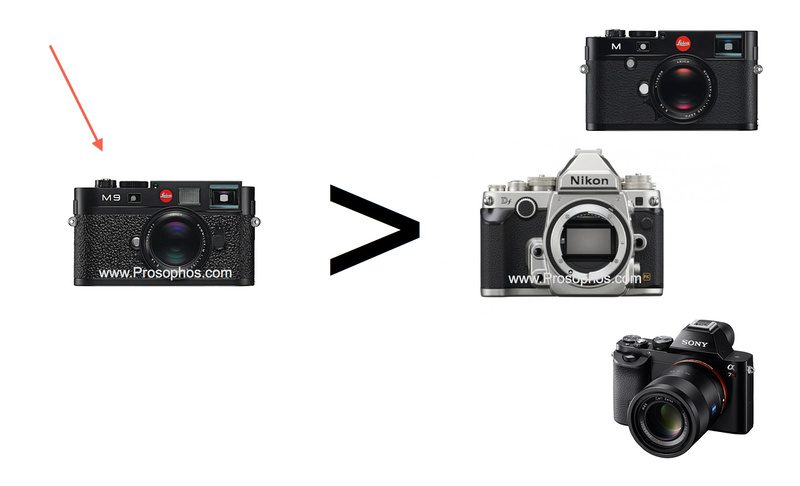
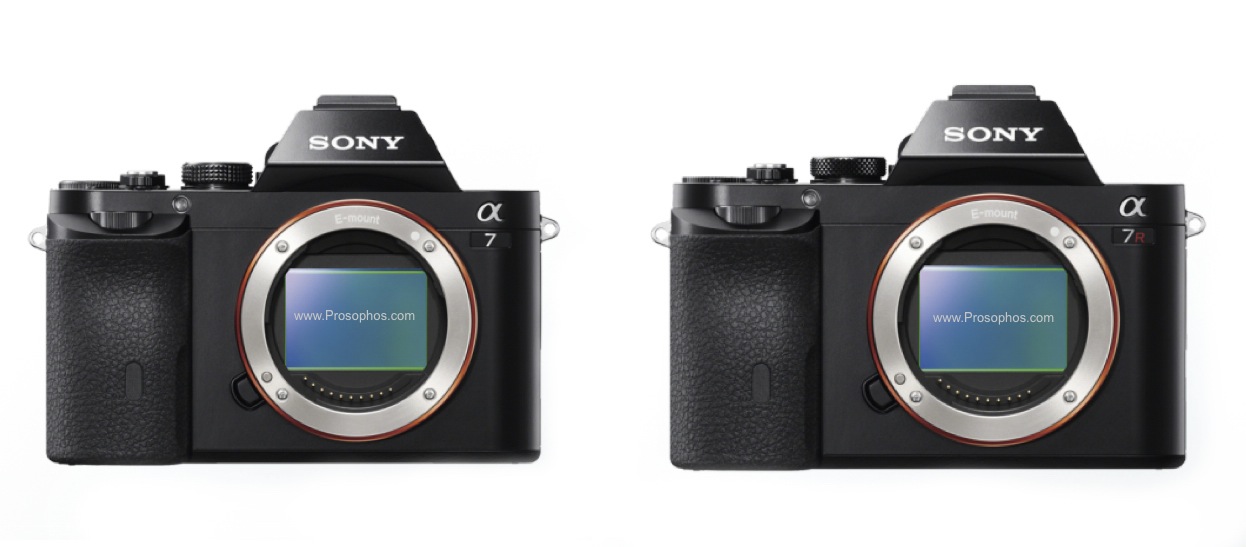
As for the Nikon Df and Sony A7/A7R, they are not rangefinder cameras, and so obviously cannot provide the rangefinder experience, which is important to me.   Also, being CMOS sensor cameras, they cannot equal the M9 in Points #2 and #3 above.

That’s basically it.  I hope that answers your question Matteo.

Sincerely,

—Peter.

[Incidentally, Matteo has submitted several images to me that will be featured in a not-too-distant Guest Post.]

Leica M9 still reigns supreme.

Inspiration, Q&A, Teaching point

Leica M9 still reigns supreme

It’s nearing the end of 2013, and the Leica M9/M-E/Monochrom with the venerable CCD sensor continues to provide the best image quality at base ISO in the 35mm (36 x 24) sensor class.

As predicted here.

The Leica M (Type 240) cannot touch it, the Nikon Df comes close, and so does the Sony A7/A7R… but none of these CMOS sensor cameras can equal it.

Don’t believe me?  Please research it for yourself.

And let’s not even mention the whole rangefinder experience, which these other cameras (with the exception of the Leica M240) lack.

So…

If you haven’t already done so, please consider signing my open letter to Leica.

Prosophos Open Letter to Leica

___

Related posts:

The M9 and CCD sensor, revisited.

Inspiration, Q&A, Teaching point

m9-sensor-revisited prosophos

As I scanned some of the other photography sites late this evening, and read several initial user reports on Sony‘s new A7 and A7R 35mm interchangeable cameras, I noticed more and more people are conceding that my prediction on September 15, 2012, on the eve of the release of the Leica M240 was true: the M9 and its CCD sensor would prove to be superior at base ISO than any CMOS offering.

Unfortunately, holding this opinion and stating it publicly — repeatedly — has probably strained my relationship with Leica.  Hopefully they’ll eventually come around to seeing my efforts as constructive.  I am, after all, an enthusiast who only photographs with Leica rangefinders and lenses.

Back to the point:  is it any wonder that in June of this year I declared my camera of the year for 2013 to be the Leica M9?  As crazy as it was for me to do, I’m sticking by it.

It’s still not too late to sign My Open Letter to Leica😉 .

—Peter.

Open letter to Leica: over 100 signatures (so far)…

Inspiration, Leica M Type 240, Q&A, Teaching point

Prosophos Open Letter to Leica

.

.

Many of you prefer the rendering of the Leica M9 CCD sensor over the M240 CMOS sensor at low ISO values, and have consequently signed My Open Letter to Leica.  For those who haven’t, please consider doing so if you want to advocate for an updated CCD sensor in a future M model.

Thank you,

—Peter.

___

Related posts:

Pure Honey.

Inspiration, Leica 24mm Summilux ASPH f/1.4, Life's Little Moments, Portrait, Teaching point

A simple image of our family pet, Honey.

A cliché sort of a thing to do, taking a photo of your pet (in photography circles anyway).

Yet this image illustrates perfectly why I hold the Leica M9 in such high regard: the rendering here is exquisite — the tonal gradations are so pleasing that we are left with the sweet illusion of viewing a live scene, as opposed to a static photograph.

It’s pure honey.

Pure Honey

↑Leica M9 and Leica 24mm Summilux @ f/1.4.

If you haven’t already done so, please consider signing my open letter to Leica.

—Peter.

A strange thing happend today with my Leica CCD poll…

Q&A, Teaching point

For several weeks now, I’ve been running a poll, asking:

“Should Leica bring back a new CCD sensor in a future M model?”

Since the poll’s inception, the majority of votes have been for “Yes“.

In fact, the “Yes” vote has been consistent at 62%, with the remainder of the votes split equally between “No” and “Don’t Care“.

Well, today there was a sudden spike in traffic to Prosophos.com and now the results look very different, with the “Yes” and “No” votes split almost equally.

Hmmm….

I had intended to write an open letter to Leica, once the votes exceeded a thousand, requesting they pursue advancements in CCD technology for future M cameras.

Now it seems, somebody has intervened….

Nonetheless, I’ll continue to ask the question:

—Peter.

Guest Post: M240, M9 sample images.

Guest Post, Inspiration, Leica M Type 240, Q&A, Teaching point

A reader, Marc H., has provided the sample images below.

[Please note:  This is not a scientifically rigorous comparison.  Marc has generously provided these for your benefit.  Any disrespectful comments will automatically be deleted.]

Marc writes:

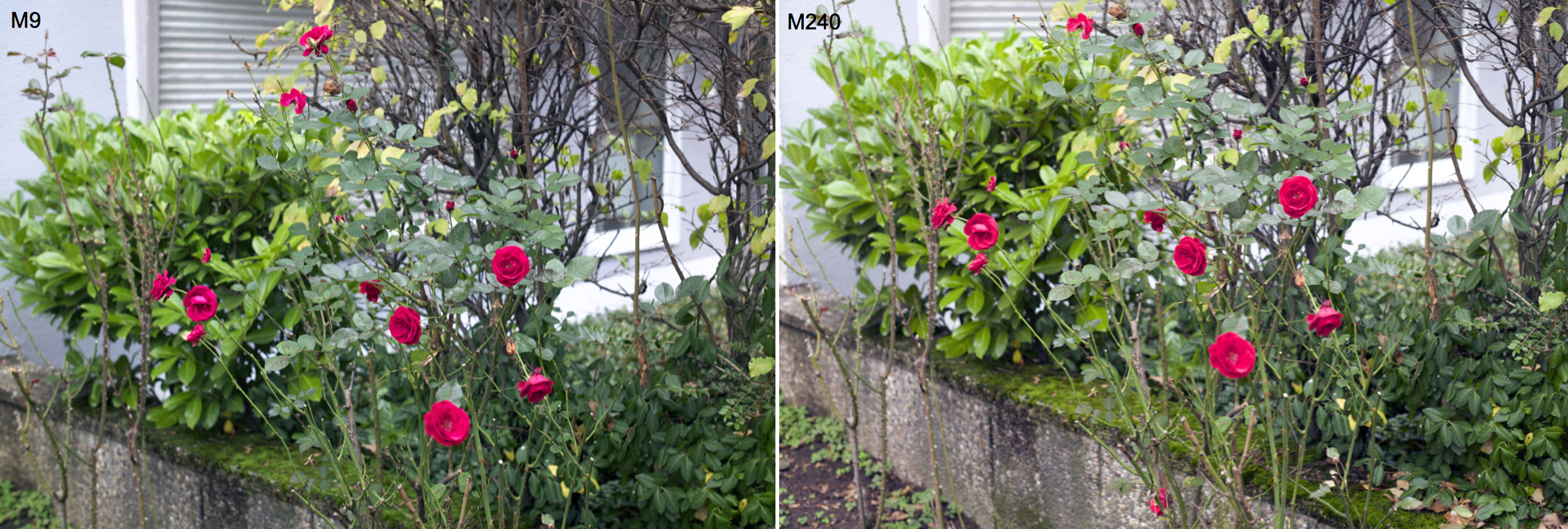
“While I still had both bodies (M9 and M240), I took a walk around Frankfurt and shot random stuff, just to see how they both render and how the color translates. I set both to the same ISO values,  f stop, white balance is auto.  The pics themselves are nothing special, but interesting to see how they render.  Both used 50mm asph lenses. “

Here are Marc’s samples

(please click on the image to view at MAXIMUM size)

Comparison 1:

M9 vs M240 - 1

Comparison 2:

M9 vs M240 - 2

Thank you Marc, for providing these.

—Peter.

Unscientific (M240 vs. M9).

Inspiration, Leica 35mm Summicron ASPH f/2, Leica M Type 240, Portrait, Q&A, Teaching point, Voigtländer 40mm f/1.4 Nokton

Please don’t write to me and tell me this comparison is not scientifically valid —  I’ve named this post Unscientific for a reason.

I will, however, acknowledge that the M240 was at a significant ISO disadvantage vs. the M9.

However, low light shooting is the main reason I bought the M240.

Perhaps those with better post-processing skills could have done better with the M240 file.

Despite my best efforts, I couldn’t.

—Peter.

Unscientific (M240 vs. M9 Prosophos comparison)

About the M240… the image quality is a step down.

Inspiration, Q&A, Teaching point

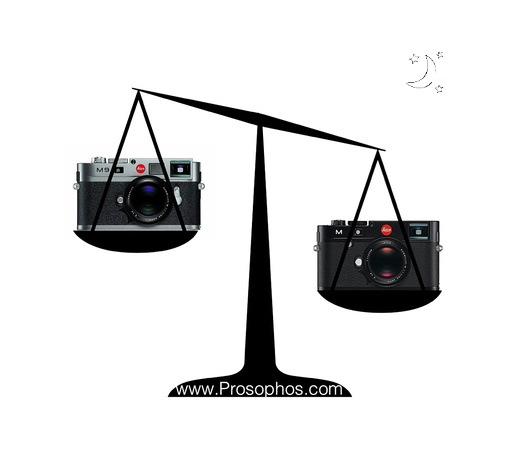
Yes, the image quality of the Leica M (type 240) is a step down from the Leica M9.

You have to ask yourself, why did I buy it in the first place, given all my rants about CCD vs. CMOS (and how I prefer the former)?

If you haven’t already done so, please consider signing my open letter to Leica.

Prosophos Open Letter to Leica

___

Related posts:

The colour transfusion.

Inspiration, Leica 50mm Summilux ASPH f/1.4, Leica M Type 240, Print, Teaching point

They were found together on the pavement, on a rainy afternoon.

On a technical note, this particular shade of red reminds me very much of the native output of the M8; it apparently can be coaxed out of the M240 after some post-processing.

And on another note, this image marks the return for me of the Leica 50mm Summilux ASPH.

—Peter.

The colour transfusion

↑Leica M240 and Leica 50mm Summilux ASPH @ f/1.4.

Q&A: Kerwin asks about the M9 in low light, M240.

Inspiration, Q&A, Teaching point

M9 in low light, M240

“Hi Peter,

I love your site and the pictures that you post.  They are a great inspiration for me to get better at being a photographer.  I follow your blog and have been very curious about the M240 and M9 debate, or the CMOS and CCD sensor battle.  I have an M9 and have been thinking about moving into the M240.  Mind you I have only been shooting Leica for about a year now.  But when I see your images and read about what you have to say about the CCD.  Then I don’t want to get the M240 anymore.  Part of the reason why I would like to get the M240 is to be able to use the higher ISO for when shooting at lower light situations.  Anyway, I’m still holding on to the M9.  Any tips on what to do when shooting in lower light with the M9?

Keep up the great work!

Cheers,
Kerwin”

Hello Kerwin,

First of all, thank you so much for your nice comments.

Now, to address your questions, which are all excellent…

Yes, I’ve always believed, and continue to believe, that CCD sensor cameras produce images at base ISO that are more pleasing than CMOS sensor cameras.  However, in low light, CCD sensors struggle relative to their CMOS counterparts.

The introduction of the Leica Monochrom did much to close the performance gap, but of course you’re limited to B&W photography when using this camera.

Quite simply then, if you wish to continue to photograph in low light situations using an M9, you need fast (aperture) lenses, like the Summilux (f/1.4) or even Noctilux (f/1 or f/0.95) lenses.  If your subjects are relatively still, then of course a steady hand and slow shutter speed are very useful (as are monopods and tripods, but most of us who shoot rangefinders do not make use of such additional equipment).

It’s also critical to expose properly with the M9 when shooting in dark environments, especially when employing high ISO.  This can be a problem, since I rarely feel comfortable shooting above ISO 1250 with this camera.  Others limit their maximum ISO to 640 and then “push” the exposure up during image post-processing.  I do this frequently.

I said above that your questions are excellent, which is very true.  It turns out, however, that your questions are timely too…

I have decided to purchase an M240.

I know I will be sacrificing low ISO image quality, in the form of the “crispness” I currently see in my images, but I am willing to give the M240 a try.

Why?

Most of the time, the light in Toronto is poor, as the winters here are long and dark.  Having a camera that can comfortably shoot above ISO 1250 has increasingly become a priority for me.

And, after selling off most of my equipment over the last few days, I’ve decided I don’t want a Nikon D800, or Sony A7/A7R, or an Olympus E-M1, or Fuji X-E2.

No folks, I still want a digital rangefinder (please see the previous post, Rangefinder Cameras)

And as far as digital rangefinders go, there’s still only one game in town.

—Peter.

Ongoing Poll: Should Leica bring back the CCD sensor?

Inspiration, Q&A, Teaching point

The longest running CCD poll :), asking whether a brand new CCD sensor should reappear in a future Leica M camera, is still running…

Why am I continuing this?

Because I love the rendering of CCD sensors!  The Leica M9 is like a portable digital mini-medium format camera.

At the very least, CCD sensors offer us photographers an alternative choice.

I’ve noticed a few notable individuals who were initially very enthusiastic about the Leica M240 (CMOS sensor camera) have now changed their tune and are subtly conceding that the M9 image quality at low ISO is superior.

So far, I have just over 400 votes…

—Peter.

Related posts:

Relaxed (Nikkor-NOCT meets M9).

Inspiration, Nikon, Nikon 58mm f/1.2 NOCT, Portrait, Q&A, Teaching point

I thought this might be a fun follow-up to yesterday’s post.

A few years ago, I attached the Nikkor-NOCT 58/1.2 to the Leica M9, via a Novoflex adapter, and took this image.

Focusing involved guessing, because of course the Nikkor-NOCT is not rangefinder coupled.

Relaxed

↑Leica M9 + Novoflex adapter + Nikkor-Noct 58/1.2 @ f/1.2.

Here is another test shot:

M9 + Nikkor-NOCT↑Leica M9 + Novoflex adapter + Nikkor-Noct 58/1.2 @ f/1.2.

As can be appreciated in the second image, one of the nice things about the Nikkor-NOCT is its near focus ability,

—Peter.

Nikon 58MM F/1.4G: The Nikkor-NOCT, reloaded.

Inspiration, Nikon, Nikon 58mm f/1.2 NOCT, Teaching point

58mm Noct vs. 1.4 Prosophos

Well, not exactly, as this new AF-S NIKKOR 58mm lens has a maximum aperture of f/1.4 (vs. f/1.2), but Nikon promises:

“The AF-S NIKKOR 58mm f/1.4G is a lens that makes the most of advanced optical design technologies… to achieve high reproduction capability of point light sources even at the maximum aperture, and natural depth of subjects utilizing smooth and beautiful bokeh characteristics. With shooting of distant night landscapes, the lens minimizes the sagittal coma flare…”

Sounds familiar, doesn’t it?  These were the coveted attributes of the Nikkor-NOCT.

Those of you who have been following this blog already know that the legendary Nikkor-NOCT was my favourite NIkon lens, and may very well be my favourite lens of all time:

The Pirate 2

The Pirate

Swing

Will the new lens be as impressive?

I hope so, given all the advances in lens design and manufacturing over the last several decades.  However, one thing I know for sure is that the new lens won’t have that silky-smooth manual focusing with which the old Nikkors were bestowed.

Either way, these are exciting times in photography.

Check out the specifications of the new AF-S NIKKOR 58mm f/1.4G here, and sample images here.

—Peter.

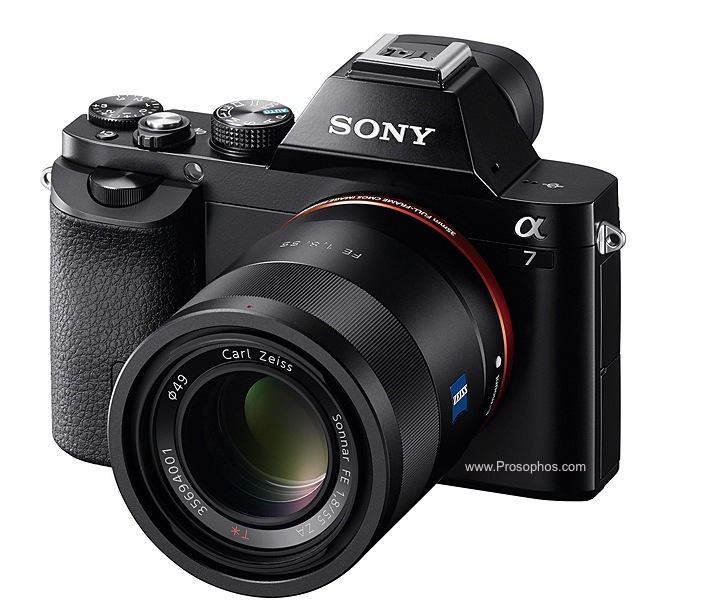
Sony A7 and A7R.

Inspiration, Q&A, Teaching point

Prosophos Sony A7

I once wrote:

The first manufacturer, other than Leica, who places a 24 x 36 sensor in a mirrorless interchangeable lens camera can count me in as a customer.  I have no doubt that at some point, somebody will do it.

However, the insanely loud shutter on the A7/A7R is a deal-breaker for me.  You can listen to it in this field test video (courtesy The Camera Store) at approximately 5:22 into the video.

The EVF is already dated too.

Too bad.

Still, you have to give Sony credit for shaking the industry.

—Peter.