Crossing the Rubicon.

Inspiration, Q&A

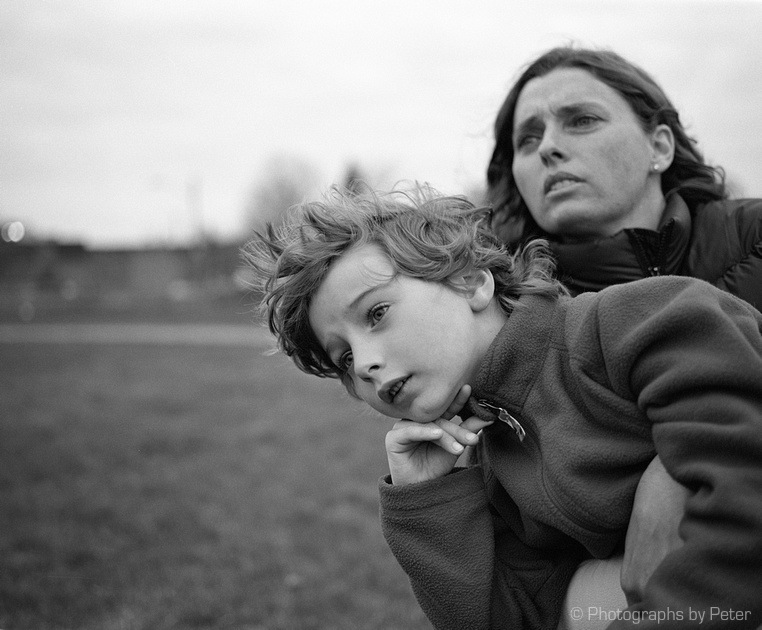
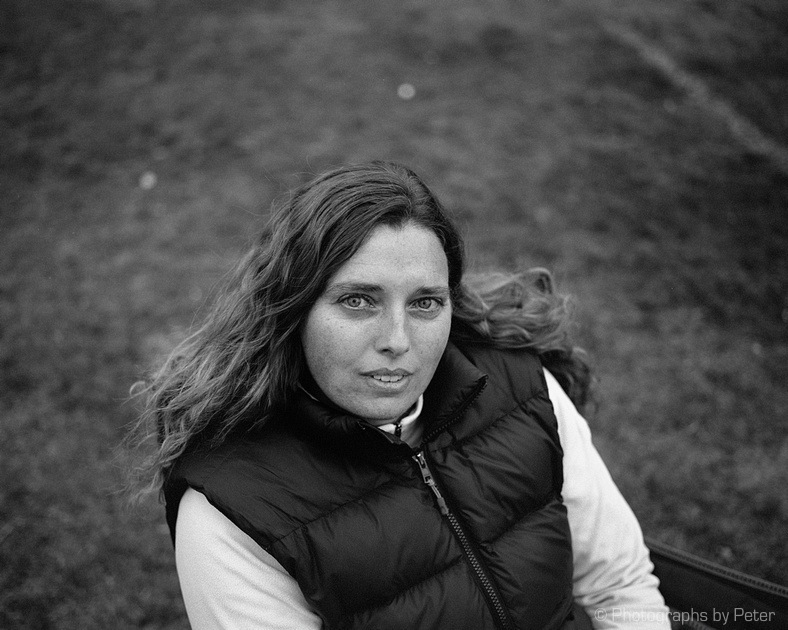
I crossed the Rubicon yesterday and photographed a 4 hour event entirely with film.

(I had no choice really, seeing as I no longer own a digital camera.)

The Kodak Portra 400 will be delivered to the lab tomorrow.

Fingers crossed… though I’m comforted by history, and countless photographers before me who have successfully photographed critical events with the “old” medium.

The gear I used: Mamiya 7II/80mm.

—Peter.


The Nikon Df sensor.

Inspiration, Nikon, Nikon Df, Q&A, Teaching point, Voigtländer 40mm f/2 SL-II

After about a week of photographing with the Nikon Df, I am pleased to say that its CMOS sensor appears to come the closest to behaving like the CCD sensor I’ve long respected in the Leica M9.

I can actually pull more shadow detail out of the files (which came as a complete surprise) and the highlight recovery is also superior (not a surprise).

Of course, the Df is not a rangefinder (so if you’re like me, and like to manually focus, that makes things more difficult… also, I miss seeing the scene “outside of the frame” that a rangefinder offers) and the stable of lenses for the Nikon F-mount are larger and generally not as well corrected as the Leica equivalents (having said that, the Voigtländer 40mm f/2 SL-II I’m using is very competent and compact).

For micro-contrast and tonality, CCD wins every time.

On the other hand, the Df has rock-solid reliable electronic guts (with robust processing power), does not feel like a beta product, and has an external ISO dial (I love this).

More photos to follow…

—Peter.


Luiz Paulo featured in British Journal of Photography.

Inspiration, Q&A

I am pleased to announce that Luiz Paulo, who’s outstanding photography has been shared on this very site, has been featured in the British Journal of Photography.

It’s a very poignant interview and the images on display do not include Luiz‘s beloved muse:  his daughter.  To find out why, and to view his images, please have a look here.

—Peter.

Related articles:

Guest Post (2014): Luiz Paulo.

Featured Photographer (2013): Luiz Paulo.

Guest Post (2013): Luiz Paulo (Part 2).

Guest Post (2013): Luiz Paulo (Part 1).

Guest Post (2012): Luiz Paulo.


M240 gone. Again.

Inspiration, Leica M Type 240, Q&A, Teaching point

I have always shared my gear choices/changes freely, assuming it may help some of you considering camera A vs. camera B, or lens A vs lens B, etc. So, along that vein, and at the risk of inviting harsh commentary, I will disclose this:

I have parted, again, with the Leica M240.

Before the M240 was released, I made some predictions about its image quality.  Specifically, I was concerned about base ISO performance vs. its predecessor, the M9.  My concerns were borne out when I viewed the initial JPG images, and then again when I examined sample RAW files.

I posted both my predictions and subsequent analysis on this site.

Of course, some photographers shared my view, and some didn’t.  Those who didn’t were critical of the fact that I hadn’t owned the camera and yet I was judging it.  My rebuttal was that you don’t have to own a camera to judge its image quality.

Well, now I’ve owned it.  Twice.

My honest opinion:  I should have listened to myself.

I tried —I really tried — to make it work (those of you who follow this blog on a regular basis know this), because I really enjoyed the ergonomic improvements.

But I just couldn’t coax the look I wanted out of it.

—Peter.


Bayer filter cameras are increasingly of little appeal to me.

Inspiration, Q&A, Teaching point

No Bayer Sensor

One of the things that photographing mostly with film lately has done to me is given me a distaste for the Bayer Filter Mosaic upon which almost all digital camera sensors are based.

Something about the images created with the de-mosaicing (interpolative) processes inherent in Bayer-based cameras just doesn’t look right to my eye any more.  They’re simply not good enough.

In the digital world, there are three notable exceptions to the Bayer trend:

(1) Sigma with its Fovean sensor-based DP models.  As a previous owner of the original Sigma DP1 model, I wait with great anticipation for the upcoming Quattro.  However, given Sigma‘s history of building sluggish cameras with a “beta” feel about them, I’m not holding my breath.

(2) Leica with the Monochrom (which sports a modified Kodak CCD sensor lacking a colour filter array).  Of course, the Monochrom is limited to B&W output (not a bad thing, unless you occasionally want/need colour!).

(3) Fuji with its X-Trans technology, where blue, green, and red sensors are “randomly” arrayed.  I’m not convinced about the results, though I do applaud Fuji for pushing the proverbial envelop.


Currently, I don’t own any of the above…  I’m in a wait-and-see mode.

—Peter.


M240 Colour Images + More Mamiya!

Film, Inspiration, Kodak Tri-X 400, Leica M Type 240, Q&A, Teaching point

This weekend has been a good one, photographically speaking.  The weather has finally cooperated in Toronto and I’ve also had ample opportunity to photograph.

The upshot:  over the next few days, I’ll be posting several colour images I’ve taken with the M240.

To put this thing to rest, I’ll state upfront that I’m now reasonably pleased with the colours I’m getting.  Are they M9-like?  No, of course not.  The Kodak CCD sensors in the M9/M-E (and M8) are special (for many reasons), so if you’re interested in seeing an updated CCD sensor placed in a future M camera, you may want to consider signing my…

Open Letter to Leica


Prosophos Open Letter to Leica


And for those interested in film photography, I’ll be posting more images from that first test roll of Kodak Tri-X I shot with my recently acquired Mamiya 7II.

—Peter.