Please hurry up Sony and release a fixed-lens “medium format” digital camera.
Those of us who place a high value on image quality but prefer to be discreet with our cameras want an alternative to the current gargantuan digital MF offerings.
—Peter.

Please hurry up Sony and release a fixed-lens “medium format” digital camera.
Those of us who place a high value on image quality but prefer to be discreet with our cameras want an alternative to the current gargantuan digital MF offerings.
—Peter.
Not too long ago, 36MP digital sensors were introduced into 35mm cameras. Not too long after that, many photographers (including some well respected ones) proclaimed that these pixel-rich 35mm cameras could produce “medium-format quality” images.
I don’t subscribe to this view, at least when it comes to portrait photography.
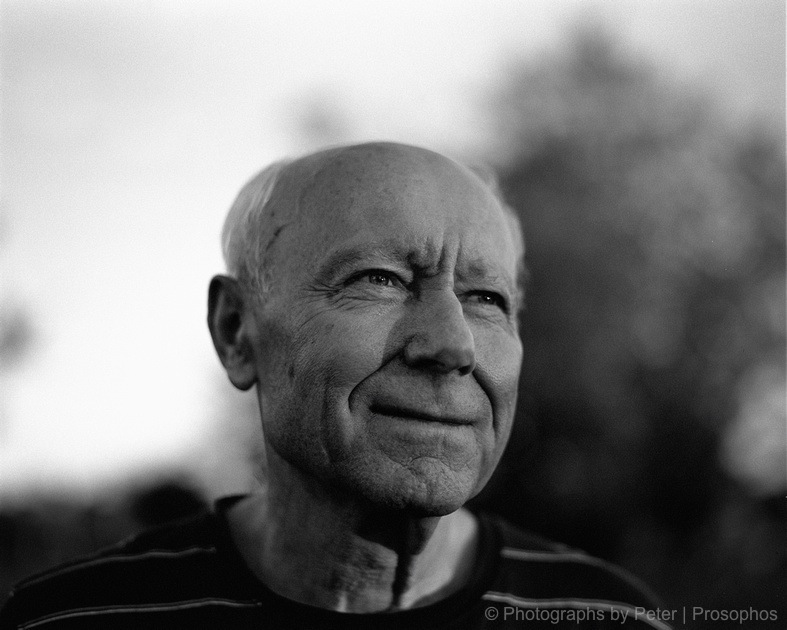
If you examine the images I’ve taken with the Mamiya RZ67 (6 x 7 medium format film), you will note that they look more “true to life” as compared to images from 35mm cameras (digital or film). The tonal transitions are subtler, the separation of subject matter from the background is more natural, and the overall rendering is somehow “more grand” than 35mm camera images (like these ones from the Nikon D800E + Zeiss Otus – a supposed “medium-format-quality” producing combination).
Even the Pentax 645D, a camera that possesses a digital sensor that is only a little bit larger than the one in the D800E, somehow produces “grander” images (but not as “grand” or true-to-life as the larger 6 x 7 film “sensor” in the Mamiya RZ67).
As I’ve written before, sensor size matters:

So, if you’re looking for a medium format look (at least with respect to portraiture), you will not get it from a Nikon D800E/D810, or Sony A7R, etc.
If you’re looking for medium format resolution, that’s another story…
—Peter.
Test shooting a cartridge of Fujifilm instant film.
Taken with the Mamiya RZ67 (using a Polaroid film back) and the Mamiya 110/2.8 lens.
The first shot has a yellow colour cast from the incandescent lighting. The remainder of the images were photographed utilizing the Westcott Ice Light.
—Peter.

One of the more frequent questions I receive is:
My short answer is:
What follows is a more detailed response. I’ve previously presented some of this information on this site, but this post will serve to amalgamate and edit the content.
—Peter.
–
—
I use the latest version of Adobe Lightroom (LR). Within LR, I often use Nik plug-ins (Silver Efex Pro, Color Efex Pro, Viveza).
–
Almost all photographers post-process (i.e., make image-enhancing adjustments, after a photograph is taken). What many novice photographers fail to recognize is the importance of pre-processing (my term). Pre-processing involves identifying and harnessing — before an image is taken — naturally-occurring enhancing elements in a scene, such as good light, perspective, etc., that cannot be altered after the fact:
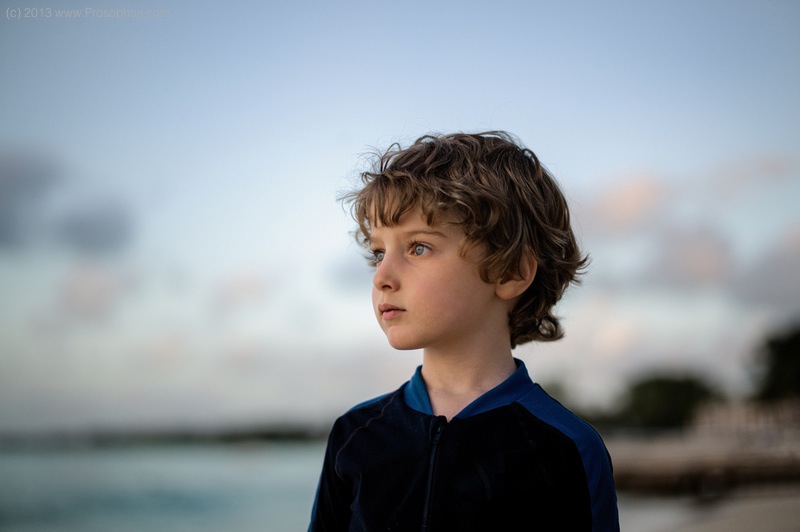
In the case of this image, Boy, the soft light that was present after the sun set was harnessed to achieve a rich palette of colours and tones. This cannot be achieved in post-processing. The perspective I’ve chosen to photograph this image from is from down low; this too cannot be achieved in post-processing.
–
I tend to favour cameras with limited menu options, or no menu options (film cameras). I prefer to adjust camera settings using external dials/controls. I limit the variables with which I concern myself to only three: Aperture, Shutter Speed, and ISO. Hence, I always shoot in Manual mode. Modern camera “features” such as scene recognition, smile detection, etc., and even not-so-old features such as exposure compensation serve only to clutter my mind and sabotage my shots.
I don’t even use auto-focus (eliminating another variable), choosing instead to manually focus.
Generally speaking, I believe that camera features — even sophisticated ones — can never substitute for photographic vision.
–
Many images on the web today appear “over-cooked” to my eye. Therefore, I always try to exercise restraint when post-processing. In fact, as time has gone by, I’ve toned down my manipulation of images.
My goal is to make my post-processing invisible.
On a related note, shooting film helps keep me grounded with respect to what I am trying to achieve with my digital images.
–
I photograph in RAW mode.
Each image is post-processed by eye. Occasionally I spend many hours honing a single image. Each photo is processed individually, depending on the subject matter, lighting, and mood.
The adjustments are small, and incrementally applied. My method now differs from what I was doing last year… this will also be true next year — in other words, my approach is constantly evolving.
It is a very personal process, dictated in good measure by artistic license; it is not open to “cookbook” interpretation.
–
—Peter.
–
Further Reading:
My Photography Workflow – 5 Items I Consider When Creating Images.
I’d to like see CCD sensors in future Leica M bodies.
Why?
Because I believe CCD is superior (in tonality, micro-contrast, general je ne sai quoi vibe) to CMOS with respect to image rendition at base ISO (you know, the kind of environment in which most of us photograph).
Most of you realize this to be true. Even those of you who initially disagreed now see there is a difference, and it favours CCD.
Am I splitting hairs in citing such nuances in sensor rendition?
Not any more so than the frequent discussions that take place around lens rendition.
Come on, you know the superior qualities of CCD befit a company like Leica!
So, if you haven’t already, please consider signing my Open Letter to Leica.

___
Related posts:
I’ve owned twelve Leica 50mm Summilux ASPH lenses in my lifetime, and three of them have been perfect in build quality and astoundingly sharp at f/1.4. The rest have been just short of exceptional. Most people wouldn’t notice… because they’ve never been crazy enough to buy, use, and sell multiple examples of them.
And don’t even ask me how many new Leica lenses will arrive with loose aperture rings, or wobbly built-in hoods, or back-focusing, or front-focusing, or… etc.
The moral of the story: in the case of Leica lenses, it can be advantageous to buy used vs. new in a sealed box. You not only save on price, you also have the opportunity to examine and photograph with the lens you’re interested in before purchasing.
—Peter.
Ahhh, that Kodak (now Truesense) sensor in the M9/M-E/Monochrom… is it still the best sensor out there?
My answer: Yes.
Is there another sensor that conjures up the same level of image quality?
Yes, the one in the M8!
So, I’d to like see CCD sensors in future Leica M bodies.
Would you?
Please consider signing my Open Letter to Leica.
___
Related posts:
Every end is a beginning.
–
–
–
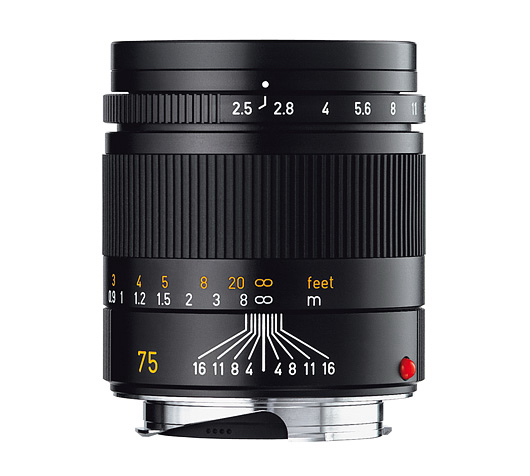
I’ve updated my review of the Leica 75mm Summairt f/2.5 lens.
More images from recent posts were added, and the content was edited.
Thanks,
—Peter | Prosophos.

–
Leica is coming to my town on July 19th (that’s less than 5 days away)!
From Leica‘s own promotional email:
“This full day, hands-on workshops are designed to help owners of the latest Leica M model get outstanding results from their game changing, digital rangefinder.”
(The grammatical error above is courtesy Leica.)
Unlike the Leica Akademie workshop of 2012, I won’t be the guest speaker, as I haven’t figured out how to “get outstanding results from their game changing, digital [M240] rangefinder”.
On a related note…
If you haven’t already done so, please consider signing my Open Letter to Leica.
(over 250 signatures so far… )
___
Related posts:
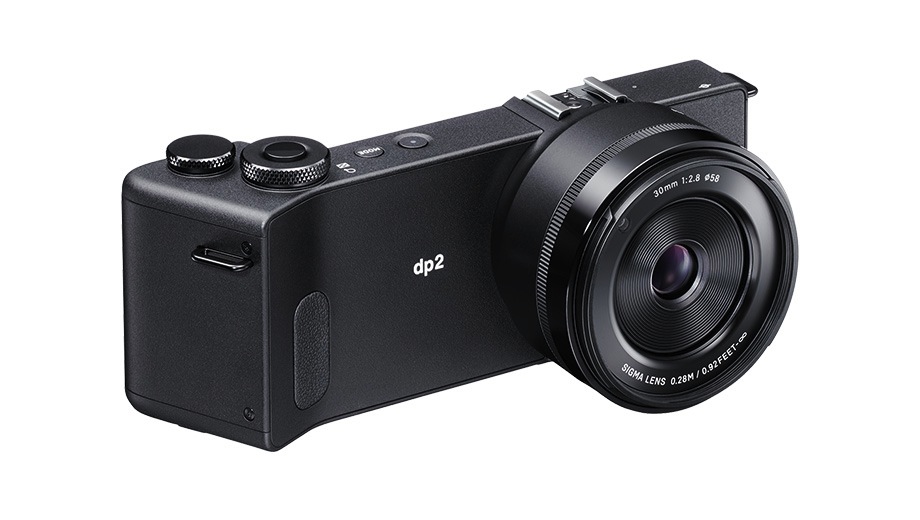
↑Image courtesy of Sigma Corporation.
—
It may be because the Sigma Photo Pro (SPP) converter hasn’t yet been optimised, but the initial RAW/JPG images I’m seeing from the new Sigma DP2 Quattro are somewhat disappointing.
The images are suggesting that image quality has suffered (as compared to the Sigma Merrill) with the re-design of the fabled Foveon sensor. I hope they haven’t indeed messed things up.
This is reminiscent of the whole Leica M240 vs. M9 business.
—Peter.

—
A few days ago, I hinted that a second lens would soon be joining my newly-acquired Leica M-E, and it arrived today.
Yes, the Leica 75mm Summarit is back (and it joins my 35mm Summarit for a 35/75 set-up).
My detailed report on the Leica 75mm Summarit is here.
—Peter.
Okay, I’ve made no secret of my appreciation of film over all things digital. I’ve always felt this way, but as I’ve gained more and more experience over the years with digital and film images from various gear, that appreciation has only grown.
Similarly, in returning to the Leica M9/M-E a few days ago, my appreciation for that magical Kodak (now Truesense) CCD has grown. After photographing with various CMOS sensor-based cameras this past year (including the Sony RX1R, Leica M240, Nikon D800E, and Nikon Df), I can honestly say that the CCD sensor in the M9/M-E is still superior to them all.
—Peter.
–
If you haven’t already done so, please consider signing my Open Letter to Leica.
(over 250 signatures so far… )
___
Related posts:
—John Lennon, (Just Like) Starting Over
–
–

–
–
–
If you haven’t already done so, please consider signing my Open Letter to Leica.
(over 240 signatures so far… )
___
Related posts:
Long-time friend and contributor of this site, Andy Gemmell, has just launched his own photography site:
Many of you have seen Andy’s work on my site, and have benefited from his frequent and always thoughtful commentary.
(So, we’re expecting big things from you Andy and you’re off to a great start with your first article!)
Congratulations Andy,
—Peter.
Part 1 was presented a few days ago here.
Sort of.
Two individuals have alerted me (thanks Dave and Aaron) to the fact that the Leica Rumors website is reporting a refresh of the Leica M-E may be coming which involves taking the current M240 body and wrapping it around the KAF-18500 18 MP CCD Sensor many of us know and love.
It’s not quite what I requested in my Open Letter to Leica (it’s not an updated CCD sensor), but I would be very pleased if this were true.
In the meantime, if you haven’t already done so, please consider signing my Open Letter to Leica.
(over 240 signatures so far… )
___
Related posts:
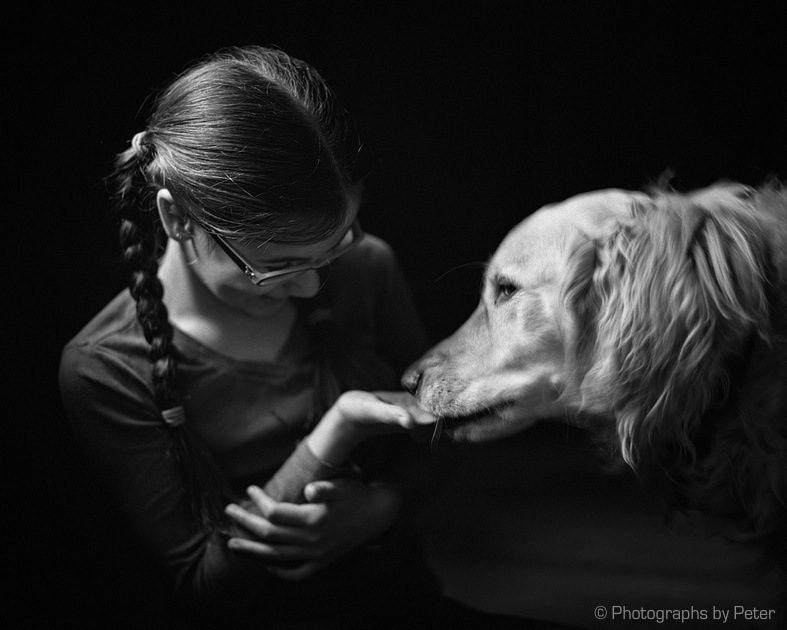
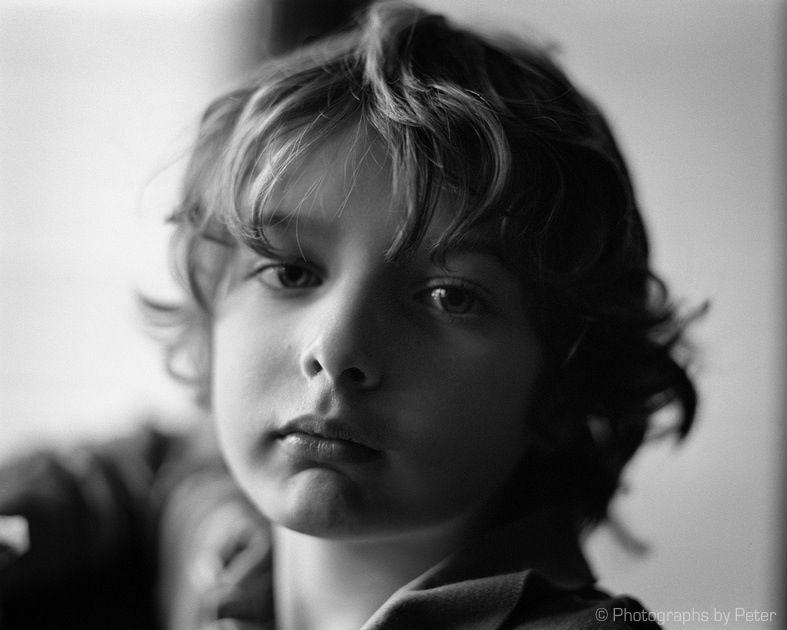
After four months with the Mamiya RZ67 and Mamiya RZ 110/2.8 lens, I can say with absolute certainty that this gear (together with Kodak Tri-X 400 film) is superior to anything I’ve ever used before for portraiture.
To think that people are practically giving this film equipment away is very telling of our instant gratification-based culture.
Sometimes, the results are truly worth waiting for.
I’ll be posting new images soon, but in the meantime, please have a look at some of the photographs the combo has yielded for me so far:
—Peter.



 Prosophos