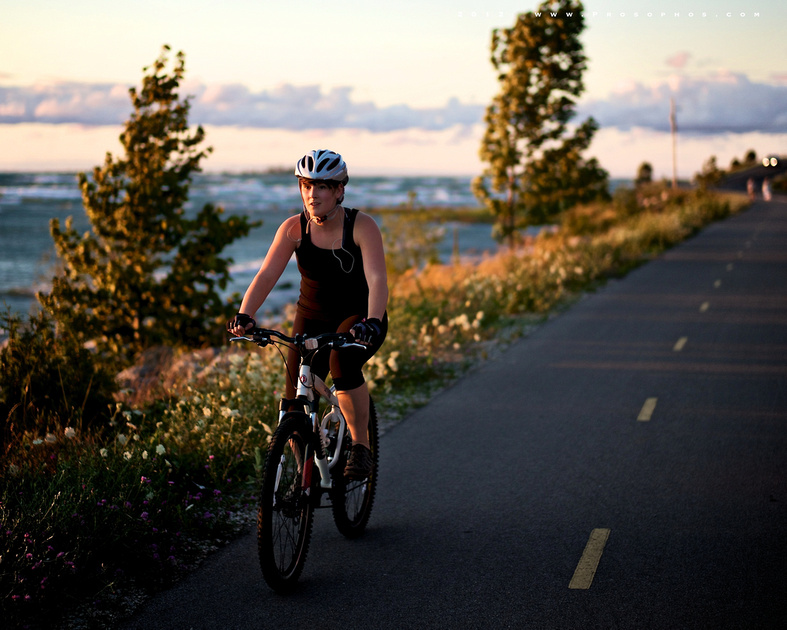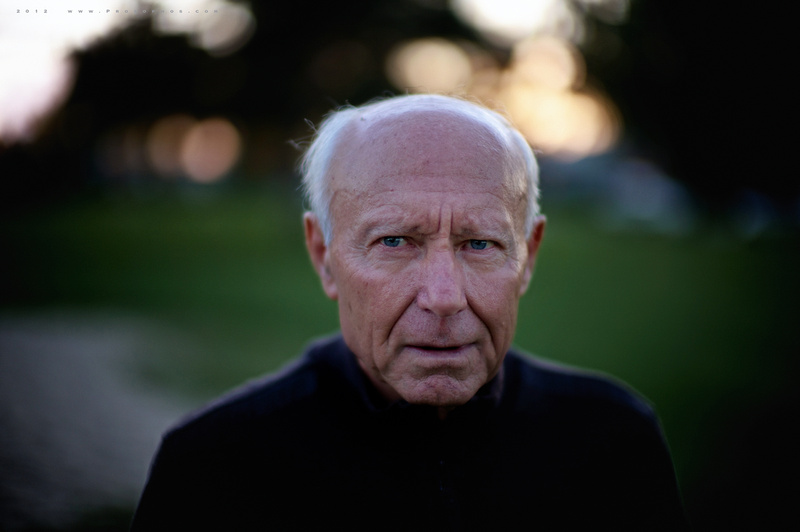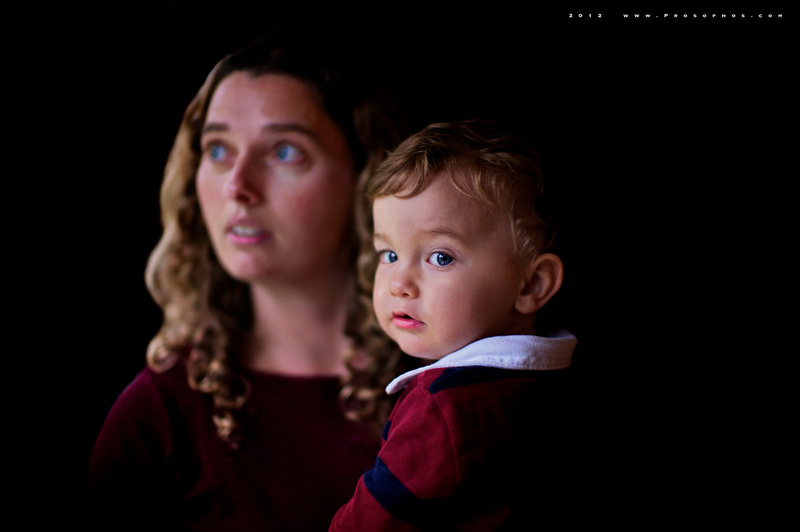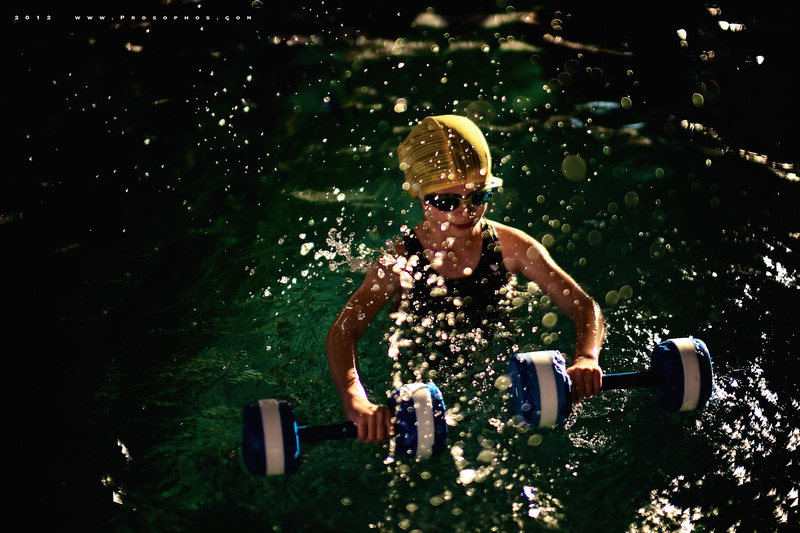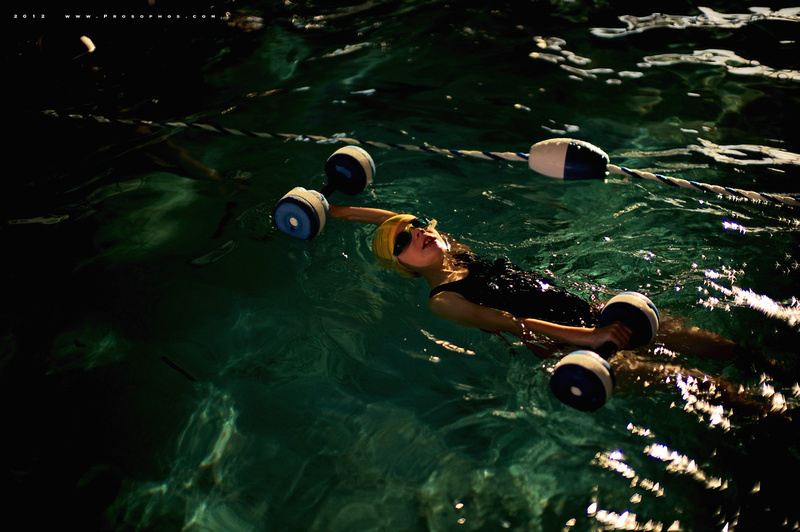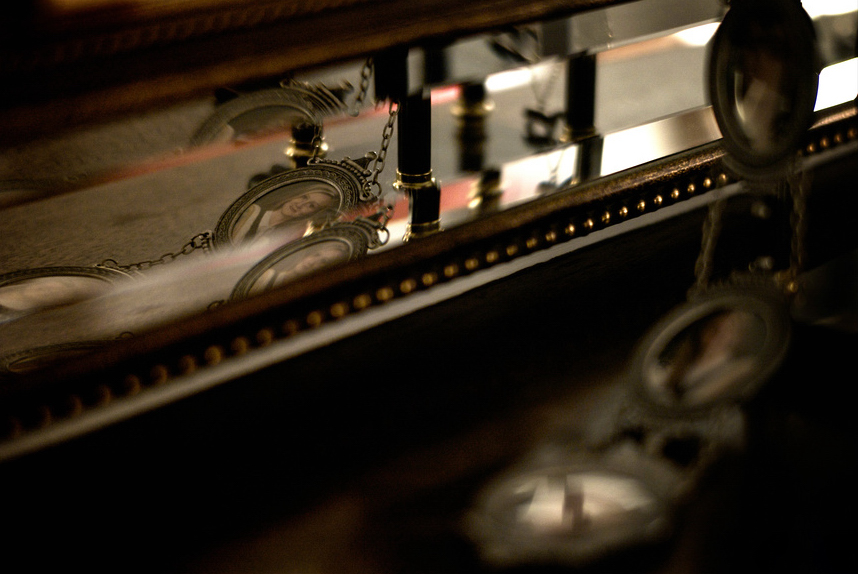
Just for fun: film or digital?

Inspiration, Teaching point

Simple question really.

I’ve always asserted that most of the time the answer is readily apparent, but is that the case here?

Now, I know many of you will assume that — since I’m asking — it must be digital.  Others of you will identify a hint of reverse-psychology at play, and you’ll choose film.

So, for you brave ones out there, what’s it going to be? 🙂

—Peter.

↑Camera and lens information withheld.

[Update: Answer is here.]

The Noctilux f/0.95 (50% and 100% crops).

Inspiration, Leica 50mm Noctilux f/0.95, Portrait, Teaching point

Yesterday, I posted the image Father Figure, which was taken with the Leica Noctilux f/0.95.

I know many of you — in addition to being interested in viewing photographs taken with the Noctilux f/0.95 — are also interested in the technical aspects of this lens.

So, I’ve decided to display the central portion of the Father Figure image at 50% and 100% magnification.  Note that the photo was shot at f/0.95, at the minimum focusing distance of 1 meter, and therefore any conclusions you draw should be considered in the context of this aperture and distance.

First the 50% crop

I’ve chosen the 50% crop because it nicely displays the quick — but extremely smooth — transition between the in-focus and the out-of-focus elements (I’ve used the word “rounded” to describe this exquisite rendering):

(please click on the image to view the large version)

↑Leica M9 and Leica Noctilux @ f/0.95 (50% crop).

Now the 100% crop

I’ve chosen the 100% crop to illustrate the level of central sharpness available at f/0.95:

[Note: the point of focus was his right eye; minimum sharpening was added during post-processing.]

(please click on the image to view the large version)

↑Leica M9 and Leica Noctilux @ f/0.95 (100% crop, minimum sharpening).

I hope you’ve found the above useful.

—Peter.

The Noctilux @ f/0.95 and “rounded” rendering.

Inspiration, Leica 50mm Noctilux f/0.95, Portrait, Teaching point

This slightly cropped image is a good example of the pleasingly “rounded” rendering this lens is capable of @ f/0.95 (see my comment under yesterday’s post).

What I’m referring to is the gentle 3D effect, that — unlike the slightly more “cut out of the scene” 3D effect you get with the 50 Summilux ASPH — is exceptionally smooth, very organic.  Specifically, his face is gently simultaneously emerging from, and blending into, the background.

Despite this, the point of focus (the nearest edge of the sunglasses) is bitingly sharp.

Incidentally, it’s this level of sharpness at 1 meter (the near focus limit) and the exceptionally smooth bokeh that separate this Noctilux from the previous f/1 version, which renders in a slightly softer way, and which depicts backgrounds in a thick-brush-painterly manner.

—Peter.

↑Leica M9 and Leica Noctilux @ f/0.95.

CMOS: that sinking feeling again.

Inspiration, Teaching point

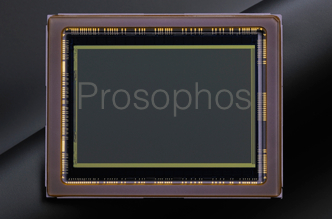
↑CMOS Sensor used in the D600 (image courtesy of Nikon).

__________________________

On September 15th, I posted some thoughts on the M9 and its CCD sensor, essentially reasserting my long-held preference for CCD (vs. CMOS) rendering, at base ISO.  Two days later, Leica introduced the M and M-E.

The new “M” — to refresh your memory — carries a CMOS sensor.

Now, in my Leica M and M-E post, I reiterated my concerns about CMOS (vs. CCD) rendering, though I decided to “wait to see” before concluding anything.

Last night, I happened to be perusing a popular photo-blogger’s site, in which he praises Nikon’s new D600 (yes, a CMOS-based camera) and reports “unbeaten” image quality.  Accompanying his post is a sample image taken at high ISO, which is simply — how can I put this delicately — atrocious.  More precisely, when you click into the higher resolution file, you are greeted by a muddy and flat arrangement of pixels devoid of detail or microcontrast.

Thinking that the poor image quality is likely secondary to shooting at high ISO (even CMOS sensor-based cameras can’t produce miracles), or the harsh lighting from the on-board flash that was used, or the previous generation zoom lens that was used, or a combination of all of these factors, I shrug it off.

Then I click into his review of the D600 and view the images taken at base ISO, with Nikon’s newest generation zoom lenses and primes (admittedly, Nikon’s newest lenses are not quite as highly regarded as Leica’s, but they’re pretty darn close).  Although the additional images look appreciably better, they still fall short of what I’m currently getting out of my three year old M9.

So, the point of all this?

I fear that if Nikon — with all its experience and might — cannot coax better image quality out of their newest generation CMOS cameras, the new “M” may end up representing a step backwards for Leica (with respect to image quality at base ISO).

I really do hope I’m wrong, but once again, I’ll wait and see…

—Peter.

5 years ago today.

Inspiration

We said goodbye to your mother on October 2nd, 2007.  You kissed her, after she left…

_______________

“Will I be here in 5 years to renew this passport again?”

…She asked me at the passport office. Right before all three of us went to New York City together. Our first trip following the diagnosis.

“Will I be there to hold C’s hand, on her first day of school?”

…She asked me during a quiet moment at home.

“Will I live to see my hair grow back again this long?”

…She asked, while I was cutting it off, right before she was about to start her chemo.

_

These were the poignant moments.  And after each question, I would answer, “Yes.”

On another occasion, about 18 months later when it was clear the end was coming sooner than any of us thought, she looked at the envelope that had arrived that day, addressed to her. She read her name aloud and said,

“When I used to see my name written somewhere, I always wondered what my end would be. Now I know.”

I had no response for her that time, other than to look her in the eye for a moment, and then look away.

—Peter.

The little red radio flyer: Greg’s poem.

Guest Post, Inspiration

Two weeks ago, I posted an image called The Little Red Radio Flyer.

One of the viewers of this site, Greg, who understood the love and loss this image was attempting to communicate, generously wrote a little poem for it.

I was sincerely touched by his kind gesture, and so today I’m publishing the poem.

Thank you Greg,

—Peter.

_______________

                                  The slender light slips on, as if

                                  A garment held up by the shadows,

                                  The arc of the tricycle’s red frame –

                                  And welling from that narrow loft

                                  Into the heart a full reknowing:

                                  Another day, a hand, a name.


                                                                    gdg

                                                                 9/20/12