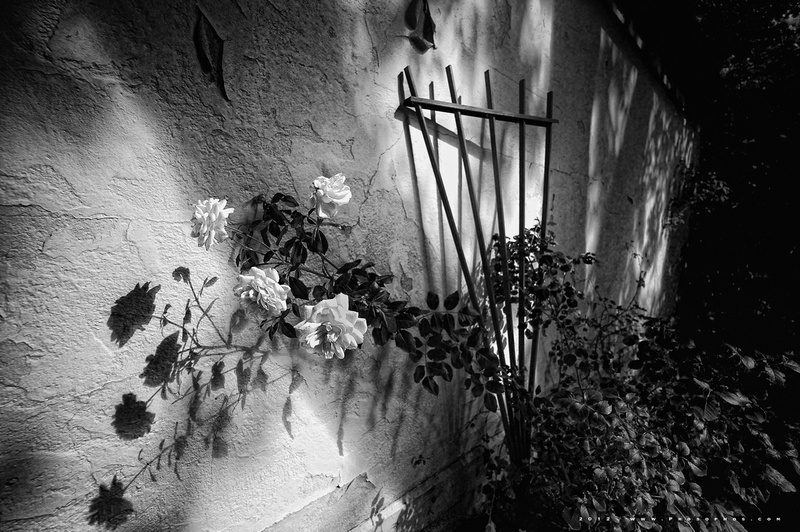
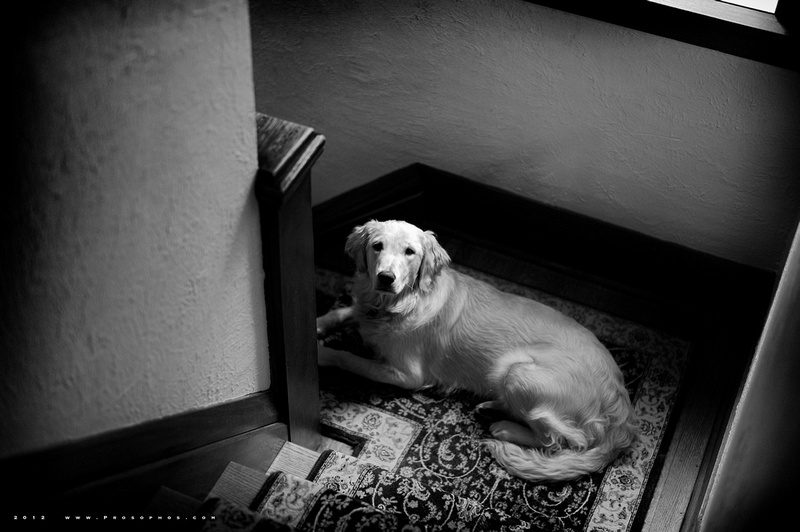
↑Leica M9 and Leica Noctilux @ f/0.95.

↑Leica M9 and Leica Noctilux @ f/0.95.
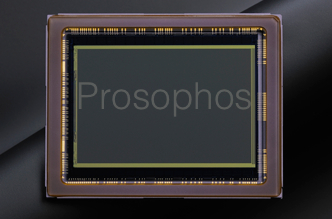
↑CMOS Sensor used in the D600 (image courtesy of Nikon).
–
__________________________
On September 15th, I posted some thoughts on the M9 and its CCD sensor, essentially reasserting my long-held preference for CCD (vs. CMOS) rendering, at base ISO. Two days later, Leica introduced the M and M-E.
The new “M” — to refresh your memory — carries a CMOS sensor.
Now, in my Leica M and M-E post, I reiterated my concerns about CMOS (vs. CCD) rendering, though I decided to “wait to see” before concluding anything.
Last night, I happened to be perusing a popular photo-blogger’s site, in which he praises Nikon’s new D600 (yes, a CMOS-based camera) and reports “unbeaten” image quality. Accompanying his post is a sample image taken at high ISO, which is simply — how can I put this delicately — atrocious. More precisely, when you click into the higher resolution file, you are greeted by a muddy and flat arrangement of pixels devoid of detail or microcontrast.
Thinking that the poor image quality is likely secondary to shooting at high ISO (even CMOS sensor-based cameras can’t produce miracles), or the harsh lighting from the on-board flash that was used, or the previous generation zoom lens that was used, or a combination of all of these factors, I shrug it off.
Then I click into his review of the D600 and view the images taken at base ISO, with Nikon’s newest generation zoom lenses and primes (admittedly, Nikon’s newest lenses are not quite as highly regarded as Leica’s, but they’re pretty darn close). Although the additional images look appreciably better, they still fall short of what I’m currently getting out of my three year old M9.
So, the point of all this?
I fear that if Nikon — with all its experience and might — cannot coax better image quality out of their newest generation CMOS cameras, the new “M” may end up representing a step backwards for Leica (with respect to image quality at base ISO).
I really do hope I’m wrong, but once again, I’ll wait and see…
—Peter.
Alternate title: Halftime.
A surreal moment.
It’s as if we are looking at two separate images… stitched together.

↑Leica M9 and Voigtländer 15mm f/4.5 @ f/5.6.
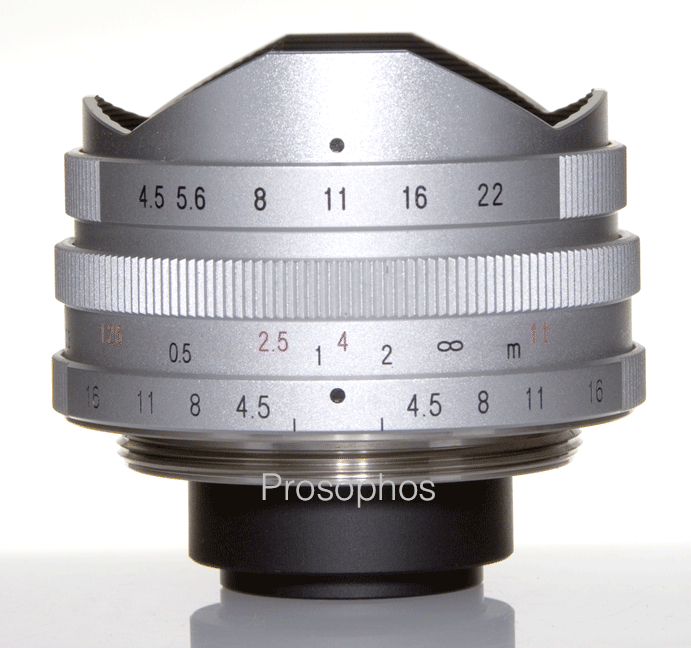
As promised, over the next few days I’ll be posting more images taken with the little Voigtländer15mm f/4.5 Super-Wide Heliar.
I’ve had more fun using this little lens than I would have ever guessed.
Stay tuned, starting tomorrow.
—Peter.

This lens is terrific!
I took possession of it this past week and have been shooting with it the last few days on my M9. I’ve already posted some images here, here, and here.
I can’t believe what I’m getting.
On the downside, it’s true that you’ll get the infamous “red edges” (peripheral colour shifts) in many images with this lens. The red edge phenomenon is a known issue with wide angle lenses when mounted on the M9… literally, the edges of the photo are coloured red:

This happens because light passing through wide angle lenses strikes the edges of the camera sensor with a steeper angle of incidence, causing colour shifts.
Compounding the problem is that I haven’t even tried assigning a Leica lens profile to the my Voigtländer 15mm, which would result in some (software) correction of the colour, as well as the vignetting that is also present. Why haven’t I assigned a profile? I don’t mind the vignetting (I often add it when post-processing anyway), and I’d rather work around the colour shifting. Now, if I was primarily a landscape photographer, this issue would be most bothersome. Something to consider if you’re contemplating getting this lens.
Stay tuned this week for more images.
—Peter.

↑Leica M9 and Voigtländer 15mm f/4.5 @ 1/4 sec, f/4.5, ISO 320.
–
This is one of my first test shots from yesterday, with my brand new Voigtländer 15mm f/4.5 Super-Wide Heliar (in L-Mount):

I finally scratched an itch in getting this tiny, inexpensive, and now discontinued (but still available new) lens, thanks to my friend Jason Howe, who finally pushed me over the edge with his images (Jason posted a very informative write-up of this lens on his website here).
Note: There’s a second generation M-mount version of this lens currently being produced with the same optics that is larger, but has the advantage of being rangefinder coupled (meaning it can be focused on a rangefinder). In contrast, this first version of the Voigtländer 15mm Heliar (shown above) is focused by not focusing at all!… please see Jason’s write-up for further details.
As an aside, note the difference in perspective between a 15mm lens vs. a 50mm lens.
—Peter.
_
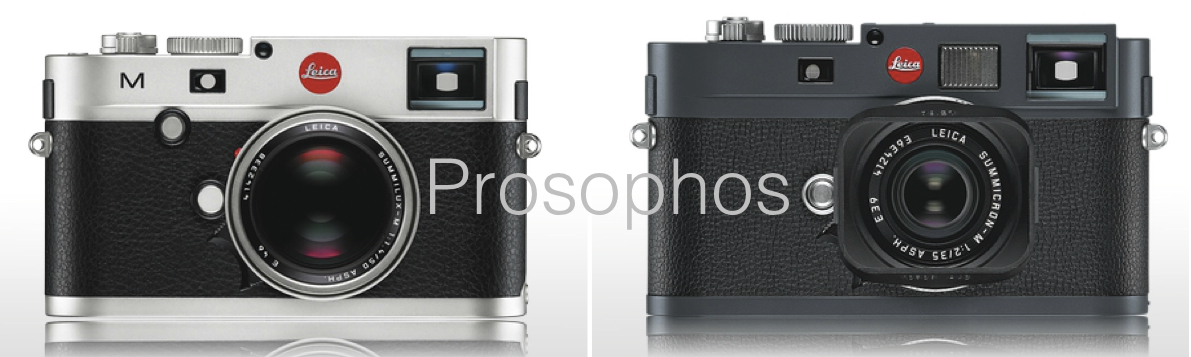
As any Leicaphile already knows, today Leica introduced TWO new models:
The Leica M and the Leica M-E.
As expected, the new flagship M sports a 24 MP CMOS sensor and is therefore able to offer video, live view, focus peaking, and has a higher (than M9) ISO upper level (though at ISO 6400, it’s not as high as one would have expected). The purportedly faster Leica Maestro image processor is a welcome addition, as is the new splash-proof camera body and higher resolution LCD screen.
Leica has obviously been listening to its customers (at least, to those customers who wanted these features).
The M-E, with its 18 MP CCD sensor, is — essentially — a re-jigged M9. This is not a bad thing, as it means that Leica is still listening to the remainder of its customers — those who are more traditional with respect to their camera needs (if you can call digital camera photographers traditionalists!), who want to keep things as they are, more or less. It also minimizes on development costs since many of the core components are being borrowed from the M9. Shrewd move.
Back to the new flagship M: I still have my concerns about CMOS (vs. CCD) sensor rendering. But, the proof — as they say — is in the pudding… so I’ll wait to see some real-world images before I conclude anything. The sample images on Leica’s website are inconclusive.
Now, here’s the main reason I decided to create this post of, essentially, re-hashed news:
No matter what you think about Leica’s new M products, you have to give Leica credit for (finally) trying to tap into the various customer segments… the pricing spread between the new cameras in their line-up (don’t forget the DLUX and X bodies) makes it possible for them to sell more gear, which bodes well for the future of the company.
That’s just Business 101.
—Peter.
[Note: I don’t accept advertising on this site. This is therefore a personal endorsement, and not a paid advertisement.]
_

–
Popflash is a California-based authorized dealer of camera equipment that is owned and operated by Tony Rose. I have dealt with Tony for many years now for most of my photographic purchases and felt compelled to write about his business.
Why?
Simply put, the service at Popflash is unparalleled. Whether it’s responding to questions or requests via e-mail or over the telephone, the Popflash team is unfailingly friendly, knowledgeable, and efficient. In particular, I’d like to recognize a specific member of the Popflash team, Alex, who is responsible for the day-to-day fielding of questions and orders.
And, despite the great service, which normally comes at a price premium in most businesses, the prices at Popflash are very competitive. In fact, I’ve gotten some of my best deals on Leica equipment there.
Last week, for example, I was informed that Popflash was expecting delivery of a lens I had been seeking for some time. This particular lens has been in high demand and in short supply, so I promptly placed an order for it.
Sometime later, well after placing the order, Popflash sent me an email informing me they were in a position to offer a discount on the lens and that they would be applying that discount to my order.
Can you believe it? They could have easily sold this very popular lens at the retail price but they chose instead to pass on their own savings to a customer.
Knowing them, I can’t say I’m surprised, though I’m always impressed.
Give Popflash a try, they deserve your business.
—Peter.

It is rumoured that the M10 [Edit: M (Type 240)] will be announced by Leica on Monday.
Supposedly, it will sport a CMOS sensor, which will allow for high ISO and video capabilities. If true, I’m sure it’ll be a hit.
However, I can’t help but feel a little sad about the demise of the CCD sensor, and its unique rendering. To this day, I believe digital images captured at base ISO with CCD sensors look different — and more appealing — than images from CMOS sensors.
It’s only my opinion of course.
If CMOS is part of Leica’s future, then I’m sure the venerable German company will have figured out a way to retain the fabled “Leica look”. But I’m equally sure that the rendering of an M10 [Edit: M (Type 240)] with CMOS will be different from the M9/M8 CCD experience.
Whether better or worse is open to debate, but it will be different.
So — if you’re like me and you value the look of CCD images — you better grab one of those heavily discounted brand new M9 cameras, while you still can.
—Peter.
Taken yesterday.
Who says you can’t get timely and reliable B&W film processing these days?… do it yourself ;).

↑Leica M3, Kodak Tri-X 400, and Leica 50mm Summilux ASPH @ f/1.4.

Today I noticed an unusual spike in traffic to this site, mainly because of increased interest in my write-up of the Konica Hexanon 60/1.2.
I was a little confused as to why an article that I posted almost a year ago was suddenly popular again (normally it’s my write-up of the Voigtländer Nokton 40/1.4 that gets the most attention). Then I visited the website of my good friend Steve Huff. Steve is about to host a photo cruise and he’s managed to secure a copy of the Konica 60/1.2 to use during his time away. One mention of this lens on his site and suddenly everybody is interested in it (that’s the Steve Huff Effect :)).
It’ll be interesting to see how well the Konica Hexanon 60/1.2 fares mounted on the Fuji X-Pro 1 that Steve is taking with him.
—Peter.

I rarely comment about camera equipment, other than when I post one of my Lens Reports. But, I sometimes make an exception.
Interestingly, the last time I made an exception was for another Sony product (see The Sony NEX-7 — I’ll take a pass for now)… probably because, when it comes to cameras, Sony is doing a great job pushing the proverbial envelop. The major shortcoming of the NEX-7, for somebody like me with legacy lenses, was the cropped sensor. As I wrote back then:
The first manufacturer, other than Leica, who places a 24 x 36 sensor in a mirrorless interchangeable lens camera can count me in as a customer. I have no doubt that at some point, somebody will do it.
Well, what a difference a year makes. The “buzz” this morning is all about the Sony DSC-RX1.
What’s so special about it?
It boasts a new, cutting edge, full frame 24 MP sensor packed into a body not much larger than a large compact.
Simply put: Wow.
And, it sports a fixed (i.e. not interchangeable) Carl Zeiss Sonnar 35mm f/2 lens (think: Fuji X100, but with a full frame sensor).
So, they’re getting closer to the “ideal”. The only thing missing is the “interchangeable lens” part of the equation.
However, it cannot be denied that this camera is revolutionary. The image quality-to-camera size ratio bests any current digital camera. As a feat of engineering, the RX1 deserves all the credit it can get. And, if your preferred focal length is 35mm, it may very well be the only camera you’ll ever need. To be honest, it may very well be the only camera most of us will every need.
Already, however, people are complaining about the price, lack of a built-in optical viewfinder, the lack of weather sealing (think: M9 ;)), etc. But for those of us who already own lenses, this camera brings us one significant step closer to the ideal mirrorless camera.
(Did I previously write to ignore Photokina?… oh, well ;)).
And, besides, the incredibly diminutive size of this camera was likely accomplished precisely because the lens is fixed. Moreover, if the X100 is any indication, having an optimized — designed from-the-ground-up — sensor-lens combination seems to ultimately benefit image quality.
So congratulations Sony. I hope you folks sell a lot of these.
My only other requirement (or, at least, preference) of any interchangeable full frame mirrorless camera, which I never stated in my original NEX-7 post, is that it should function like camera and not a computer. As a photographic tool, it must get out of the way and I shouldn’t have to dive into menus to make changes to the shutter speed, aperture, etc. It’s the one thing Leica has understood all along… I hope this continues.
I really don’t know enough about the RX1 to comment about whether it, too, excels in ergonomics. Unfortunately, Sony has a history of building cameras that, well, don’t operate like cameras.
But I do know enough about the RX1 to give Sony full credit for starting a revolution.
—Peter.
The nuanced colour palette of a cloudy morning at the beach.

↑Leica M9 and Leica 50mm Summilux ASPH @ f/1.4.

↑Leica M9 and Leica 50mm Summilux ASPH @ f/1.4.
–
I’m pleased with this image… the light, the mood.
And — curiously — her profile mirrors the contours of the lighthouse:
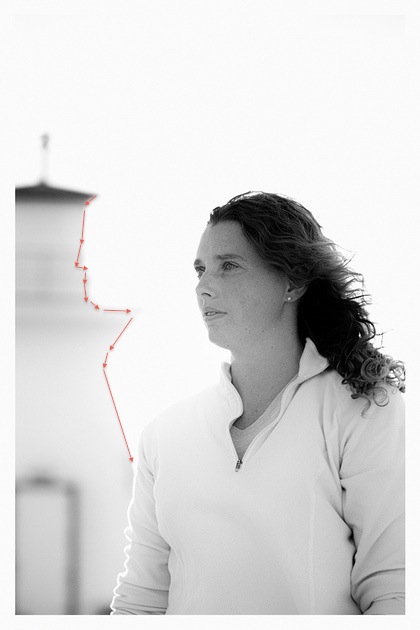
I hadn’t noticed it until my wife pointed it out.
Admittedly, our brains are always seeking to make order of the world around us, but the two main elements in this image — photographically speaking —complete each other. This sort of harmony ultimately resonates with the viewer, whether they know it or not.
—Peter.
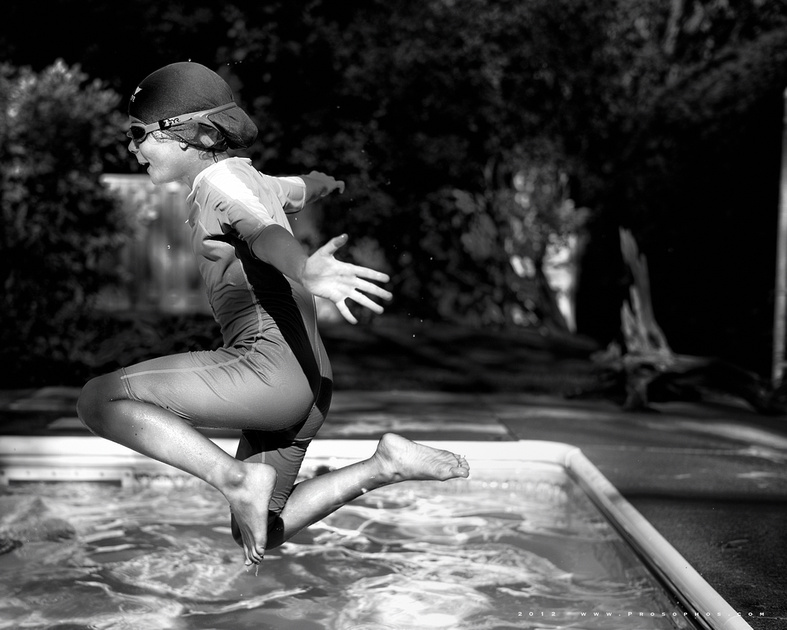
Unfortunately, no one can be told what the Matrix is. You have to see it for yourself.
—Morpheus, The Matrix.
Fans of the movie The Matrix will no doubt understand my reference to it in the context of this image.
This is a technically difficult shot, not so much because of the action (I pre-focussed on the plane of her anticipated trajectory), but because of the extremes of light and dark populating this scene… accurately judging the exposure was quite a challenge.
And capturing her form in this most interesting pose — at the moment she entered the slice of space illuminated by a shaft of sunlight — was accomplished with the aid of good timing and a hefty dose of luck.
This photo was chosen as a Leica Fotografie International (LFI) Master Shot.
—Peter.
↑Leica M9 and Leica 50mm Summilux ASPH @ f/1.4.
Unofficially anyway.
As an aside, after judging for the moment, lighting, composition, and post-processing, I’m always most pleased with an image of mine if it makes me believe — even for a moment — that I’m staring at a painting.
It’s too soon to know if this one qualifies, but that’s my early impression.

↑Leica M9 and Leica 50mm Summilux ASPH @ f/1.4.
It’s not easy nailing this kind of close-range shot at f/1.4 with a manual focus rangefinder camera, but when I’m successful, it’s always worth it.
In this case, there is a problem with the image in that the horizon is not level (a photographic “no-no“, most of the time), and fixing this will result in her foot being cut off at the bottom edge of the frame (a bigger photographic “no-no“).
I’ve therefore decided to keep things as they are… hopefully the viewer will think that I meant to shoot it this way — intentionally slanting the image so that it takes on a more dynamic look. 😉
[Incidentally, the other Chasing the Ball images may be found here, here, and within this article about using the M9 for sports here.]

↑Leica M9 and Leica 50mm Summilux @ f/1.4.
Photokina is:
“…the world’s largest trade fair for the photographic and imaging industries.”
…and all the photographic fora are abuzz with rumours and speculation about what new cameras and lenses are about to be unveiled.
Why “try to ignore them”?
If you’re visiting this site you probably already own a camera, so your time would be better spent learning how to use it properly!
Constantly “upgrading” equipment is not only costly, it’s counter-productive: you never hold on to it long enough to get any good at using it. Moreover, when you’re first getting acquainted with a new camera the quality of your photographic output is at an all-time low because you’re too busy trying to figure out all the operational nuances (all those buttons, menus, quirky behaviours, etc.) to actually concentrate on the basics like composition and lighting.
How do I know?
I’ve made the same mistake — over and over again. 😉
My advice?
Buy the best camera equipment you can afford (see my previous article here) because — all other things being equal — a good image will always look better when created with high-quality equipment vs. cheap equipment. Then, practice, practice, practice (there are no shortcuts!) and make that camera an extension of your brain… the photos will follow.
On the off-chance you don’t “bond” with your gear (and this sometimes happens when the camera isn’t the right size or shape, etc.) you’ll probably be able to sell it and get most of your money back… good equipment is always in demand.
Did I mention, practice, practice, practice?
[Disclaimer: This is a bit tongue-in-cheek, but mostly true.]
—Peter.
 Prosophos