A double-meaning with this title: her studies, of course, and my ongoing study of the M240 colour signature.
—Peter.


A double-meaning with this title: her studies, of course, and my ongoing study of the M240 colour signature.
—Peter.
There’s an ethereal quality in the image towards the right edge of the frame — caused by a bit of lens flare… but it appears as if the film grain is commingling with the very light that it’s trying to contain.
Don’t you just love film?
—Peter.

I’ve been busy developing Tri-X, shot with my Mamiya RZ67 and Leica M3, using my process for developing B&W film.
The moments captured reflect what I cherish the most: Life’s Little Moments.
Unfortunately, we’ve been thrust into darkness again, as winter doesn’t seem to want to go. If I was photographing with a digital camera, my output over the last few days would have been zero. But somehow, with a shutter speed of 1/15 (or less!) and a few rolls of Kodak, I’ve produced a few images worth keeping.
I’ll be posting some of them, starting tomorrow.
In the meantime… I wait for good light.
—Peter.
I shot a roll of 120 film today, using the equipment in the title above.
10 shots for the roll, 6 of them were keepers… I wish my yield with digital approached that ratio.
I’ll be posting some of the images later this week.
What I love about this set-up is that the output makes everyday life look like art. Or, maybe I should say that it reveals the art of everyday life.
—Peter.
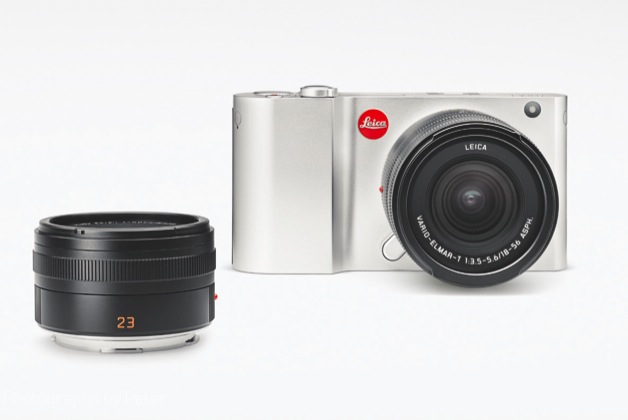
↑Photo courtesy Leica.
No, I wasn’t given the newly-released Leica T Type 701 to review. And no, I haven’t tried it.
But I’m getting emails asking me about it, so I’ll make a few comments.
The sensor is excellent (they’re using a tried-and-tested sensor), and the new lenses (only two have been announced so far) will perform in the typical Leica fashion — wonderfully. And, of course, they released an M adapter for M lenses. Nice.
I’m too biased towards optical viewfinders and larger sensors to be tempted by it.
However, I’m quite impressed with Leica‘s execution on this release. They got the marketing right, and the design (minimalistic — read: excellent). They even got the right reviewers on board, and were careful to educate them on the product beforehand.
Most impressively, they out-Appled Apple with the interface.
I like what they’ve done.
—Peter.
My first portrait using the Mamiya 180mm f/4.5 Short Barrel lens with the Mamiya Tilt/Shift Adapter.
I really should be supporting this heavy and unwieldy gear with a tripod, but I’ve avoided tripods all my life (ahhh the undisciplined life of a candid photographer).
Not bad though. I see great potential with this set-up.
—Peter.

You have to love this city and its weather 😉 .
This image was taken using the Mamiya 110/2.8 at its near focus limit; even at f/4 (the aperture used for this shot), the depth of field is quite thin — perhaps too thin for this portrait, since only the near eye is in focus.
Still, I like it.
The look of the Tri-X film and the bigger 6 x 7 “sensor” of medium format is quite remarkable. Notice the true-to-life rendering of his face, texture of his hat, etc. Currently, high-end 35mm digital cameras may be able to out-resolve this antiquated gear (at least using the scanner I’m using), but they cannot duplicate the look of this image.
—Peter.


Last week’s experience with new gear made me appreciate something all over again: the joy of shooting with a rangefinder.
I’ve written about this previously, but it doesn’t hurt to be taught old lessons again.
Many people view the Leica rangefinder and its mechanical coincident focusing mechanism as antiquated. Yet, I’ve chosen this type of camera (starting with the M8) for almost 100% of my photography for the last 7 years. For me, and many others, there is no better example of an unobtrusive and high quality image-capable camera.
Recently, another camera company has been celebrated for manufacturing smaller-than-DSLR “full frame” bodies, yet it is noteworthy that Leica accomplished this back 2009 with the M9. Moreover, to this day, Leica is the only company that (mostly) understands the ergonomics of a proper camera and the importance of an optical viewfinder.
The modern Leica M camera carries forward design principles that have been retained, honed, and perfected over many decades. Quite literally, there is no competition in the current camera landscape.
On a final note…
Although I have been famously critical of a sensor decision Leica made with the M240 (though I’m learning to live with it), I have no problem giving credit where credit is due, so:
—Peter.
This is an image, of course, but it’s also a test shot. I’m trying to tackle and tame the shortcomings of the CMOS sensor.
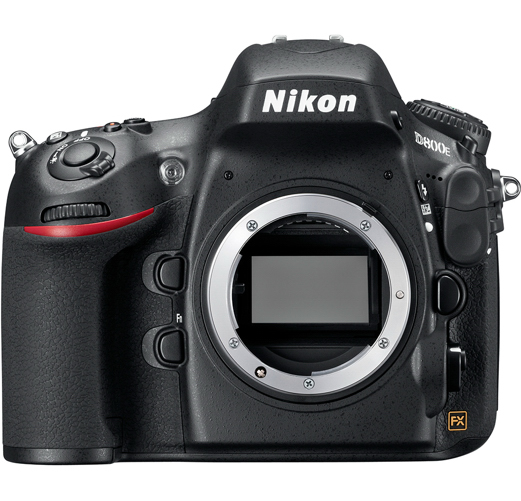
My brief experience with the D800E confirmed for me that “CMOS is CMOS” when it comes to trying to pull out shadow detail (or getting micro-contrast, or getting good skin tones)… i.e., as of April 2014, it’s not as good as CCD, whether we’re talking Nikon or Leica.
Surprisingly, the D800E also made me appreciate the M240 more.
However, going forward I’m going to give the technical stuff a rest and start concentrating on photography again.
And as I go along I hopefully will be able to reduce the time it took to get this image to where I wanted it to be.
—Peter.

↑Leica M240 and Voigtländer Nokton 40mm @ f/1.4.
Here’s a second image, taken a little earlier from the first (and cropped).
The lighting is different, and I’ve processed it differently too.
I realize I’m comparing apples to oranges, but I’m curious on your thoughts as I work through these D800E/Otus files.
—Peter.
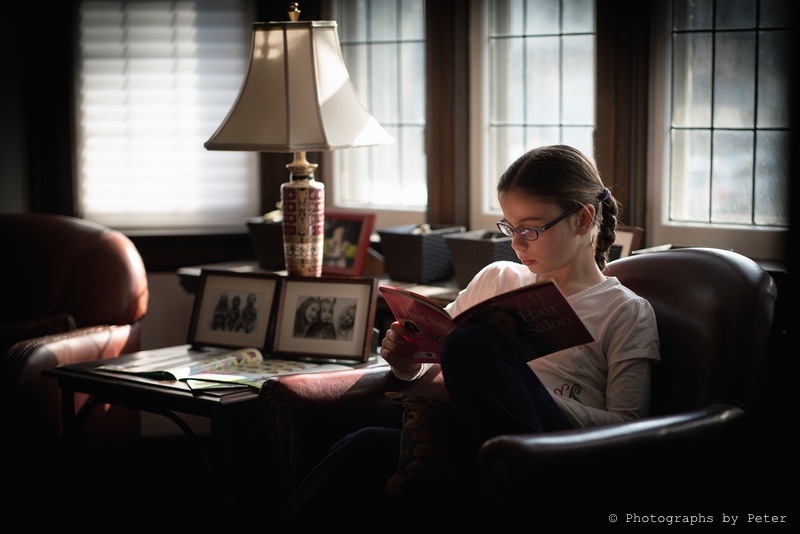
↑Nikon D800E and Zeiss Otus 55mm @ f/1.4.
The art and science of composition.
Or, synchronicity.
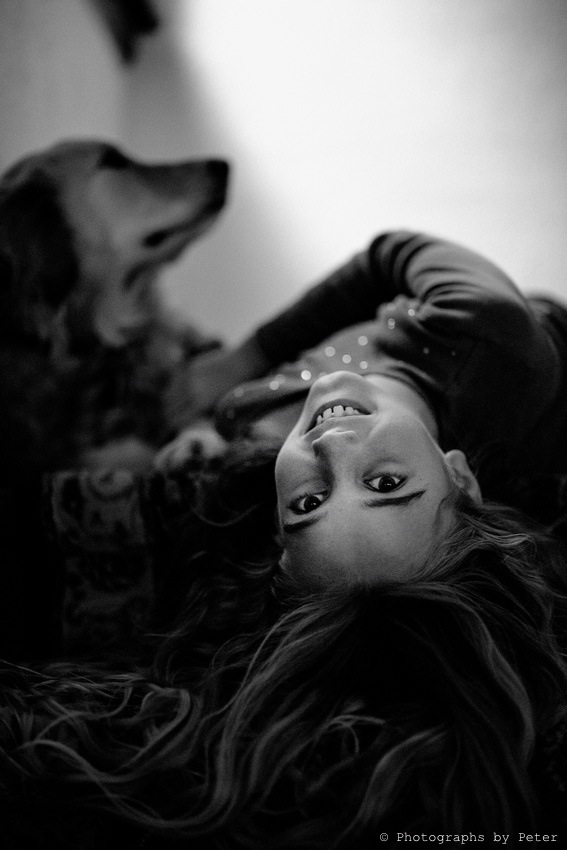
↑Nikon D800E and Zeiss Otus 55mm @ f/1.4.
This is a test shot using my recently acquired used Mamiya tilt/shift accessory on Fuji instant (“Polaroid”) film.
No alcohol was harmed during the testing process.

↑Mamiya RZ67, Mamiya 180mm @ f/4.5, tilt/shift accessory, and Fuji FB-3000.
Ever since I acquired the Mamiya RZ67, I have been searching for a specific accessory item for it.
The trouble is, it is difficult to find a used example of this piece. And brand new, it sells for more than what I paid for my entire (used) Mamiya kit.
However, last week I found a mint copy of what I was looking for, at an exceptionally low price. I thought it was too good to be true, until it arrived this week.
–
–

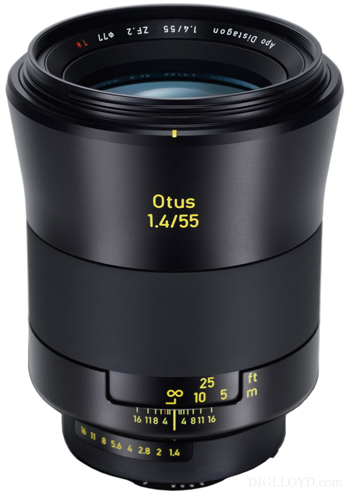
(the above image was taken with my new digital set-up: the Nikon D800E and Zeiss Otus 55mm @ f/1.4)
–
I am amazed at how many of you correctly deduced either the lens or camera, based on the two “test images” I posted over the last 24 hours. A few of you even employed a psychological analysis of me to come up with your answer.
The first person to correctly guess both camera and lens, even before the first test shot, was Johannes. Impressive predictive prowess, my friend.
Honourable mention goes to Andrew, who correctly guessed the lens and steadfastly held on to his prediction.
So here I go… on to a new adventure.
Please be patient with the images. The M9 + 50 Summilux ASPH pairing produces a different look, there is no doubt. In many ways I prefer its rendering to my new gear (the M9 has a CCD sensor that is superior — at base ISO — to any of the current CMOS offerings, and Leica lenses are of course legendary).
Yet, I’m back to Nikon, where my digital experience was first forged.
In a sense, I’m home again.
—Peter.
Orchids in the evening.
Considering the camera was handheld at a shutter speed of only 1/125 sec, the sharpness is excellent. The shutter vibration is better than what I expected. I’m pleasantly surprised.
The lighting was mixed (natural twilight and nearby incandescent) and the colour is true to what I saw.
Tonality is really nice too.

–
–
Aperture: Undisclosed
Shutter Speed: 1/125 sec
ISO: 400
Camera: Undisclosed
Lens: Undisclosed
As promised, here is the 100% crop from the image posted earlier today:

–
–
Aperture: Undisclosed
Shutter Speed: 1/200 sec
ISO: 500
Camera: Undisclosed
Lens: Undisclosed
For the first time in five years, I am without a digital Leica M (my Leica M9 is gone, and so are my Leica lenses).
I don’t see myself purchasing another digital Leica M again, unless:
–
The Leica M3 and Voigtländer Nokton 40mm are still with me.
The Mamiya RZ67 is with me.
My deep connection to rangefinders will remain with my M3, and I will continue to develop my portrait photography with the formidable RZ67. Both of these are, of course, film cameras.
I’ll therefore be exploring another digital system.
In fact, it’s already in my hands.
—Peter.
This was shot wide open @ f/2.8, but required a relatively slow shutter speed of 1/30 sec to expose the foreground figures correctly. The camera was braced on the floor to reduce vibration and also to obtain the perspective I was seeking.
I was lucky to hit the shutter at just the right moment — the eye contact was brief.
I wasn’t sure how the 110/2.8 would deal with shooting into the light, but the lens has once again impressed me.
And, I am really enjoying the Mamiya RZ67… more so than I thought I would. Yes, it’s a large and heavy camera, but the system is so well thought out that it prevents you from “screwing up” while delivering exceptional results.
When I purchased my Mamiya equipment, the 180/4.5 lens was also included, but I haven’t yet photographed with it.
—Peter.

↑Mamiya RZ67, Mamiya 110mm @ f/2.8, and Kodak Tri-X 400.
 Prosophos