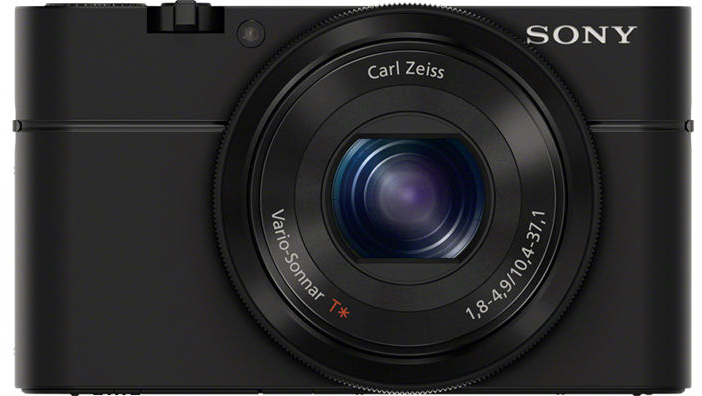
The Camera Store reviews the Epson R-D1.

Inspiration, Q&A

Prosophos - Epson R-D1

Yes indeed.  As part of the The Camera Store‘s ongoing Unsung Cameras of Yesteryear series Chris Niccolls reviews the Epson R-D1 —the camera that actually preceded the Leica M8.  The review came out almost a month ago but I hadn’t seen it until now.

As always, it’s an entertaining and informative video (I find TCS does the best video reviews out there).

For those of you who appreciate CCD sensors, check out what Chris says about the image quality coming out of this more-than-a-decade year old 6 MP digital rangefinder (9:30 mark of the video).

—Peter.

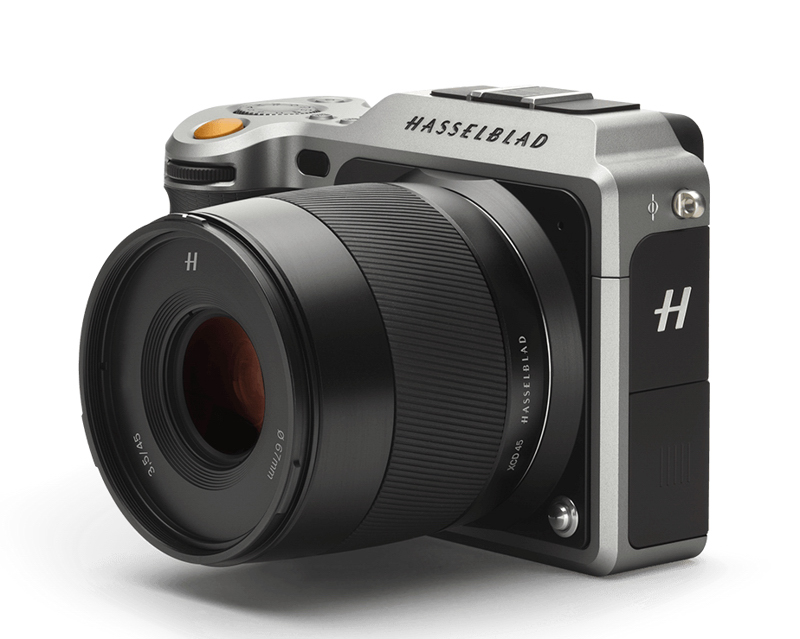
The Hasselblad X1D.

Inspiration, Q&A

Prosophos - Hasselblad X1D

Image courtesy of Hasselblad.

I’m not sure if this is accurate, but the following may be of interest to you:

“The camera is not fast, however. It takes a long time to boot up, a long time to write images to its dual SD cards, and navigating the interface isn’t exactly smooth. The autofocus system is slow and ponderous, and you can hear the lenses cranking away as they rack back and forth trying to lock focus. This is definitely not a camera for sports photography or any fast action.

But for portraiture, landscapes, still life, or any other slower photography discipline, the X1D promises to provide a level of image quality you can’t get with smaller format cameras. We’re looking forward to spending more time with the camera and evaluating the image output from a final production version when the camera hits stores later this summer.”

The Verge.

This is the first hands-on report I’ve read that goes into any detail about the handling of the Hasselblad X1D.

It’s what I feared, but expected.

As long as photographers understand that the main draw of the X1D is that it is lighter than any other digital medium format camera, then “it’s all good” as they say.

Who knows? Maybe the final production version will be more speedy.

Just don’t bet on it.

—Peter.

My Camera of the Year for 2016.

Inspiration, Leica M8 (CCD Lives!), Leica M9(P)/M-E (CCD Lives!), Q&A, Teaching point

Prosophos - Leica M9 Black

My 35mm digital camera of the year for 2016 is:

Leica M9/M-E

🙂

After experimenting with the Nikon D810 (and other cameras) for more than seven months, I continue to prefer the Leica M9/M-E for image quality, at base ISO.

It is clear to me that the D810 has the better performing sensor by all objective metrics and has more malleable files, but somehow the M9 images look better.

(The runner up camera is once again the Leica M8.)

But, am I being premature with my selection?  What will the second half of 2016 bring?

Leica may finally improve on the disappointing M240 with the release of a new M in the fall, but realistically most of us won’t be able to get a hold of it until 2017.

Either way, don’t expect it to be a CCD camera like many of us have asked for in My Open a Letter to Leica.

I’ll be interested in it anyway, if the image quality is better than the M240.

—Peter.

Previous Camera of the Year Winners:


2015: Leica M9/M-E

2014: Leica M9/M-E

2013: Leica M9/M-E

2012: Leica M9/M-E

2011: Leica M9

2010: Leica M9

2009: Leica M9

2008: Leica M8/Nikon D3

2007: Leica M8/Nikon D3

2006: Leica M8

Fraction.

2016, Baseball, Beyond 200 feet of My House™, Favourite, Inspiration, Leica 50mm Summilux ASPH f/1.4, Leica M8 (CCD Lives!), Portrait, Q&A, Sports, Teaching point

The dividing line (and timing) of an out.

On a technical note, whereas I would have machine-gun-photographed with the D810 at 5 FPS to try to get this shot (and would have had a 50-50 chance), I was able to get the “decisive moment” with the M8 on a single click of the shutter.

—Peter.

Fraction

Leica M8 (CCD Lives!Prosophos Open Letter to Leica) + Leica 50mm Summilux ASPH.

Nikon D810 vs. Leica M9 (in “real life” use).

Inspiration, Leica 35mm Summilux ASPH FLE f/1.4, Leica M9(P)/M-E (CCD Lives!), Nikon, Nikon D810, Q&A, Sigma 35mm f/1.4 ART, Teaching point

(Not a scientific comparison between images taken at two different times under different conditions — but this reflects “actual use” conditions for me.)

(See related:  Nikon D810 vs. Leica M240 in “real life” use.)

I photographed my kids’ school Fun Fair yesterday.

Here is an image from the event, taken with the D810 + Sigma 35mm 1.4 Art @ f/4:

Fun Fair 2016

Here is an image from last year (2015), taken with the Leica M9 + Leica 35mm Summilux ASPH FLE @ f/4:

Fun Fair 2015

And here are the magnified views.

First, the D810 + Sigma 35mm f/1.4 Art @ f/4 (magnified):

Fun Fair 2016 (magnification)

Next, the Leica M9 + Leica 35mm Summilux ASPH FLE @ f/4 (magnified):

Fun Fair 2015 (mangification)

My conclusions:

The D810 + Sigma 35 Art made it easier to photograph the event, the M9 + Leica 35 FLE produced more pleasing image quality (in “actual use” conditions).

In all fairness to the D810 + Sigma 35 Art, when the conditions are right and the focus is nailed, this combination leaves very little to be desired: Nikon D810 + Sigma 35 Art in optimal conditions.

—Peter.

Nikon D810 vs. Leica M240 (in “real life” use).

Inspiration, Q&A, Teaching point

This is a comparison I did tonight for my own purposes.  I’ve decided to share it with you.

This reflects my “real life” use of these camera/lens combinations, but does not represent a scientific analysis.

I repeat, this is NOT scientific.

Here are two images from the kids’ school Lip Synch competition.

The first was taken in 2015 with the Leica M240 + Leica 50mm Summilux ASPH:

(f/2.8 | 1/250 | ISO 1600).
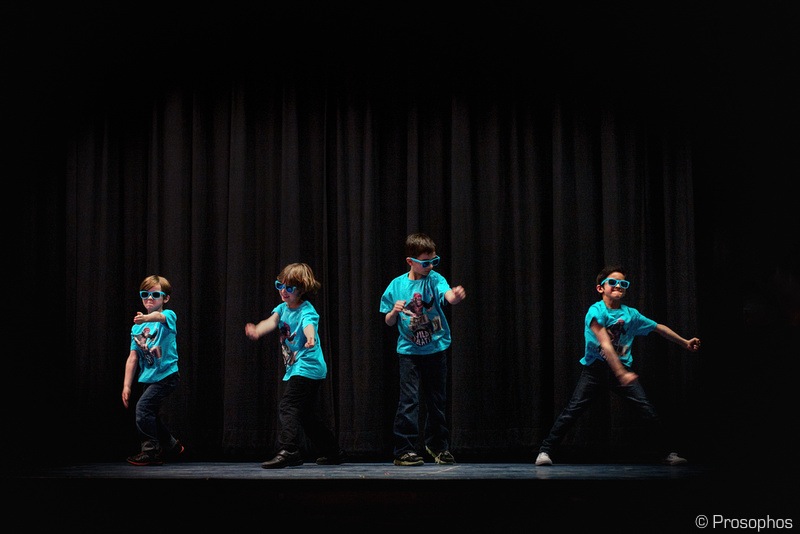
Prosophos Leica M240 and Leica 50

The second was taken in 2016 with the Nikon D810 + Sigma 50mm ART (I was sitting a little further back):

(f/2.8 | 1/250 | ISO 1000).

Prosophos Nikon D810 and Sigma 50

Now here are the central crops (looking at the individuals in sharpest focus from each image)…

Leica M240 + Leica 50mm Summilux ASPH (100%):

Prosophos Leica M240 and Leica 50 (crop)

Nikon D810 + Sigma 50mm ART (100%):

Prosophos Nikon D810 and Sigma 50 (crop)

The results above are consistent with other images I’ve examined.

The variables that differ between these two images are numerous.  The only thing they have in common is that they represent real-life output from my use of these camera/lenses.

What do YOU think of the results?

—Peter.


Safe!

2016, Baseball, Beyond 200 feet of My House™, Favourite, Inspiration, Nikon, Nikon 300mm f/4E PF ED VR, Nikon D810, Portrait, Q&A, Sports, Teaching point

I love the placement of the elements here… including the stray helmet to the right.

On another note, I’m really digging the Nikon 300mm f/4 E PF ED VR (a lens whose name is longer than its focal length!).

It’s slightly larger than my Sigma 50/1.4 ART, but weighs less (755 g for the Nikon, 815 g for the Sigma), making it relatively easy to carry around.

Surprisingly, the 300mm focal length has proven to be very versatile.

—Peter.

Safe!

↑Nikon D810 + Nikon 300mm f/4E PF ED VR.

Test Shots: Leica M8 and 75mm Summarit.

Inspiration, Leica 75mm Summarit f/2.5, Leica M8 (CCD Lives!), Q&A, Teaching point, Within 200 feet of My House™

I welcomed the return of an old friend recently:  the Leica M8.  It was the gateway camera for me into the world of rangefinders, almost 10 years ago.

Today, I welcomed another old friend, the Leica 75 Summarit f/2.5.  Seeing as the entire Summarit line of lenses have been updated recently, there are currently many great deals to be had on the “old” versions.  As it happens, the 75/2.5 is one of my all-time favourite Leica lenses (see my brief 75mm Summarit review here).

As soon as the 75/2.5 arrived this afternoon, I stepped outside (but Only Within 200 feet of My House™) to shoot some quick test shots while the light was still good.

It’s nice to see that my two friends still play nicely together.

—Peter.

Prosophos - M8 and 75 Summarit (1)

Prosophos - M8 and 75 Summarit (2)

Prosophos - M8 and 75 Summarit (3)

Leica M8 (CCD Lives!Prosophos Open Letter to Leica) + Leica 75mm Summarit f/2.5.

Sigma 35mm Art @ f/1.4 on the Nikon D810 (very, very short review).

Inspiration, Nikon, Nikon D810, Portrait, Q&A, Sigma 35mm f/1.4 ART, Teaching point

Ever since I switched over to the Nikon D810 and started using Sigma Art lenses, I’ve received a few questions asking me how well the Sigmas perform on the high-resolution D810.

Well let me put it this way: the internet got it right… these lenses are exceptional.

The Art lenses are the only lenses I’ve tried on the D810 that gave me the kind of performance I’d gotten used to with my Leica gear.  In fact, I’d venture to say I probably would have already abandoned the D810 and missed out on what the camera sensor is truly capable of, if it wasn’t for the Sigma lenses.

As a simple demonstration, I’m posting a crop from yesterday’s image Up in order to illustrate the sort of central sharpness you can expect when using the 35 Art @ f/1.4 (focus is on the near eye):


Up (central magnification - Nikon D810 and Sigma 35mm ART at 1.4)

Sharpness, of course, is only one facet of lens performance, but I also appreciate how this lens has very little distortion and how beautifully it handles light, colour, and out-of-focus rendering.  Last, but not least, I also appreciate how Sigma has consciously avoided adorning the exterior with tacky emblems: it comes wrapped in a wonderfully nondescript dark body with minimal markings:

Sigma 35mm 1.4 ART - Prosophos


—Peter.

H’s Hockey Card.

2016, Favourite, Hockey, Inspiration, Nikon, Nikon 300mm f/4E PF ED VR, Nikon D810, Portrait, Q&A, Sports, Teaching point

This image is from this morning’s game.

(I decided to turn it into a “hockey card” for my daughter.)

On a technical note, it was nice having a 300mm lens today.  Telephoto reach was one thing I’ve missed while using my rangefinder cameras all of these years.  As my children have gotten bigger, so have the playing venues… hence the need.

On another note, I’ve gone from begrudgingly accepting my Nikon D810 to deeply appreciating it.  I can’t say that I’m passionate about it (yet) like I am with my Leica M3 (or, previously, my M9), but I am shocked to state that I actually enjoy photographing with it.  I’ll be damned.  It’s interesting how the incremental improvements over the D800 (the quiet shutter being one of the obvious changes) have transformed the user experience.  Good work Nikon.

Also, I’ll have to comment more on the Nikon 300/4 lens (used for this image) on a future post.  I’ll say this much now though:  I’m very pleased with it.

—Peter.

H's Hockey Card

Sparkle.

Inspiration, Nikon, Nikon D810, Portrait, Q&A, Sigma 35mm f/1.4 ART, Teaching point

There’s something about the way the Sigma 35mm f/1.4 ART renders… photos from it just sparkle, for lack of a better word.

At this point, I think I may even prefer it over the Sigma 50mm f/1.4 ART, but I haven’t shot enough with either to draw any definite conclusions (though the fact that I might be favouring a 35 over a 50 is saying something, given I’ve traditionally been a 50 shooter).

Either way, both of these Sigma ART lenses are phenomenal.  I can’t wait until springtime to get outside in good light and really play with them.

—Peter.

Sparkle

Test Shot Portraits #1 and #2.

2016, Favourite, Film, Inspiration, Kodak Tri-X 400, Leica - Black Chrome Special Edition, Leica - Kanto, Leica 50mm Summilux ASPH f/1.4, Leica M3, Portrait, Q&A, Scanner - Plustek 120, Teaching point

Test shot portraits: the first in harsh artificial light last night; the second in natural light earlier today.

The focus is where I wanted it in the first, but I can’t say that about the second image (it is slightly front-focused).  Perhaps I’m out of practice, perhaps my eyesight is starting to fail me, perhaps the rangefinder (or lens) is off.

I have no idea, because this is film.

And that’s the beauty of it.

—Peter.

Kanto Leica M3 50mm Summilux Black Chrome Test Shot 1 Prosophos

Kanto Leica M3 50mm Summilux Black Chrome Test Shot 2 Prosophos

Close Connection.

Film, Inspiration, Kodak Tri-X 400, Minolta Autocord CDS III 75mm Rokkor f/3.5, Print, Q&A, Rolleinar 2, Scanner - Plustek 120, Teaching point

There’s another close connection going on here…

I’ve attached a Rolleinar 2 close-up lens kit to the Minolta Autocord to get this shot.

This is the first test image with the combination.  The buttery-smooth bokeh of the Rokkor f/3.5 is impressive, given the concomitant sharpness in the in-focus areas.  It’s one of the reasons I sought out the Autocord in the first place.  It’s rare to find such sharp-but-smooth rendering — often you only get to have one of these attributes in a lens.  The only other lenses I know of that are as well balanced are the Leica 50mm Summilux ASPH and the Mamiya RZ 110/2.8.

—Peter.

Close Connection