[Guest Post] Aaron C Greenman on Cameras, Human Perception, Photography.

Guest Post, Inspiration, Q&A, Teaching point

Aaron just posted this comment (see below) under the the October 1 post, but I believe his thoughts warrant  a standalone post.

Thank you,

—Peter.

Aaron C Greenman writes:

“I agree with you that for the majority of “shooters” the EVF is the future, but for the majority of “makers”, the OVF and/or rangefinder will continue to be critical to the experience.

My firm realisation was simply that we’ve reached a point where “better” in terms of specifications (megapixels, dynamic range, “what I see in the viewfinder is what I get in the viewfinder, etc.”) is not necessarily better for meaningful and impactful composition. And conceptually, when you step back a bit from the marketing speak of “live view”, it sounds like asinine marketing speak – what’s more “live view” than, in fact, looking at a direct view of reality? I was never aware that TV was more real and live than what my eyes see.

In many ways, philosophically, and given the amazing latitude that modern sensors give and that allowed in post-processing, I don’t understand the photographer’s focus on wanting to pre-determine all output variables before the shot. I understand focus (easiest with manual focus and distance scales even at 1.4, without an obsession for tack sharpness), but why on exposure, color processing, “effects”, image ratio, etc? All of this simply adds to the complexity up front, when the photographer’s focus should be on subject and composition.

I truly believe that for all the advances in technology, now that the pace and goals of camera development have been largely driven by electronics companies (Sony) as opposed to photography companies (Nikon, Canon, Olympus), images may be technically “better” (or more impressively outpacing what the average naked eye can see), but with no more artistic merit than before, and perhaps, on average, less.

A couple years ago on Peter’s site, I posted a comment about the increasing divide in digital photography between human perception of the scene and digital perception of the scene, and it’s impact on creating images that have humanity in them (and not just “impressiveness”). I’m still thinking through those issues, and I’m sure there’s a longer article somewhere in there waiting to be written.

In the industry’s relentless march to continually make more “capable” tools with higher ISO abilities, it has created a larger gap between how the eye and mind perceives a scene in terms of light and how the tool is capable of seeing the scene.

I’ve always believed that a lot of the CCD vs CMOS debate was actually an acknowledgement of the dissonance of the camera not seeing like the eye sees. The M9 with a 35mm Summilux basically tolerated light like the human eye – during the magic hour, the photographer’s ability to see the scene and the camera’s ability to see the scene were synchronised; most all CCDs when paired with a fast lens were tuned in a way to more or less match the film range, which more or less matched the capability of human vision.

As ISOs go through the roof, suddenly the camera sees more than the eye, or to take it to an extreme, the camera viewfinder can create all the aesthetic parameters of the work of art that the photographer wants before the photographer even takes the photo. But is this what we really want and need to develop our “eye” and create a visual memory of our lives in our minds and not just on the screen/paper?

It’s the same story with “creative” points of view allowable with tilt screens, phone remote apps, and, of course, drones. All “impressive” capabilities that allow “new” images from points of view that people haven’t necessarily seen before, but how many of these images have any real merit as compositions with a valuable message or story once the freshness wilts? And does the birds eye view really allow us to develop a better understanding of how to have successful human interaction, which frankly our planet could use more of to get us out of the current mess that we’re in?

OK maybe I’m reaching a little there – but the issues are fundamental. It’s why to me despite the Leica S not “keeping up” with the technology cycle, I still am incredibly tempted by the S006, because of its absolutely brilliant split prism viewfinder screen, no live view, no video, and a wonderful sensor and processing engine. It’s an M9 for the SLR set. Too big for my type of photography, ans call me old school, but I’m constantly wowed by that viewfinder.

I don’t want to be as coy or as blatantly European as saying it’s all about Das W, but Leica in their own way has a real point, once you cut through the marketing babble.

As I’ve said before, to each his own. The M9 has been the only camera in my 30 year career that I can truly say has made me a better photographer, and that I enjoy picking up like no other. The images aren’t as sharp, and the highlights not as smooth, and the composition not as perfect, but every time I’m at least damn sure that it’s identical to what my eyes saw and what my mind remembers, which is invaluable.

Best Regards,

ACG

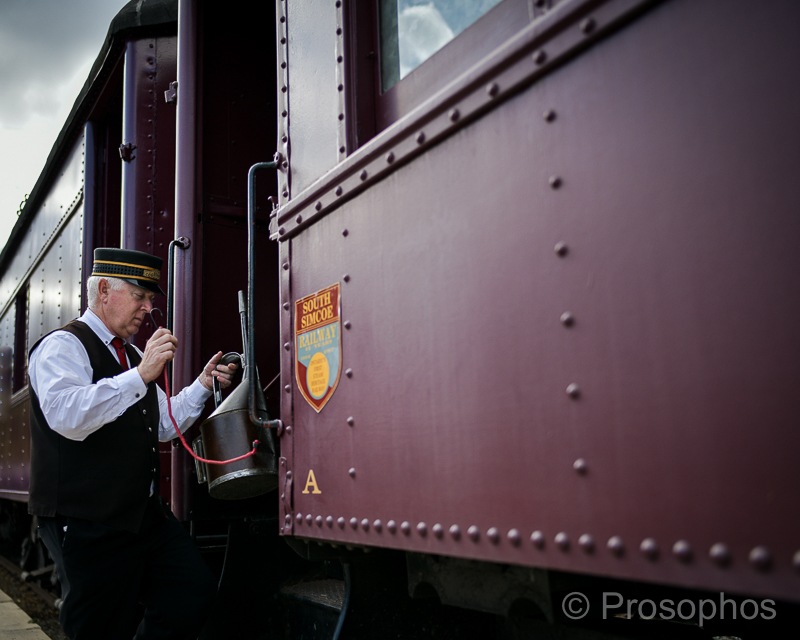
[Guest Post]: Aaron C Greenman (1 image).

2017, Guest Post, Inspiration, Leica M9(P)/M-E (CCD Lives!), Q&A, Teaching point

Today, Aaron shares his thoughts (as well as a fine image) after his recent extensive use of the Hasselblad X1D.

You can find more of Mr. Greenman‘s work at:  acuitycolorgrain

Thank you Aaron for your contribution!

—Peter.

– – – – – –

ACG writes:

“After a dip in the non-Leica waters for a few months (Hasselblad X1D and 45mm to be exact) and a penultimate, frustrating experience continually trying to get my “decisive moment” (and failing) with that set-up, I’m back to the M9P and MM exclusively, with my trusty 35mm Summilux ASPH (pre-FLE).

We all go through phases, but this last one has taught me definitively: megapixels and dynamic range no longer matter, it’s all about the shooting experience, the “view”, and the rendering of the lens. Long live Leica M……”

↑Image © Aaron C Greenman.