In praise of blurry images.

2012, Inspiration, Konica Hexanon 60mm f/1.2, Leica 35mm Summilux ASPH FLE f/1.4, Leica 50mm Summilux ASPH f/1.4, Nikon, Nikon 58mm f/1.2 NOCT, Portrait, Teaching point

Sometimes I choose to post a blurry image.

Admittedly, most of the time it has been generated as a result of user (me!) error.  Occasionally, I’ve planned it.  Regardless of how it’s arrived at, there is something about it that has caught my eye.  Invariably, somebody will condemn it by pointing out the obvious: “it’s blurry”.  End of story.

Or is it?

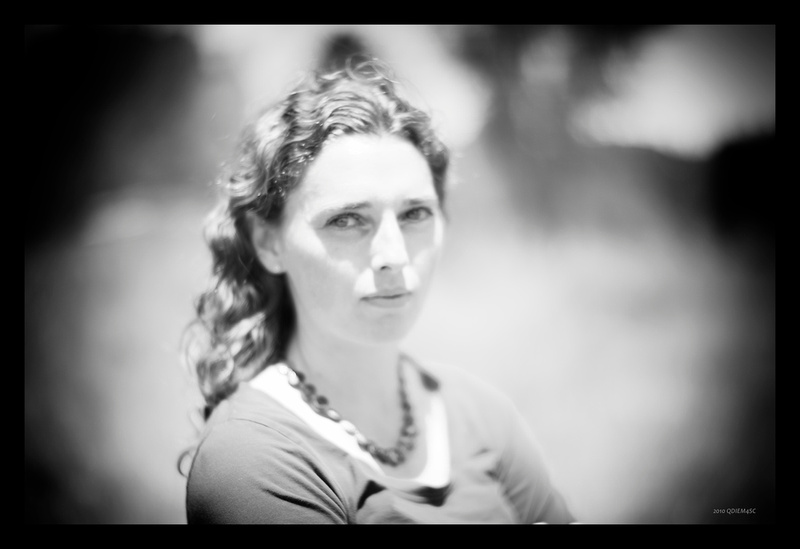
Sometimes, the out-of-focus-ness is adding more than it’s taking away.

Sometimes, the emotive intent of an image is made sharper precisely because it is blurry.

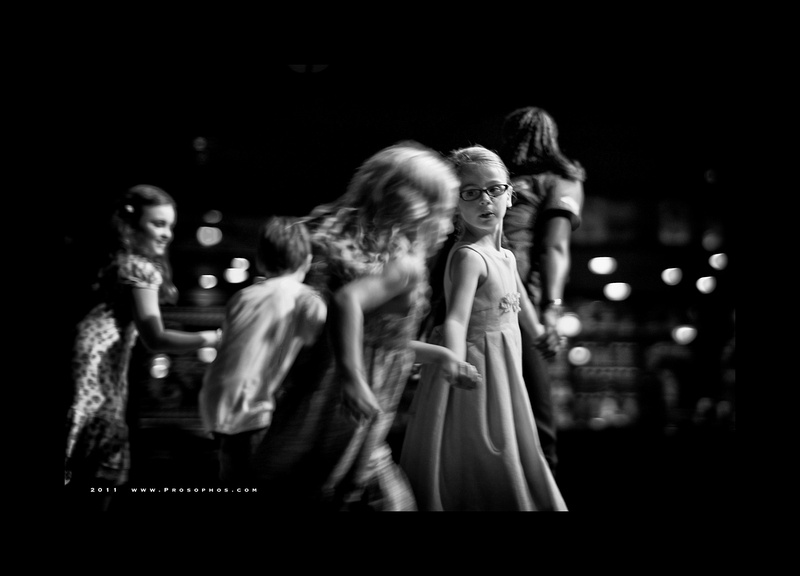
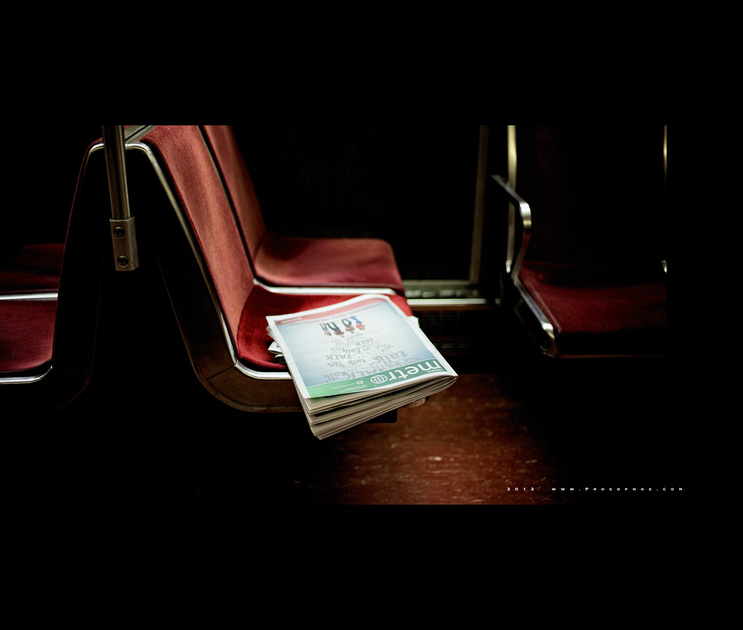
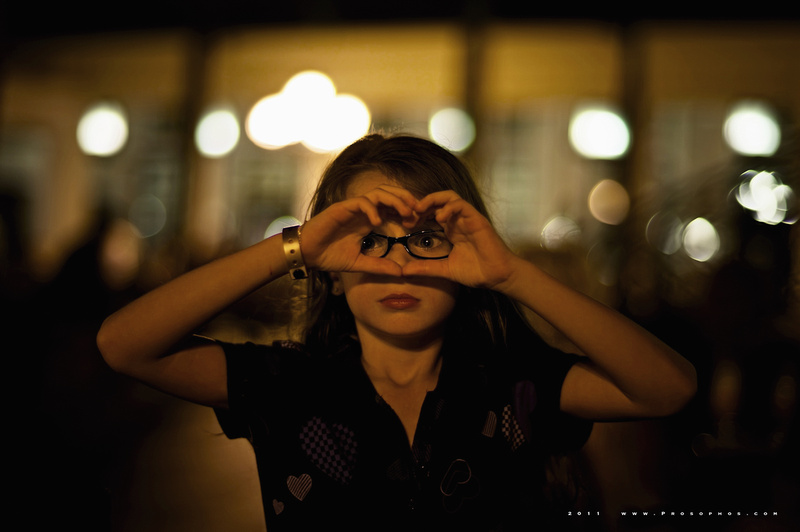
You’ll find some samples below.  They’re all blurry — and they all have left an indelible impression on my mind.

[And you?… do you have a favourite blurry image?  I’d love to see it…]

—Peter.

(please click on the images below to view)

↑Nikon D3S and Nikkor-NOCT 58mm @ f/1.2.

↑Leica M9 and Leica 50mm Summilux ASPH @ f/1.4.

↑Nikon D3S and Nikkor-NOCT 58mm @ f/1.2.

↑Leica M9 and Konica Hexanon 60mm @ f/1.2.

↑Leica M9 and Leica 35mm Summilux FLE @ f/1.4.

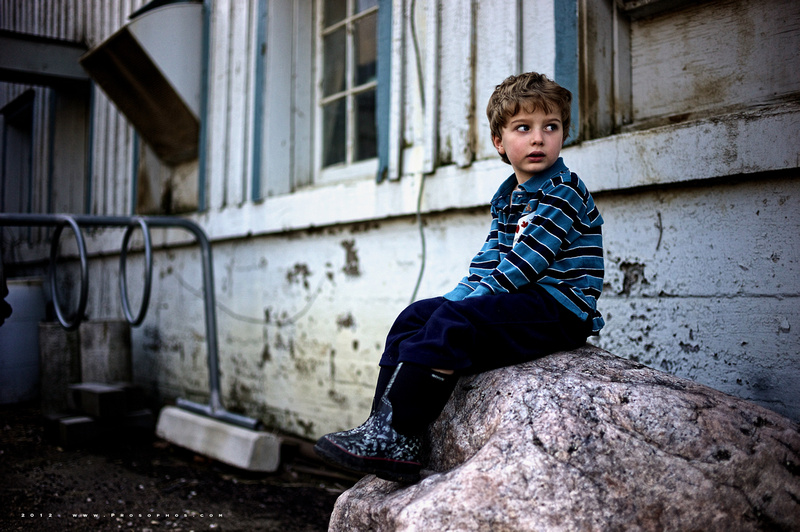
Little boy blue (before and after).

2012, Inspiration, Leica 35mm Summilux ASPH FLE f/1.4, Leica M9(P)/M-E (CCD Lives!), Teaching point

I’m posting an extra entry today, in response to a request from one of my viewers, Mark, who commented on the original Little Boy Blue image (please see the Comments section of that post, which also contains a detailed response from me).

Mark was wondering what the before-and-after images looked like (i.e., before-and-after post-processing was applied).

So Mark, this one’s for you.

Below, you will find the “before” image as it came out of the camera.  This is a DNG file loaded directly from my memory card and converted to JPG in Apple’s Aperture, without any intermediate steps on my part:

(please click on the image to view)

↑Little Boy Blue (before post-processing)

_

Note how “flat” the file appears, and how I intentionally underexposed the image at the time it was shot (one of my techniques when working with digital cameras).

Now, here is the “after” shot, following my customized post-processing.  This could have been processed an innumerable amount of ways, but I chose to do it this way:

(please click on the image to view)

↑Little Boy Blue (after post-processing)

_

I hope this helps, Mark.  If you ever make it to Toronto from Edmonton, I would be happy to take you on a Practical Photography Teaching session!

Regards,

—Peter.

2nd man out (Cinematic).

2012, Favourite, Inspiration, Portrait, Teaching point, Voigtländer 40mm f/1.4 Nokton

The coalescing of moving figures into a foreground-midground-background composition, the interaction with the observer… the split-second alignment of it all before it vanishes like a dream.

I live — photographically speaking — for moments like this.

(please click on the image to view)

↑Leica M9 and Voigtländer Nokton 40mm @ f/1.4.

The passionate breakfast (Cinematic).

2012, Inspiration, Portrait, Teaching point, Voigtländer 40mm f/1.4 Nokton

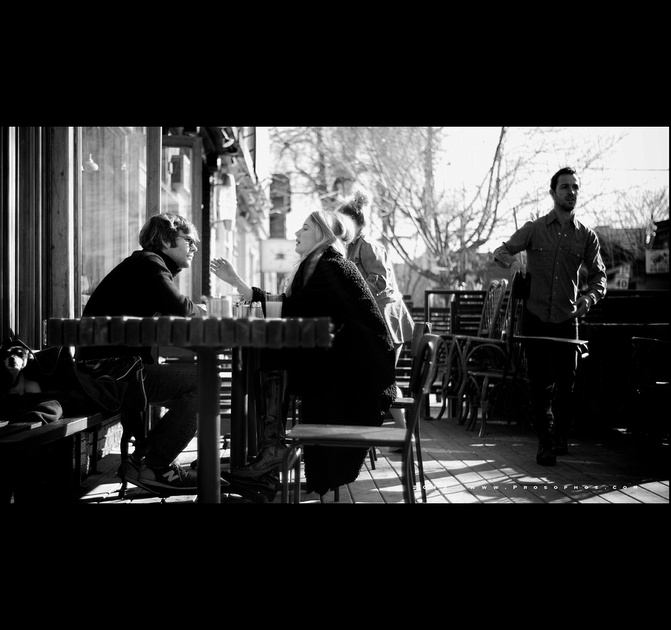
I spotted these two when I met Dominic for our 1-on-1 Photography Teaching Session, and they generously allowed us to intrude upon their intimate morning meal.

Winter is thawing, spring is arriving, and the light is finally returning… and you can see it on everybody’s face.

(please click on the image to view)

↑Leica M9 and Voigtländer Nokton 40mm @ f/1.4.

Thanks Dominic!

Inspiration, Q&A, Teaching point

Just finished a Practical 1-on-1 Teaching Session with Dominic this morning and had a great time.  As always, I tried to pass on some photographic pearls of wisdom — hope I succeeded. :)

Thanks Dominic, you are a gentleman and it was a pleasure meeting and photographing with you (I hope your planned solo shooting this afternoon was a success… please send some photos my way!).

Reminder:  if you’re interested in a practical, one-on-one photography teaching session, please have a look here, or contact me here.

—Peter.

You, the viewer.

Inspiration, Q&A, Teaching point

WordPress, which hosts this site for me, has recently added some functionality to their statistical summary pages.

Up until today, I knew that there were just over 1,000 visits to the site a day.  From the comments I receive here and via email, I had a sense of where some of the viewership was originating, but it was all a little vague.

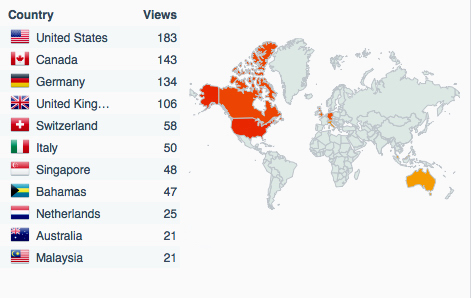
Well now the picture —so to speak — is clearer… and I’m a little bit surprised.  For example, here is a screen shot taken yesterday from my admin page showing the breakdown of visits:

↑Views on Thursday March 8, 2012, as of 8:30 pm.

The visits from the United States and Canada, and even the UK, are not so surprising, but Germany being in the top 3?  That was a pleasant surprise.  As was seeing the presence of Switzerland, Italy, Singapore, Bahamas, Netherlands, Australia, and Malaysia!

In fact, when I access the all-time viewership, I am quite amazed:

↑Distribution of all-time viewers (Total = 189,106) since April 25, 2011.

When I started this site, I knew I wanted to build a platform upon which I could share my images and thoughts to satisfy my creative needs.  I also wanted to establish a web “presence” so that I could build a client base for my photography.  What I didn’t realize at the time was how much contact I would have with people from all over the world… people who share the same passion for “seeing” and ultimately interpreting the world… all within the constraints of a humble still image.

That has been most gratifying.

—Peter.

French braid (Cinematic).

2012, Favourite, Inspiration, Leica 35mm Summilux ASPH FLE f/1.4, Portrait, Teaching point

I waited until the right moment to click the shutter.

The viewer is being pulled into this image by the vortex of intertwining arms that are, in turn, intertwining the young girl’s hair.  Similar patterns can also be seen in the white sweater and background window treatment.

(please click on the image to view)

↑Leica M9 and Leica 35mm Summilux FLE @ f/1.4.

Quietly content.

Inspiration, Leica 75mm Summilux (Canada 🇨🇦) f/1.4, Portrait, Teaching point

Notice the beautiful window light, and the mirroring of his profile by the globe.

When you click to view the larger image, please also note how sharp his eye (the point of focus) appears, even wide open @ f/1.4.  Everything else fades softly out of focus.

Those two qualities — biting sharpness and delicate out-of-focus rendering — are both courtesy of the Leica 75mm Summilux lens.

(please click on the image to view)

↑Leica M9 and Leica 75mm Summilux @ f/1.4.

Two Sunday mornings open in March for Practical Teaching.

2012, Inspiration, Q&A, Teaching point

If you’re a photography novice in the Toronto area and are interested in one-on-one Practical Photography – Teaching, I currently have two Sunday sessions available in March:

March 4 & 25 (morning sessions)

The two hour sessions are tailored to your needs and are meant to be a non-intimidating way of getting out there and taking photos!

If you want to learn more about my teaching sessions, please see here.

Thanks,

—Peter.

Forever young.

2012, Inspiration, Leica 35mm Summilux ASPH FLE f/1.4, Portrait, Teaching point

A capricious breeze passes, ruffling his hair as the image is taken.

This shot works on a personal level, but also because of the mirroring going on:  the sprawling “limbs” of the metal bars echo the branching tree limbs on the opposite side of the frame.

(please click on the image to view)

↑Leica M9 and Leica 35mm Summilux FLE @ f/1.4.

_

Notice also that all of the “limbs” (metal bars, human arm, tree branches) connect and span the frame:

_

_

Of course, I wasn’t thinking about all of this when I saw and captured this moment.

In reality, I crouched down and peered through the viewfinder, taking advantage of the wide-ish perspective offered by my 35mm lens and dynamically composed my shot until things looked just right.

—Peter.

Dancing (about our memories).

2012, Favourite, Inspiration, Konica Hexanon 60mm f/1.2, Portrait, Teaching point

In this frame, they exist perpetually in motion, but frozen in time.

We often review the images of our memories this way… in stop-start sequences.  Some frames are conjured from the darkest recesses of our minds — simultaneously blurry-and-sharp, complete-and-incomplete, and often… out of sequence.

(please click on the image to view)

↑Leica M9 and Konica Hexanon 60mm @ f/1.2.

Q and A: Voigtländer Nokton 40/1.4 vs. 35/1.2?

2012, Inspiration, Q&A, Teaching point, Voigtländer 35mm f/1.2 Nokton, Voigtländer 40mm f/1.4 Nokton

I received this via email this week and — because this is a question I’m often asked — I thought I would feature this as a Q&A post:

_

I’ve become a regular follower of your blog and I really love it! Respect to the fact that you manage to post a good and interesting photo each day. I try do to the same and sometimes it is hard to do so.

I’ve a question however. I work with a M8 and M9 and do weddings and other documentary work, sometimes portraits, lots of editiorial work. Since I left my 5D2 at home, life began to be fun again (I mean photographically). However, sometimes I miss my 12.500 iso and 50/1.2 lens (which wasn’t sharp at all wide open btw).
I’m thinking of buying a low-light lens to use in case the light is really bad. My fastest lenses are the 35 and 50 summicron and I’m thinking about the 35/1.2 and the 40/1.4. The 50 is too quirky I think.
The difference between the two is ‘only’ a half stop, but the difference between 1/45th and 1/60th can be crucial. On the other hand, I won’t take the 35 as a daily to go lens in my bag, while the 40 will fit in very easily. The price difference is also quit big, but not that big a deal. It’s still cheap in Leica-terms.
It wouldn’t be a problem to take the 35 to important shoots as an ‘in-case’ lense, but would that half stop make the difference?

Could you give me any advice in which of these two to choose?  I hope I don’t bother you too much with this these questions.

kind regards,

Joeri

_

Hi Joeri,

Thanks for the nice note!

The Voigtländer 35/1.2 (either Version 1 or 2) is the technically better lens with a desirable mix of both modern sharpness and classic rendering.  It does not focus shift, so it won’t frustrate your focusing attempts.  And it’s maximum f/1.2 aperture, as compared to other 35 lenses with a maximum aperture of f/1.4, does make a difference — not so much with respect to the extra light collected, but more in the ability to isolate subjects and create a nice “3D” effect (see an example image here).  If you don’t mind the size, it’s an all-around “better” lens than the Nokton 40/1.4.

The Nokton 40/1.4 on the other hand, is just so darn small and versatile, behaving in many ways like both a 35 and a 50 lens, but it’s the technically “inferior” lens:  not as sharp wide open, flares more, has been known to focus shift.

In the end, both lenses are capable of producing great images, so it really depends on what you value most – small size and versatility (40/1.4), or technical excellence (35/1.2).

It seems from your question that you already know the pros and cons of each lens, so it’s really up to personal preference.

Hope that helps, and thanks again for the nice note!

[If you are looking for more detailed information on both these lenses, please see my previous user reports:  Voigtländer Nokton 40mm f/1.4 and Voigtländer Nokton 35mm f/1.2]

—Peter.

Riding on the metro (cinematic).

2012, Favourite, Inspiration, Leica 35mm Summilux ASPH FLE f/1.4, Print, Teaching point

I’ve previously written about achieving simplicity in one’s images, and of finding inspiration in the little moments.

Here’s an example of both.

This image was captured on the way back from work.  The seats had just emptied of passengers and the train was sitting still for a few minutes with its doors wide open.  I became aware of a movement to my left and looked to find the pages of a discarded newspaper fluttering with the air current.

The simplicity of the scene was beautiful, as was the illumination provided by a single incandescent lamp from just outside the window — like a spotlight.

I raised the camera to my eye and clicked the shutter.

Soon after, the seats quickly filled up, the newspaper was taken away, and the doors closed.

The moment had come and gone.

(please click on the image to view)

↑Leica M9 and Leica 35mm Summilux FLE @ f/1.4.

Pole position.

2012, Inspiration, Teaching point, Voigtländer 40mm f/1.4 Nokton

This is a grab shot, taken yesterday during one of my Practical Photography – Teaching sessions.

At the time, I was discussing the importance of Strong Diagonals in images, as well as the importance of pre-focusing to nail shots like these at wide Apertures — in this case f/1.4.

Fortunately, this woman walked by, allowing me to illustrate the above points, as well as allowing me to demonstrate the importance of capturing an ambulating figure in mid-step.

And yes, this image was taken with the lovely little Voigtländer 40mm Nokton 40/1.4 — an extremely underrated lens.

(please click on the image to view)

↑Leica M9 and Voigtländer Nokton 40mm @ f/1.4.

Thanks Matt!

Inspiration, Teaching point

Matt signed up for one of my one-on-one teaching sessions a few weeks ago and I had the pleasure of meeting him this morning.  During our two hour walkabout, we discussed photography and did some shooting.  Oh yes… I tried to pass on some photographic pearls of wisdom too :).

Thanks Matt and have a safe flight this afternoon!

[Just a reminder, if you’re interested in a practical, one-on-one photography teaching session, please have a look here, or contact me here].

—Peter.


Q&A: What are apertures and f-numbers? [for novices]

2012, Inspiration, Konica Hexanon 60mm f/1.2, Leica 75mm Summilux (Canada 🇨🇦) f/1.4, Q&A, Teaching point

[Note: This post is intended for novice, and not experienced, photographers.]
____________________________________

In photography, the aperture is the adjustable opening of a lens that determines the amount of light entering through it and onto a camera’s sensor, be it digital or film.  If the aperture is large, a large amount of light will pass through the lens and enter the camera; if the aperture is small, a small amount of light will enter the camera.

Simple, right?  But, it gets a little confusing…

The problem with using the entrance aperture size to communicate a lens’ light transmitting ability is the physical reality that a longer lens will require a larger aperture to achieve the same level of light transmission as a shorter lens.  In other words, if “x” is the amount of light we wish to reach a camera’s sensor, a 75mm lens will require a bigger “hole” (aperture) at the entrance than a 50mm lens to achieve “x”.

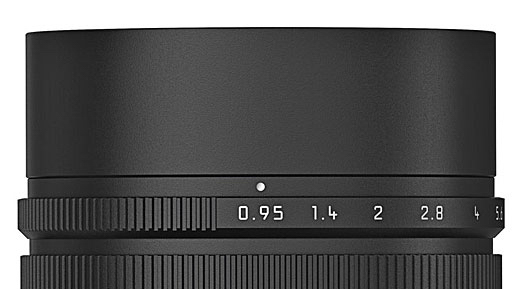
To avoid confusion, and to standardize notation across all lens types, f-numbers — instead of actual aperture sizes — are used to communicate the light-transmitting ability of all lenses.   An f-number (also known as an f-stop, or focal ratio) is defined as the focal length of a lens divided by the aperture diameter.

You’ll usually see f-numbers labelled on lenses as a sequence of fractions:

f/1, f/1.4, f/2, f/2.8, f/4, f/5.6, f/8, f/11, f/16, f/22, etc.

The important thing to remember is that because the f-number is a fraction, the smaller the denominator, the greater the light transmission.

(please click on the image to view LARGER)

Thus, when considering light transmission, f/1 > f/1.4 > f/2 > f/2.8 > f/4, etc.

In fact, for every step to the left in the sequence above, twice as much light is being transmitted as the preceding step.  Thus, f/1 allows for twice as much light to hit the sensor as f/1.4, and f/1.4 allows for twice as much light as f/2, etc.

Incidentally, lenses that are able to achieve maximum f-numbers of f/1, f/1.4, or f/2 (or even f/2.8) are often loosely referred to as “fast” lenses because they allow photographers, for a given amount of light, to shoot at faster shutter speeds than so-called “slower” lenses (exactly twice as fast for each step up in the f-number ladder).

It follows from the above, then, that large aperture/f-number lenses are useful in low-light situations:

↑Leica M9 and Konica Hexanon 60mm @ f/1.2.

The other main use for large aperture/f-number lenses is to achieve subject isolation.*

Thus a lens of a given focal length set to f/1.4 (for example) will create a greater background blur than when set to f/4.:

↑Leica M9 and Leica 75mm Summilux @ f/1.4

_
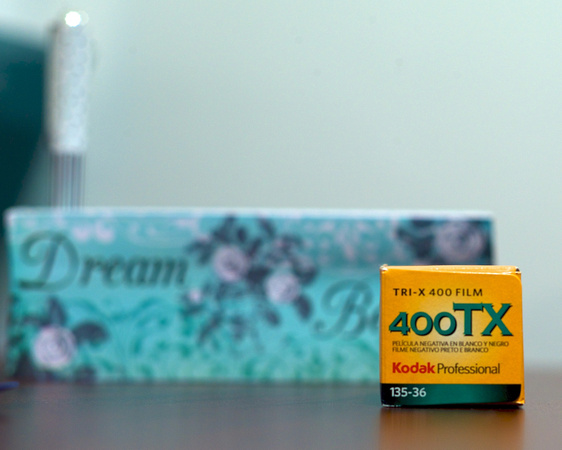
↑Leica M9 and Leica 75mm Summilux @ f/4.

_

I hope you found this useful,

—Peter.

______________________________________________

*The other way to achieve subject isolation is to shoot with a longer focal length.