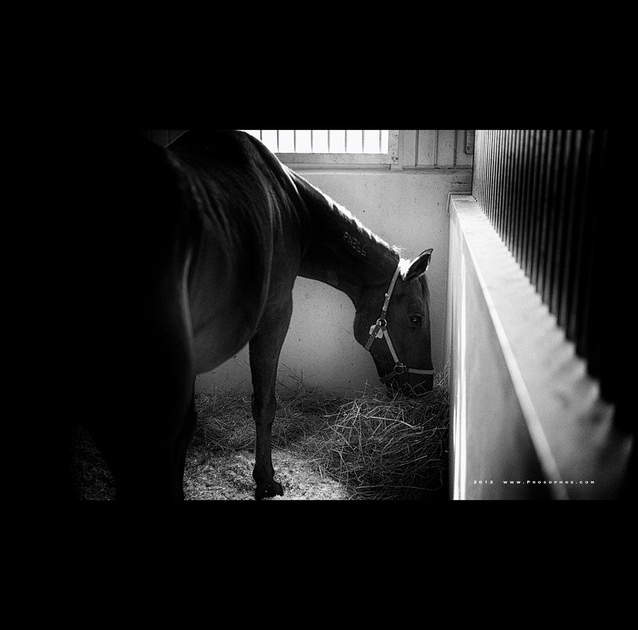
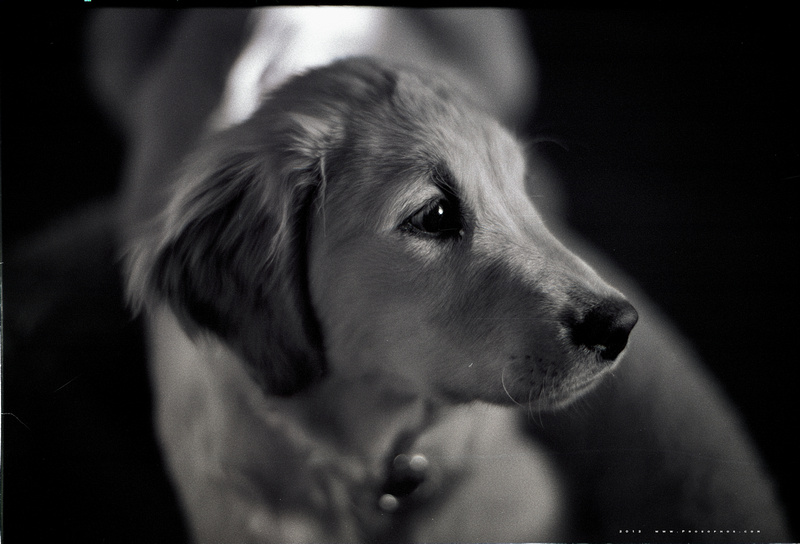
H – A portrait.

2012, Favourite, Inspiration, Leica 75mm Summilux (Canada 🇨🇦) f/1.4, Portrait, Teaching point

Look carefully at the rendering of the Leica 75mm Summilux (Canadian version)… it’s wonderful.

I sometimes struggle with this lens, as it doesn’t have the coatings of modern lenses and it is susceptible to flare.  Physically it’s large too.  And correct focus is notoriously difficult to achieve at f/1.4, because of the extremely thin depth of field (witness the focus here is on the near eye; by the time we get to the second eye, we are already out of focus).

But for portraits, I can’t think of a more appropriate lens in this focal range.

I should really do a Lens Report on this lens, as I’m often asked about it.  But I haven’t been motivated to because the qualities of the 75 Summilux that I most value are not easily appreciated via test charts.  Ideally, it’s best to just view images taken with it (however, when I wrote my report on the Leica 75mm Summarit f/2.5, I did include some comparison crops between the two lenses).

If you want to see more examples of portraiture with the Leica 75mm Summilux, please see here, here, and here.

(please click on the image to view)

↑Leica M9 and Leica 75mm Summilux @ f/1.4.

Field of dreams.

2012, Favourite, Inspiration, Leica 50mm Summilux ASPH f/1.4, Leica M9(P)/M-E (CCD Lives!), Portrait, Teaching point, The Beautiful Game

I resisted the temptation to crop away the top and bottom portions and present this as a pseudo-panoramic horizontal strip… something about the original image (as presented here) appears very surreal, very much like a “dream”.  Or perhaps a diorama.

(please click on the image to view)

↑Leica M9 and Leica 50mm Summilux ASPPH @ f/1.4 + 3 stop ND filter.

Worker, 1937.

2012, Favourite, Inspiration, Leica 50mm Summilux ASPH f/1.4, Portrait, Teaching point

Actually, this was captured this week… but something about him made me think of a bygone era.

I also could have called this Worker 11, as it follows my previous 10 Worker images.

In the past, I’ve sort of criticized the 50mm Summilux ASPH as being “too perfect” of a lens, but I love how it has rendered him, and this moment.

(please click on the image to view)

↑Leica M9 and Leica 50mm Summilux ASPH @ f/1.4.

C’s photo shoot, Part 4 of 5.

2012, Favourite, Inspiration, Leica 35mm Summilux ASPH FLE f/1.4, Leica M9(P)/M-E (CCD Lives!), Photo Shoot, Portrait, Teaching point

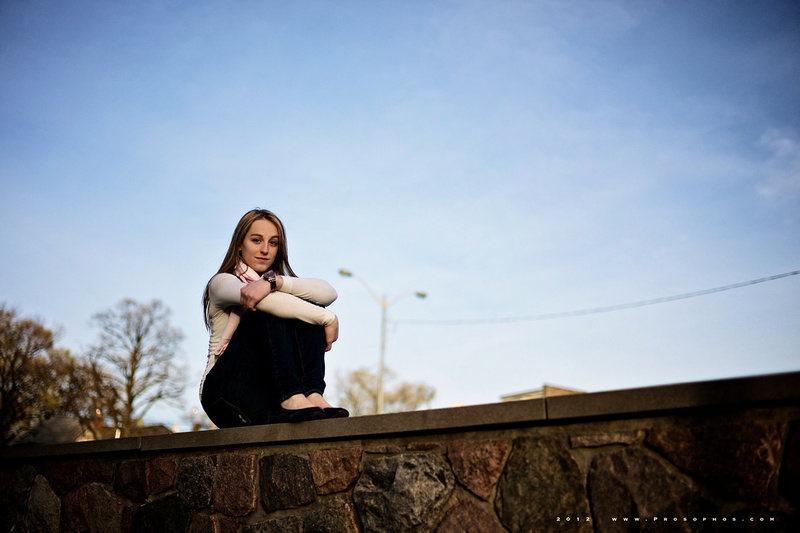
This was taken just prior to the sunset, as the light cast a warm glow.

All the previously washed out nuances of colour and texture in the environment seemingly emerge from nowhere and take on a golden hue — this is what happens at the so-called “golden hour“.

(please click on the image to view)

↑Leica M9 and Leica 35mm Summilux FLE @ f/1.4.

Q&A: Bishop asks about shooting portraits with a 35mm lens.

Leica 35mm Summarit f/2.5, Leica 35mm Summilux ASPH FLE f/1.4, Q&A, Teaching point

“I am new to following your site…via your guest blog entry on Steve Hufff’s site and I wanted to say I enjoy your work very much.  The tones, the processing when in color and your subject matter are a joy.  I look forward to seeing more of your posts in the future.

A quick question for you though.  I noticed many of your portraits are shot with a 35mm lens.  I am wondering if you are cropping your resulting image?  I ask because your portraits are closer than what I am achieving with a 50mm without being in the face of my own children.  Not that I am a purist and don’t crop images but I try not too.  Appreciate your comments on this as you are able.

I should also add that I enjoy how you capture your children in the midst of their activities…not an easy thing to do I am sure but what a great result.

Thanks and I look forward to more of your work.  

Best regards — Bishop”

Hi Bishop,

Thank you so much for writing, and for the kind words!

In answer to your question, I don’t often crop when using a 35mm lens*, because if I did, I would lose the more interesting perspective I get with this FOV, vs. the 50mm. It’s true that one needs to be more careful with distortion when photographing people with a 35mm lens (and to some extent distortion is always there), but with practice you learn to minimize it and/or take advantage of it.

It took me some time to learn how to do this, because I was always a “50mm photographer”, but the rewards have been worth it.  Of course, I still shoot with a 50mm lens!

I hope I’ve been able to help, and thanks again for writing,

—Peter.

________________________________________

*In those of my 35mm images where people appear “closer” than what you’re able to achieve with your 50mm lens, Bishop, I have obviously cropped the image.  Having said that, I’m normally photographing people as close as possible.

Getting the most out of your camera (and photography): turn everything off.

2012, Inspiration, Teaching point

If you want to get the most out of your camera, and be a better photographer, turn every “Auto” function on your camera OFF.

Photograph in Manual mode and decide for yourself what the aperture, shutter speed, and ISO should be.  If possible, use a prime (fixed focal length) lens and focus it manually.

In short, remove (and control for) as many variables as possible when photographing.

In this way only will you be able to understand the behaviour and importance of light.  In this way only will you begin to anticipate images before they materialize.

 —Peter.

She, then and now (film).

2012, Film, Inspiration, Leica 50mm Summilux ASPH f/1.4, Leica M2, Leica M3, Portrait, Teaching point, Voigtländer 40mm f/1.4 Nokton

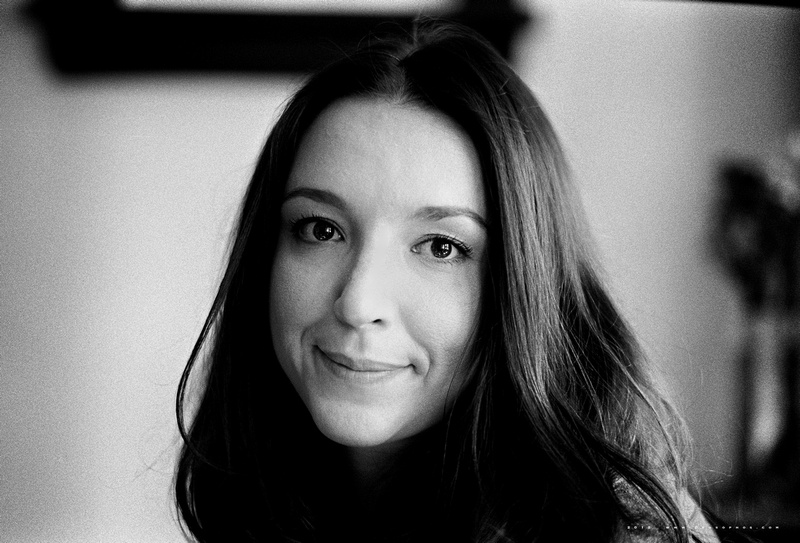
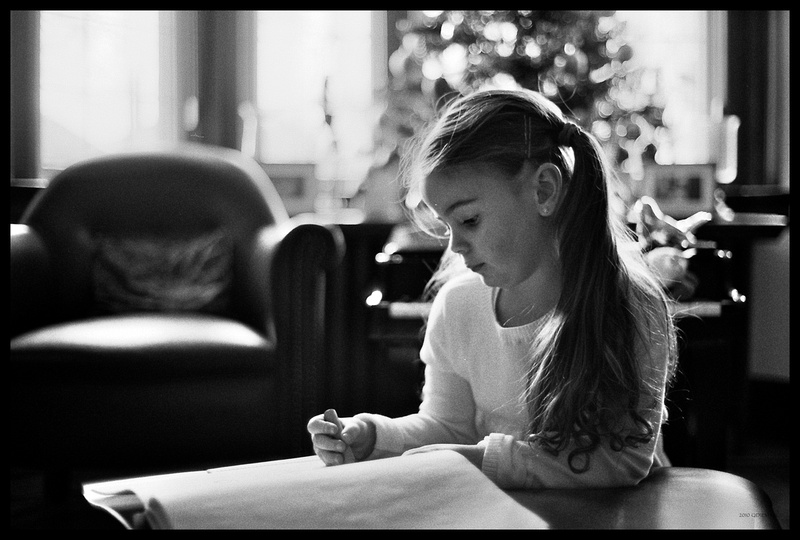
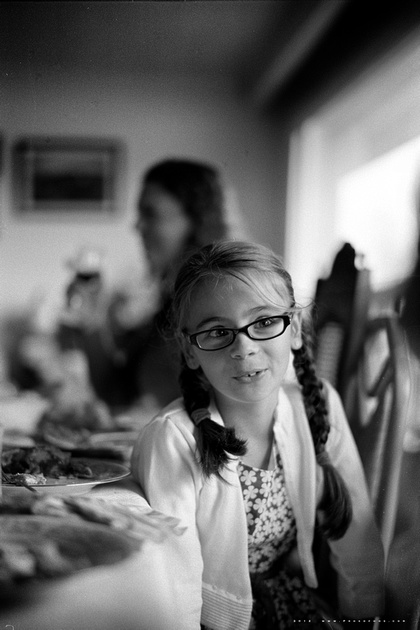
A few years ago, I realized I had never captured her on film.

It was important to me for some reason.

So I started shooting film again.

_

(please click on the images to view)

2009:

↑Leica M3, Fuji X-tra 400, and Voigtländer Nokton 40mm @ f/1.4.

2010:

↑Leica MP, Ilford HP5 Plus 400, and Voigtländer Nokton 40mm @ f/1.4.

2011:
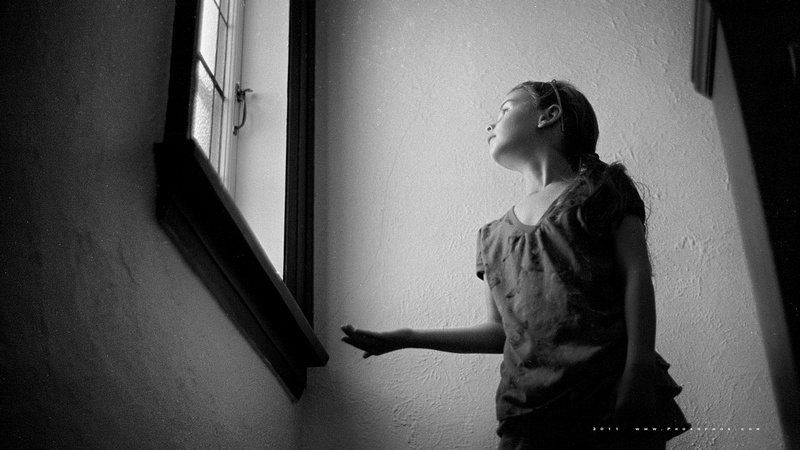
↑ Leica M2, Ilford HP5 Plus 400, and Voigtländer Nokton 40mm @ f/1.4.

2012:

↑Leica M2, Kodak Tri-X 400, and Leica 50mm Summilux ASPH @ f/1.4.

_

I look at these images now, and follow the path of light:

originating from the late afternoon sun,

filtering through the window,

touching her face before reflecting off,

traversing the distance between us,

bending in the glass elements of a lens,

and finally etching her image onto an organic emulsion.

_

The film, like the viewer, is forever altered.

And it all happens in a fraction of a second — just like growing up.

—Peter.

The twinkle in his eye.

2012, Favourite, Inspiration, Leica 75mm Summilux (Canada 🇨🇦) f/1.4, Portrait, Teaching point

This one was challenging, but ultimately very rewarding.

He was constantly moving, with his back toward me most of the time, making a decent shot difficult (it’s always a struggle at this age when kids start getting mobile, but — on the positive side — they’re still “naturals” in front of the camera).

So, I tried a few times throughout the day to capture him… without success.

Then, at the time of the “golden hour“, he was once again looking out the window.  As he turned here, and smiled, a shaft of soft light from outside acted as a gentle spotlight on his left face and shoulder.

As I couldn’t back up any further from where I was, I could just fit him within the 75mm frame lines.  And I tried my best to hit focus, as this wonderful combination of expression, light, and composition would likely not repeat itself.  Fortunately, it all came together.

Life’s Little Moment to be cherished.

(please click on the image to view)

↑Leica M9 and Leica 75mm Summilux @ f/1.4.

Man and metro (Film).

2012, Film, Inspiration, Leica M2, Teaching point, Voigtländer 40mm f/1.4 Nokton

I thought this would be most appropriate for a Monday morning post, but it was pushed aside with all of the announcements yesterday.

Tuesday morning will do nicely however :).

As an aside, I really like the little iPhone Pocket Light Meter app – I’ve been using it for just over a year with my M2 for situations like this, where the lighting is tricky, and it’s done very well.

(please click on the image to view)

↑Leica M2, Kodak Tri-X 400, and Voigtländer Nokton 40mm @ f/1.4

Why I love film (Honey).

2012, Film, Inspiration, Leica 75mm Summilux (Canada 🇨🇦) f/1.4, Leica M2, Portrait, Teaching point

I have been trying to photographically capture the essence of Honey, since she entered our lives in December.  The closest I’ve come with my M9 (digital camera) is with this shot, taken 3 months ago.

The image below represents my latest attempt.

Now,

…it may be because this time I was using a more than 50 yr old camera with no back LCD screen, no meter, no battery, not even an on/off switch…

…it may be because I then fumbled with the film in a changing bag, trying to blindly load it into a spool…

… it may be because it was then lovingly bathed in a series of mystery chemicals and finally in distilled water, before being hung in my basement-turned-sauna as the hot water ran in the sink, generating steam to get rid of dust in the air…

…it may be because I then delicately handled each strip and spent minutes scanning each frame into my computer…

…it may be because all of these things make me better appreciate the act of image creation

…but…

…I believe this image has come close to capturing Honey’s soul.

If you don’t see it, that’s OK.  I can’t explain it.

But if you do see it, then you know:

that’s why I love film.

—Peter.

(please click on the image to view)

↑Leica M2, Kodak Tri-X 400, and Leica 75mm Summilux @ f/1.4.

Thank you Chris’ Coffee Service!

2012, Inspiration, Leica 75mm Summilux (Canada 🇨🇦) f/1.4, Teaching point

[Full disclosure:  I haven’t been paid a cent for this endorsement, I’m just a very satisfied customer.]

This is a special thank you post to Chris’ Coffee Service.

(please click on the image to view)

↑Leica M9 and Leica 75mm Summilux @ f/1.4.

That’s my 10 year old Isomac Millennium espresso machine in the above photo (taken yesterday), which was purchased brand new in 2002 from Chris’ Coffee Service.  It just arrived back home, following being masterfully repaired by Tim in Chris’ service department (thanks Tim!).

As most of the viewers of this site know, I live in Toronto, Canada.  However, when I was looking for my first espresso machine many years ago, I kept reading about Chris and his company in the various coffee fora.  It seemed that they had an unblemished reputation for service that had people raving.  So, even though they were located far from home and across the border in the USA, I didn’t hesitate to place my order with them.

Let me tell you that in all of the years I’ve owned this machine, the support provided by Chris’ Coffee Service has been astounding — from the people that answer the phones, to the service department, to Chris himself.  Tim — in particular — in the service department has talked me through basic repairs and maintenance over the phone, which has saved me a great deal of time and money.

The good folks at Chris’ Coffee Service provide all of this service for free, because they understand that a happy customer is a repeat customer.  Ironically, I’ve been prepared on more than one occasion (given the amount of wear-and-tear on my Isomac following daily use for a decade) to purchase a new machine, but every time I’ve dealt with Chris and Tim, they’ve never tried to sell me a new one.  In fact, they’ve repeatedly convinced me to just get my trusty Isomac repaired. 

Can you believe that?

In an age of disposable everything, it’s nice to know that some things — like my Isomac and the service at Chris’ Coffee Service — endure.

Thanks Chris, and a special thank you to Tim… you are the best at what you do!

—Peter.

Why I photograph wide open (Life as a dream).

2012, Inspiration, Leica 50mm Summilux ASPH f/1.4, Portrait, Q&A, Teaching point

_

↑Leica M9 and Leica 50mm Summilux @ f/1.4.

_

“Wide open shooting for me

is a sort of visual short-hand

to communicate life as a dream.”

_

For anyone familiar with my photographic work, it’s evident that I have a preference for shooting at wide open apertures.

There are plenty of reasons why I do this, but the main one is this:  the visual imprint of wide open shooting is one where some things are readily perceived, while others are only hinted at… which is an accurate representation of how we perceive the world.  And every single (fleeting) moment of life.

—Peter.