It’s here.

↑Sony RX1R arrives (image taken with iPhone 5).
–
I’m going to take a break for a while, away from daily posts and, ummm… I don’t know — photograph? 😉
—Peter.

It’s here.
↑Sony RX1R arrives (image taken with iPhone 5).
–
I’m going to take a break for a while, away from daily posts and, ummm… I don’t know — photograph? 😉
—Peter.
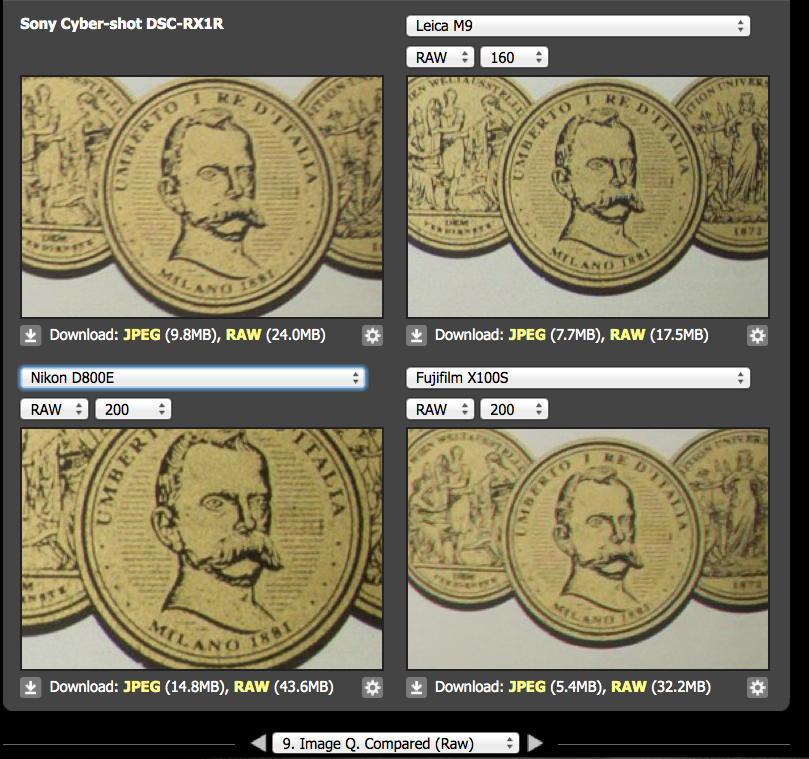
The website Dpreview, the “original” internet hangout for camera geeks and enthusiasts, has a useful studio scene comparison tool that allows one to pit camera against camera. I was using it today to compare Sony‘s new RX1R (the new AA filter-less version of the RX1) vs. the old trusty Leica M9. For fun, I also included two current cameras that have generated much enthusiast interest: the Fuji X100s and the Nikon D800E (admittedly, the Fuji X100s is the only camera of the bunch that doesn’t use a full frame sensor, so it’s sort of the oddball in this sensor grouping but, to me, it’s relevant as a portable and formidable photographic tool).
Here is the overall studio scene, as seen on Dpreview:

–
And here are the (left) side 100% crops of the above scene, from each camera, focusing on the label of the Martini bottle (see the red arrow above):
(please click on this image to view at MAXIMUM size and sharpness)
–
(Note: the crops above vary in size, depending on the megapixel count of each sensor.)
See anything, possibly unexpected here, regarding sharpness?
Finally, here are the centre 100% crops , focusing on the Queen of Hearts card in the original scene:
(please click on this image to view at MAXIMUM size and sharpness)
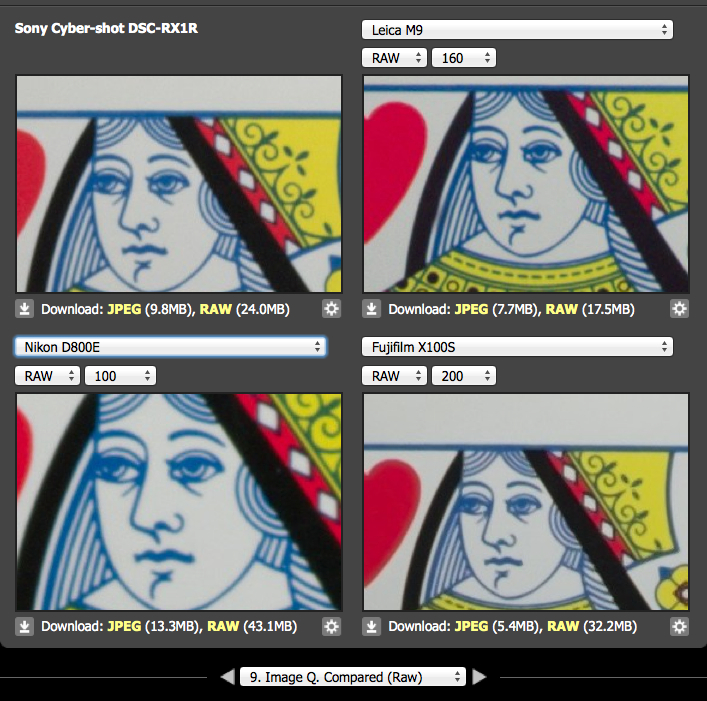
Using the Dpreview comparison tool, one can obviously pick and choose other portions of the scene to make comparisons about sharpness, texture rendering, etc. I’ve chosen two areas that I believe are representative of lens sharpness performance (corner vs. central) with respect to these cameras (the feathers in the far right of the scene are also worth checking out).
—Peter.
—
If you haven’t already done so, please consider signing my open letter to Leica.

___
Related posts:

–
Something happened this week that compelled me to write this.
A well-known Leica guru and ambassador published a review of the Leica M240 and — unsurprisingly — praised most things about it: the new features, the new CMOS sensor, and (gasp!) even the EVF add-on.
The thing is, as I was looking at his sample images, my honest reaction was: his previous Leica M9 photographs looked better.
My visitor statistics on Prosophos.com tell me one of my more popular posts this year is: M240: More Thoughts. Moreover, if I type the search “Leica M240 vs CCD” on Google, that same post and my Leica M240: Final Verdict post are currently the top two search results. In fact, any combination of the search terms “Leica M240/CMOS vs. M9/CCD” on Google will yield one of my posts on either page 1 or 2.
I realized all this today, and wondered: Why?
My best guess is that many of you see what I see, that the Leica M9 beats the M240 in the only thing that counts: image quality.
And no amount of cheer-leading for the latest and greatest will change that.
So I’ll keep photographing with my antiquated M9 until the successor to the M240 arrives. And when that happens, if Leica sticks with a CMOS sensor (which they most certainly will), hopefully they’ll have enough sense to strike a deal with Sony.
—Peter.
—
If you haven’t already done so, please consider signing my open letter to Leica.
___
Related posts:

So what does it mean when you see a “mint” Leica M3 listed on ebay from a seller who, after thousands of transactions, has 100% positive feedback?
It means you’re pretty safe to buy this M3, which is advertised as perfect — including the “vulcanite” covering, which is described as “original and complete”.
Right?
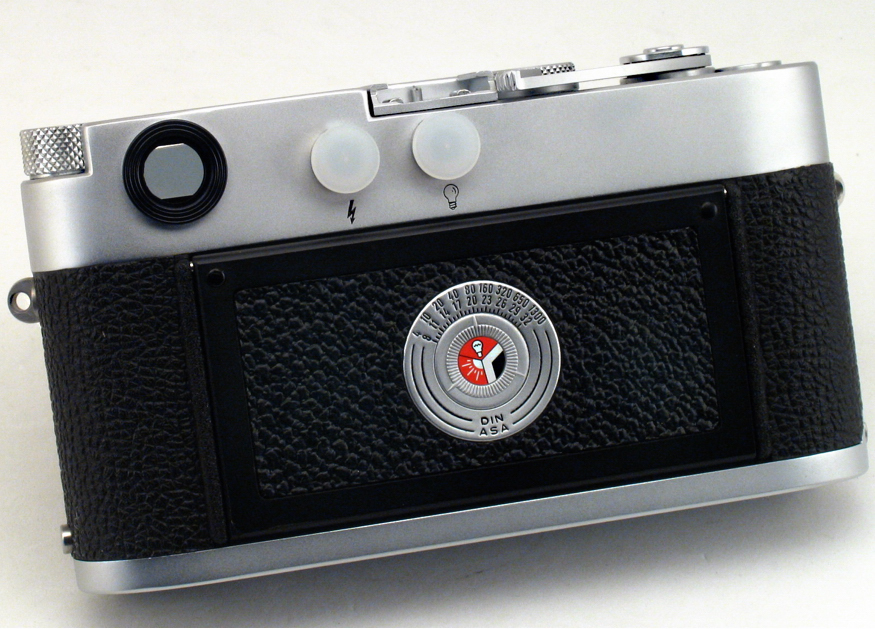
Well, have a close look:
–
Do you see it?
–

–
Look carefully at the back door covering – it actually differs from the rest of the camera. Therefore, it’s not all original.
And that’s just the tip of the iceberg when it comes to what’s wrong with this camera, which has been put on sale for a premium, because it was “owned by a collector who kept it in its box” for the last 50+ years.
Right.
Bottom line: It’s difficult to know who to trust on ebay — so be careful.
—Peter.

–
Yes, it’s still that good, nearly four years after its introduction.
(that’s an eternity for digital cameras)
And yes, that’s just my opinion, hence the word “My” in the title.
As of this date, 99% of the images on this site have been made using this iconic camera.
I’ve been tempted by the Nikon D800, the Sony RX1, and the Leica M Monochrom (I haven’t been tempted by the Leica M240), but I keep reaching for the Leica M9.
—Peter.
—
If you haven’t already done so, please consider signing my open letter to Leica.
___
Related posts:
I photograph to remember
I photograph to forget
I photograph to see
I photograph to disappear
I photograph to celebrate
I photograph to mourn
I photograph to share
I photograph to be selfish
I photograph to be
Me
—Peter.

–
The newly released Leica X Vario has “it”.
What’s “it”?
…Image quality.
This camera has image quality in spades. All of the sample photos I’ve seen just ooze micro-contrast, sharpness, jaw-dropping colour, etc.
The Leica M8 had”it”.
The Leica M9 had “it”.
Heck, the Sony RX1 has “it”.
The Leica M240 will never have “it” (sorry, I couldn’t resist).
Am I tempted to get this camera?
Surprisingly, yes.
Will I get this camera?
No.
All the documented shortcomings — slow zoom lens, slow auto focus, no built-in viewfinder (forget the price for now, I mean, this is Leica so you know what you’re in for) — ultimately conspire against this camera, at least for my kind of shooting. I’m too addicted to the “decisive moment” and the rapidity of rangefinder shooting.
But, man, have you seen the sample images? The colour?
Wow.
—Peter.
I will no longer be offering 1-on-1 teaching sessions for the foreseeable future. This includes both photography walk-abouts and computer post-processing sit down tutorials.
Instead, I will be focusing on personal projects.
—Peter.

I just found out my Hide and Seek image was stolen by this other blog. No written request for permission, no compensation, no… nothing.
I know what I want to do, but I’d appreciate any advice from you, the loyal visitors of my site (unless you’re the one who stole my image :)).
[UPDATE: I’ve just left a comment on the other site requesting that my image be removed.]
[UPDATE #2: The image has now been removed.]
—Peter.
Recently, the trend amongst some Leica shooters has been to purchase vintage lenses and mount them on modern digital camera bodies.
There’s no doubt about the appeal of many of these old Leica lenses: they offer an alternative visual fingerprint, are more compact, and may be had at a low purchase price as compared to their modern counterparts.
Given all this, why did I “buck the trend” and return the 1937 50mm Summar Collapsible f/2 I had in my possession last week, after only 24 hrs of use?
Because there’s always a trade-off.
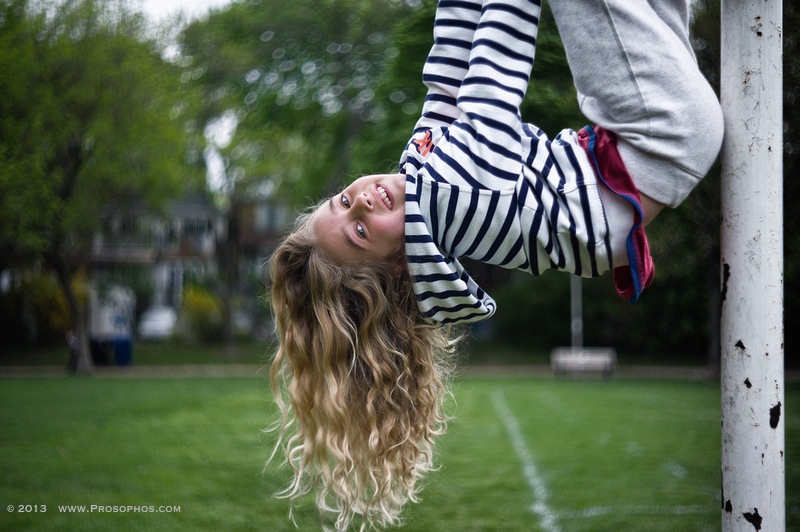
In the case of the 50mm Summar, the problem is its jarring bokeh:

–
More and more these days, I seek out lenses that help me to tell my story, not ones that (unpredictably) impose their own.
In the examples above, the lens is interfering with the visual narrative by drawing attention away from the (intended) subjects and onto its vertiginous background blur.
Admittedly, when conditions are right, the 50mm Summar performs acceptably — perhaps even admirably:
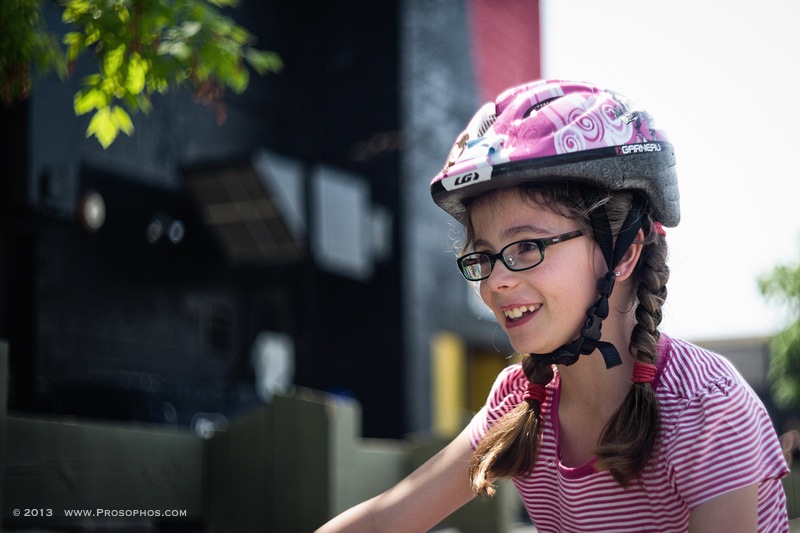
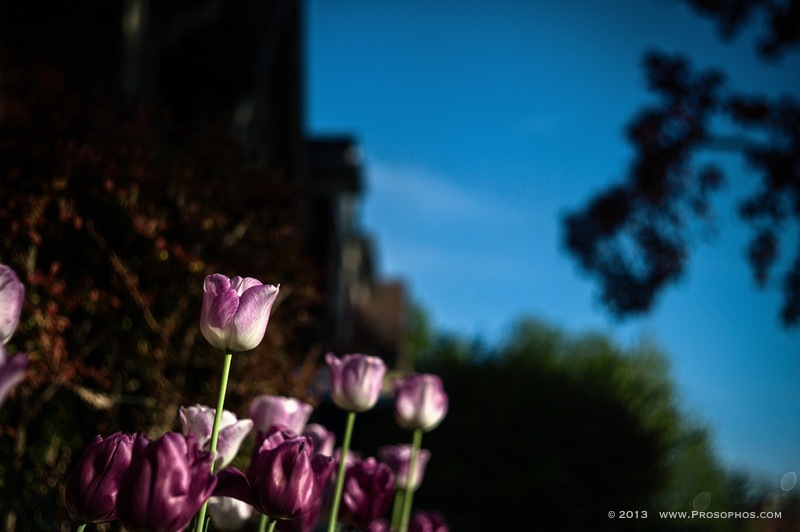
↑All images: Leica M9 and Leitz (Leica) 50mm Summar Collapsible f/2 (1937).
–
Even when this old 50mm Summar exhibits relatively tame bokeh, when I compare other aspects of its performance (including microcontrast) to, say, my 50mm Summilux ASPH, there’s just no contest.
—Peter.

I’ve updated my main website page to include just over 100 of my favourite images.
I had always thought that this year, which marks 5 years of using Leica rangefinders, I would post my 5 favourite images. The trouble is, I’m still too emotionally attached to most of them to be objective.
—Peter.

Last year, I abandoned Apple‘s Aperture after it crashed while I was editing a client’s images. I couldn’t restart it no matter what I tried and I spent the better part of a day trying to make it work to no avail. As a last ditch effort, I installed the copy of Adobe‘s Lightroom that shipped with my Leica M9 and it worked like a charm. Despite some of the operational differences I had to get accustomed to, I haven’t looked back.
Well, today while evaluating Lightroom‘s slideshow abilities for a client’s needs, I realized that there is only one image transition feature available. Besides being limiting, it’s boring too because all it does is transition from one image to another in a static fashion (I guess they’re not lying when they refer to it as a slideshow — it’s simply just that).
So, off I want to the App Store to find the latest copy of Aperture (CAN$79.99) and — sure enough — it was there. However, my iMac‘s older operating system didn’t support it! I had to update the OS to Mountain Lion (CAN$19.99) which took me a few hours (it’s over 4GB in size and then there’s the installation time on top of that).
Don’t you just love computers?
When all was said and done, however, my beloved Aperture (with all its enhance slideshow features!) was back.
And, it’s working perfectly with my Nik plug-ins. As an added bonus, the new OS runs quickly despite my aged iMac. Finally, the enhanced features Mountain Lion brings to the desktop are a welcome addition.
The only thing I have to get used to is the “opposite direction” mouse scrolling for navigating page content.
—Peter.
–
“Photography has always been many things to me. Love, passion, hobby, stress relief and freedom – but mostly a competition within myself to get better and better.”
—Kristian Dowling.
–
–
—
__________________________________________
__________________________________________
–
34 years old. Worked as a Getty Images staff photographer, working in news, sports and entertainment. Moved on to Freelance working with Associated Press, MTV, Fox, Capitol/EMI Records and Katy Perry.
Leica M(240), M Monochrom, Leica M9-P, Nokton 35/1.2. Nikon D4, D800E, D600, 24-70, 70-200, 85/1.4G. Profoto, Speedlight and LED lighting kits.
“As an individual, the photography experience is most important. The images come second, because when I’m gone, the experience in life is more meaningful to me than the pictures I leave behind.”
“What got me started in photography at age 16, was being fired from KFC, pushing me to work in photographic retail, and thus eventually pursuing a photography career. I was also Australian, National Karate Champion a few years in a row and ranked 4th in the World Karate Championships. Karate gave me the determination and discipline needed to go as far as I have in Photography.”
__________________________________________
–
–
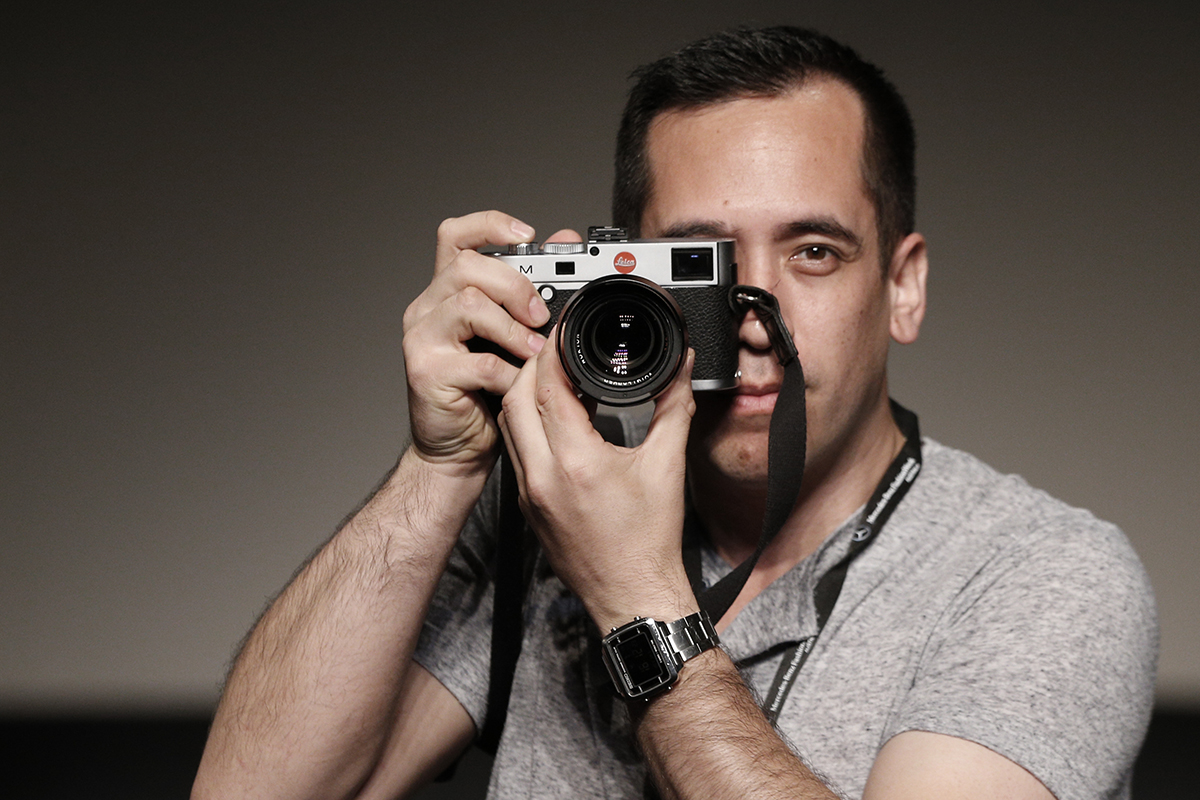
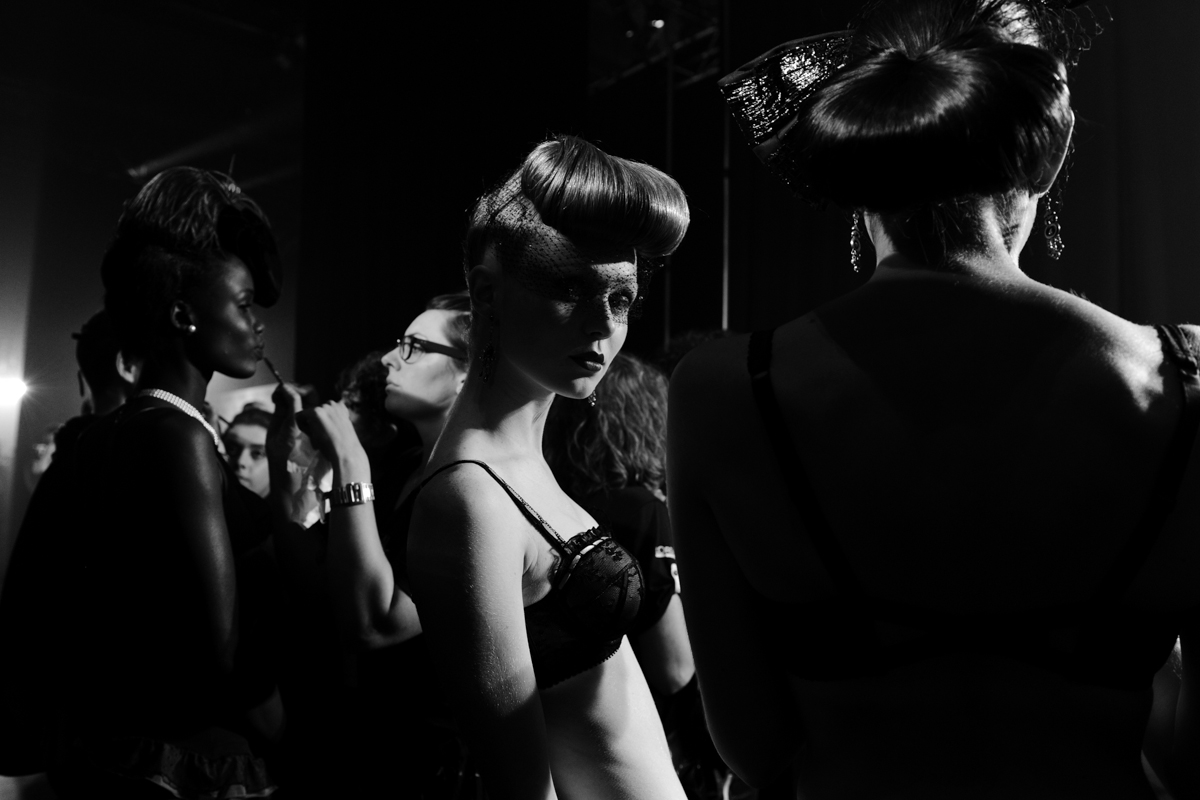
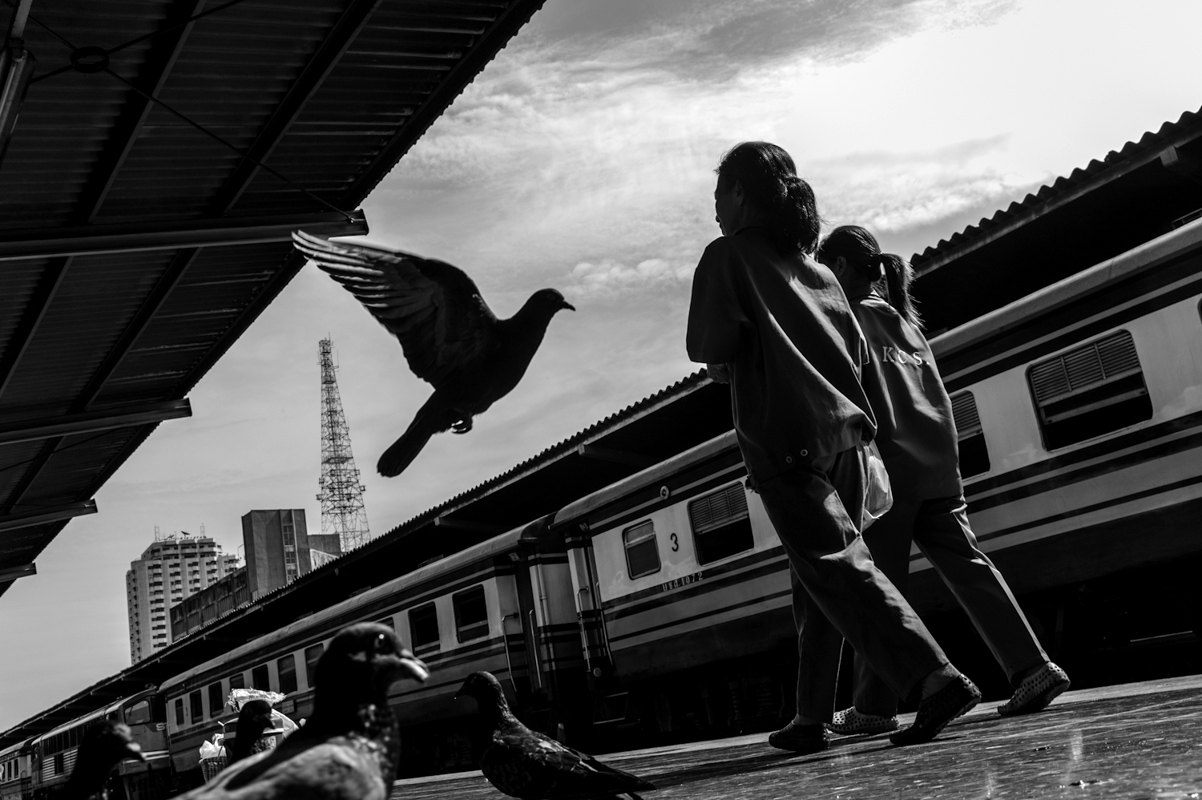
Today, I am very excited to feature the work of Kristian Dowling, whose photographic exploits involve the biggest names in entertainment, fashion, and sports. He is the consummate professional, known for his ability to “deliver”, under all manner of circumstances. Continually sought after for his ability to create memorable and inspirational images, he is rightfully admired by his clients and colleagues alike.
Recently, Kristian decided to eschew the fast-lane life of Los Angeles, where he was working as a celebrity photographer, and headed back to his roots in Melbourne, Australia.
Now, when not on assignment, Kristian is busy teaching fellow photo enthusiasts about “Seeing the Light”, via his photographic workshops, personalised coaching sessions, and contributions in various photographic fora.
As if his formidable photographic talents and unwavering dedication weren’t enough, Kristian is also a genuine, affable, and generous soul.
(Short story…)
When I contacted Mr. Dowling last month and asked him if he wouldn’t mind being a Featured Photographer on Prosophos.com, Kristian — despite his many accomplishments, stature, and busy schedule — responded within 24 hrs, writing:
–
—Peter.
–
–
__________________________________________
–
What motivated (and still motivates) you to pick up a camera?
“The desire to improve and explore. Exploration using the photographic medium relates not only to exploring the world, but testing myself to see how well I can translate what I see into photographic imagery. Photography has always been many things to me. Love, passion, hobby, stress relief and freedom – but mostly a competition within myself to get better and better. Thankfully, there are no limits with photography, so my journey will continue until the day I leave this Earth. These days I’m focused on helping others, and passing on the knowledge I’ve collected over the years. I coach individuals and groups through my photographic training and really enjoy seeing my students improve and achieve their goals. It means a lot to me to see the development of others through my coaching, and I’m finding that I am just as excited seeing my students progress, as seeing myself improve. It’s been a big career change for me since leaving my career behind in Hollywood, but it’s a lot of fun and certainly more rewarding.”
–
What do your images “say” about you?
“There are probably many things photographers hope their images say about them. To me, the most important thing I want to convey through my images is ‘dedication’. By this I mean dedication to my subjects, my effort, my planning, my results, and my own self-improvement. Most photographers focus on one main area and style with their photography, but with me, I enjoy so much about photography that it’s not a priority for me to have a style to be distinguished by. I’m not saying it’s not important to have my work be uniquely different, but with so many photographers out their doing great new things, I don’t feel the need to focus on one style just to be different. I do what I like and try my best to do it at the highest, most consistent level. There’s also a sense of achievement when you’re confident enough to be able to shoot a variety of different styles, assignments and subjects, and that’s what I thrive on. I also strive to get my pictures 100% right out of camera, which is certainly a high goal but one I must set in order to keep improving. It’s very important to me to get my images right out of camera, the traditional way, like I did when I shot film. I don’t believe in shooting with post processing as a fall back option when I can do most of it at the time of exposure. It’s much more rewarding taking a picture successfully, without the need to post-processing corrections…. not to mention, time saving 😉 “
–
How have you evolved as a photographer/artist over the years?
“Over the years I have evolved as a photographer at a rapid pace. The 1st stage of my evolution started with photography books, and being inspired by amazing photographers like Steve McCurry, Alex Webb, Sebastião Salgado, Jesse Marlow, Richard Avedon, Jeanloup Sieff and many others. The 2nd stage began with my first major employment with Getty Images only 9 months after starting photography as a profession. In this industry, this kind of start is unheard of. I was fortunate that Getty saw potential in me and took a gamble by making me a staff photographer working at the highest editorial level. It was an honor but a huge challenge. I was already quite a technically sound photographer, but a lot of weight goes into experience – which I was lacking. Very quickly I was working alongside some of the world’s top editorial photographers as the world’s largest events, including the Commonwealth Games, New York Fashion Week, Cannes Film Festival, Beijing Olympics and many more. Not only was I working there, but often as the official photographers with a great deal of pressure placed upon my shoulders, and the shoulders of our team. At the time I was fortunate that the amazing photographers I was working with were happy to help me, and train me in a team environment focused on achieving the absolute best results possible. It was this interaction with other photographers that has influenced me the most. The 3rd stage of my evolution is where I am right now – exploration of myself with the freedom of not being tied down by employment and clients. It kind of feels like starting photography all over again, but I’m excited by the possibilities and welcome the challenges ahead.”
–
Any further comments about your work you’d like to share?
“My advice to aspiring photographers all focused on image quality is to not forget to enjoy the experience and not get all caught up in the trap of analyzing their images at pixel level sharpness. I used to be online all the time focusing on what sensors and lenses will provide maximum picture quality, forgetting that it’s not the camera taking the picture, it’s me. Cameras (modern ones) are designed to provide great ‘image’ quality, but the ‘picture’ quality comes down to the photographer – and IMHO, the photography experience is most important. The images come second….”
_
–
__________________________________________
–

–

–
–

–
–
–
–
–

–

–

–

–
–

–
–
A big thank you once again to Mr. Kristian Dowling.
—Peter.
–
–
__________________________________________
–
–
–
–
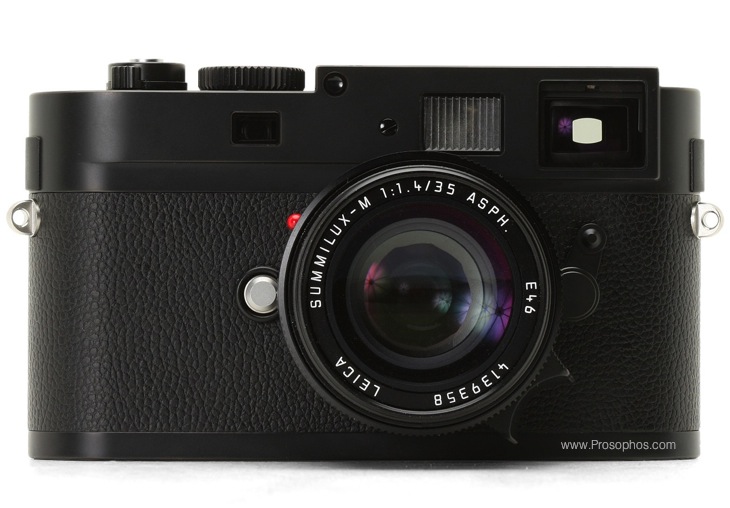
I bid goodbye to my Leica Monochrom yesterday.
I wasn’t “bonding” with it, for several reasons, so it’s off to a new home.
Without a doubt, it’s a unique and formidable photographic tool, but it’s just not for me.
—Peter.
–
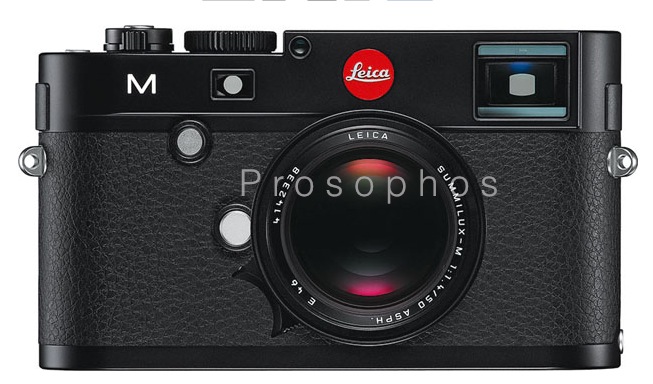
I continue to be underwhelmed with M(240) images.
[See: M240: Final Verdict.]
[See: M9, M(240), DXO… and smoke and mirrors.]
I know, I know, the shutter is quieter, and the buffer is larger, and the LCD is better than what we had with the M8/M9/Monochrom.
But… who cares, if the images all look like Canikon… sorry, like Canikoleica?
Oh yes, I forget, we have to wait for updated firmware, for the correct raw converter “profiles”, for people to get used to working with the new files, etc. The problem I have with these sorts of statements, and other statements from many M owners, is that it all sounds like mass rationalization.
Yes, the new “box” is shinier, the new box is newer.
But… I prefer to let the images do the talking. So far, they are inferior to anything I’ve seen out of the M9 or M8 (not to mention the Monochrom).
Sorry, but I’m calling it as I’m seeing it.
Perhaps my long-held view that CCD has something that CMOS lacks is simplistic.
But it appears to summarize things nicely.
—Peter.
—
If you haven’t already done so, please consider signing my open letter to Leica.
___
Related posts:

↑Today, this site celebrates a 2nd birthday!
_____
–
Thank you all for your contributions here each and every day!
I’ll try to keep posting an image a day, for as long as I’m able, but Prosophos.com is entering the terrible twos so, who knows? 🙂
—Peter.
–
–
–
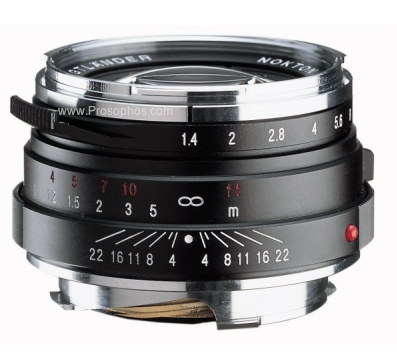
I’m asked this almost weekly (even though I name the gear used to take each image I post, below each image I post).
For the record, these are the cameras/lenses I’m currently using.
—Peter.
______


–
–
–

↑Luiz Paulo (photo courtesy of his daughter :)).
–
“…I try to find the appeal of the simplest things…”
—Luiz Paulo.
–
–
__________________________________________
__________________________________________
39 years old. Born in Sao Paulo, Brazil. Still lives and works in the “big city”. Since college (ad school) has been working in photography. First job at Kodak. Nowadays works with his brother doing everything related to still imaging mainly for advertisement and print ads — illustrating, retouching, and even photographing.
Leica M9P. Leica 28mm Summicron ASPH, 28mm Elmarit ASPH, 35mm Summilux ASPH and 50mm Summilux ASPH.
“Those who I care about, love, and respect… “
“I have a big scar on my neck [from a childhood accident]. My daughter says she wants a scar too…”
__________________________________________
–
–
Almost a year ago, Luiz Paulo did me the honour of gracing Prosophos.com with his images, thereby providing this site’s first Guest Post.
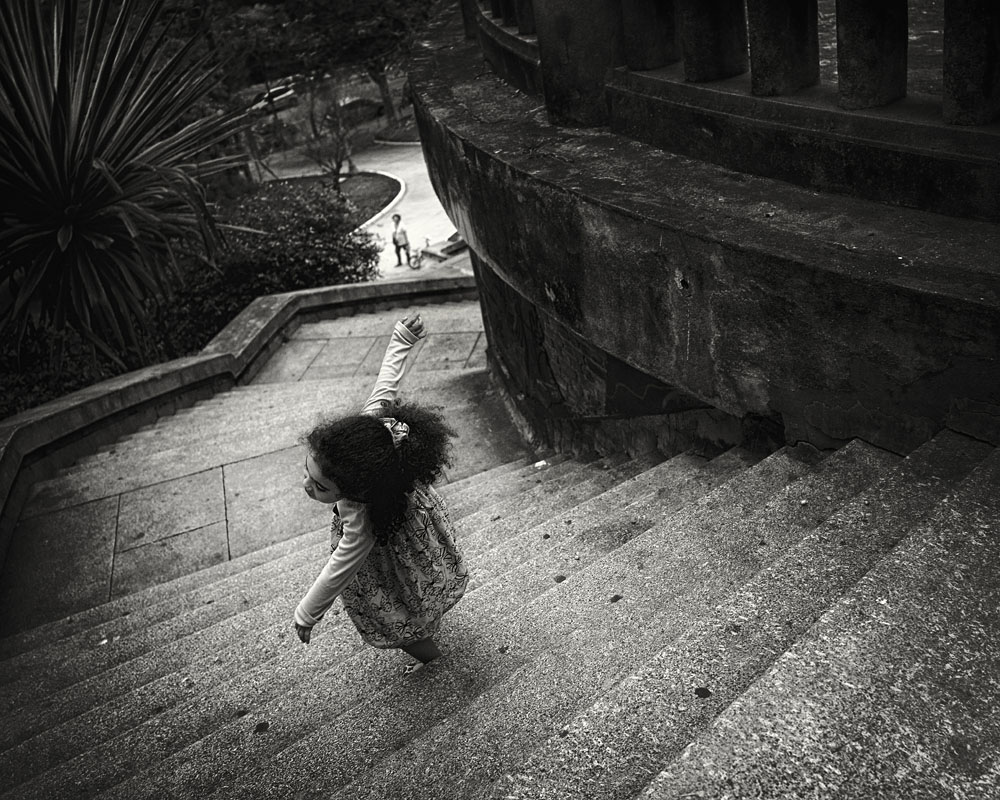
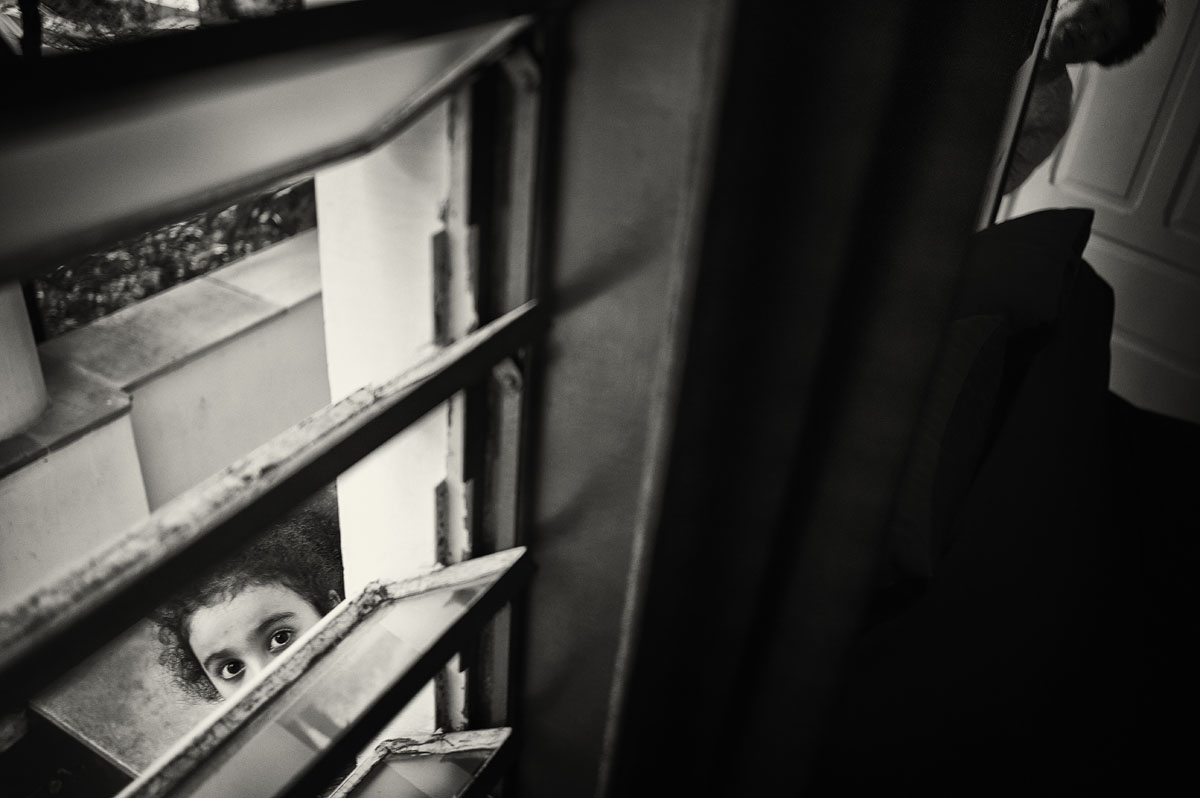
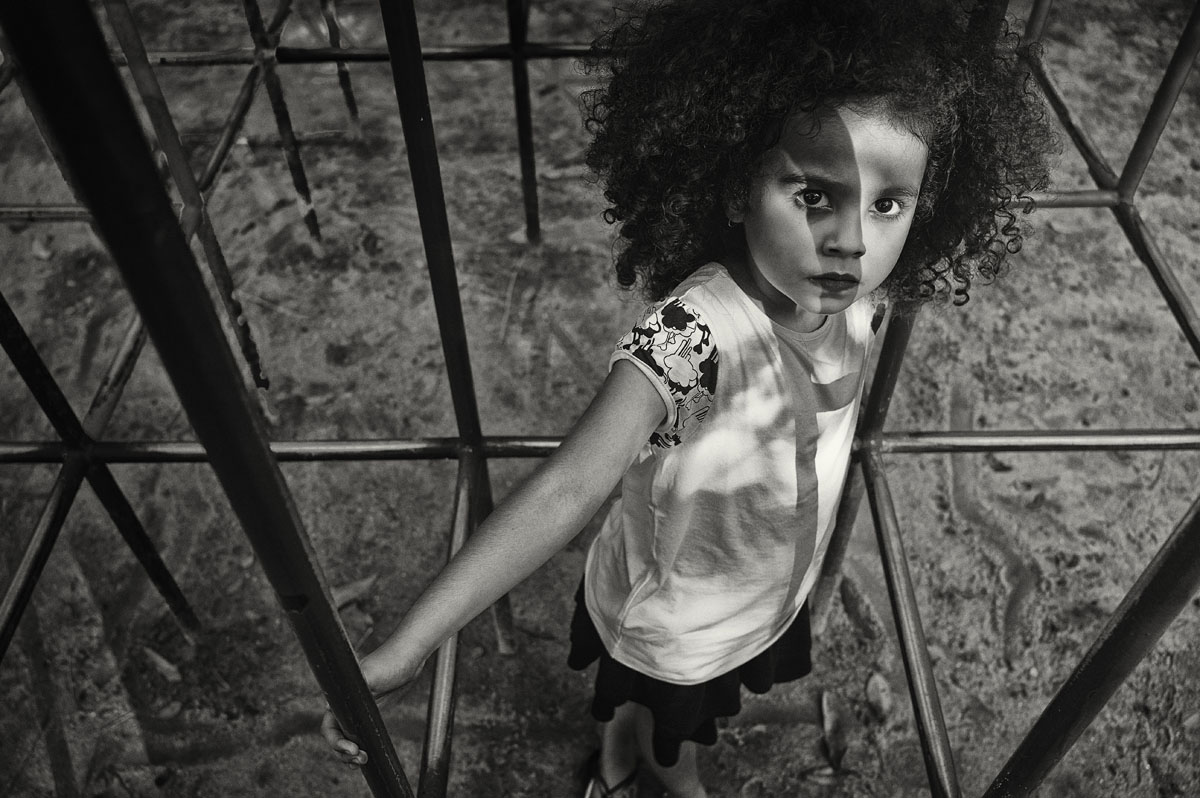
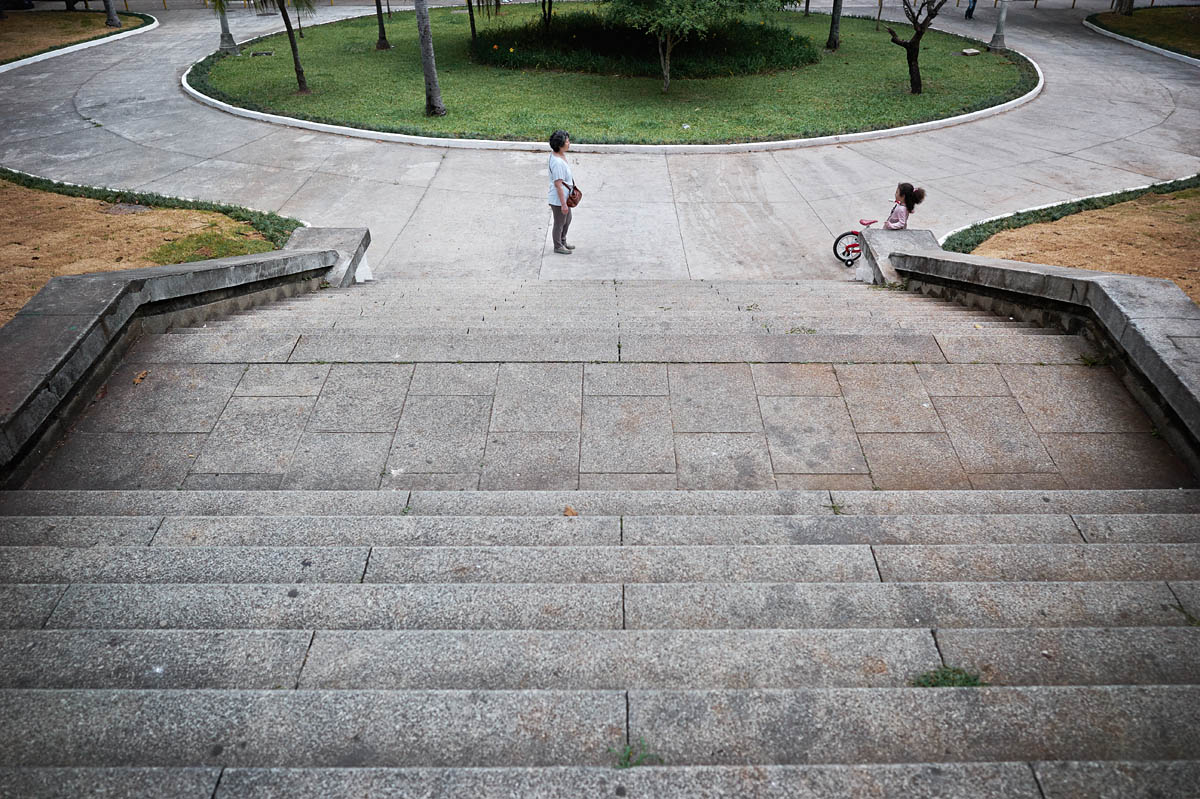
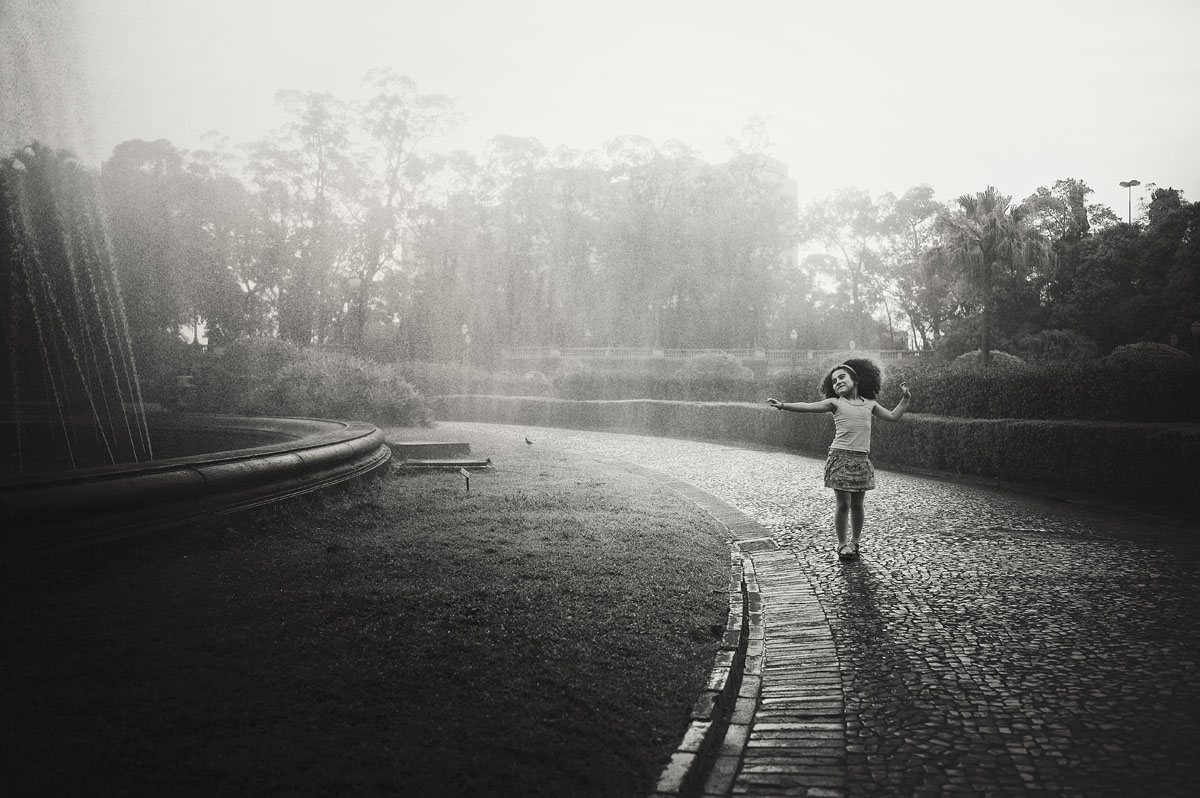
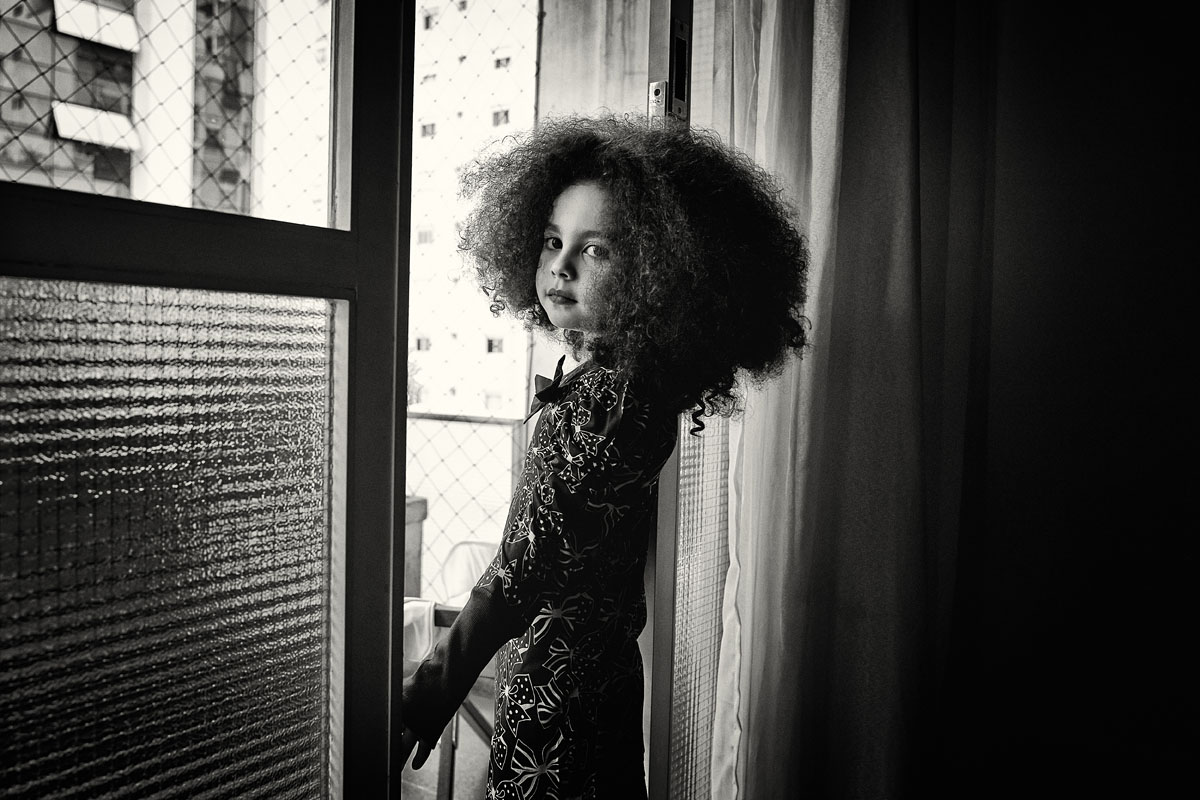
Luiz‘s Muse is quite obviously his beautiful young daughter, who appears in almost every one of his photographs. What struck me then, and continues to resonate with me now, is the Alice in Wonderland-like quality found in his work: each image is seemingly fashioned with a whimsical dusting of make-believe and a real sense of expectation. Overall, there is a surreal quality to each meticulously crafted frame that leaves the viewer feeling not only as if he/she is viewing a series of stunning photographs, but is also turning the pages of some wondrous and magical story-book.
So sit back, relax, and be prepared to be taken to an enchanted world… a world inhabited by one lovely little girl — and an extremely gifted photographer/story-teller.
—Peter.
–
–
__________________________________________
–
What motivated (and still motivates) you to pick up a camera?
“To tell stories — letting the opportunities drive my frames.”
–
What do your images “say” about you?
“It’s hard to describe it for your own images. The picture has to tell you what happened and let you imagine forward. But I think my work presented here is very personal and reveals what is important to me and how I feel about it.”
–
How have you evolved as a photographer/artist over the years?
“For my personal work I try to find the appeal of the simplest things surrounding me, the pure, the genuine — the Life’s Little Moments, if I may use this lovely expression… :)”
–
Any further comments about your work you’d like to share?
“I’m very grateful for this opportunity. Sharing is intrinsic to all us; a way not only to show possibilities but also an exercise to learn through opinions. I do know I have to learn. I’m still doing it and hope I always will.”
_
–
__________________________________________
–

–

–
–
–
–

–
–

–

–
–

–

–
–
–
My sincere gratitude to Mr. Luiz Paulo for generously sharing his wonderful work.
—Peter.
–
–
__________________________________________
–
–
–
–
 Prosophos