Plustek 120 and Silverfast: Mark’s settings for dust removal.

Film, Guest Post, Q&A, Scanner - Plustek 120, Teaching point

I recently reported on the Plustek 120 scanner for scanning B&W film.

After reading about my positive experience with the Plustek 120, my friend Mark purchased one.  Mark, being a Master in film processing, develops both B&W and colour film.  While using the colour film dust removal feature of the Silverfast sofware, he initially found things weren’t working.   However, a few quick changes in Silverfast solved the problem.

Mark writes:

“I appear to have a fix for the problem… It seems that there is a setting under [Silverfast’s] “Preferences > Special > Maximum Offset for iSRD alignment” that is “Maxed Out” by default. I have decreased my value to 50 (from a default of 70) and decreased the detection threshold to 2 (in the iSRD Dialogue) and the resulting correction is PERFECT, with no alterations in the underlying grain structure of the resulting scan…I hereby declare this to be a FINE scanner

Thank you for this information Mark.

—Peter.

Keeping it real.

Inspiration, Q&A, Teaching point

I thought it might be a good time to link to an old post of mine, from over two years ago.

What prompted this?

Looking at some images from a popular website, where a guest photographer was sharing his experience with one of the latest cameras.  The images were beautiful, but the processing was over the top.  Too plastic.

When processing, my friends, you have to keep it real.

–Peter.

1963 M3 – Test Shot.

Film, Inspiration, Kodak Tri-X 400, Leica M3, Q&A, Scanner - Plustek 120, Teaching point

Completing my move back into shooting film is my acquisition of a Leica M3.

I’m revisiting an old friend, in that I’ve owned two of these previously (a couple of examples of my previous output with the M3 can be seen here and here) .

This one is from 1963, and it still has the “L” seal intact — which means it has never been opened to be serviced since leaving the factory in 1963.

How well does this 50+ year old camera fare?

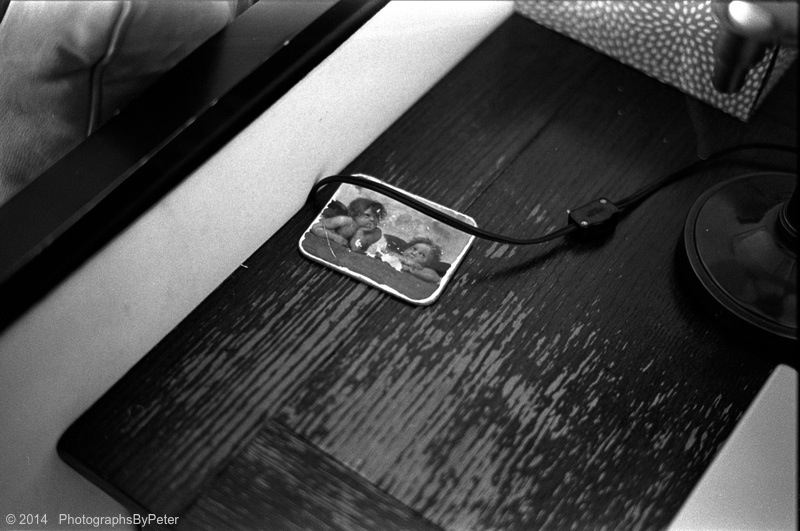
Here is a test shot from today (focus is on the angels):

1963 M3 Test Shot

↑Leica M3, Leica 50mm Summilux ASPH @ f/1.4, and Kodak Tri-X 400.

The focus is spot-on, and most of the shutter speeds are working perfectly.

Now, do I get it serviced to get the last ounce of performance out of it, or do I leave it untouched (with the L seal intact)?

Hmmm…

—Peter.

For some reason…

Inspiration, Q&A, Teaching point

For some reason, my open letter to Leica has been getting a lot of traffic today.

Who should sign it?

Anyone who wants an updated CCD sensor in a future Leica M model.  Anyone who places emphasis on rangefinder simplicity and also values high image quality at low-to-moderate ISO values.

Yes, Leica, incorporate the ergonomic improvements of the M240, but help differentiate the brand from the mediocre CMOS landscape by bringing back an updated CCD sensor.

Please bring back a superior, simple, and reliable still-photography camera worthy of the Leica brand.

(If you’re reading this and are in agreement, please click on the Dear Leica dot below and sign your name in the comments section.)

Thanks,

—Peter.

Prosophos Open Letter to Leica

___

Related posts:

Epson V700 vs. Plustek 120.

Film, Inspiration, Q&A, Scanner - Plustek 120

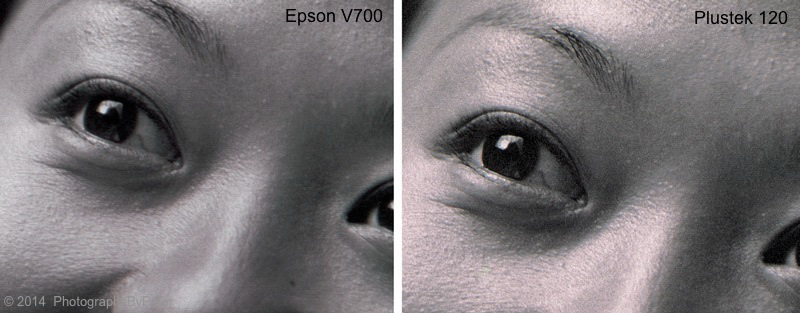
Here is a high magnification crop from each scanner, from yesterday’s Smile image.

Qualifiers:

  1. Default values in SilverFast 8 (identical settings for both scanners).
  2. Each manufacturer’s stock film holders were used (the Epson ones are flimsy, the Plustek ones are impressive).
  3. I’m only examining sharpness (though I already have an opinion about dynamic range that I’ll keep to myself for now).
  4. This is a B&W comparison only (no colour comparisons are forthcoming – sorry!).
  5. This is not scientific.*

*This was done for my own evaluation purposes.  I have other crops I’ve compared but I’m only posting one because it is representative of the overall results.

The Epson V700 is on the left, the Plustek 120 is on the right:

epson-v700-vs-plustek-120-photographs-by-peter

My verdict?

The Plustek 120 wins.

However, the Epson V700 was hampered by its substandard film holders.  Those of you who are using the BetterScanning substitutes are likely coaxing better performance out of the Epson.

Please note that we are splitting hairs with these crops.  The overall image quality is excellent for both.

In actuality, I was happy with the Epson — until I saw what I can get from the Plustek.  And my goal was to get something at least as good as the Epson in a smaller package.  The fact that I’m getting better image quality (in the context of my workflow) is a bonus.

The second big bonus with the Plustek is that there is no large, smudge-prone, glass panel present from which I have to keep wiping away fingerprints.

The third big bonus with the Plustek is that the film holders can accommodate 3 frames of 6 x 7 film (the Epson ones hold 2.5… which is very inconvenient).

Finally…

I’d like to congratulate Plustek for keeping film scanners alive.   I’m no longer plagued by crazy notions of purchasing a used (and discontinued, and unsupported) Nikon Coolscan 9000 for an inflated price in the second-hand market.

The Plustek 120 appears to be a quality product that is well-conceived and is well-executed.  And thank you Plustek, for finally including well-engineered film holders!

Hopefully, it’s built to last.

—Peter.

The Plustek 120 has arrived!

Film, iPhone, Q&A, Scanner - Plustek 120, Teaching point

That was fast delivery!… ordered yesterday, here today.

(Thank you Canada Post)

Plustek 120-1

I still have the plastic protective sheet on the front 🙂

The footprint is certainly much smaller than the Epson V700.  Excellent.

For comparison purposes, here is the Plustek 120 from above, with a standard 3-hole punch and my recent Polaroid photo sitting on top of it:

Plustek 120-2

Now, the question is:

Will it perform as well as the V700?

—Peter.

Smile.

Film, Inspiration, Kodak Tri-X 400, Mamiya RZ 110mm F/2.8, Mamiya RZ67 Professional Pro II, Photo Shoot, Portrait, Q&A, Teaching point

Here is my first image from the first roll of Kodak Tri-X 120 put through the Mamiya RZ67.

I self-processed the film at home like this, and self-scanned on an Epson V700.

Looking at the tonality of this image, I want to weep tears of joy.

Nothing I’ve experienced with digital comes close.

People, all these years we have been duped.

Instead of constantly upgrading e-cameras,

We could have had this all along.

And now film is dying.

Shame on us.

—Peter.

Smile

↑Mamiya RZ67, Mamiya 110mm @ f/2.8, and Kodak Tri-X 400.

Epson V700 or Plustek 120 for Medium Format?

Film, Q&A

Epson V700 vs. Plustek 120

Yes, I’m looking to you for advice.

If you had to choose between the Epson V700/V750 or Plustek OpticFilm 120 to scan Medium Format film, which would you choose?

My newly arrived refurbished Epson V700 is defective (but I have been able to coax some scans out of it) so now I’m wondering if I should replace it with a new one or move to something else.  I’m only interested in scanners that are currently in production, so that excludes the various Nikon and Minolta offerings.

Thanks,

—Peter.

Test Shot 1 (answer).

Film, Fujifilm FP-3000B, Inspiration, Mamiya RZ 110mm F/2.8, Mamiya RZ67 Professional Pro II, Q&A, Teaching point

The answer to my Guess Which Gear question is:

Mamiya RZ67 Professional Pro II and Mamiya RZ 110mm F/2.8, using Fujifilm FP-3000B (Poloraid-type) B&W film:

Mamiya RZ67 with Polaroid Back

As the name implies, the Mamiya RZ67 is a 6 x 7 film format system.  Its film “sensor” size can be appreciated by looking at this comparison:

PhotographsByPeter Sensor Size Mamiya vs 35mm

This is a modular system and the Polaroid film back provides less “sensor” size (and less image quality) than 120 film, but I purchased it along with the 120 film back so that I could get instant results and feedback.  As you can see from my first Test Image, I messed up on my initial settings  (I had the ISO on the camera set to 800, while the Fuji FP-3000B is pegged at ISO 3000) so it was a good thing the damage was limited to only one image vs. an entire roll of 120 Kodak Tri-X.

[Incidentally, Fuji has recently announced that it is discontinuing this film 😦 . There’s an online petition asking Fuji to bring back the FP-3000B and so far there are over 10,000 signatures.  You can still find it in stock, but prices have jumped quite a bit.  If you’re interested in using it, buy it while you can — and sign the petition!]

Knowing my love of small Leica rangefinders, why did I even look at this behemoth of a camera?   One word:  PORTRAITURE.

If you look at the sample images online, you will be amazed.  Hopefully, I will produce something worthy of this camera.  The gear, for me, will be relegated to formal shooting, which means I will seldom use it.  However, given how easily and inexpensively one can obtain such capable film-based medium format systems, the decision was easy.

As a side bonus of first using the Polaroid back on the Mamiya, my kids were amazed at seeing “the pictures come out of the camera, like in the old cartoons!“.  It’s great to see that in this age of digital wizardry, something as old as this can fire up their imagination.

Now… off to dig up my old film developing equipment and brush up on…

My Method for Processing B&W film

Thanks for your interest.

—Peter.

Leica, please bring back an updated CCD sensor.

Inspiration, Q&A, Teaching point

I’m about to go on holiday.

While I’m gone, please help keep the momentum going, and consider signing my open letter to Leica.

Who should sign this letter?

Anyone who wants an updated CCD sensor in a future Leica M model.  Anyone who places emphasis on rangefinder simplicity and also values high image quality at low-to-moderate ISO values.

Yes, Leica, incorporate the ergonomic improvements of the M240, but help differentiate the brand from the CMOS-muddy-file-with-video/EVF-me-too landscape by bringing back an updated CCD sensor.

Please bring back a superior, simple, and reliable still-photography camera worthy of the Leica brand.

—Peter.

(and thank you to the over 150 individuals who have already signed)

Prosophos Open Letter to Leica

___

Related posts:

I came close to trashing all of my Leica gear this week.

Inspiration, Q&A, Teaching point

Prosophos - Leica Trashed

In frustration, I came close to selling all of my Leica equipment a few days ago.

After an ice storm that left this city without power (and some of our fellow citizens still have no heat!), the whole family became ill (and we still are…).

What does this have to do with Leica?

Well, the one day where everything was “normal”, thankfully, was Christmas Day — our power had been restored and we hadn’t yet gotten sick.  Naturally, I was looking forward to photographing.

After shooting some frames and reviewing the images, I realized the focus was off!  A few key moments were lost (or at least, rendered blurry).  I took a few test shots and realized my M9 was back-focusing by about an inch.  Enough to mess things up when photographing at f/1.4.

This is one of the charms of rangefinder ownership.  The rangefinder focusing mechanism, over time, can spontaneously (or with little provocation) deviate from spec.

No problem, I thought.  That’s why I have a back-up M9(P).

So I started photographing with it.  But I realized why this camera has been relegated to back-up status.  Its buffer chokes up after a few frames and it takes several seconds before I can start photographing again.  The outcome:  I missed a few more key moments.

A specific charm of Leica ownership is that one M9 can behave in a much different way from another — identical — M9 (with the same SD card and the same firmware!).  Leica still hasn’t mastered the whole electronics thing… which may be perceived by some as somewhat of a shortcoming in the digital age.

Back to the story…

Maybe it was because I had spent the weekend and some of the week re-enacting scenes from Pioneer Village, or maybe it was because I was getting sick, but I had had enough!

(I know, I know, these are “First World” problems, and — believe me — I know how fortunate I am.  I’m just venting).

I started packing away the M9s.

But what other camera(s) would I now use?

Out of everything currently out there, the only nonLeica camera that will accept my M lenses and give me a full frame sensor is the Sony A7(R).  And its CMOS sensor comes the closest to achieving my coveted M9 CCD sensor rendering (the Sony colour signature is another story).  But… Leica lenses (especially wide angle ones) don’t necessarily shine on other manufacturers’ platforms.  So my pricey Leica Summilux lenses would be worth little on the Sony.

No problem, I thought once more.  I’ll just sell my lenses too and start from scratch.

But, but… I used the Sony RX1R earlier this year and the computer-as-camera user interface left me cold.  That, and having to rely on the EVF:  through it, it didn’t feel like I was watching the world… it felt like I was watching TV.

So I turned my attention to DSLR cameras.

The only contender for me would be the Nikon Df.  Small for a DSLR, plenty of external controls for manual shooting, etc.  And I was close to purchasing it, despite the downgrade in base ISO image quality it would represent (high ISO functionality is another story).

But I prefer to manually focus.  And I’d been-there-done-that with the D3 and D3s, both coupled to a Noct Nikkor 58/1.2 AIS lens.  When photographing action wide open, the hit rate with this system is low (even when using the “green dot” focus aid).

Plus, I’ve grown accustomed to the “see the world outside of the frame” view of the rangefinder window.  With it, I can see elements outside of what the lens sees, and I can therefore better anticipate how a given moment may unfold.

Finally — believe it or not — I was once more tempted to switch to a new Leica M240.  Oh, but the image quality would be… (well, you know).  And don’t forget those electronic gremlins, which continue to plague Leica, even with their latest bodies…

In the end, I decided to keep my current gear.  Yes, I know… I’ve become predictable.

Which places my photography situation in a precarious position, with respect to any future “upgrade” path.

Hopefully, by the time my current M9 cameras die (or their sensors spontaneously crack — but that’s another story!), there will be other viable options out there for me).

I’m holding out hope for Sony to sort out its user interface, and I’m also closely watching for advances in EVF technology.

Or maybe Leica will finally produce a non-beta version of a camera.

Yes, it’s a love-hate thing.

—Peter.

Good light is good (…and high ISO is often overrated).

Inspiration, Q&A, Teaching point

Good Light is Good (…and High ISO is overrated)

A number of years ago, Nikon introduced the flagship D3 and changed the face of photography by allowing us to capture images in near darkness.   I remember taking an image indoors late one evening in 2007 and marveling at how clean the image looked at ISO 6400.

Yet, these days when I photograph, I preferentially seek good light, and my ISO requirements with an f/1.4 aperture lens rarely exceed 1600.  Anything more than this, and I’m basically turning nighttime into daytime — which is often undesirable, as it destroys the ambiance of nighttime scenes.

I’ve learned the obvious: good light is good, and no amount of ISO boosting overcomes the disadvantages of poor light or poor lighting.

Good light reveals nuances in colours and textures, and generally confers depth to those flat representations of the world we call photographs.

That same ISO 6400 image from six years ago, when viewed now with a more critical eye, falls a little short on an aesthetic level, not because the lighting was dim, but because the lighting was poor.

Poor light is not necessarily the same as weak light.  For example, the scant light available after a sunset is “good light”, if one harnesses it properly (with the aid of a tripod and slow shutter speed).  The same thing may be said of incandescent lighting, if it is arranged on your subject in a pleasing way. 

Good light is not necessarily the same as bright or plentiful light.  For example, midday sunlight is often too stark to be desirable for portraiture, but may be perfect if the goal is to capture the interplay of light and shadow. 

Admittedly, high ISO capabilities are desirable for specific applications — for example, astrophotography, where the goal is to “see” the faint light emitted by distant stars but the exposure time is kept to a minimum to “freeze” the stars’ movement (so that stars remain “points” of light in the final photograph).  Or, if the goal is to capture action in dim light, or to record a memory for posterity and lighting considerations are secondary or beyond one’s control, then yes, a high-ISO-capable camera is vital.

If the goal, however, is to create an aesthetically pleasing photograph — even at night — then seek good light.

—Peter.


Q&A: Matteo asks about the Leica M (type 240).

Inspiration, Q&A, Teaching point

Matteo writes:

“Dear Peter,

I hope all is well with you!

Finally this 2013 is going to an end… I’ve spent this year mostly in London, with little time for photography.

Far from home and committed to work, I’ve been having a hard time developing my ‘artistic’ side.

However, in a strong effort to keep my eyes trained, I’ve dedicated a bit of time to explore film and rangefinder photography.

Now I’m thinking to jump into digital again (time and flexibility are the main reasons), but I have to save a bit before getting a new camera.  I’m very interested in hearing a little more from you about your experience with the new M240.  It seems you don’t consider it on par (sensor wise) with the new [Sony] Alpha7R and Nikon Df, and I’m curious about that.  I’m still a bit puzzled about the available options, as I never had the chance to test extensively an M9 or any of these new models. I think I will stick to film for a little more 🙂 .

—Matteo”

Thank you very much Matteo for writing.

Well, it turns out I may have an opinion about the Leica M240… 🙂

As many of the readers of Prosophos.com know, I’ve written much about it:

…And I have even written an open letter to Leica asking for an updated CCD sensor on a future Leica M model.  So far, over 130 individuals have signed it.

However, to answer your question in a concise manner, I’ll note three things I don’t appreciate about the Leica M240 sensor:

  1. Colour signature The native Leica M240 colour signature is suboptimal for skin tones, and one has to constantly fight against the default settings to achieve acceptable results.
  2. Colour Tonality Colour transitions are rendered more coarsely by the M240 vs. the M9.  The M9 renders tones in a more subtle and delicate fashion.
  3. Microcontrast Although the M240 sensor (24 MP) will objectively out-resolve the Leica M9 sensor (18 MP) at 100% magnification, the M240 files as a whole are more “muddy” and “flat” as compared to the more “crisp” and “3D”-like images generated by the M9See here for two examples (see various photo-sharing sites, photography fora, and generally the entire internet for more 🙂 …).

As for the Nikon Df and Sony A7/A7R, they are not rangefinder cameras, and so obviously cannot provide the rangefinder experience, which is important to me.   Also, being CMOS sensor cameras, they cannot equal the M9 in Points #2 and #3 above.

That’s basically it.  I hope that answers your question Matteo.

Sincerely,

—Peter.

[Incidentally, Matteo has submitted several images to me that will be featured in a not-too-distant Guest Post.]