645.

Inspiration, Q&A, Teaching point

Recently, I asked the question:  How large a print can you make from a Leica M9 file?

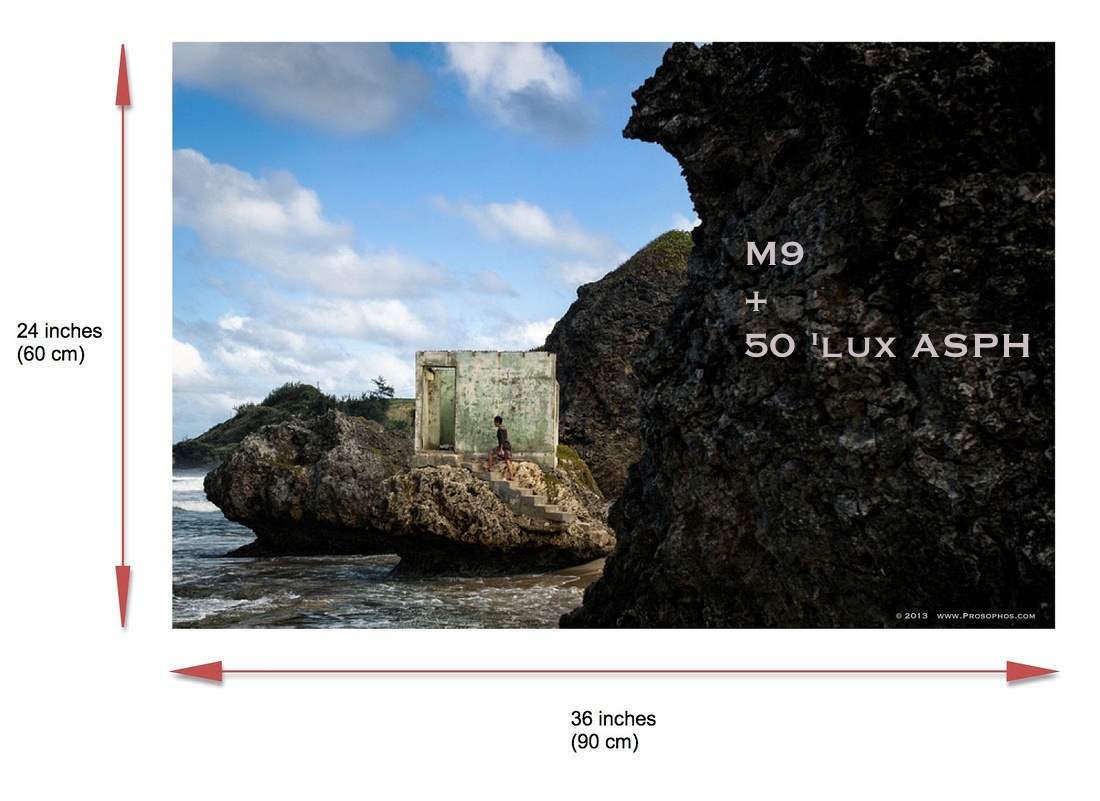
For my purposes (portraiture and simple element scenes), the answer turns out to be 36 x 24 inches:

36 x 24 comparison

I thought about this some more, and realized that it would be interesting to see how much of a magnification over the Leica M9 sensor those prints above represent.  If you want to skip the math below, the answer turns out to be 645!

Here’s the math:

The Leica contains a so-called “full frame” sensor that is exactly 36 x 24 mm in size (that’s where the 36 x 24 comes from).

The area of this sensor

= 36 x 24 mm

= 864 mm2

 –

The prints I made were 36 x 24 inches.

In the equivalent (metric) mm, this translates to

= 914 x 609.6 mm

=557, 174.4 mm2

 –

The magnification of print-over-sensor area, therefore

= 557,174.4/864

= 645

This is remarkable when you think about it.  The digital sensor (about the size of a stamp — remember those?) produces an image which is then magnified 645 times to produce the prints you see above.

Proportionally, this is what is going on:

645 Times

All of the above underscores the importance of technique, lens quality, etc., when photographing with the aim of producing large prints: any “error” will be magnified 645 times!

Of course, you always have the option of turning to the much larger and more forgiving medium format sensors, but that’s another story…

—Peter.

Prosophos Images on display at the Stephen Bartels Gallery!

Inspiration, Q&A

I am very pleased to announce that my work is now being featured at the Stephen Bartels Gallery in London, England.

It is an honour to be part of the distinguished group of photographers Stephen has pulled together under the auspices of the SBG.

If you find yourself in London, please drop by Stephen’s fine gallery and have a look at the amazing images on display.  And, if you happen to spot my humble contributions, please feel free to take a picture and send it my way ;).

—Peter.

prosophos-at-stephen-bartels-gallery

36 x 24.

Inspiration, Leica 24mm Summilux ASPH f/1.4, Leica 50mm Noctilux f/0.95, Portrait, Q&A, Teaching point

How large a print can you make from an M9 file?

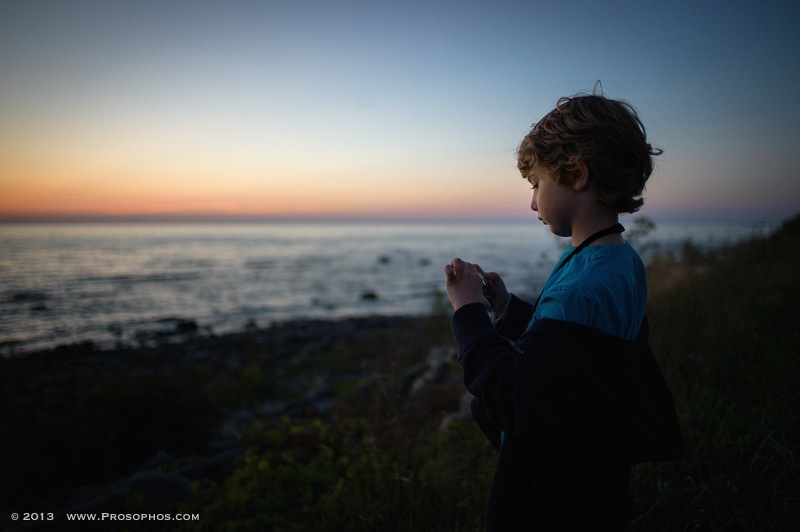
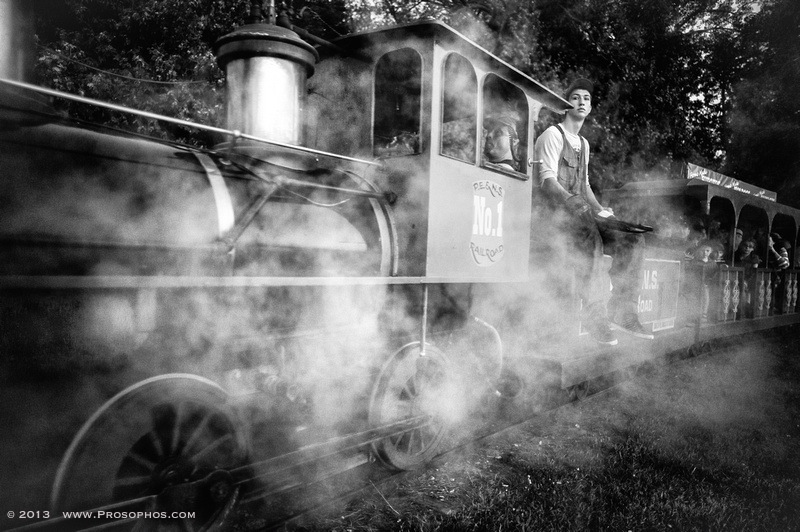
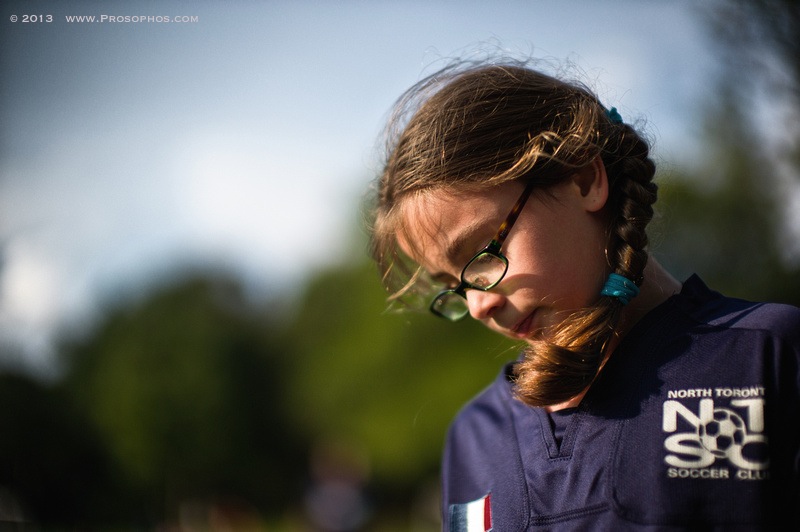
Well, the largest I’ve printed for clients is 36 x 24 inches:

24 x 36 M9 50 Summilux

Even at this large a size, the detail from the M9 and the 50mm Summilux combo used to create the image above is impressive.

However, yesterday I tried doing this for the first time with two other lenses:  the 24mm Summilux (f/1.4) and and the 50mm Noctilux (f/0.95).  Truth be told, I wasn’t expecting anything near as good as what I get from the technically brilliant 50 Summilux ASPH.

We’ll I’m happy to report that I was wrong.  They not only did well, they did exceptionally well — I was astounded to see how much detail the 24 Summilux and 50 Noctilux produce at their widest apertures.

But in the age of phone and tablet image viewing, most people will never encounter an actual print, let alone a 36 x 24 print.  So what does 36 x 24 actually look like?  I thought I’d show you with a little demonstration:

(please click on the image to view at MAXIMUM size and detail)

24 x 36 size demo

—Peter.

Guest Post: Afghan Family Life in the 1960s.

Film, Guest Post, Inspiration

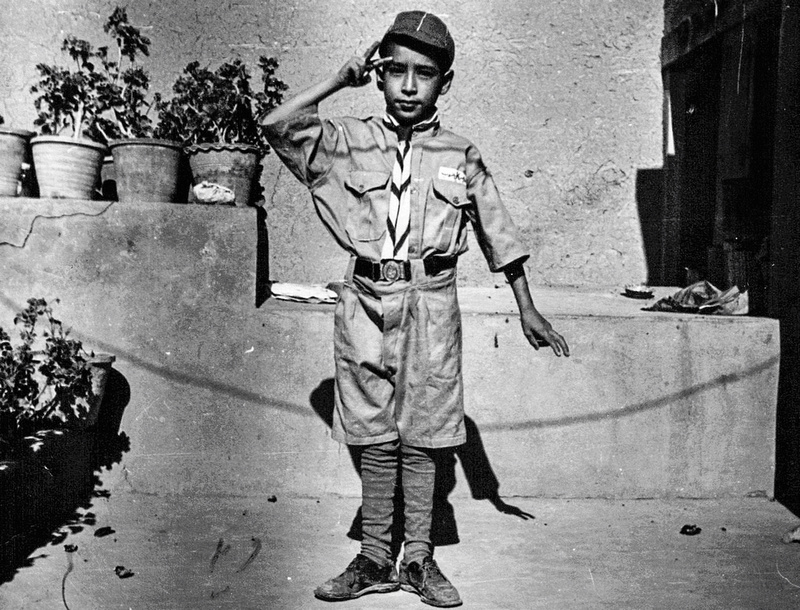
Earlier this week, Gullalai Salimi forwarded these photographs to me.  They were taken by her late father, back when Gullalai was a child growing up in Afghanistan.  Afghan society was more tolerant in the 1960s, and so the country she knew 50 years ago bears little resemblance to the modern-day incarnation.

With her permission, I digitally scanned Gullalai‘s original film photographs and decided to post the images here because I thought they may be of general interest to the viewership of this site.

—Peter.

Afghanistan 1

Afghanistan 2

Afghanistan 3