The Voigtländer Nokton 35mm f/1.2 aspherical Version I (short review).

Teaching point, Voigtländer 35mm f/1.2 Nokton

(Disclaimer: This is not a comprehensive analysis, but one user’s experience.)

I had been looking for, ruminating about, and scratching my head over the Voigtländer Nokton 35mm f/1.2 for almost a year.  And, for various reasons, I never jumped at getting one.

Well then of course it was discontinued.  Cosina Voigtländer was planning to build a new version [Edit: available as of late August 2011], which was to be somewhat more compact in size. But I learned a while ago that there are always trade-offs in lens design, and what finally convinced me to get the newly-old version was Cosina’s statement as to why it was being discontinued: that it was too difficult to procure the glass and too expensive/difficult for them to manufacture anymore.

Hmmm….well that certainly piqued my interest.

Having finally decided to get one, it was unfortunately out of stock in all the usual places I frequented.

However, one night back in February of 2010, I saw a new Voigtländer Nokton 35mm f/1.2 (Version I) on sale on one of the large USA retailer websites.  I didn’t make the same mistake of hesitating.

Subsequently, my friendly UPS delivery man arrived late one evening with the 35/1.2 in hand. And of course – being insane – I headed outside into a freezing Canadian winter and took my first shot with it @ f/1.2.

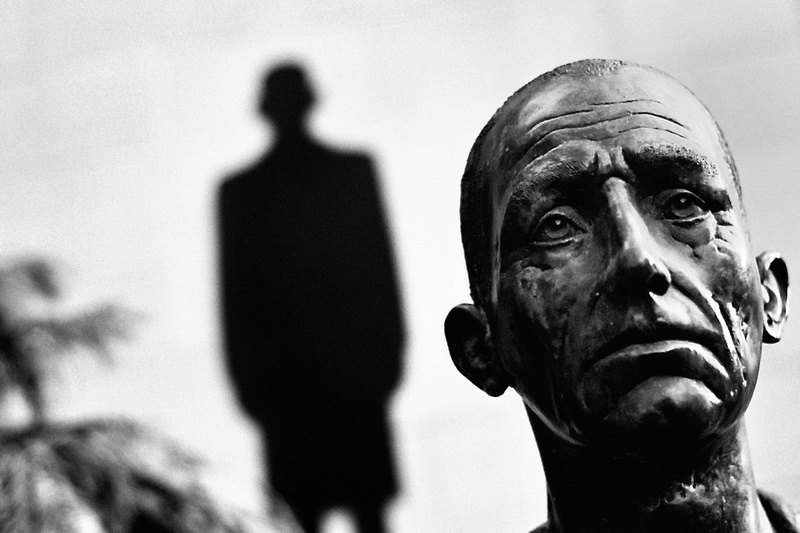
Here is a sample image from that first night:

(please click on the image to view)
↑Leica M9 and Voigtländer Nokton 35mm @ f/1.2.

What I learned, almost immediately, was that this lens was going to change the way I photograph.  The lens could be trusted in extremely low light situations and could produce a delicate bokeh that rivals its Leica counterparts.

(please click on the image to view)
↑Leica M9 and Voigtländer Nokton 35mm @ f/1.2.

Counterparts, what counterparts?  Of course, there is no other 35mm rangefinder lens in production that can shoot at an aperture of f/1.2!  Yes, the Voigtländer Nokton 35/1.2 actually gives you a half stop more light than the next fastest 35mm rangefinder lenses out there.

Truthfully though, I find that the practical benefits of a half stop light advantage are not that pronounced.  If I’m shooting in a dark environment where f/1.4 is not enough, then chances are that f/1.2 will not be enough either… but, it sometimes helps!

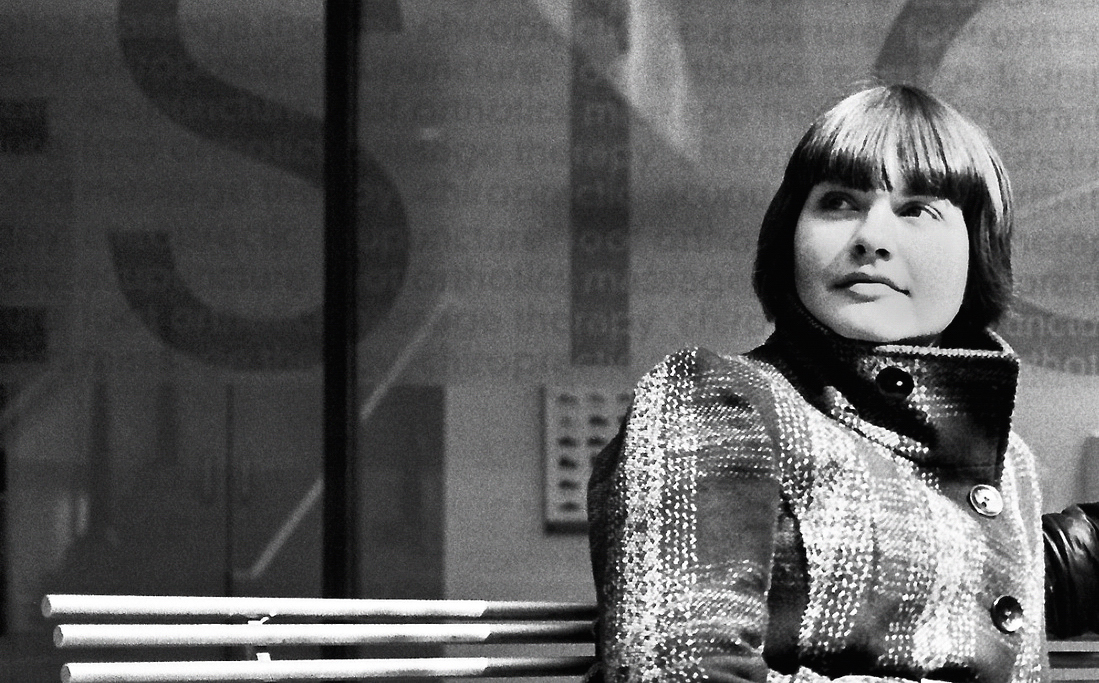
However, putting aside low-light considerations, there is another tangible benefit to shooting at f/1.2:  subject isolation.

Subject isolation with a 35mm lens?  Not possible, you say.

Well, it is at f/1.2.

Is it better than what you get when shooting with another 35mm lens at f/1.4?  I think so, or at least I’ve convinced myself of it.  See for yourself:

(please click on the image to view)

↑Leica M9 and Voigtländer Nokton 35mm @ f/1.2.

What are the other benefits to the Voigtländer Nokton 35mm f/1.2?

It displays no focus shift!  Check

It’s an M-mount lens that near focuses to the M rangefinder limit of 0.7 m.  Check and check.

It has very little distortion, and even at its widest aperture, there is very little vignetting.  It is also built very solidly and the focus ring is well weighted for focus precision.  Check, check, and check.

And it’s got a bit of an “old school” look and feel to it (both the lens and the images it produces!) that I appreciate very much.  This point cannot be emphasized enough as it’s the reason I own this lens vs. any other fast 35mm lens – I just like how the Voigtländer Nokton 35/1.2 draws.  Period.

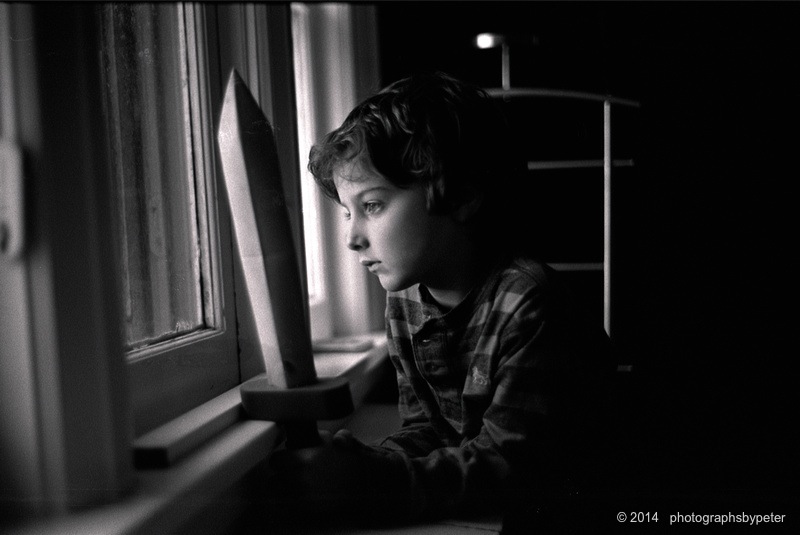
And finally – the part that totally shocked me:  it’s sharp at f/1.2.  No kidding, this thing is just razor sharp at its widest aperture, à la Leica.  This is one of the reasons you buy Leica glass at 5 times the cost, but the Voigtländer Nokton 35/1.2 gives you wide open sharpness that would satisfy the most discerning lens aficionado:

(please click on the image to view)

↑Leica M9 and Voigtländer Nokton 35mm @ f/1.2.

Don’t believe me?  The focus in on the near eye.

Here is the 100% crop (remember this is at f/1.2):

(please click on the image to view)

The Leica 35mm Summilux asphericals (I and II)  may be sharper wide open, but not by much.  In practical use, your own ability to focus correctly will have more impact on the final image.

So, why was I so resistant to getting this lens in the first place?  In other words, what are the negatives?

It’s the size and weight that put me off this lens for so long. I kept reading about it.  The internet kept warning me about it.

In the end, I guess I was so prepared to be overwhelmed by the size that I was pleasantly surprised when I finally got my hands on one.  It actually handles and balances very well on the M9 and, although the size causes partial viewfinder blockage, it is manageable.

By way of comparison, here’s how it stacks up against the current version of Leica’s Noctilux and Voigtländer’s own smaller offering, the Voigtländer Nokton 40/1.4:

Voigtländer 35/1.2:

  • Length = 3.1” (78mm)
  • Maximum Diameter = 2.5″ (63mm)
  • Weight = 1.1 lb (490 g)

Leica 50/0.95:

  • Length = 3.0″ (75mm)
  • Maximum Diameter = 2.9″ (73mm)
  • Weight = 1.54 lbs (700g)

Voigtländer 40/1.4:

  • Length = 1.2″ (30mm)
  • Maximum Diameter = 2.2″ (55mm)
  • Weight = 0.39 lbs (175g)

Fast glass with minimal optical compromises will always be heavy…

Other negatives?  Well, similar to my previous Voigtländer Nokton 40/1.4 discussion, the Nokton 35/1.2 lacks the biting microcontrast of its Leica counterparts and exhibits purple fringing wide open at high contrast edges.  Note, even the incredible Leica 0.95 Noctilux struggles with these, albeit at f/0.95!  At other apertures, the Nokton 35/1.2 is a stellar performer, in line with Leica’s finest.

In summary then, the Voigtländer Nokton 35mm f/1.2 aspherical (Version I) is a stellar optic with the following attributes:

  • Maximum aperture f/1.2 (equaled by no other M-mount 35mm lens).
  • At f/1.2, can achieve subject isolation (unique for a 35mm lens).
  • Incredibly sharp, even at f/1.2.
  • As compared to other fast lenses, there is relatively little vignetting at wide apertures.
  • There is no focus shift.
  • Provides soft and delicate bokeh.
  • Near-focuses to 0.7 meters.
  • Built solidly and operates with fine precision.
  • Comes in standard M-mount.
  • Relatively Inexpensive.

On the downside:

  • Large and heavy for an M lens, but there are larger and heavier ones out there (Leica 75/1.4, Leica 50/0.95).
  • Causes partial viewfinder blockage.
  • Less than class-leading microcontrast and resistance to purple fringing – but almost as good as Leica’s finest.

If the Voigtländer Nokton 35/1.2 was manufactured by Leica, I’m sure it would be priced many-fold higher.  Given its actual price (if you can find one), it represents a relative bargain.

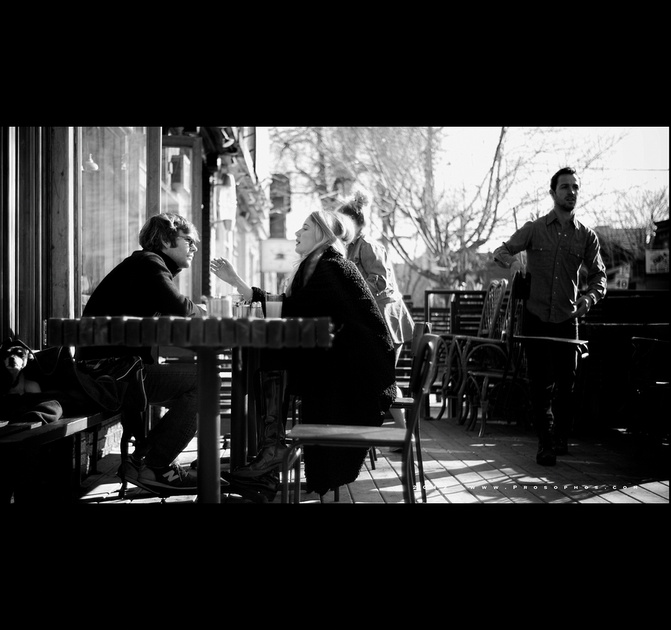
And finally, since a picture is worth (at least) a thousand words, I’ll end this discussion by posting several more images taken with this lens:

(please click on any of the images below to view)

All of the above images were taken with the Leica M9 and the Voigtlander Nokton 35mm @ f/1.2.

If you would like to see more of my images created with the Voigtländer Nokton 35mm f/1.2, please see here.

_____________________________


—Peter.

After the rain, and some respect for the little D40.

Inspiration, Nikon 58mm f/1.2 NOCT, Teaching point

It’s been raining on and off this weekend, so I thought this shot would be à propos.

(please click on the image to view)

↑Nikon D40 and Nikkor-NOCT 58/1.2 @ f/1.2.

This image was taken with the Nikkor-NOCT 58mm @ f/1.2, mounted to a Nikon D40 camera.

The D40 was an entry level SLR camera, announced by Nikon in late 2006.  Given we are currently in 2011, this camera is ancient by digital camera standards.  However, it has a 6 megapixel DX format CCD sensor.  The “CCD” part is what interests me because, along with a weak AA filter, this is exactly what you will find in the Leica M9 (although, in the M9 there is a larger “full frame” 18 megapixel sensor).

I’ve always been attracted to the look of photos captured by CCD sensors with weak AA filters, as the output is just more “vivid” to my eye – even when shooting with the dreamy NOCT @ f/1.2.

Here is one more photo with the same combo:

(please click on the image to view)

↑Nikon D40 and Nikkor-NOCT 58/1.2 @ f/1.2.

It’s raining again | The Nikkor-NOCT 58/1.2.

Inspiration, Nikon 58mm f/1.2 NOCT, Print, Teaching point

The rain has returned after a long absence, so I thought I’d post a second image today, more à propos of the mood.

(please click on the image to view)

This shot was taken last year with the Nikkor-NOCT 58/1.2 (on a Nikon D40 body).

The Nikkor-NOCT 58/1.2 is a remarkable lens that, unfortunately, is no longer made.  I really should write a piece about it, but there is plenty of technical information available on the web about this lens.  Have a look here and here.

Over the next little while, I’ll be posting some of my favourite shots I’ve taken with this lens.  The images do a better job of telling the story of the NOCT anyway, as compared to technical discussions.

The Voigtländer Nokton 40mm f/1.4 [shortest review ever].

Inspiration, Teaching point, Voigtländer 40mm f/1.4 Nokton

_

(photo courtesy of Voigtländer.com)

_

____________________________

This is my favourite lens for photographing life’s little moments.

The Voigtlander Nokton 40/1.4 was my first M-mount lens, purchased back in 2008 along with a Leica M8.

Through the years, I’ve been hot-and-cold on it, for all of the well-documented reasons people either like or dislike it.  And though I’ve experimented with some of Leica’s finest, I always seem to find a path back to this modest lens.  If I had to explain why that is, I would say it’s because it’s small, light, fast (f/1.4), and has a focal length that sits between my most used focal lengths (35mm and 50mm).  It also has virtually zero distortion, and is sharp enough.  The bokeh can be harsh, but the optics that conspire to cause this can also impart a most desirable character to images.

Here are some examples:

—Peter.

–

–

Sample images taken with the Voigtländer 40mm f/1.4 Nokton:

Simplicity.

Inspiration, Leica 50mm Summilux ASPH f/1.4, Teaching point

Achieving simplicity in photography is a very difficult, but worthwhile goal.

Simple compositions are generally more pleasing to the eye, and more directly communicate visual impressions than cluttered ones.

In the first image below, the triad of leaves, lit up by an errant shaft of sunlight, first caught my attention as I was walking by so I appropriately exposed for them.  Exposing for their brilliant glow meant losing details in the shadows, but this is what I wanted, as the end-effect is a seemingly floating cluster of foliage with only the mere suggestion of the supporting framework of trees.

Simplicity.

(please click on the image below)

↑Leica M9 and Leica 50mm Summicron @ f/2.

Most novice photographers make the error of being over-inclusive in their images and forget to ask themselves, what is it about this scene that first caught my attention?

Often we can easily achieve simplicity by shooting with a telephoto lens or by moving closer and isolating the subject of interest.  But this is not the only way.

More tricky – and more satisfying – is to capture a wider scene that has been stripped down to just a few elements.  Sometimes that’s impossible, especially in a world all too cluttered with distractions.  But it’s worth trying for.

In the second image below, the original scene was full of foreground objects, but I moved myself to higher ground and angled my field of view so that only two things (besides the sky) are visible in the final image.

(please click on the image below)

↑Leica M8 and Leica 50mm Summilux ASPH @ f/1.4.

In photography then, truly, less is more.

The Leitz (Leica) Tele-Elmar 135mm f/4.

Leica 135mm Tele-Elmar f/4 (1966), Sports, Teaching point

(Photo Source: L Camera LeicaWiki)

–

The Leitz (Leica) Tele-Elmar 135mm f/4 is a lens I’ve been seeking for a while.

When I moved away from DSLRs, I sometimes missed having a longish focal length for certain applications, like photographing sports (where shooting from a distance is often a reality).  Telephoto lenses are also surprisingly useful for landscape photography, and for portraiture too.

However, 135mm represents a long focal length for a Leica M camera, because accurate manual focusing in this range can be tricky unless both camera and lens are in perfect calibration.

Knowing this, I nonetheless set out to find the venerable “T-E 135”.

The Tele-Elmar 135mm f/4 was manufactured from 1965 to 1990 before it was updated, first cosmetically, and then to the current Apo-Telyt 135mm f/3.4 form in 1998.

Why was I looking for the older model?

The current Apo-Telyt 135 approaches a cost of US$3300 (as of July, 2011), whereas a T-E 135 can be found for as little as $500, and the performance difference is said to be negligible!  In other words, the older model represents one of the last true bargains of Leica optics.  The other things in favour of the T-E 135 are its small size and light weight  – these are qualities I value dearly.

Well, I finally secured an excellent condition Tele-Elmar 135mm f/4, manufactured near the beginning of its production cycle, in 1966.  This makes my copy a 45 yr old lens!

Fortunately, manual focusing with the T-E 135 has been easy and accurate.   The lens is a little soft at its widest aperture (f/4), but is quite sharp beyond that, with excellent contrast.  Given the apertures involved, this lens will most likely be used in outdoor settings where plenty of light is to be found.

Funny enough, my first use of the T-E 135 occurred at an indoor pool, as I couldn’t wait to try it!  The lack of light necessitated shooting at a relatively slow shutter speed of 1/125 sec and a high ISO of 2000.  Here is the end result:

(please click on the image below)

↑Leica M9 and Leica 1966 Tele-Elmar 135mm f/4 @ f/5.6.

_____________________________

Please donate to this site!

Please show your appreciation for this article!

If you’ve been helped by this article, or any of my other articles, please consider making a contribution to help me run Prosophos.com.  Whether it’s $1, $5, or $10… it all helps.

This site is a labour of love, but any help I receive will help me devote more time to running it.

Thanks,

—Peter.

Flare.

Inspiration, Nikon 58mm f/1.2 NOCT, Teaching point

Lens flare is usually to be avoided.  It happens when you point your camera towards the sun, or any other bright source of light and get starbursts, circles, or blobs of light introduced into the frame.  Sometimes, these light artifacts are desired, for artistic effect.  More often than not, they interfere with a critical portion of the image and prove to be quite distracting.

Other times, when the bright light source is just outside the frame and the light rays are striking the front of the lens tangentially, you end up with a low-contrast and hazy photograph (for more information on lens flare, please read here).

Yet, despite what I’ve written above, I find that bright backlighting can often be dramatic, so I find myself frequently photographing things against the sun.  I do it taking my chances that flare won’t interfere with the image.

In the photo below, the undesirable effects of lens flare are found in abundance:

(please click on image below)

As you can see, the bottom right corner of the frame contains spurious green discs, an orange starburst, and red arcs of light that were not part of the original scene.  The rest of the image is washed out with less than normal contrast.

Is this photo ruined?  Many would say so, but I would disagree.  I find all of the “faults” in this specific example are not interfering with the subject and are, in fact, contributing to the overall emotional appeal of the image.  The stray spangles of light remind me of the brilliant sunlight on the particular day I took this photo and lend an almost magical quality to the portrait.  The image speaks to me of summer, and I am taken there when viewing it.

Often it is through such “mistakes” that our photos become more interesting.  Noise, blurriness, tilted horizons, etc., are often distractions but sometimes they can serve to enhance a photo.

We live in a digital age that allows us to experiment with little loss, so there is little reason not to experiment.

Strong diagonals.

Inspiration, Leica 28mm Summicron ASPH f/2, Leica 35mm Summarit f/2.5, Leica 75mm Summarit f/2.5, Leica 75mm Summilux (Canada 🇨🇦) f/1.4, Teaching point, Voigtländer 35mm f/1.2 Nokton, Zeiss ZM 21mm f/2.8 T* Biogon

If you examine my photos, you’ll notice a dominant diagonal line running through many of them.  I’ve sort of learned to make images this way automatically, after years of photographing.

Why is a strong diagonal important? 

I don’t know the academic answer but I know the simple one:  in many cases, photos look better with it than without it.

A strong diagonal connects a photo from the top to the bottom and, in doing so, serves to visually point (much like an arrow) the viewer’s eye from one end to the other and, at the same time, ties the image together.  It also serves to “fill” the frame.  Finally, it acts as a balance or scale where you can divide the remaining visual elements equally between the two halves on either side of the line.  These last two points are, in actuality, addressing and solving problems related to composition.

But enough talk –  let’s look at some images.

The 3 images below feature simple structures that form an easily identifiable strong diagonal element:

(please click on any of the images below)

↑Leica M9 and Leica 75mm Summilux @ f/1.4.

↑Leica M9 and Voigtländer Nokton 35mm @ f/1.2.

↑Leica M9 and Leica 28mm Summicron @ f/2.

In this next image the subject is the beach and the strong diagonal is its shoreline:

(please click on the image below)

↑Leica M9 and Zeiss ZM 21mm @ f/2.8.

In each of the above photos, I could have composed differently, but the result would be less pleasing to the eye.  How strong is the effect?

Well, take a look at this shot:

(please click on the image below)

↑Leica M9 and Leica 75mm Summarit @ f/2.5.

I had originally taken this photo as a portrait with the subject placed a little off to the side (one of the “rules” of taking portraits is to not centre the person, but that’s another discussion).  However, the strong diagonal of the field line kept interfering with my original composition and crop, and the eye kept falling short of the corner of the frame – the look was simply inharmonious.  When I cropped the photo so that the white line was allowed to span the image from one corner to the other, the composition became more pleasing, even though I was now violating one of the rules of portraiture.

Such is the strength of the dominant diagonal that our brains are actually willing to give up reality in favour of a more pleasing composition .  Here’s an example:

(please click on the image below)

↑Leica MP and Leica 35mm Summicron @ f/4.

We all know that a tower doesn’t jut out of the earth sideways like the CN Tower appears to be doing above, but the photo is made more pleasing to the eye because of it.  On a side note, the chosen composition also emphasizes the sheer height of this structure because it somewhat disorients us, and gives us a sense of what it must feel like to stand at the base of the tower.

Here is another example:

(please click on the image below)

↑Leica M9 and Leica 35mm Summarit @ f/2.5.

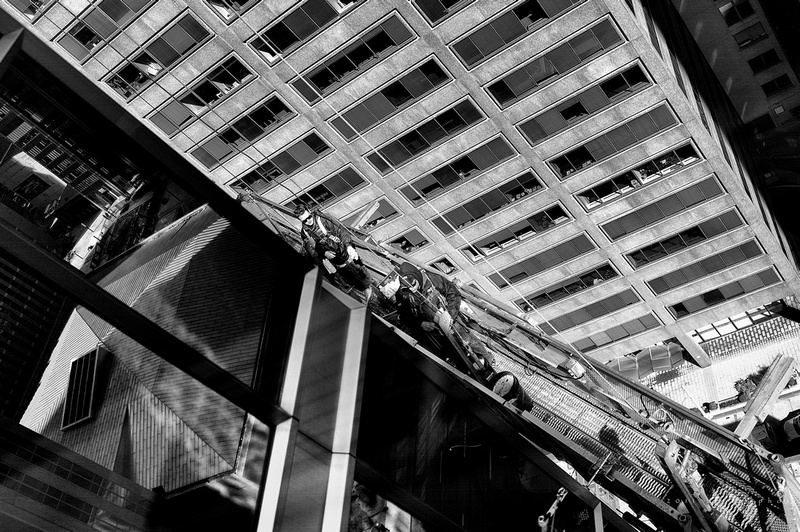
Once again, the image elements (the buildings) have been tilted so that the window washer platform forms a strong diagonal.  The tilting here is also successful because of the sense of vertigo it adds to the image which, by the way, is named Vertigo.

Finally, here is what I would consider a very successful use of a diagonal:

(please click on the image below)

↑Nikon D3 and Nikon 24mm AF-D @ f/2.8.

In the image above, the diagonal is the barrier separating the (Niagara) Falls from the girl.  What’s more, this division has resulted in a harmonious composition in that the Falls and the face are equally prominent on either side, and the image is therefore “balanced”.  Finally, on an artistic note, the strands of the girl’s hair over her face mirror the linear strands of water behind her, which is immensely pleasing to the eye.  I cannot pretend to have planned it this way, but my choice of composition resulted in a happy accident.

I hope the above discussion on strong diagonals was helpful.

The merry-go-round.

Inspiration, Leica 50mm Summicron f/2, Teaching point

It’s challenging sometimes to photograph something you’ve photographed before and produce something with a fresh perspective.

I often look to change things up by photographing at different times of the day (or night), under different sorts of weather.  It’s mostly about the light and the way it paints everything it touches.  A simple park bench can be boring under flat light but can be absolutely poetic with the red-orange back-lighting of the setting sun behind it.

Sometimes I’ll change my angle or point of view.  There are actually many variables involved, and many opportunities to introduce change.

When I was shooting this Merry-Go-Round, I was doing it at the same time of day, in the same season, and using the same camera and lens I’ve shot previously.  So what to do?

I decided to play with the shutter speed to create a blur effect, shooting at 1/4 sec.  The aperture was set to f/16.  I panned a little bit to follow the action so that some of the elements in the image were recognizable and not just blurred blobs.

I don’t know if I succeeded in making these interesting, but I like the effect, and I enjoyed revisiting a familiar scene in a slightly different way.

(please click on any of the images below to view)

All three photos taken with the Leica M9 and Leica 50mm Summicron @ f/16.

The Leica M9… for sports?

Inspiration, Konica Hexanon 60mm f/1.2, Leica 75mm Summarit f/2.5, Sports, Teaching point

I wrote this little piece for my good friend Steve Huff over at SteveHuffPhoto.com, and he was kind enough to publish it.  The specific link to it is here.

For the non-photo geek, it’s somewhat unorthodox to use a fully manual camera like the M9 to try and capture action, especially in this world of auto-focus and auto-everything-else.  But, as I write below, I’m able to anticipate better with this camera and – what’s more – there is no auto-focus system on the planet that will allow me to track the moving eye of a player at f/2.5 (or wider) better than my own eye.  The Leica allows me to be in full control, which is what I want.

Anyway, the article is reproduced here for you:

The Leica M9… for Sports? by Peter | Prosophos

Hi Steve,

Sometimes, when I read the commentary on the various fora, I get the sense that many people view the Leica M series cameras as great for “static” scenes like portraits, landscapes, and bowls of fruit.

Yet, as you have demonstrated with your concert photography, Leicas are great tools for capturing dynamic moments, and I know of at least one person who shoots racecars with his M9!

Despite this, Leicas are not often linked to sports images, so I thought this would make an interesting “just for fun” posting for your fine website.

OK, so the “sports” I’m referring to involves kids, but this still qualifies as action, and it’s not typical of the usual photography most people associate with a Leica camera.

Would I recommend a Leica M as a sports camera?

No, not really. The various “pro” DSLR bodies in existence are weather-sealed, have great high ISO performance, lend themselves more naturally to shooting at telephoto distances, and can be machine-gunned for crazy high frame rates.

Yet, what would I choose to photograph sports (or anything else I shoot)?

Hands down, the M9.

My reasons?

That’s a long story, perhaps long enough for somebody else to write an article about it. For now, I’ll just say that an M camera allows me to shoot the way I want, and to anticipate the action better than any other kind of camera I’ve ever used.

Here are the images, and thanks for doing such a great job with this site!

Peter | Prosophos

(please click on any of the images below)


↑Leica M9 and Leica 75mm Summarit @ f/2.5.

↑Leica M9 and Leica 75mm Summarit @ f/2.5.

↑Leica M9 and Leica 75mm Summarit @ f/2.5.

↑Leica M9 and Leica 75mm Summarit @ f/2.5.

↑Leica M9 and Leica 75mm Summarit @ f/2.5.

↑Leica M9 and Leica 75mm Summarit @ f/2.5.

↑Leica M9 and Leica 75mm Summarit @ f/2.5.

↑Leica M9 and Leica 75mm Summarit @ f/2.5.

↑Leica M9 and Konica Hexanon 60mm @ f/1.2.

↑Leica M9 and Leica 75mm Summarit @ f/2.5.

This last shot was taken with the Nikon D3S, but I’m including it here because I like it:

Bright, midday light.

Konica Hexanon 60mm f/1.2, Leica 50mm Summicron f/2, Leica 75mm Summilux (Canada 🇨🇦) f/1.4, LFI Master Shot, Teaching point

Harsh light washes out colours and details, and creates blown highlights and deep shadows.  The latter two are unflattering to faces, so I try to avoid shooting in bright midday light when photographing people.

Sometimes though, the moment inspires and emotion wins over technical perfection.

[Photography Pearl:  An emotionally appealing, but technically flawed, photograph will always trump a boring, but technically perfect one.  If an image connects with the viewer, it has succeeded.]

(please click on the images below)

↑”Springtime” (Leica 50mm Summicron @ f/2).  [This image was chosen as a Leica Fotografie International (LFI) Master Shot].

↑”Mother and daughter” (Leica 75mm Summilux @ f/1.4 with a 3 stop ND filter).

↑”The contortion of play” (Leica 75mm Summilux @ f/1.4 with a 3 stop ND filter).

↑”Not homeless, just tired” (Konica Hexanon 60mm @ f/1.2).

All images taken with a Leica M9.

Bokeh, and the Hexanon 60mm f/1.2.

Konica Hexanon 60mm f/1.2, Teaching point

Bokeh refers to the out-of-focus elements in an image.

Photographers usually obsess over it because it can enhance – or detract from – an image.  More precisely, it can be smooth or harsh, or anything in between.

Different lenses render bokeh differently, and we often speak of a lens’ character in this respect (lenses can also exhibit other characteristics, but that discussion is outside the scope of today’s post).

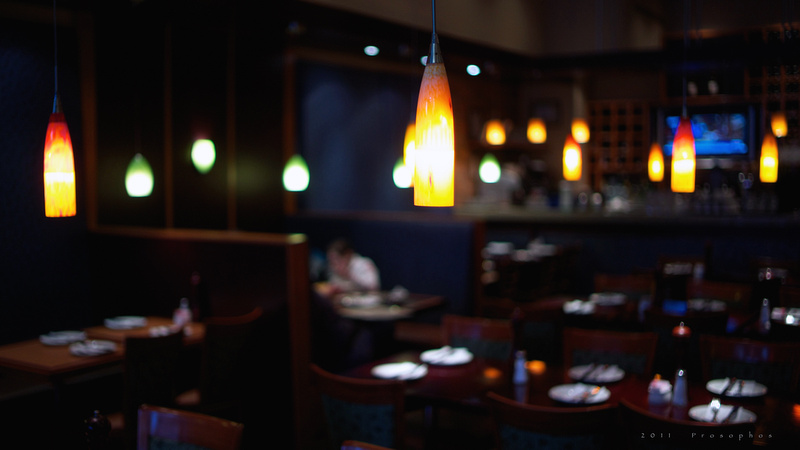
The Konica Hexanon tends to have bokeh on the wild side (harsh), which I often prefer to the more marshmallow-y (smooth) look you get with certain more “perfect” lenses, like the Leica 50mm Summilux Aspherical.

The interesting thing is, the quality of the bokeh can be different even when using the same lens at the same aperture, depending on what content is being photographed.

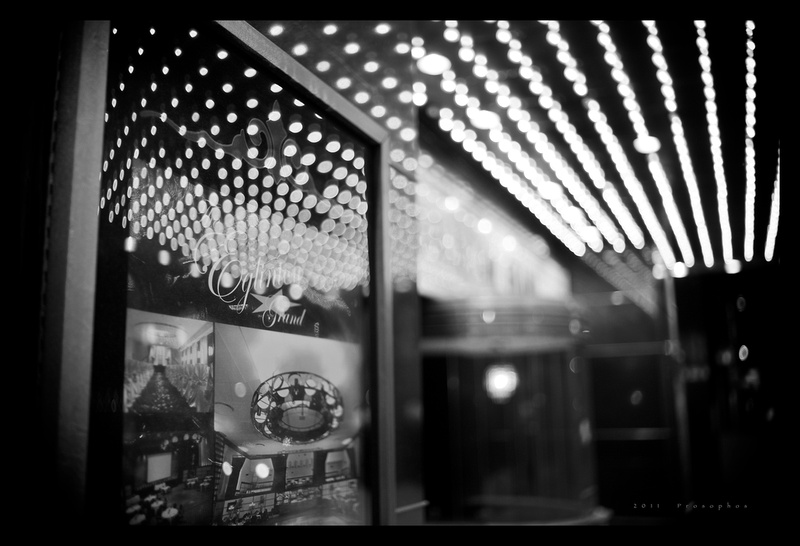
For instance, here are two examples demonstrating some of the different ways the Konica Hexanon 60mm renders bokeh (both shot @ f/1.2):

In this first example, the harshness of the bokeh is apparent in the foliage, where we find rather “hard” edges to the circles; the Leica 50mm Summilux Aspherical would have rendered this in a more smooth manner.  Foliage, by the way, is a bit of a “torture test” for lens bokeh, as it can bring out some rather jarring results, even in lenses that are generally thought to be smooth.


(please click on the image below)

In the second image below, even though the same lens is being used, the background has been rendered more gently.  I would specifically describe it as painterly – a mix of smooth and bold as if painted by an artist’s brush.  This is what I really appreciate about this lens – there’s always a tension present between extremes that I find visually very appealing.

(please click on the image below)

Of course, foreground elements may also be out-of-focus, as is the case with the railing in the second shot as it approaches the bottom right portion of the frame.  It follows that different lenses will handle foreground elements differently.   But I’ll leave that discussion for another day…

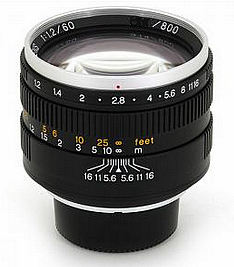
The Konica Hexanon 60mm f/1.2 – it’s got a Hex on me.

Inspiration, Konica Hexanon 60mm f/1.2, Teaching point

I’ve been looking, and looking for this lens.

I’m not gloating. I’m just happy. So very happy.

This is my dream lens….

I’ve searched, and searched for it, and was finally rewarded this week.  And it arrived today.  Oh, sweet joy.

Here is one of my first test shots.

(please click on the image below)

↑Leica M9 and the Konica Hexanon 60mm f/1.2, Special Edition.

Never heard of the Konica Hexanon 60/1.2?  It’s understandable, as there were only 800 of these ever made, in 1999.  Most of these are sitting in boxes, on collectors’ shelves.  Occasionally – actually, rarely – one of these is put up for sale.

If you want to read more about this special lens, you may do so here at Yanidel’s photo-blog – it was his artistry with the KH 60/1.2 that first made me aware of its existence (if you’ve never seen Yanidel’s site, do yourself a favour and have a look – his street photography with any lens is brilliant).