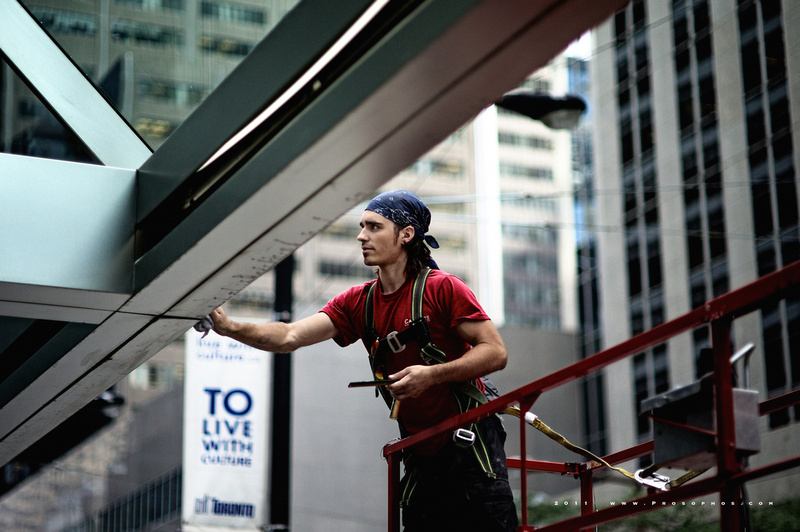
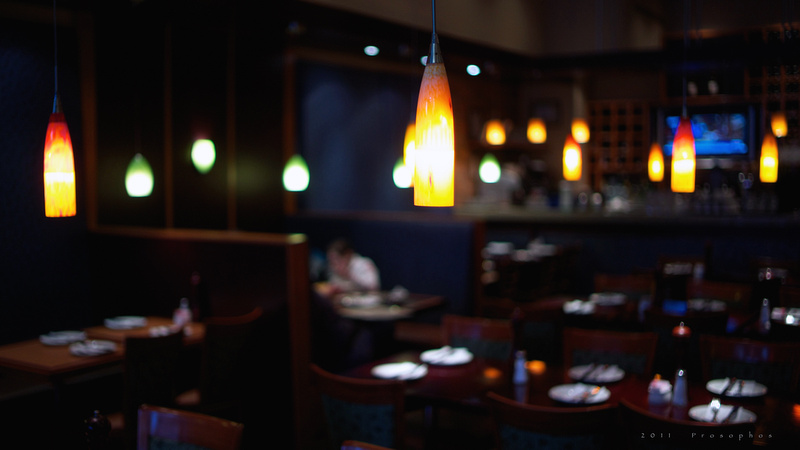
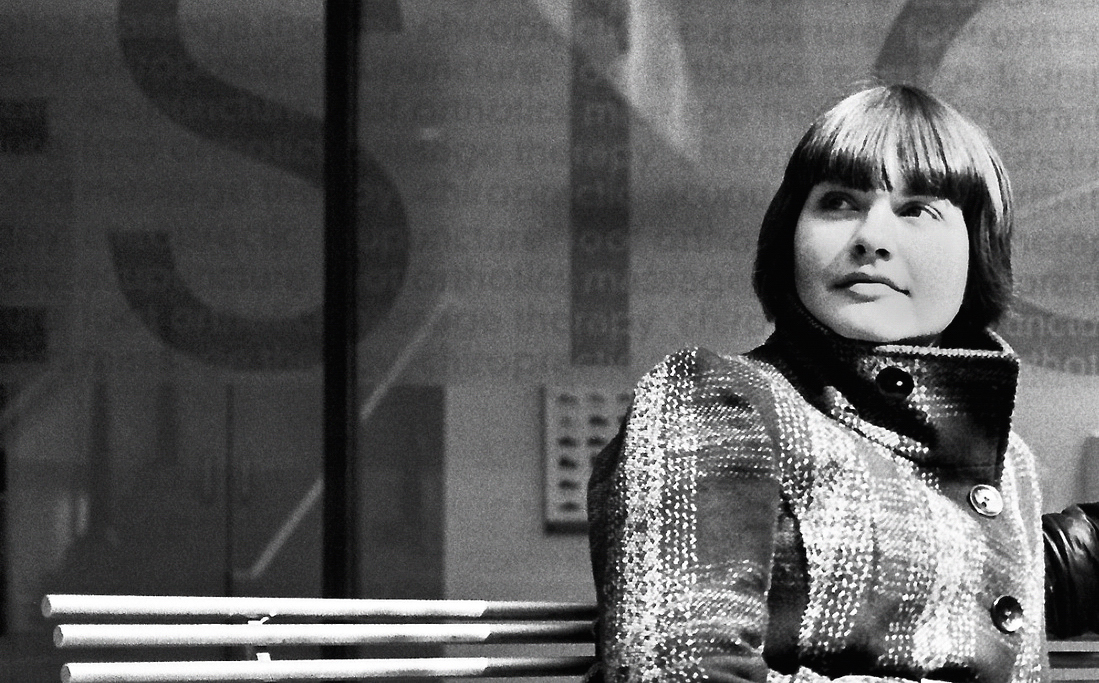
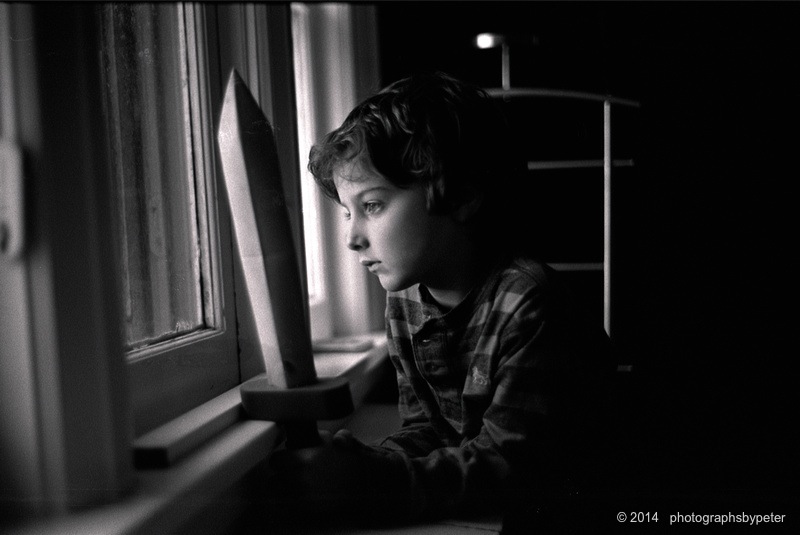
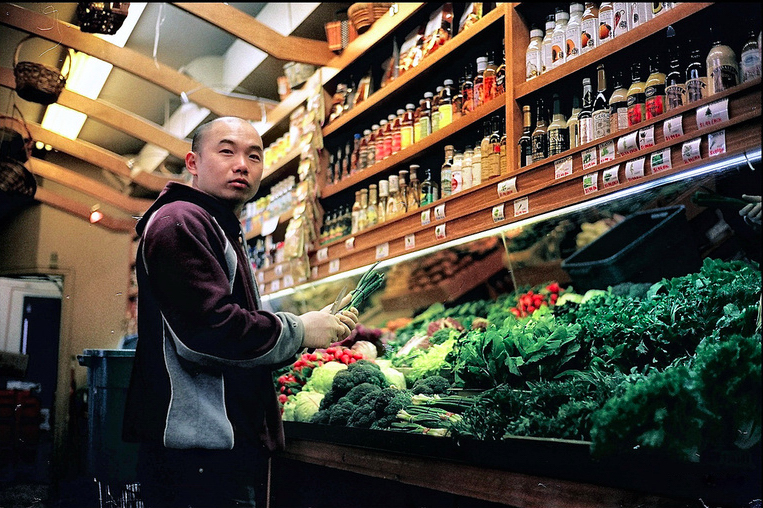
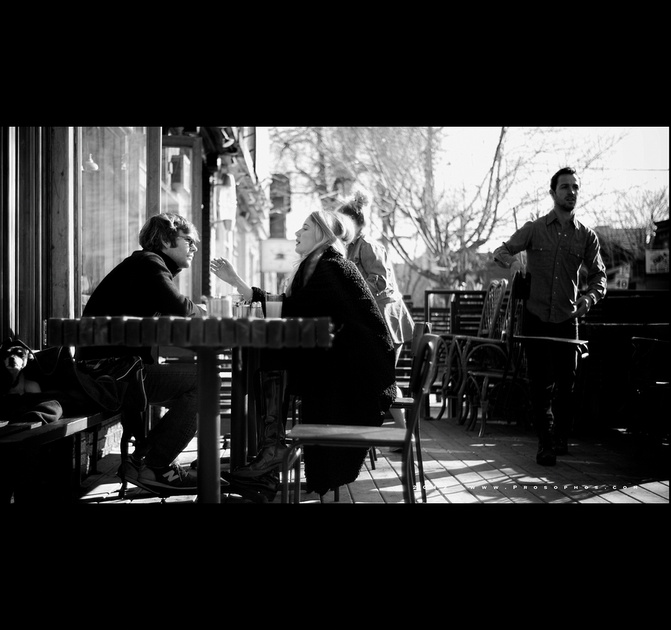
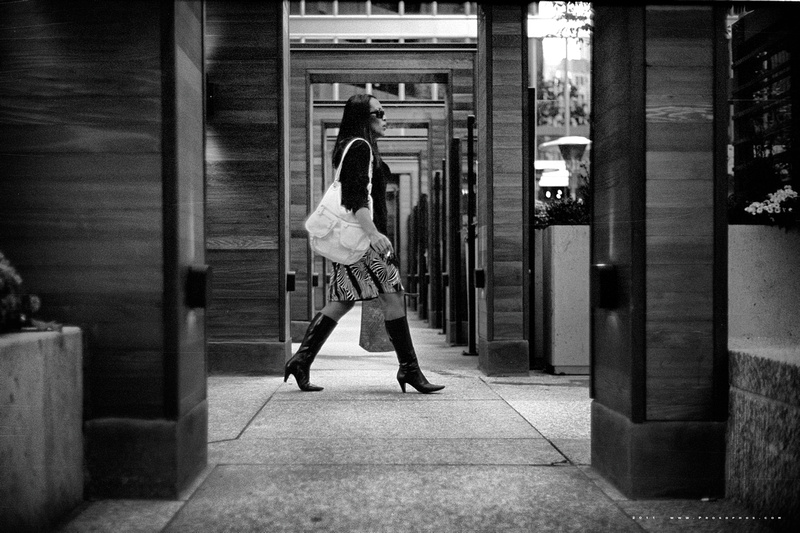
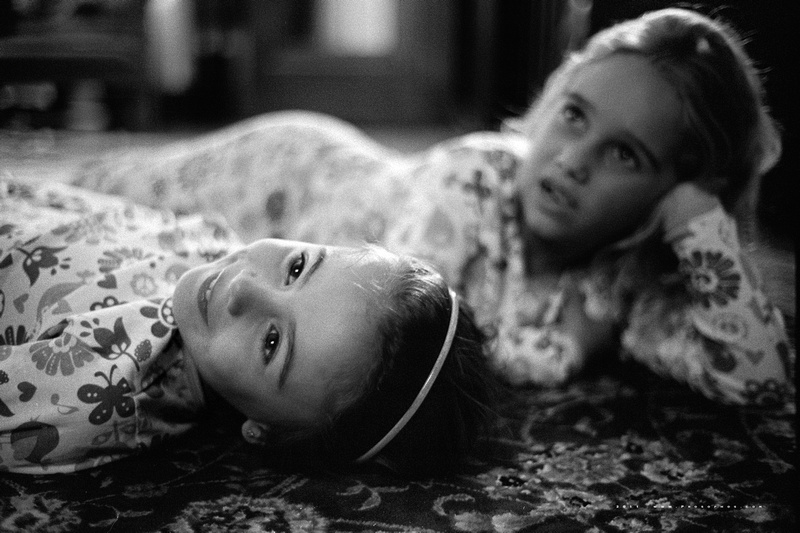
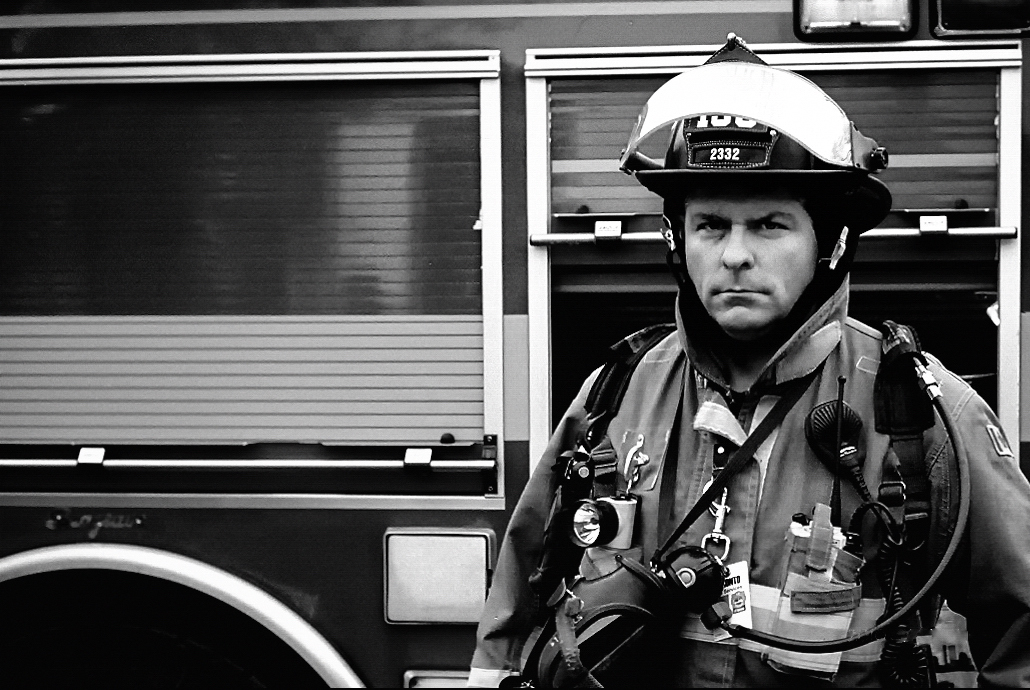
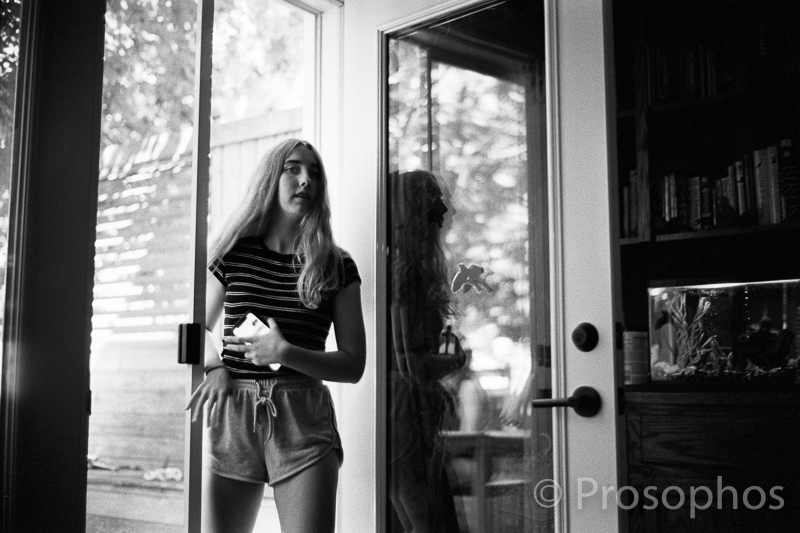
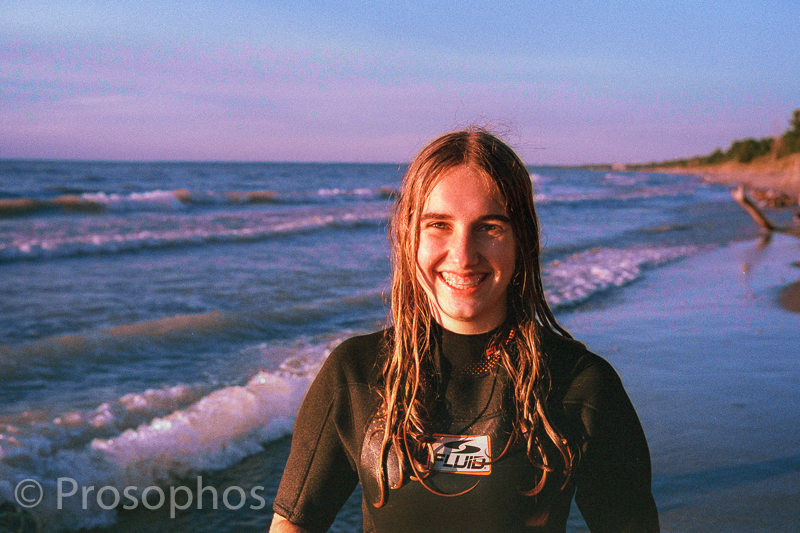
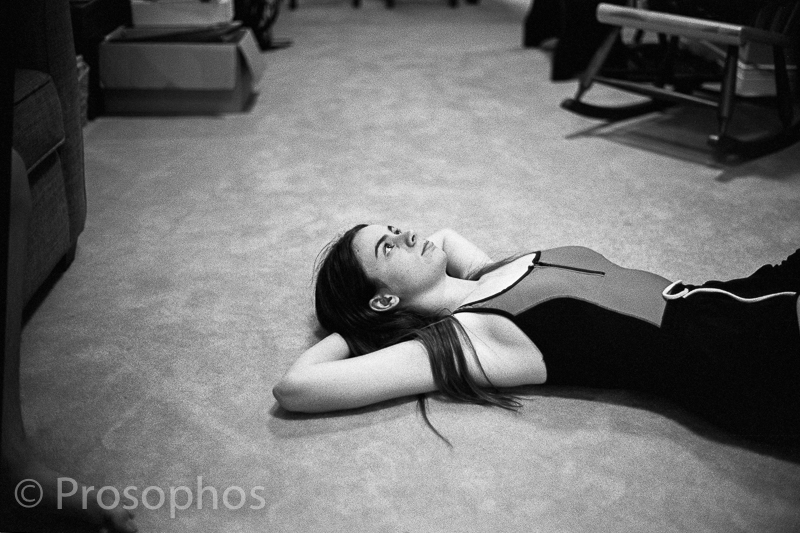
Over-processed, not.

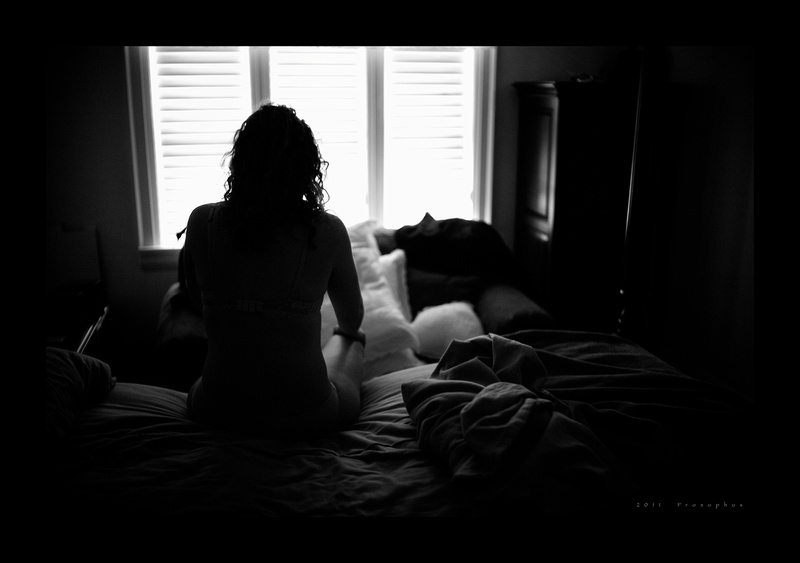
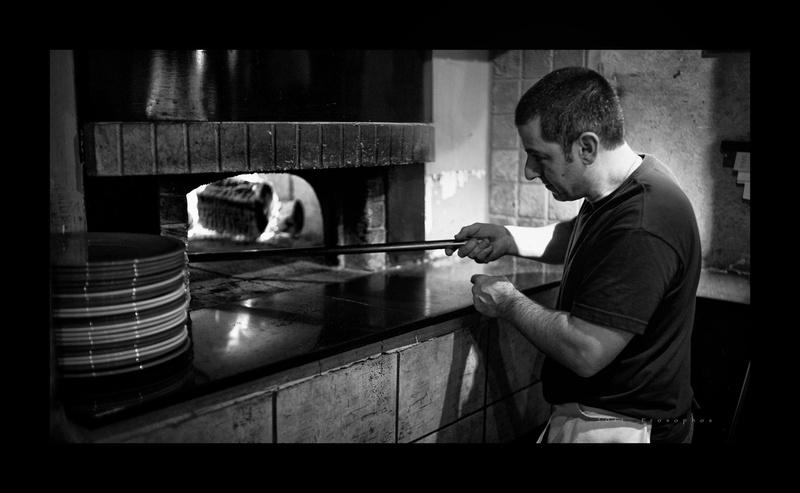
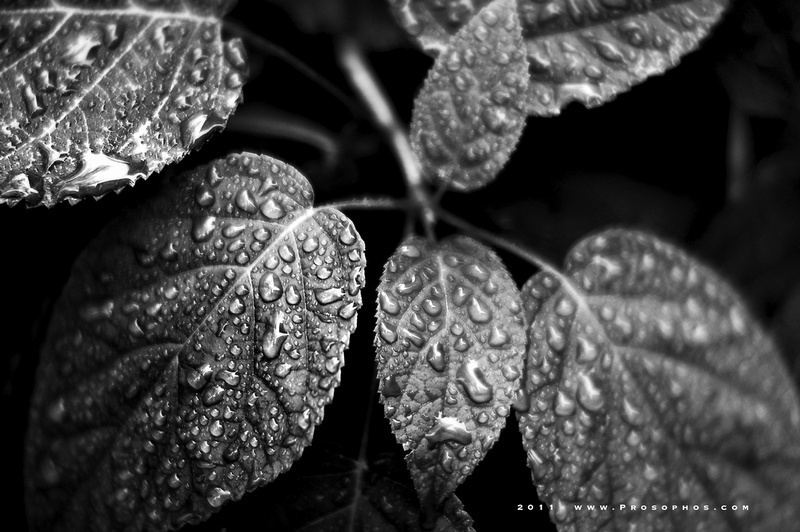
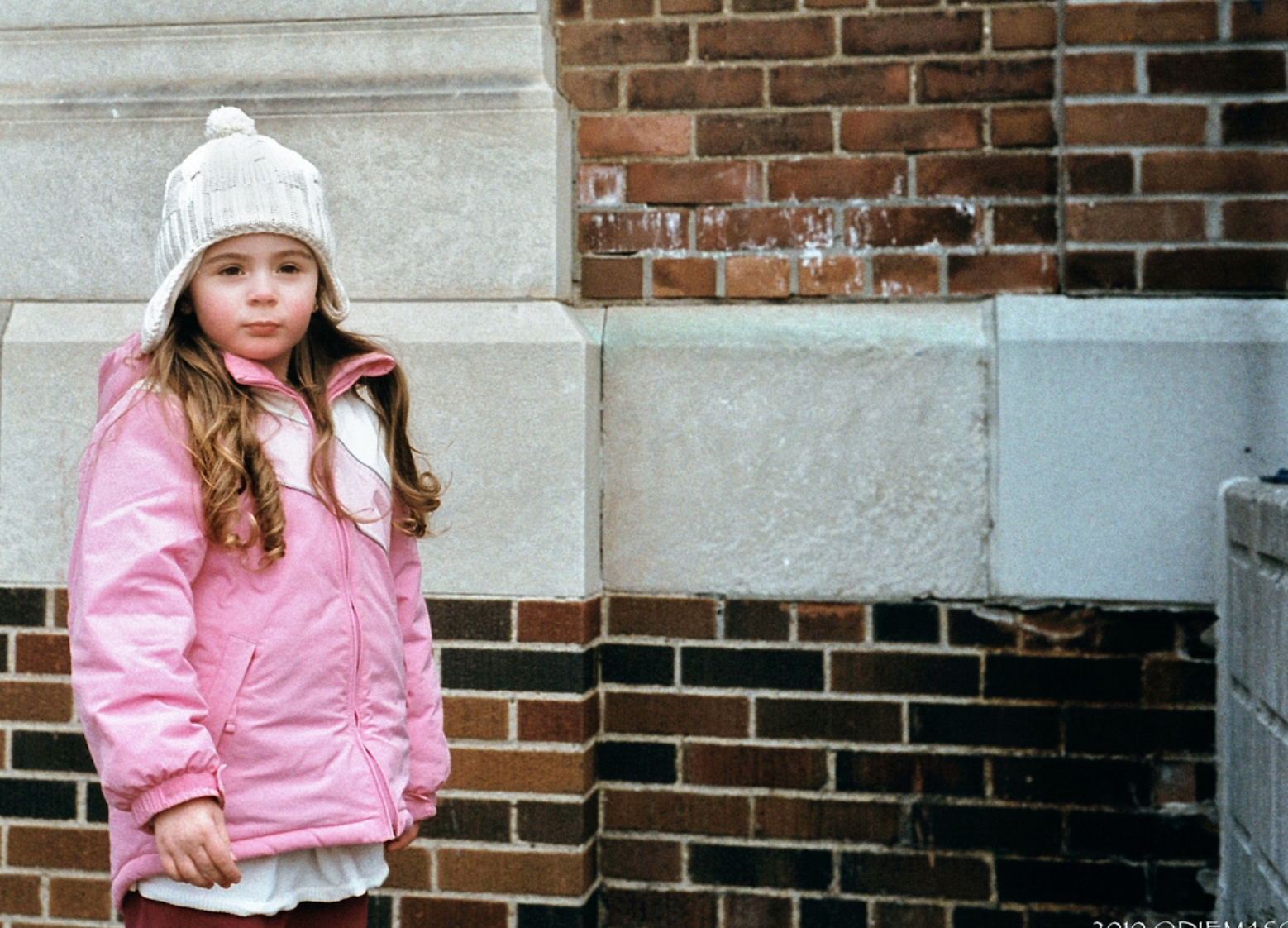
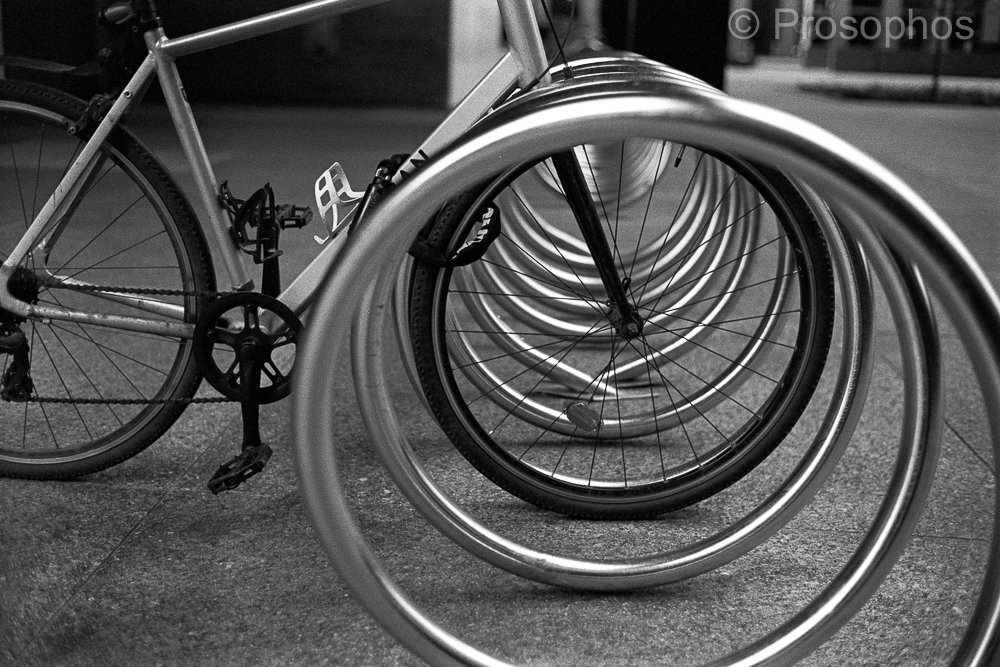
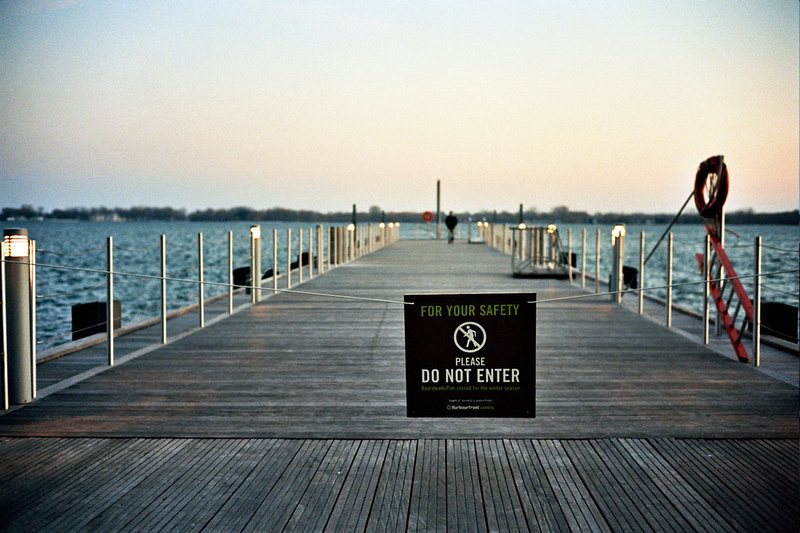
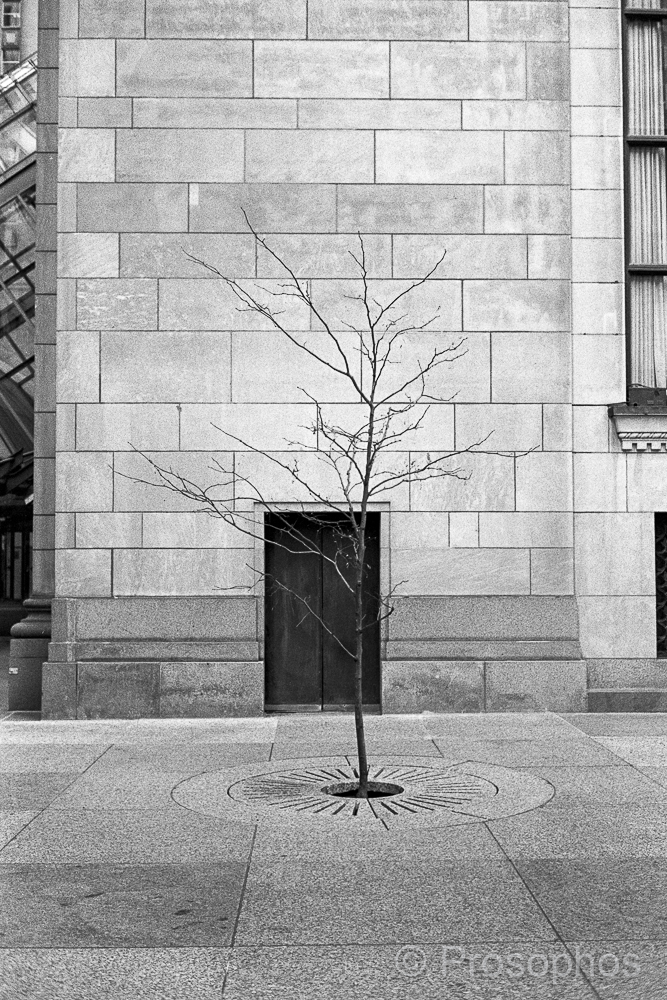
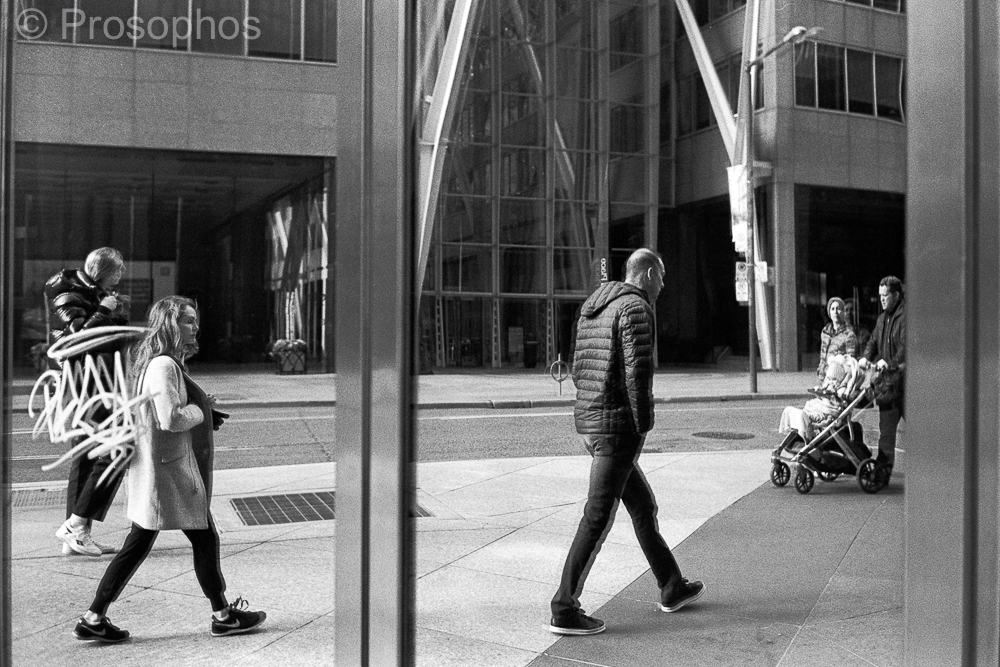
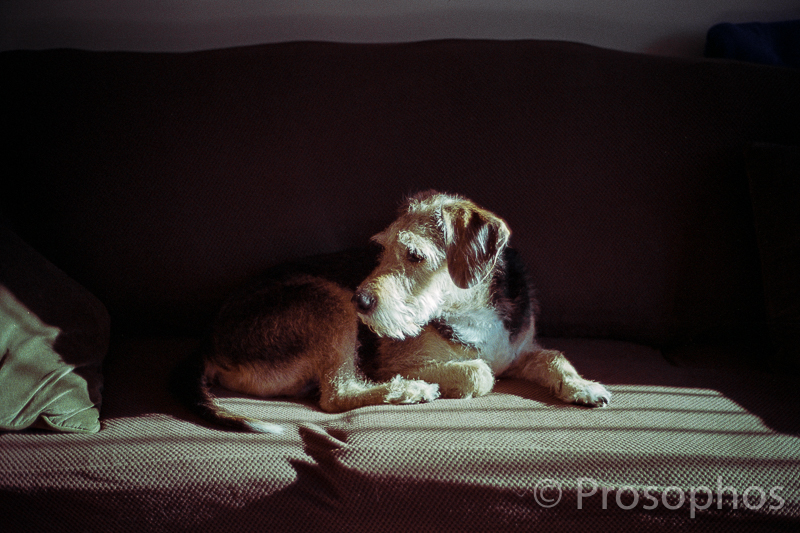
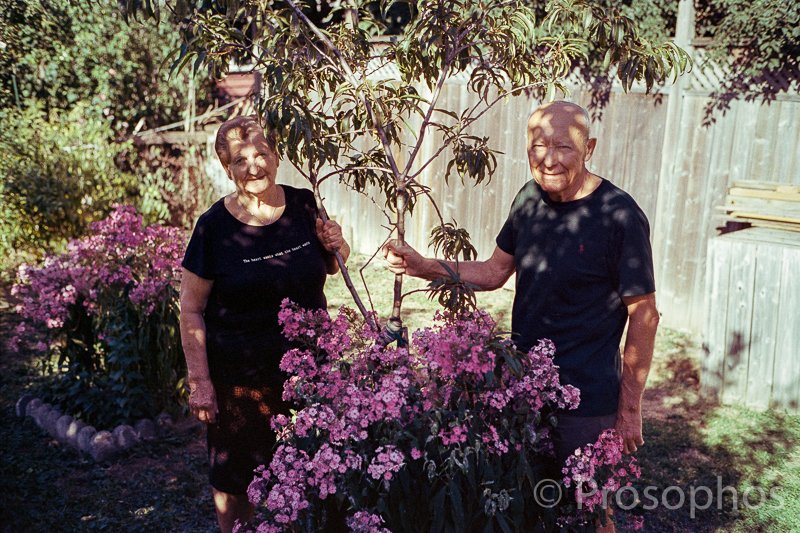
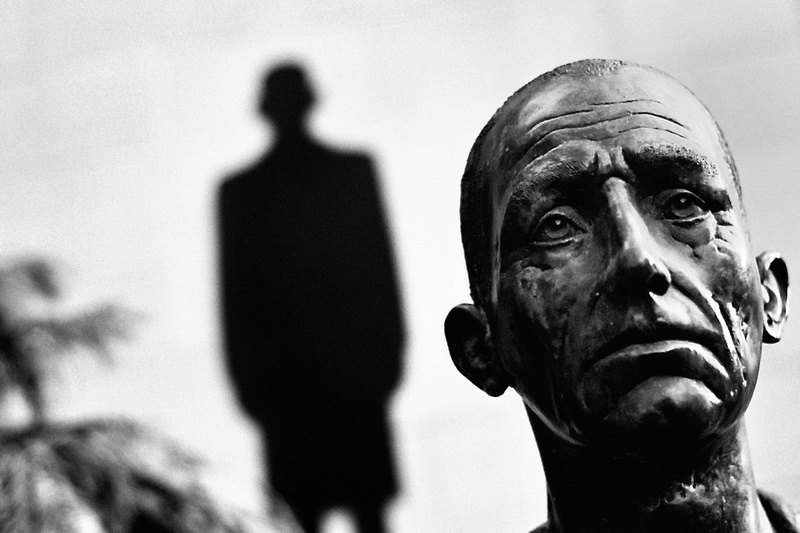
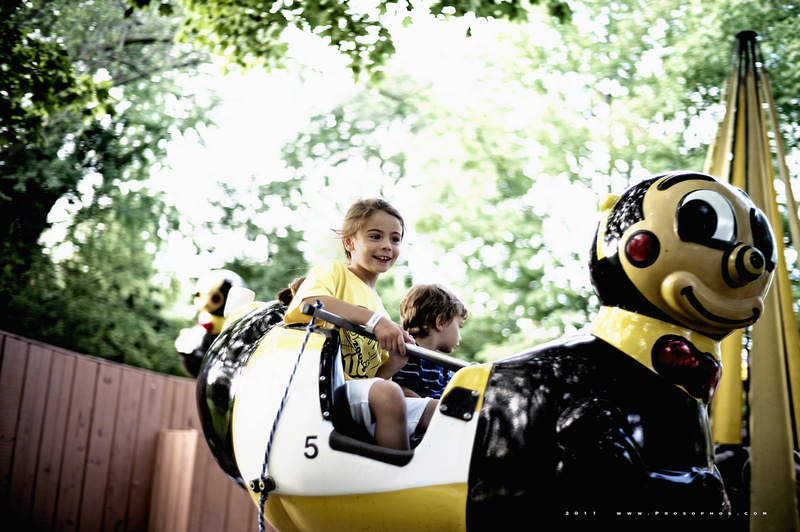
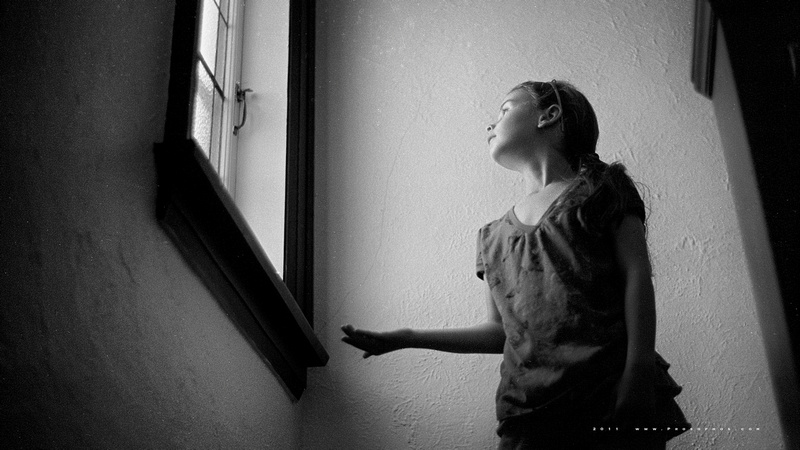
Leica M2, Teaching point, Voigtländer 40mm f/1.4 Nokton

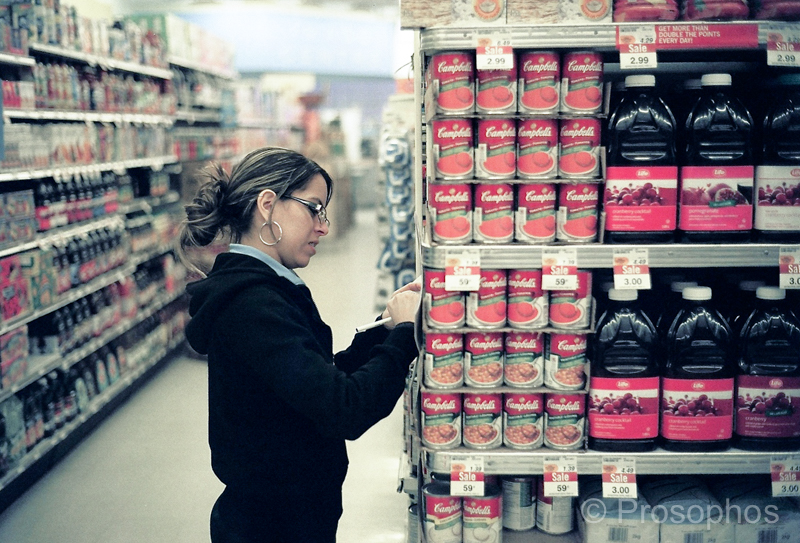
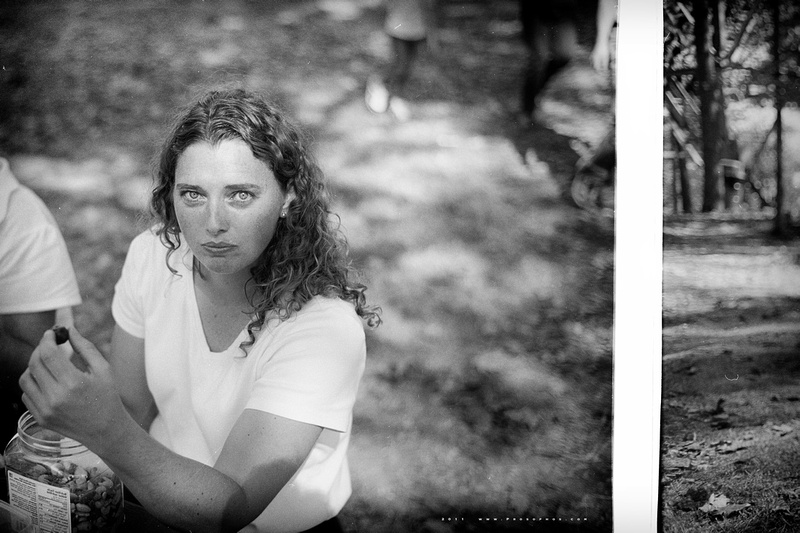
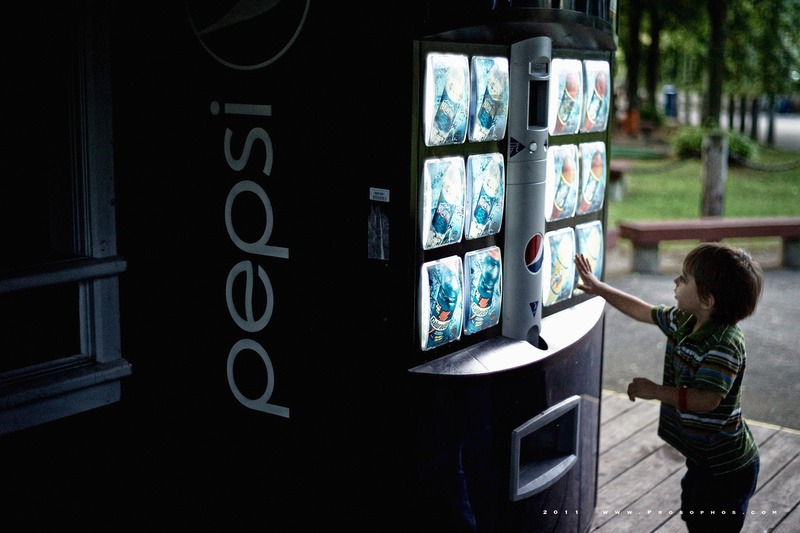
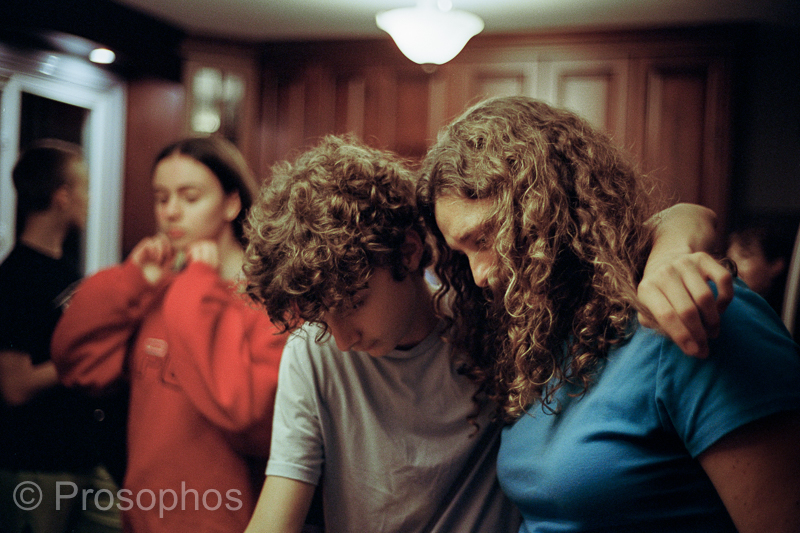
I always have to remind myself not to over-process my images.

It used to be the domain of poor HDR photography practitioners, but now I see “over-cooked” images everywhere.  What’s worse is that few people are objecting to it.

Don’t get me wrong, I shoot in raw format and process ALL of my images, sometimes using various software plug-ins – which I suspect are the most popular tools employed by the offending photo-chefs.

And, especially in my novice days, I have been guilty of over-processing too.  Moreover, I’m sure in a few years I’ll look back at my current digital output and label it as garish.

However, I’ve been shooting a lot with film lately.  I’m doing this mostly because my mood and creative juices are calling for it…. something to do with the darker, cooler season of autumn.

In doing so, I’m always reminded of how a photograph should look.

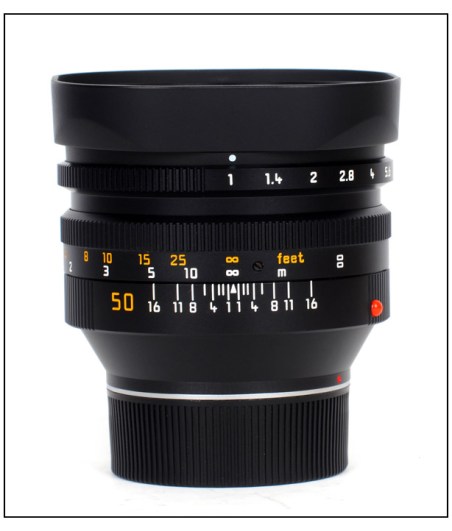
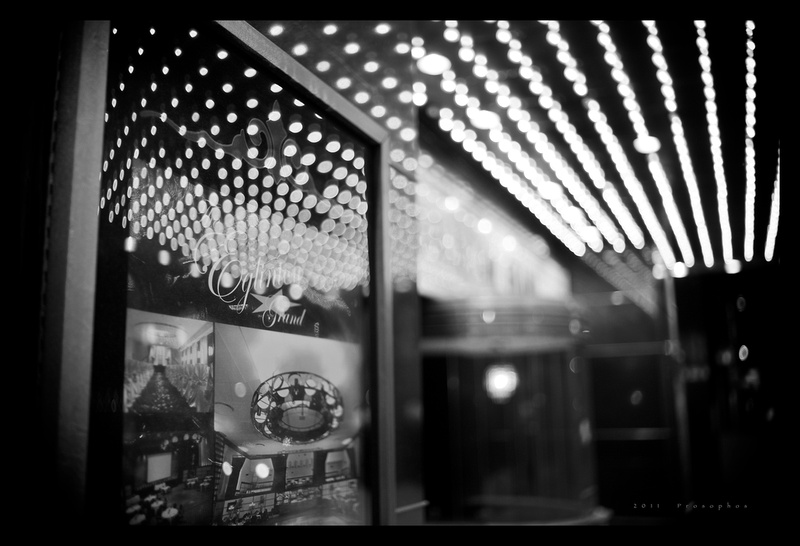
↑Leica M2 and Voigtländer Nokton 40mm @ f/1.4.

Nothing flashy.  Nothing exciting.  But real.

I know digital and film, in their native state, look different so I’m not trying to emulate one with the other.

I still go ahead and process the film images I’ve scanned into my computer, though – fortunately – it’s harder to screw around with them… but not impossible.   This limitation helps me understand what I should be striving for when processing digital images.

Keeping it real, so to speak.

—Peter.

Running.

Inspiration, Leica 75mm Summilux (Canada 🇨🇦) f/1.4, LFI Master Shot, Portrait, Teaching point

The exhilaration of being, on a sunny autumn day.

This photo was chosen as a Leica Fotografie International (LFI) Master Shot.

(please click on the image to view)

↑Leica M9 and Leica 75mm Summilux @ f/1.4.

As you can see, the 75mm Summilux produces an extremely shallow depth of field at f/1.4.  Nailing focus here – while he is running towards me – is tricky.

Further complicating things is the long focus throw of the 75/1.4, which is designed for precision and not for speed.

I rarely get this kind of shot with this lens, at this aperture… and to have caught him in mid-stride was the icing on the cake.

A walk with (and “testing” out) the Leica 50mm Noctilux f/1.0 (E60).

Inspiration, Leica 50mm Noctilux f/1, Teaching point

As I previously posted, I recently acquired a Leica Noctilux f/1.0 and added it to the stable of lenses I normally use.

Now, I am not a lens tester by any stretch of the imagination – I don’t photograph test charts, or brick walls; I don’t place my camera on a lab bench with a tripod taking repeated measurements.

But, like all disciplined photographers, I do carefully observe how each of my lenses behave under different shooting circumstances.  I pay particular attention to each lens’ strengths and weaknesses in environments in which I regularly find myself, and – finally – look for the general character of the image output.  That’s what I’m most interested in.

By doing this, I have conceptually set aside certain lenses for daylight use, for low-light, for action, for situations where cold-hard details are required, for situations where soft and dreamy portraits are my priority, for scenes in which “interesting” bokeh is desired, for scenes where neutral and smooth bokeh is preferred, etc.  Each lens has a particular flavour that potentially lends itself to a given situation.

So, that being said, I took out my new-used Noctilux f/1.0 for a walk – to start acquainting myself with it.

Normally on this site, I only post photos that have some emotional significance to me.  However, I thought some of the the sample images from my “test” walk would be of general interest.

Please note that all of these images were shot at f/1.0 – the aperture in which I’m most interested.  A neutral density filter was used to overcome the brightness of shooting at f/1 in daylight.

The first thing I was looking for was general sharpness.  Lens sharpness isn’t everything, but it is important.  It’s the one thing you can’t add to a photo during post-processing, if the photo is blurry to begin with (whereas you can always take a sharp photo and make it blurry).

When I write sharpness, I’m referring to central image sharpness and not sharpness across the field.  As a (mainly) portrait shooter, I really don’t care if the corners of an image are blurry – in fact that’s a positive thing for me.  Landscape shooters, of course, would care.

The first image is of a Monarch butterfly I encountered:

(please click on any of the images below)

↑Leica M9 and Leica f/1.0 Noctilux @ f/1.0.

The sharpness seems pretty good (the focus was on the butterfly, of course).  The bokeh looks pretty good too – smooth but not too smooth for my taste.

Let’s look at the 100% crop.  The sharpness holds up but we also see something commonly encountered with fast lenses shot at their widest apertures:  purple fringing.
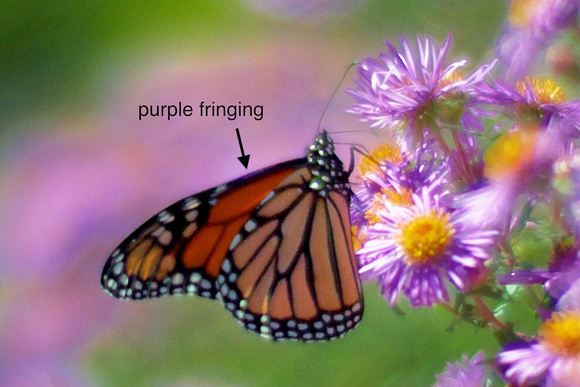
↑Leica M9 and Leica f/1.0 Noctilux @ f/1.0 (100% crop).

Purple fringing tends to occur in high contrast transition points, typically on the edge of dark structures  – in this case the edge of the butterfly wing – against bright backgrounds.  In actuality, purple fringing is an example of longitudinal chromatic aberration (forget the technical stuff, just know when you’re likely to see it, as I’ve illustrated above).

Let’s look at another image.

I next encountered this scene of a man sitting on a park bench and focused on him:

(please click on any of the images below)
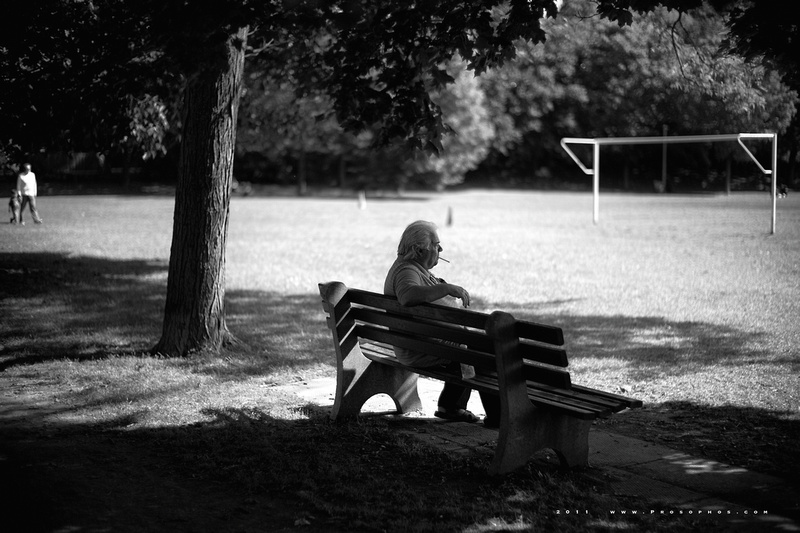
↑Leica M9 and Leica f/1.0 Noctilux @ f/1.0.

And here is the 100% crop:

↑Leica M9 and Leica f/1.0 Noctilux @ f/1.0 (100% crop).

Once again, pretty darn good considering this was shot at f/1.0 in harsh daylight!  It’s not as sharp as the (newer) Noctilux f/0.95 ASPH is at f/1.0, but the “old” Noctilux’s ability to capture details is mighty impressive.  I would go further to say that I appreciate the character of this lens at f/1.0 more than of the newest ASPH Noctilux.   It’s hard to explain, but this old Noctilux seems to create images where the in-focus elements are simultaneously sharp and soft… Again, perfect for portraits.

OK, enough of sharpness and image crops.

The other thing I noticed while shooting was that at f/1.0 this Noctilux vignettes.  Here is an image where the vignette has been exaggerated by adding contrast to the image as a whole (i.e., I did not add a vignette, but by adding contrast to the entire image, the vignetting that was naturally produced by the lens was exaggerated):

(please click on the image below)
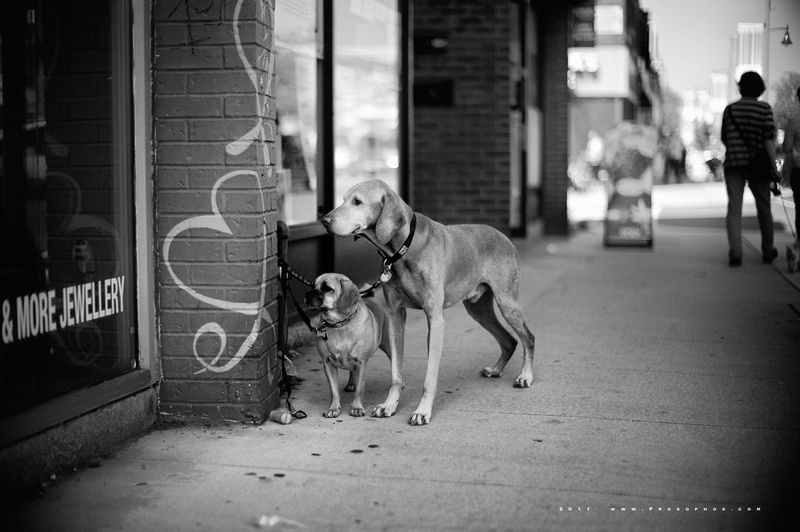
↑Leica M9 and Leica f/1.0 Noctilux @ f/1.0.

Why am I evaluating vignetting in an image that I’ve already post-processed?  Well, as I wrote above, I’m not scientifically evaluating but I’m examining this lens under the conditions in which I work.  In the native file, I already see the vignetting but, by adding contrast to it, the vignetting is emphasized.

Again, vignetting may be a negative thing, depending on your style of photography, but I appreciate it in the case of portraiture, where the darkened borders help to “bring out” the central subject.

Speaking of “bringing out” the subject, I’ll include two more images taken during my walk that I believe highlight the subject isolation abilities of this lens, when shot at f/1.0:

(please click on any of the images below)

↑Leica M9 and Leica f/1.0 Noctilux @ f/1.0.
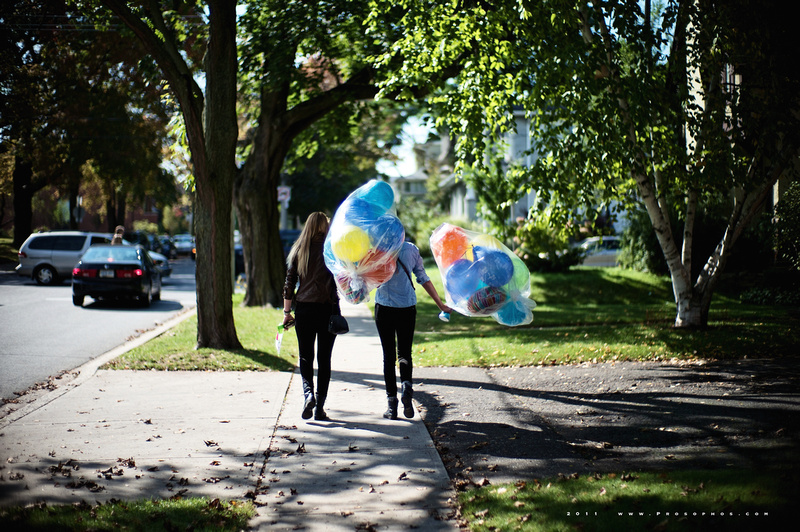
↑Leica M9 and Leica f/1.0 Noctilux @ f/1.0.

What do I mean by subject isolation?  In each of the above images, the in-focus elements seem to “pop-out” of the image; some refer to this as the “3D” effect.  Whatever you call it, this look is secondary to the shallow depth of field conferred by shooting at f/1.0.  At f/1.0, there is only a razor-thin plane where things are going to be in-focus; the rest of the scene will out-of-focus.  This is one of the qualities people covet when they seek out a lens like the Noctilux and why they shoot at f/1.0 – even in daylight.

I could write more (about bokeh, flare resistance, etc.) but this discussion is already proving to be lengthy so ‘ll end it here for now.

OK, I lied… here is one more 100% crop, of the Balloon Walk image above:

(please click on the image below)

↑Leica M9 and Leica f/1.0 Noctilux @ f/1.0 (100% crop).

You can actually read the Happy Birthday text on the balloons; as I wrote above, the in-focus elements in the image are simultaneously sharp and soft – I really appreciate this.

Thanks for taking the time to read this.

If you wish to view more of my images taken with this lens, as I keep shooting with it, please click on the link here.

_____________________________

Please donate to this site!

Please show your appreciation for this article!

If you’ve been helped by this article, or any of my other articles, please consider making a contribution to help me run Prosophos.com.  Whether it’s $1, $5, or $10… it all helps.

This site is a labour of love, but any help I receive will help me devote more time to running it.

Thanks,

—Peter.

The look.

Inspiration, Konica Hexanon 60mm f/1.2, Portrait, Teaching point

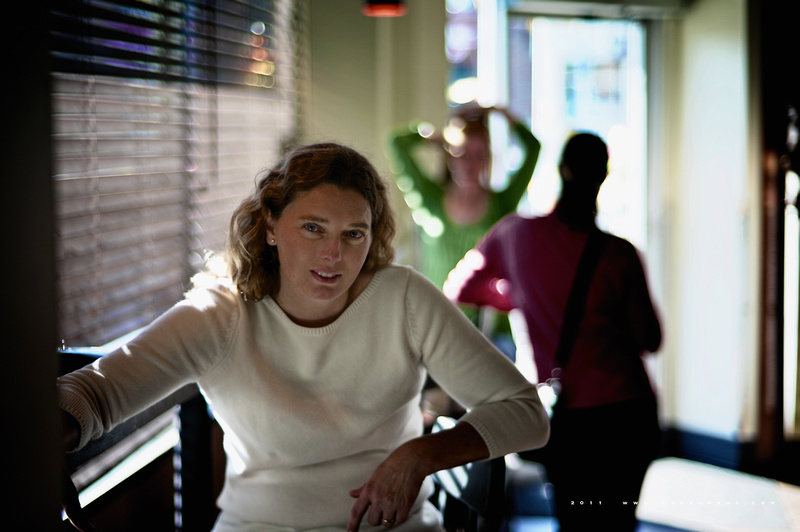
I know it too well.  She’s wondering if she’s ever going to get her coffee.

The lighting was tricky here… mixed natural and incandescent.   On the other hand, the blinds shielded against the harshest of the outside light and things balanced nicely.

(please click on the image to view)

↑Leica M9 and Konica Hexanon 60mm @ f/1.2.

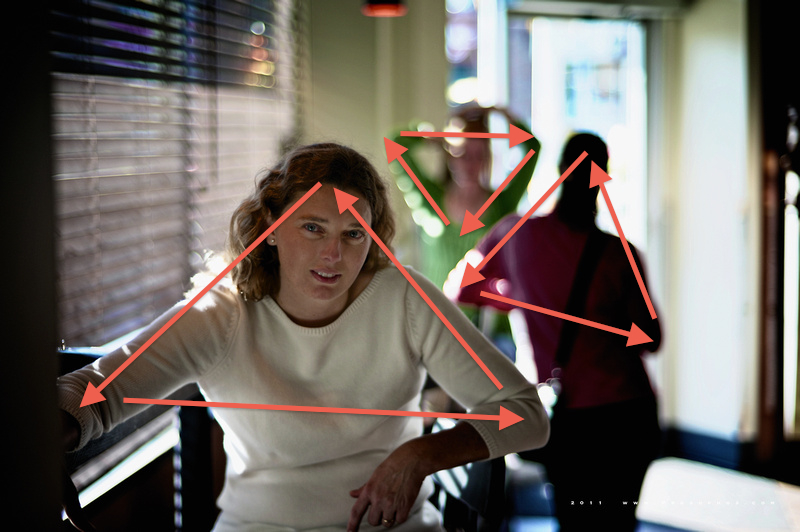
I love how the girl furthest back, by adjusting her hair the moment the shutter was released, has filled out the composition:  her posture creates an inverted triangle that fits like a puzzle piece between the triangles formed by the postures of the two figures closest to us.  It is difficult to explain so here is a visual of what I mean:

She did get her coffee, eventually.

Levels.

Inspiration, Leica 50mm Summicron f/2, Photo Shoot, Teaching point

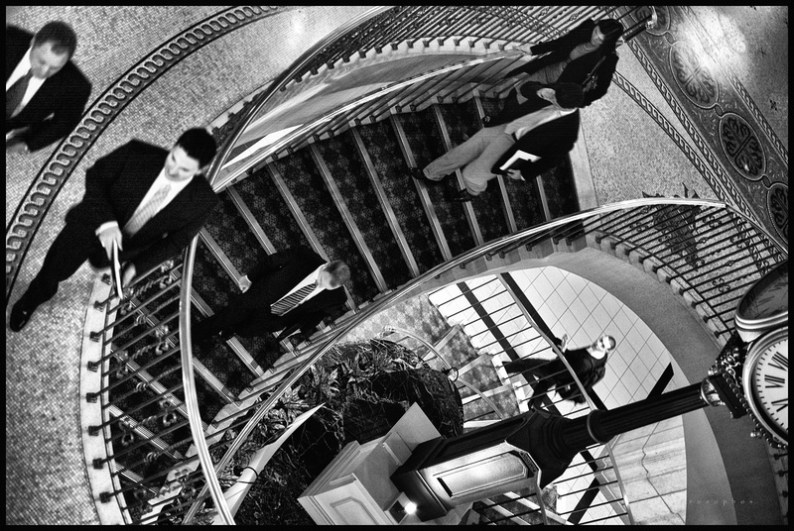
This shot is unsuccessful.

The scene is from the lobby of the Royal York Hotel in Toronto where an interesting vantage point is afforded by the arrangement of the floors and spiral staircases – it sets up an almost Escher-like effect on the brain.

(please click on the image to view)

↑Leica M9 and Leica 50mm Summicron @ f/2.

My goal was to capture the bustling movement of people, on each level, including the connecting staircase.  The first strike against success was the lens  – I had a 50mm, and I needed a 35mm.  Consequently, the frame is tilted in order to try to “fit” more of the scene into the field of view (this somewhat contributes to the general visual disorientation so it’s not such a bad thing).  The second – and more fatal – strike was that, despite the constant flow of human traffic, there was never any satisfactory simultaneous distribution of people amongst the levels.  Despite waiting for it to happen, it never materialized.

Still, I kept this shot as a token for my efforts.  I do like the fact that the man in mid-step (bottom right) has spotted me, despite being two levels beneath me.

One rung at a time.

Inspiration, Portrait, Teaching point, Voigtländer 40mm f/1.4 Nokton

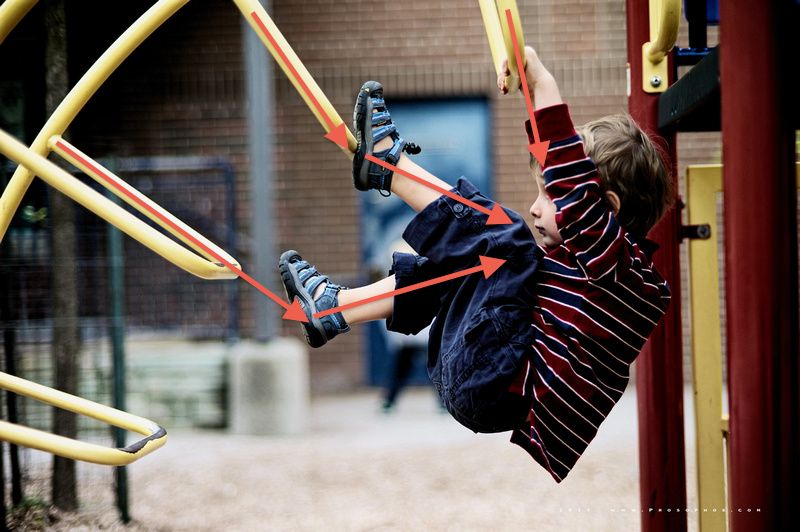
I captured a few frames during this sequential climb, but this one – with the searching foot – ultimately prevailed.

(please click on the image to view)

↑Leica M9 and Voigtländer Nokton 40mm @ f/1.4.

After studying this for a while, I realized why I preferred this image to the others.

The floating foot, adds a dynamic quality to the image.  We know he’s climbing, but with the foot between rungs, his movement is emphasized and there is a (tiny) sense of drama: will he find his footing?

More than this, the same lower foot, though not connected to the rung, completes a rung-to-limb schematic echoed in the two rungs above, that ultimately converges and directs our attention to his face (see red arrows below):

(please click on the image to view)

It’s interesting to tease these little visual cues out, though I’d much rather enjoy the images for what they are: precious, personal moments… frozen in time.

Gelato (and sharpness of the Konica Hexanon 60mm @ f/1.2).

Inspiration, Konica Hexanon 60mm f/1.2, Portrait, Teaching point

So, here’s our young lad eating some yummy gelato.

(please click on the image to view)

↑Leica M9 and Konica Hexanon 60mm @ f/1.2.

I am always in awe at what fast rangefinder lenses – in this case, the Konica Hexanon 60mm f/1.2 LTD – can do @ f/1.2.   Firstly, there is the subjective dream-like quality to the images.  Secondly, on the technical side, the sharpness wide open is remarkable.  Have a look at the 100% crop, where the focus is on the eye:

(please click on image to view)

↑Leica M9 and Konica Hexanon 60mm @ f/1.2 (100% crop, no sharpening).

With all the difficulties in nailing focus manually, on a moving target at f/1.2 with a back-focusing lens, it’s this sort of result that inspires me to keep shooting.

Jump! And, some thoughts on image creation.

Inspiration, Konica Hexanon 60mm f/1.2, Portrait, Teaching point

I often try to photograph in an unobtrusive manner because there is a natural rhythm to people and events to which the shutter release should be timed.  Snapping a photo at the wrong moment is like cutting against the grain, singing off key, or attempting to be somebody you’re not… it just doesn’t feel right.

When shots are planned – more likely than not – the smiles will be strained, the postures will be tense, the natural rhythm will be off.  This is of course unless you’re dealing with professional models, though even then introducing some spontaneity into the proceedings is a good thing.

Having written all this, I sometimes plan a shot, such as this one:

(please click on the image to view)

↑Leica M9 and Konica Hexanon 60mm @ f/1.2.

I asked C to jump.  That’s the planned part.  However, the act of jumping creates some fluidity because she’s concentrating on jumping and not posing.  Also, creating this image on the street allows for other elements to be introduced into the scene.  In this case, the passing couple wonderfully completes the composition – something for which I didn’t plan.

Lucky for me.

Something happening.

Inspiration, Leica 35mm Summarit f/2.5, Teaching point

Posting photos with commentary – like I do on this blog – is new to me.  I used to just post photos, free of my interpretation, because I believed the images should stand on their own merit.  Interpretation would be left to the viewer.

I still believe that, but I’ve obviously softened my stance – hence this blog.

However, I’m posting this image, which I will leave hanging, unadorned by words (other than the title, “Something happening”).

I took it yesterday.  Today I’ll leave the details up to you.

I’m curious as to what you dream up.

(please click on the image to view)

Leica M9 and Leica 35mm Summarit @ f/2.5.

The Voigtländer Nokton 35mm f/1.2 aspherical Version I (short review).

Teaching point, Voigtländer 35mm f/1.2 Nokton

(Disclaimer: This is not a comprehensive analysis, but one user’s experience.)

I had been looking for, ruminating about, and scratching my head over the Voigtländer Nokton 35mm f/1.2 for almost a year.  And, for various reasons, I never jumped at getting one.

Well then of course it was discontinued.  Cosina Voigtländer was planning to build a new version [Edit: available as of late August 2011], which was to be somewhat more compact in size. But I learned a while ago that there are always trade-offs in lens design, and what finally convinced me to get the newly-old version was Cosina’s statement as to why it was being discontinued: that it was too difficult to procure the glass and too expensive/difficult for them to manufacture anymore.

Hmmm….well that certainly piqued my interest.

Having finally decided to get one, it was unfortunately out of stock in all the usual places I frequented.

However, one night back in February of 2010, I saw a new Voigtländer Nokton 35mm f/1.2 (Version I) on sale on one of the large USA retailer websites.  I didn’t make the same mistake of hesitating.

Subsequently, my friendly UPS delivery man arrived late one evening with the 35/1.2 in hand. And of course – being insane – I headed outside into a freezing Canadian winter and took my first shot with it @ f/1.2.

Here is a sample image from that first night:

(please click on the image to view)

↑Leica M9 and Voigtländer Nokton 35mm @ f/1.2.

What I learned, almost immediately, was that this lens was going to change the way I photograph.  The lens could be trusted in extremely low light situations and could produce a delicate bokeh that rivals its Leica counterparts.

(please click on the image to view)

↑Leica M9 and Voigtländer Nokton 35mm @ f/1.2.

Counterparts, what counterparts?  Of course, there is no other 35mm rangefinder lens in production that can shoot at an aperture of f/1.2!  Yes, the Voigtländer Nokton 35/1.2 actually gives you a half stop more light than the next fastest 35mm rangefinder lenses out there.

Truthfully though, I find that the practical benefits of a half stop light advantage are not that pronounced.  If I’m shooting in a dark environment where f/1.4 is not enough, then chances are that f/1.2 will not be enough either… but, it sometimes helps!

However, putting aside low-light considerations, there is another tangible benefit to shooting at f/1.2:  subject isolation.

Subject isolation with a 35mm lens?  Not possible, you say.

Well, it is at f/1.2.

Is it better than what you get when shooting with another 35mm lens at f/1.4?  I think so, or at least I’ve convinced myself of it.  See for yourself:

(please click on the image to view)

↑Leica M9 and Voigtländer Nokton 35mm @ f/1.2.

What are the other benefits to the Voigtländer Nokton 35mm f/1.2?

It displays no focus shift!  Check

It’s an M-mount lens that near focuses to the M rangefinder limit of 0.7 m.  Check and check.

It has very little distortion, and even at its widest aperture, there is very little vignetting.  It is also built very solidly and the focus ring is well weighted for focus precision.  Check, check, and check.

And it’s got a bit of an “old school” look and feel to it (both the lens and the images it produces!) that I appreciate very much.  This point cannot be emphasized enough as it’s the reason I own this lens vs. any other fast 35mm lens – I just like how the Voigtländer Nokton 35/1.2 draws.  Period.

And finally – the part that totally shocked me:  it’s sharp at f/1.2.  No kidding, this thing is just razor sharp at its widest aperture, à la Leica.  This is one of the reasons you buy Leica glass at 5 times the cost, but the Voigtländer Nokton 35/1.2 gives you wide open sharpness that would satisfy the most discerning lens aficionado:

(please click on the image to view)

↑Leica M9 and Voigtländer Nokton 35mm @ f/1.2.

Don’t believe me?  The focus in on the near eye.

Here is the 100% crop (remember this is at f/1.2):

(please click on the image to view)

The Leica 35mm Summilux asphericals (I and II)  may be sharper wide open, but not by much.  In practical use, your own ability to focus correctly will have more impact on the final image.

So, why was I so resistant to getting this lens in the first place?  In other words, what are the negatives?

It’s the size and weight that put me off this lens for so long. I kept reading about it.  The internet kept warning me about it.

In the end, I guess I was so prepared to be overwhelmed by the size that I was pleasantly surprised when I finally got my hands on one.  It actually handles and balances very well on the M9 and, although the size causes partial viewfinder blockage, it is manageable.

By way of comparison, here’s how it stacks up against the current version of Leica’s Noctilux and Voigtländer’s own smaller offering, the Voigtländer Nokton 40/1.4:

Voigtländer 35/1.2:

  • Length = 3.1” (78mm)
  • Maximum Diameter = 2.5″ (63mm)
  • Weight = 1.1 lb (490 g)

Leica 50/0.95:

  • Length = 3.0″ (75mm)
  • Maximum Diameter = 2.9″ (73mm)
  • Weight = 1.54 lbs (700g)

Voigtländer 40/1.4:

  • Length = 1.2″ (30mm)
  • Maximum Diameter = 2.2″ (55mm)
  • Weight = 0.39 lbs (175g)

Fast glass with minimal optical compromises will always be heavy…

Other negatives?  Well, similar to my previous Voigtländer Nokton 40/1.4 discussion, the Nokton 35/1.2 lacks the biting microcontrast of its Leica counterparts and exhibits purple fringing wide open at high contrast edges.  Note, even the incredible Leica 0.95 Noctilux struggles with these, albeit at f/0.95!  At other apertures, the Nokton 35/1.2 is a stellar performer, in line with Leica’s finest.

In summary then, the Voigtländer Nokton 35mm f/1.2 aspherical (Version I) is a stellar optic with the following attributes:

  • Maximum aperture f/1.2 (equaled by no other M-mount 35mm lens).
  • At f/1.2, can achieve subject isolation (unique for a 35mm lens).
  • Incredibly sharp, even at f/1.2.
  • As compared to other fast lenses, there is relatively little vignetting at wide apertures.
  • There is no focus shift.
  • Provides soft and delicate bokeh.
  • Near-focuses to 0.7 meters.
  • Built solidly and operates with fine precision.
  • Comes in standard M-mount.
  • Relatively Inexpensive.

On the downside:

  • Large and heavy for an M lens, but there are larger and heavier ones out there (Leica 75/1.4, Leica 50/0.95).
  • Causes partial viewfinder blockage.
  • Less than class-leading microcontrast and resistance to purple fringing – but almost as good as Leica’s finest.

If the Voigtländer Nokton 35/1.2 was manufactured by Leica, I’m sure it would be priced many-fold higher.  Given its actual price (if you can find one), it represents a relative bargain.

And finally, since a picture is worth (at least) a thousand words, I’ll end this discussion by posting several more images taken with this lens:

(please click on any of the images below to view)

All of the above images were taken with the Leica M9 and the Voigtlander Nokton 35mm @ f/1.2.

If you would like to see more of my images created with the Voigtländer Nokton 35mm f/1.2, please see here.

_____________________________


—Peter.

After the rain, and some respect for the little D40.

Inspiration, Nikon 58mm f/1.2 NOCT, Teaching point

It’s been raining on and off this weekend, so I thought this shot would be à propos.

(please click on the image to view)

↑Nikon D40 and Nikkor-NOCT 58/1.2 @ f/1.2.

This image was taken with the Nikkor-NOCT 58mm @ f/1.2, mounted to a Nikon D40 camera.

The D40 was an entry level SLR camera, announced by Nikon in late 2006.  Given we are currently in 2011, this camera is ancient by digital camera standards.  However, it has a 6 megapixel DX format CCD sensor.  The “CCD” part is what interests me because, along with a weak AA filter, this is exactly what you will find in the Leica M9 (although, in the M9 there is a larger “full frame” 18 megapixel sensor).

I’ve always been attracted to the look of photos captured by CCD sensors with weak AA filters, as the output is just more “vivid” to my eye – even when shooting with the dreamy NOCT @ f/1.2.

Here is one more photo with the same combo:

(please click on the image to view)

↑Nikon D40 and Nikkor-NOCT 58/1.2 @ f/1.2.

It’s raining again | The Nikkor-NOCT 58/1.2.

Inspiration, Nikon 58mm f/1.2 NOCT, Print, Teaching point

The rain has returned after a long absence, so I thought I’d post a second image today, more à propos of the mood.

(please click on the image to view)

This shot was taken last year with the Nikkor-NOCT 58/1.2 (on a Nikon D40 body).

The Nikkor-NOCT 58/1.2 is a remarkable lens that, unfortunately, is no longer made.  I really should write a piece about it, but there is plenty of technical information available on the web about this lens.  Have a look here and here.

Over the next little while, I’ll be posting some of my favourite shots I’ve taken with this lens.  The images do a better job of telling the story of the NOCT anyway, as compared to technical discussions.

The Voigtländer Nokton 40mm f/1.4 [shortest review ever].

Inspiration, Teaching point, Voigtländer 40mm f/1.4 Nokton

_

(photo courtesy of Voigtländer.com)

_

____________________________

This is my favourite lens for photographing life’s little moments.

The Voigtlander Nokton 40/1.4 was my first M-mount lens, purchased back in 2008 along with a Leica M8.

Through the years, I’ve been hot-and-cold on it, for all of the well-documented reasons people either like or dislike it.  And though I’ve experimented with some of Leica’s finest, I always seem to find a path back to this modest lens.  If I had to explain why that is, I would say it’s because it’s small, light, fast (f/1.4), and has a focal length that sits between my most used focal lengths (35mm and 50mm).  It also has virtually zero distortion, and is sharp enough.  The bokeh can be harsh, but the optics that conspire to cause this can also impart a most desirable character to images.

Here are some examples:

—Peter.

Sample images taken with the Voigtländer 40mm f/1.4 Nokton:

Simplicity.

Inspiration, Leica 50mm Summilux ASPH f/1.4, Teaching point

Achieving simplicity in photography is a very difficult, but worthwhile goal.

Simple compositions are generally more pleasing to the eye, and more directly communicate visual impressions than cluttered ones.

In the first image below, the triad of leaves, lit up by an errant shaft of sunlight, first caught my attention as I was walking by so I appropriately exposed for them.  Exposing for their brilliant glow meant losing details in the shadows, but this is what I wanted, as the end-effect is a seemingly floating cluster of foliage with only the mere suggestion of the supporting framework of trees.

Simplicity.

(please click on the image below)

↑Leica M9 and Leica 50mm Summicron @ f/2.

Most novice photographers make the error of being over-inclusive in their images and forget to ask themselves, what is it about this scene that first caught my attention?

Often we can easily achieve simplicity by shooting with a telephoto lens or by moving closer and isolating the subject of interest.  But this is not the only way.

More tricky – and more satisfying – is to capture a wider scene that has been stripped down to just a few elements.  Sometimes that’s impossible, especially in a world all too cluttered with distractions.  But it’s worth trying for.

In the second image below, the original scene was full of foreground objects, but I moved myself to higher ground and angled my field of view so that only two things (besides the sky) are visible in the final image.

(please click on the image below)

↑Leica M8 and Leica 50mm Summilux ASPH @ f/1.4.

In photography then, truly, less is more.