The purple hat portrait, revisited.

Inspiration, Pentax 645D, Portrait, Teaching point

Day 2 with the Pentax 645D.

A nice little beam of sunlight provided the illumination for this image.

The previous Purple Hat Portrait, which has a very different vibe, may be found here.

Yesterday, I posted a test shot taken with the new gear.  However, I’m more interested in portraits than in test shots, so I’m curious to find out what people think of the overall rendering in this portrait.

—Peter.

The purple hat portrait, revisited

↑Pentax 645D and Pentax 75mm @ f/2.8.

Fuji X-E1, CMOS vs CCD, and the new Leica “M”.

Inspiration, Teaching point

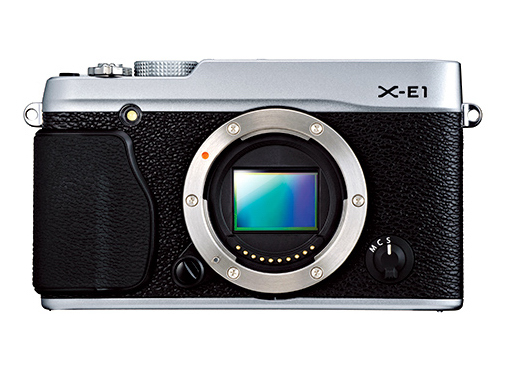
Fuji X-E1

Strangely, reassurance (at least for me) that Leica’s new CMOS sensor-based “M” may retain the exceptional image quality of the “old” CCD sensor-based M9 (and M8) at base ISO has come from an unlikely source — the Fuji X-E1.

(I write “strangely” because none of the leaked Leica images have been reassuring.)

I’ve been following the Fuji X-E1 for a little while now, and can honestly state that the rendering of this CMOS-based camera is spectacular, even at base ISO.

—Peter.

The package.

Inspiration, Nikon, Nikon 58mm f/1.2 NOCT, Street, Teaching point

😉

From a few years ago.

At the time, I was rather fond of this simple image but most people I showed it to only politely smiled… they clearly weren’t impressed.  Now, years later, I think I understand my attraction to it.

I like the way the gentleman’s legs parallel the skier’s skis, as does his downward gaze.  Interestingly, his figure and the dust bin beside him mirror the Purolator logo… something I hadn’t noticed at the time.

As an aside, it’s always nice to go back and re-visit our images but I’m always amazed at how many of my own, if taken today, would end up being deleted.

—Peter | Prosophos.

The package

↑Nikon D3S and NOCT-Nikkor 58mm @ f/4.

My photography workflow, Part 4.

Inspiration, Teaching point

[See also: My Photography Workflow, Parts 1, 2, and 3].

Infusion of Self.

We leave an imprint of ourselves in our images – this is what I mean by Infusion of Self

Infusion of Self is not equivalent to an imposition of self.  Imposition of self occurs when we point a camera at somebody and alter his/her behaviour (posture, expression, etc…).  The resulting photo will be different from the one that would have emerged had we not imposed our presence — and camera! — on our subject (I like to think of imposition of self as the human equivalent of the Observer Effect in physics!).

But that’s not what I’m referring to when I speak of Infusion of Self.

Infusion of Self is deeper, and it can occur even when our subjects are unaware of our presence and even when we’re photographing inert objects.

Remember, we as photographers are storytellers (please see the previous section, Inspiration).  When we create an image, we are sharing our unique vision of the world, to the world.   This is achieved via a myriad of decisions that we make while photographing.

For example, let’s assume that before us sits an old man on a park bench.  The scene likely contains many elements — the old man and the park bench of course, but perhaps also a garbage bin nearby, a playground in the distance, people walking by from time-to-time, fluctuating sunlight as the clouds roll by above, etc…

Now let’s assume we decide to photograph our old man.  We’ve just made a decision that somebody else may not have made.  But this is just the first of many possible decisions:

Do we click the shutter when the old man is frowning or smiling?  Do we stand tall or crouch down low to the ground before photographing him?  Do we compose the scene so that the garbage bin is included, the playground, or both?  Do we wait for a passerby to enter the frame?  Do we use a wide-angle or telephoto lens?  Fill flash?  Film or digital media?  (And on and on…)

The above are choices we make irrespective of whether we engage our subject, and they all affect how his “story” is told (and ultimately perceived).  That is why if we send 10 different photographers on an assignment to each take exactly one image of him, we will almost certainly end up with 10 very different images.

The potential permutations of the variables (those above and those not even mentioned) are literally astronomical in number.

But here’s the interesting part:  because our images are imbued with our unique choices, we may be identified through our images.

Despite all the possibilities, we may still discern a “look” or style in accomplished photographers whom we admire, because they have achieved a proficiency in their work that allows them to communicate their “vision” in a consistent way.   In other words, despite countless potential decisions, they consistently make choices in which we find their perspective, in which we find their imprint.  This imprint is applied all along the photo-creation chain — from the outset, with the choice of subject matter, through all the moments leading up to the click of the shutter, to the subsequent post-processing.  The result — the image — is as unique as a fingerprint.

Achieving an image “fingerprint” through Infusion of Self is what we should all aspire to, because it can only be achieved consistently when we have gained a high degree of efficiency and proficiency, and it is only possible when we, in a very real sense, are “true” to our vision.

I keep this in mind, when I photograph.

—Peter | Prosophos.

My Photography Workflow, Part 3.

Inspiration, Teaching point

[See also: My Photography Workflow, Parts 1 and 2]

Inspiration.

Inspiration is easy to explain, at least on a colloquial level.

Simply stated, inspiration is the spark that ignites our need to create.

Most of us first get the “spark” to photograph because we are emotionally moved by something.  It might be the birth of our first child, or the breathtaking scenery of some unblemished place.   It might be an infinite number of things (good and bad) and they all represent stories we want to tell, and we — through our images — are the storytellers.

Inspiration provides motivation, purpose, and focus.  We can certainly produce compelling images without it but we’re making it more difficult for ourselves when we do.  This is especially true at the novice stage, but it remains true even after we’ve gained a high degree of technical proficiency.

Photographing with inspiration also facilitates an Infusion of Self (discussed in the next section) into our work.  We look, we see, we are moved.  Everything that follows is our attempt to communicate — through iconography — that which has resonated within us.

Consequently, I always look for inspiration and try to photograph whenever the “spark” ignites me; often, this happens when I’m observing Life’s Little Moments.

Want to find a good starting place for your photography? 

Find something that emotionally moves you and point your camera in that direction.

—Peter | Prosophos.

My Photography Workflow, Part 2.

Inspiration, Teaching point

[See also: My Photography Workflow, Part 1.]

5 Items I consider when creating images.

You will notice that, on this site, I almost always write about people “creating” or “making” images.  Occasionally, I refer to people “capturing” them.  What you won’t see is any comment from me about somebody “taking a snap”.

Why?

I believe that good photographic output requires effortMost of us who are serious about this craft choose to share images with the world that we are proud of, that we have created through some type of process requiring our mental and physical exertion.  I therefore choose my language accordingly.  This may seem trivial — a question of semantics, perhaps — but for me the distinction is important.  To call somebody else’s work a “snap” is almost as bad as complimenting the image and then saying to him/her: “You must have a good camera!“.

Simply put, consistently pleasing images are, created, not randomly “snapped”.  Of course, one may by sheer luck produce a good image and even a work of photographic art, but it won’t happen consistently unless you know what you’re doing.

In a sense, I’m preaching to the converted by writing the above because most people reading this have previously engaged in some sort of struggle to produce a good image and already intuitively understand the effort that is involved.  However, some of you may not realize that, in addition to expending effort, you engage in a process, and therefore may miss opportunities to improve it so that you may achieve consistently good results.

So, what sort of thought process do I engage in when creating an image?  What are the things that I look out for?

Essentially, I keep five things in mind:

1. Inspiration

2. Infusion of self.

3. Illumination.

4. Inclusion/Exclusion.

5. Intelligence/Iteration.

The above is presented in the temporal sequence — more or less — of how I consider things, though of course some overlap occurs.  I’ve tried to be clever by using words that begin with “I”, so a few of these may not be very transparent at first glance.

Do I check off these items with pencil and paper when I’m out photographing?

No, of course not.  This simply represents the framework of my workflow* and encompasses my impetus for seeking to photograph, my thought process while photographing, and my strategy for improving my photography.  Most of this process occurs on a subconscious level.  Over time, however, I’ve become more aware of the elements in my workflow and have learned to readily recognize them when they present themselves and fine-tune them when I can.

—Peter | Prosophos.

[*Note that this workflow does not address post-processing, which is essential in realizing the full potential of any given image.  That’s a whole other topic that is beyond the scope of this discussion.  Moreover, it’s a topic that does not lend itself well to written tutorials.  Having stated that, a boring image will remain boring after post-processing, so it is important that you get things right from the start — or at least get it right just before you click the camera shutter.]

My Photography Workflow, Part 1.

Inspiration, Teaching point

Introduction.

I’m starting a series of posts discussing my thought process when creating photographic images.  I’m hoping it will be of help to those of you who are just beginning your photographic adventures, and also to those of you who are more experienced but wish to compare notes.  The idea for this arose last year when I was asked to discuss my images during the Leica Akademie workshop in Toronto.

I know many of you aren’t necessarily able to attend a Leica workshop and most of you aren’t able to travel to Toronto for a One-on-One Teaching session with me, so I thought presenting this information on my website, though not ideal, would at least make it more accessible.

Before I begin, I’d like to emphasize the following:

This is a work-in-progress, both literally and figuratively.  In the beginning there will be gaps between sections, because I won’t be able to write them all in one sitting.  As time passes, and as sections are completed, I’ll likely be updating and expanding each of them by adding more commentary, examples, and images.  Hopefully as I learn, I’ll revise.  I’d like the content to eventually strike a balance between being comprehensive and remaining practical.

With that in mind, the next post will be an overview of my five considerations, my “workflow” for creating photographic images.

—Peter | Prosophos.

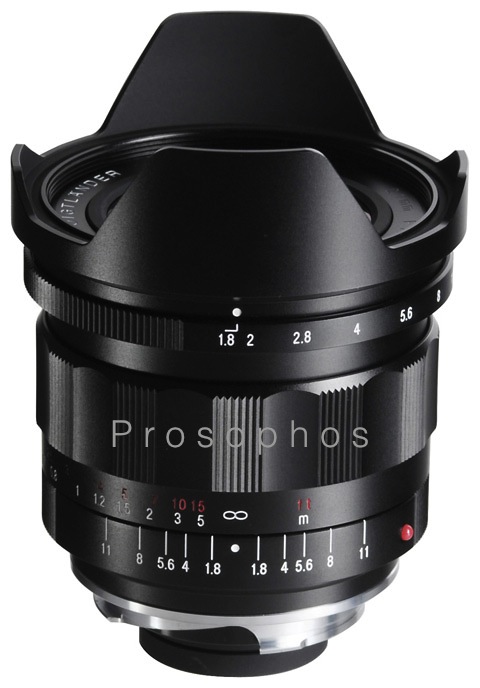
Q&A: The Voigtländer 21mm F/1.8 Ultron.

Q&A, Teaching point

Voigtlander 21mm 1.8 Ultron

Jon asks:

Hi Peter,

How are you?  I just wanted to get your opinion on the new CV 21/1.8. Any experience with the lens?  I know from reading your site that you’ve had experience with CVs. I’m salivating on the 1.8. I currently have the ZM 21/2.8 and its extremely sharp. Just wondering if its worth the upgrade (if one will consider that an upgrade).

I’ll be using it on the M9.

Thanks,

Jon

Hi Jon,

I am well, thank you for asking.  I hope you are well too.

I haven’t used the CV 21/1.8 Ultron, but have seen some samples online.  Most of them have been on film, where it looks very good.  On digital, where you intend to use it, I’m not yet convinced.  The M9 samples online are few and far between right now (it’s so new!), so it’s hard to draw any conclusions.  On more than a few of the images that are available, however, I’ve seen a lot of chromatic aberration in high contrast transition areas. Admittedly, this is often seen with “exotic” lenses when shot wide open… hopefully this is not also present when the CV 21/1.8 Ultron is stopped down.

One of the things I’ve learned over the years is that Voigtländer lenses tend to lack a little of that “pop” — that micro-contrast — that I find with Leica (and often Zeiss) lenses, so I’m expecting the same here.  Whether the end result is acceptable depends on your perspective and needs.

By the way, the Zeiss ZM 21/2.8 is a tremendous lens…  as good as anything Leica produces.  If yours is working well, I would hold on to it regardless of whether you opt to buy the Ultron 21/1.8.

Hope this helps,

Peter.

The New Leica M (240) – Sample Images.

Inspiration, Teaching point

Seeking Light

My good friend Raaj has just posted some sample images on his site from the new Leica M (240).

As regular readers of my site know, I’ve posted extensively about CCD vs. CMOS sensor rendering at base ISO.  Notably, I’ve expressed concern that the move to a CMOS sensor in the new M(240) would equate with a loss in image quality at base ISO, while there would be gains made in high ISO photography, and in movie-making.

Are my concerns well-founded?  I don’t believe that question can be answered for certain based on web-sized images, but I’ll let you be the judge.  Incidentally, Raaj tells me he will try to post some scenes that were shot with both the M9 and M(240), using the same lens.  That will be most interesting to see.

—Peter.

The grocer.

Film, Inspiration, Portrait, Street, Teaching point, Voigtländer 40mm f/1.4 Nokton

For anyone in doubt about film having a different look from digital, look carefully at this image.

Noteworthy observations: the colours, the tonality.  There are other differences that I’ve never been able to put my finger on — call it the “je ne sais quoi” factor.

As an aside, I’ve always found that the Voigtländer Nokton 40mm, the lens used to capture this image, performs exceptionally well on film.

—Peter | Prosophos.

The grocer

↑Leica MP, Voigtländer Nokton 40mm @ f/1.4, and Fuji Superia X-tra 200.

Leica Noctilux F/0.95.

Inspiration, Leica 50mm Noctilux f/0.95, Teaching point

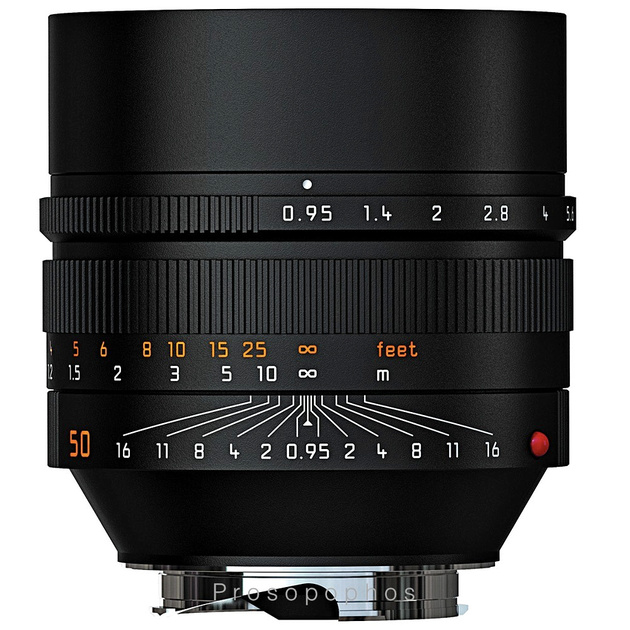
Ever since I acquired this lens, I’ve been carrying it around trying to look for reasons to get rid of it.

Why?

Well, the negatives are well known:  cost, size, weight, and the 1 m minimum focus distance.

So, what am I going to do?

…I’m keeping it.

I’ve bonded with it and I’ve been pleased with the images I’ve created with it.

Maybe I’ll come to my senses some day.  Hopefully soon.

—Peter | Prosophos.

Prosophos - Leica Noctilux F0.95