Q&A: Peter asks about new Leica M vs. M9P/ME, and lenses.

Inspiration, Leica 35mm Summarit f/2.5, Leica 35mm Summilux ASPH FLE f/1.4, Q&A

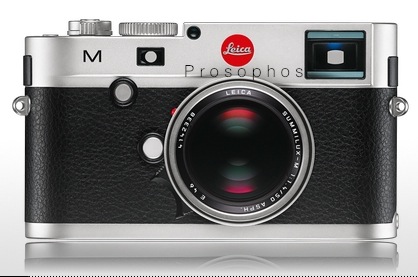
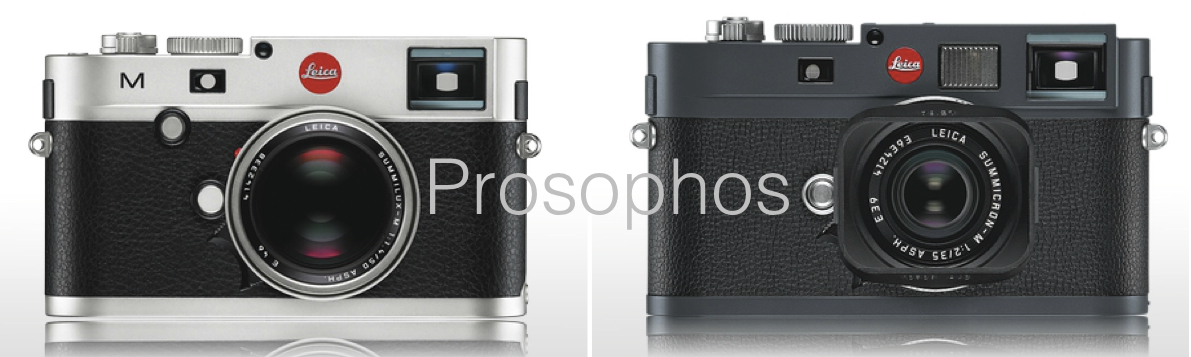
Leica M and M-E - Prosophos.

Hi Peter,

I wonder if you would want to give me your personal opinion about my next photographic step.

I adore the way you placed life’s little moments in the picture. As a physician too I already know how fragile life can be and that we have to live it by enjoying or at least inhaling every little good moment. Your photos are wonderful.

I mostly make pictures of people who I care about and when I am abroad for meetings or holidays. I am a hobbyist but invest in my eye and technique. As an interventional cardiologist I also developed an eye for quality materials and technique and therefore I recently decided to go for my childhood dream camera, an M…no snob-ism involved.

Initially I used a second hand M9P for a day to see if I would like it, and I did. The colors and clarity are stunning. I came from a Nikon D700 with 24,35,50,85 primes. I kept the D700 and a 50 mm since sometimes I will likely need AF or high ISO capabilities and its not a bad camera at all. However the M has something special. It forces me more to make a perfect composition and exposure and the results seems very nice.

I always said I would keep my budget within certain constrains so now I would like your opinion on how to spend my money best:

  • new M + 35 summarit, 50 summilux, 90 elmarit / summicron preASPH

  • ME or M9P + 35 summilux 35, 50 summilux, 90 elmarit / summicron preASPH

I do not need video or live view but I am a bit worried about the M9P/ME high ISO capabilities and its re-activeness. The new M also will be more responsive and more silent.

Did you experience the high ISO quality or responsiveness of the M9 as a creatively limiting factor? I tend to use the lowest ISO setting I can and do not do a lot inside but as you do, sometimes I do. However I would like to have wide aperture lenses usable at full aperture or slightly stopped down. That way I guess I will rarely need higher than ISO 800 and I guess than image quality is still OK. I still have the Nikon D700 when really low light performance counts but I expect me to not have it with me anymore…
I tend to go for the extremely expensive summilux 35 more then a more expensive camera (new M). Do you like its character and can you comment on the difference with the rendering of the summarit 35?

Also did you have any troubles with skintones on the M9? What is your workflow there? Do you set your white balance ad hoc or later?

Many thanks

Peter.”

Hello Peter,

So many questions!  I’ll be concise, but hopefully comprehensive, in my responses.

In a nutshell, given you already have a D700, I would recommend:

  • M-E or M9(P) with EITHER 35 or 50 Summilux*.

(*i.e. one lens.  I wouldn’t bother with any other for now.  And really, it will free you.)

I should also inform you that I am biased towards CCD sensor-based cameras, even though the new “M” will have many features, the “older” technology wins out for me at base ISO (at least until I’ve seen evidence to the contrary).

Your question about the 35 Summilux vs. 35 Summarit:   Both are capable, but the 35 Summilux is the optically “superior” lens (sharpness, micro-contrast, etc), however it tends to “paint” with bold strokes which is desirable for some subject matter but may be too harsh for others.  The 35 Summarit, on the other hand, is a little more classic/delicate in its rendering with a smoother bokeh.   It’s a lovely little lens.  You may view examples from both the 35 Summarit and 35 Summilux on my site:

https://prosophos.com/category/leica-35mm-summarit-f2-5/

https://prosophos.com/category/leica-35mm-summilux-asph-fle-f1-4/

Ultimately, which you prefer is really a matter of personal taste, but if you opt for an M9 (vs. the new M), you really should purchase a Summilux lens for low light work.  Also, the Summilux (50 or 35) lenses are something special and need to be experienced at least once in a lifetime.

As for your question regarding whether the low ISO constraints of the M9 limit creativity, I’ll let my images speak for themselves.  I don’t mean this in an arrogant way, but as a practical answer.

Finally, I shoot in DNG (RAW) format and am able to make minor colour adjustments easily during post-processing, so I do not have any issues with “skin tones”.

I hope this helps, and I thank you for your very kind comments regarding my work.  Despite my answer above, I really do think the new M will be a terrific camera, so I believe you can’t go wrong either way.

Respectfully,

—Peter.

More Leica M (240) sample images.

Inspiration, Q&A, Teaching point

Prosophos - Leica M

So by now everybody knows Leica released more official photos taken with the upcoming M (240).  I write “more” because they had previously released sample images on their website.

Looking at the new sample images, it seems that what I wrote months ago still applies:

The M9… image quality — again, at base ISO — [is] superior to anything being produced by CMOS-based cameras.  This was true in 2006 (M8) and 2009 (M9), and it is true even today, despite the release of a new generation of CMOS cameras…

I see people are being careful — as I have been up until now — to not draw any premature conclusions about the new M‘s image quality.  Essentially, many are pointing out that the newly-released images, as images, are not very inspiring and this, in turn, may be adversely biasing perceptions of image quality.

Yet when I look at M9 (or M8) images, even at web sizes, they have a crispness and vitality to them that the new sample images from the M (240) seem to lack.

This is undeniable.

—Peter.

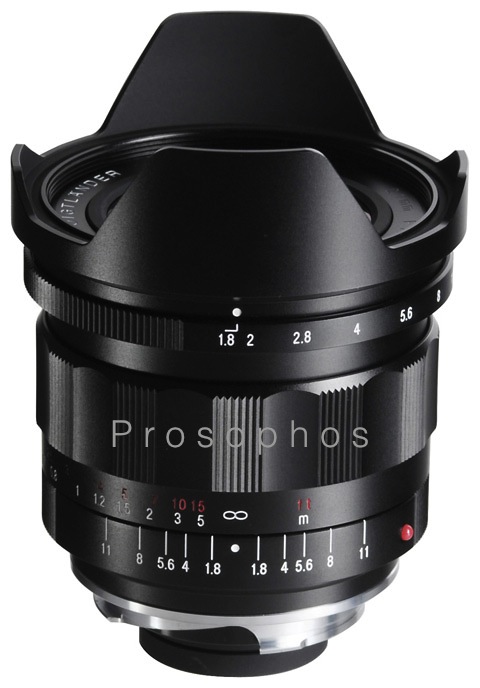
Q&A: The Voigtländer 21mm F/1.8 Ultron.

Q&A, Teaching point

Voigtlander 21mm 1.8 Ultron

Jon asks:

Hi Peter,

How are you?  I just wanted to get your opinion on the new CV 21/1.8. Any experience with the lens?  I know from reading your site that you’ve had experience with CVs. I’m salivating on the 1.8. I currently have the ZM 21/2.8 and its extremely sharp. Just wondering if its worth the upgrade (if one will consider that an upgrade).

I’ll be using it on the M9.

Thanks,

Jon

Hi Jon,

I am well, thank you for asking.  I hope you are well too.

I haven’t used the CV 21/1.8 Ultron, but have seen some samples online.  Most of them have been on film, where it looks very good.  On digital, where you intend to use it, I’m not yet convinced.  The M9 samples online are few and far between right now (it’s so new!), so it’s hard to draw any conclusions.  On more than a few of the images that are available, however, I’ve seen a lot of chromatic aberration in high contrast transition areas. Admittedly, this is often seen with “exotic” lenses when shot wide open… hopefully this is not also present when the CV 21/1.8 Ultron is stopped down.

One of the things I’ve learned over the years is that Voigtländer lenses tend to lack a little of that “pop” — that micro-contrast — that I find with Leica (and often Zeiss) lenses, so I’m expecting the same here.  Whether the end result is acceptable depends on your perspective and needs.

By the way, the Zeiss ZM 21/2.8 is a tremendous lens…  as good as anything Leica produces.  If yours is working well, I would hold on to it regardless of whether you opt to buy the Ultron 21/1.8.

Hope this helps,

Peter.

Mark.

Guest Post, Inspiration, Leica 50mm Noctilux f/0.95, Portrait, Q&A, Street, Teaching point

Yesterday I had the pleasure of meeting Mark, a fellow Canadian and reader of this site.

[Please see some of Mark’s previous contributions, here and here].

And he’s gentleman, through and through.

After sharing a cup of coffee and our life experiences, we walked over to Dundas Square to photograph and found it almost completely empty!  Incredible.

I did end up with one image though — the only image that counts:  a portrait of Mark.

—Peter.

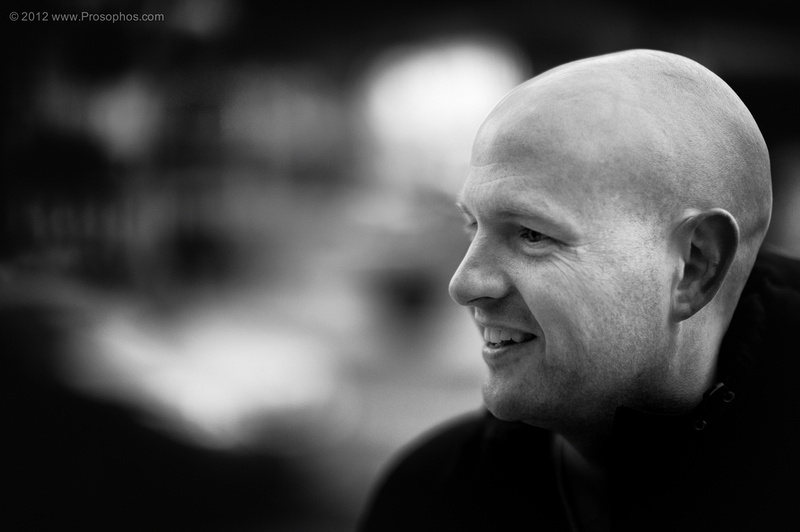
Mark

↑Leica M9 and Leica Noctilux @ f/0.95.

Follow-up: Getty Images.

Inspiration, Q&A, Teaching point

[Now that my iMac is down, I’m taking the opportunity to catch up on some of my writing.]

Back in April, I mentioned that Getty Images, the well-known distributor of image content, was interested in about 40 of my images.

At the time, I was wondering whether I should go ahead and license my images to them.  Since most of them involve people, the paperwork involved for submission was going to be a bit of a hassle.

After pondering it, and also taking into consideration some of your comments, I decided to submit just three.

After that, I kind of forgot about the whole thing.

Well, while I was away in August, I received an e-mail from Getty informing me that the rights to one of those images, Christmas at the Toronto Beach (the image above) had been purchased, and that I would be receiving a royalty payment for it some time in October.

Sure enough, the payment arrived a couple of days ago.

The amount:  US$154.50.

After accessing the Getty Contributor website yesterday, I learned that this amount represents 30% of the total Getty was paid, and that my image was licensed for world-wide usage, for a duration of two years.

The intended use?  Greeting cards (my guess is that you’ll see it on a Christmas card near you).

This was a bit of a learning experience for me, so I’m glad I did it.  Having said that, I don’t know if I’ll be submitting any more images to Getty.

I hope that this post was of interest to those of you considering licensing your own images.

—Peter.

My Apple computer is down (but not out).

Inspiration, Q&A, Teaching point

I’m currently having trouble with my almost 3 yr old iMac.

It’s faithfully helped me post-process all of the images you’ve seen on this site, both film and digital, but over the last few months it has slowed down to a crawl.

Often it just freezes, necessitating a re-start.

So, I had it checked out over the weekend and it turns out that the hard drive needs replacing.  It since has been sitting in my local Apple store, and is currently in “repair” status, so I haven’t been able to process any new images.  Instead, I’ve been posting my previously prepared images using another computer.

(The “spice” has to keep flowing, after all…)

As it turns out, I’m not the only one with the same problem…  a few days ago, I received a message from Apple, stating:

Dear iMac owner,

Apple has determined that certain 1TB Seagate hard drives used in 21.5-inch and 27-inch iMac systems may fail. These systems were sold between October 2009 and July 2011.

Our records show that you have an iMac with an affected 1TB Seagate hard drive. Apple will replace your hard drive with a new one, free of charge, under the iMac 1TB Seagate Hard Drive Replacement Program.

Please choose one of the following options to get a replacement hard drive.

• Apple Retail Store – Set up an appointment with a Genius.
• Apple Authorized Service Provider – Find one here.
• Apple Technical Support – Contact us for local service options.

Apple recommends replacing your affected hard drive as soon as possible. Before you go in for service, please back up your data. Learn more about backup options.

Additional Information

You will need to have the original Mac OS installation discs that were shipped with your iMac in order to reinstall your operating system, other applications, and any backed up data after your hard drive is replaced.

This worldwide Apple program does not extend the standard warranty coverage of the iMac.

Apple will replace affected 1TB Seagate hard drives, free of charge, for three years from your iMac’s original date of purchase or until April 12, 2013, whichever provides longer coverage for you. Apple will continue to evaluate service data and provide extensions to this program as needed.

We apologize for any inconvenience.

Sincerely,

Apple Inc.

So, if you’re having trouble with your iMac, check to see if yours is affected.


As an aside, along with the hard drive fix, my computer screen is also being replaced free of charge (thank you AppleCare), because it started developing some horizontal dark banding in the upper left corner.

I guess I could complain about my computer falling apart, but instead I’m pleased that Apple is standing behind its product, and its extended warranty.  Thank you Apple.

And, since I intend on holding on to my Leica M9, I don’t have a pressing need to upgrade this iMac.  Hopefully, when I get it back, it will give me a few more years of service.

—Peter.

Q&A: My images, my approach, and Leica.

Inspiration, Q&A, Teaching point

“Hello Peter.

I was reading Steve’s [SteveHuffPhoto.com] and [this] led me to your wonderful pictures. Then [this] led me [to] thinking how do you shoot?

Do you “wear” your camera? Do you have those “one-a-day” projects?

And I LOVE your 21+1 from ’12 and 11 from ’11.

Then it led me to think again. Are the pictures “out-of-the-camera”?

Do you use photo shop to achieve those colours? Or it that really Leica magic?

Keefe.”

_________________

Hi Keefe,

I often “wear” my camera, but I don’t really have a “one-a-day” project (having said that, I often post a photo every day on my site).

None of my photos are presented as they emerge out of the camera.  I shoot in DNG (RAW) format which produces rather nondescript files, so it’s up to me to work with the images and shape them as I see fit.

I use Aperture with Nik plug-ins for my post-processing.

And I try to learn as I go along… continuously.

As for Leica magic?  For me… yes.  It’s a combination of having a camera that suits my shooting style and that is accompanied by great optics.

Thanks for writing,

—Peter.

Q&A: 1-on-1 Teaching Sessions for post-processing?

Inspiration, Q&A, Teaching point

_______________________________

“Hi Peter,

I love your work.

Read your article about shooting your family with the best gear on Steve Huff. I am located in [USA] and wonder if you have any private sessions on editing digital photos rather than walking sessions. Just wondering what that might cost… Thanks a ton.

Pete.”

________________________

I’m often asked about my post-processing (see a previous Q&A here) and sometimes get a request — like the one from Pete above — to use my  1-on-1 teaching sessions as a tutorial for post-processing.

I therefore thought it might be useful to post my response to Pete:

_

Hi Pete,

Thank you for writing.

To answer your question, I’ve always thought of the 1-on-1 teaching as an opportunity to teach anything… and I often do.

The only problem with teaching my post-processing is that I don’t follow a “cookbook” approach.  It’s a creative thing, so it doesn’t lend itself well to a “Step1, Step 2…” approach.

Having said that, I do have some techniques that I’ve developed over the years.

I’d be open to teaching them, but I would need you to supply a laptop loaded with Apperture (or Lightroom) and some of the Nik plug-ins (not absolutely necessary).  My fee would have to be the same for 2 hours, as I charge for time and not content.  And then you’d have to figure in your own travel costs.

So, as you can see, it would be pricey for you.  I will leave it up to you as to whether you think it’s worth it.

Either way, thanks again for writing, and for your kind words.

Cheers,

Peter.

Q&A: My lenses.

2012, Inspiration, Leica 50mm Summicron f/2, Leica 50mm Summilux ASPH f/1.4, Q&A, Voigtländer 40mm f/1.4 Nokton

One of the more frequent email questions I receive is:

What lenses do you use?

Most of the time, it’s easy to tell if you follow my daily posts, because I list the specific lens (and camera) used beneath each image.

However, I’ve been known to frequently re-jig my set-up — as I’ve done recently.

So, currently, I’m using:

1. The Leica 50mm Summilux ASPH.

2. The Leica 50mm Summicron.

3. The Voigtländer Nokton 40mm.

And…

If you want to view images taken with any of the equipment I’ve ever used, you can search for specific lenses in the Category Cloud.  It looks like this:

You can find it on the bottom of the page…

Just click on a specific category (link) and all the images associated with it will be displayed.

Hope that helps,

—Peter.

***Answer*** to: “Smooth” [Which Lens?].

2012, Inspiration, Q&A, Teaching point, Voigtländer 40mm f/1.4 Nokton

Yesterday, I posted this image, taken with my Leica M9…

(please click on the image to view)

…and asked you to guess which lens was used.  Many of you were generous with your time and responded.

I appreciate the effort (and guts!) of all of you who took the time to record your best guess.

Moreover, reading the analysis behind each choice was very interesting and educational (I urge those of you who haven’t read through the comments of the original post to please do so).

So now, without further delay — the answer.

And the answer is…

_

(a) Voigtländer Nokton 40/1.4.

(b) Leica 50 Summicron.

(c) Voigtländer Nokton 35/1.2.

(d) Leica 50 Summilux ASPH.

(e) Leica 35 Summilux FLE.

_

Yes, the little Voigtländer Nokton 40mm.

(If you want to read an old write-up of mine on this lens, please see here.)

Thanks for playing :),

—Peter.

Later today…

2012, Inspiration, Q&A

Later today, I’m posting the answer to yesterday’s post.

If you haven’t already done so, you still have time to attempt a guess.

Even though this exercise is just for the fun of it, I’m really interested in learning the reasoning behind each selection.  As photographers, we are all biased (negatively or positively) when viewing an image — when we are aware of the equipment used — and exercises such as this help us, a little bit, to understand our biases.

As I wrote yesterday, if the roles were reversed I’m not sure I’d be able to correctly identify the lens, especially without the aid of 100% crops.  Still, the image I posted was larger than usual for a typical web image, so it may be possible.

—Peter.

Q&A: Smooth [which lens?].

2012, Inspiration, Q&A

This image, Smooth, was taken with the Leica M9 and one of these lenses:

(a) Voigtländer Nokton 40/1.4.

(b) Leica 50 Summicron.

(c) Voigtländer Nokton 35/1.2.

(d) Leica 50 Summilux ASPH.

(e) Leica 35 Summilux FLE.

Just for fun, can you guess which lens was used?

Now — knowing me — you may think I’m trying to make a point about the Voigtländer lenses being quite good (or at least “good enough”), but then again, I may be using reverse psychology ;).

Either way, I’d be grateful to have you play this guessing game.

(please click on the image for a LARGER view)

_

If you want to view images I’ve taken with the various lenses on the list, please click on these links:

Voigtländer Nokton 40/1.4.

Leica 50 Summicron.

Voigtländer Nokton 35/1.2.

Leica 50 Summilux ASPH.

Leica 35 Summilux FLE.

I’ll reveal the answer tomorrow… feel free to share this.

—Peter.

Thank you Tom Smith, Leica Akademie.

2012, Inspiration, Q&A, Teaching point

I’d like to thank Mr. Tom A. Smith, the Events & Education Manager of Leica Akademie NA, for inviting me to be guest speaker at the Toronto workshop this past weekend.

I thoroughly enjoyed the experience, and was able to meet John Parkyn, a frequent comment contributor to this site, as well several other passionate photographers.

Thank you all!

—Peter.


Guest Post [2]: Mark develops film for the first time.

2012, Film, Guest Post, Inspiration, Portrait, Q&A, Teaching point

I received this email from Mark this morning and his enthusiasm was so infectious, I just had to make it today’s post.  And of course, the images speak for themselves.

Well Peter,

I did it!!

Thanks to your direction and encouragement, I have developed my first roll of B&W film.

Attached below are a few of the results.

I realize they are scratched and full of flaws (flaring and such…) but…I think they are incredible!

I realize I am biased, however; I wanted to take the time to thank you for your efforts in getting me (and hopefully many others!) to this point.

There is nothing quite like the feeling that producing something like this brings…

I am now certain that I am “The (second…) Most Interesting Man in the World” (Dos Equis anyone?? I’ll leave the top spot to you…for now.)

…Mosquitos refuse to bite me, purely out of respect.  I can now live vicariously through…myself.

🙂

Anyway, these are shot on a Zeiss Ikon, with a 50 lux 1.4; mostly at 1.4 or 2 with an ND Filter.  The film is T-max 400, and they were scanned on the Plustek 7600 (currently on special at B&H!)

Anyway, all the best…I hope we can meet in person some day soon.

Mark, these are so full of LIFE.  Wonderful work my friend…

If I had a small part in making this happen, I am honoured.

—Peter.

[Note:  For other readers interested in learning about how I process B& W film, please click here.]