

The Crucible.
2014, Favourite, Inspiration, Leica 28mm Elmarit ASPH f/2.8, Leica M8 (CCD Lives!), Life's Little Moments, Print, Teaching point“You will, Judas, my brother. God will give you the strength, as much as you lack, because it is necessary—it is necessary for me to be killed and for you to betray me. We two must save the world. Help me.”
Judas bowed his head. After a moment he asked, “If you had to betray your master, would you do it?”
Jesus reflected for a long time. Finally he said, “No, I’m afraid I wouldn’t be able to. That is why God pitied me and gave me the easier task: to be crucified.”
― Nikos Kazantzakis, The Last Temptation of Christ.
–
The End.
Favourite, Inspiration, Leica 28mm Elmarit ASPH f/2.8, Leica M8 (CCD Lives!), Print, Q&A, Teaching pointEvery end is a beginning.
–
“I’m writing you, to catch you up on places I’ve been
And you held this letter
Probably got excited
But there’s nothing else inside it
Didn’t have a camera by my side this time
Hoping I would see the world through both my eyes
Maybe I will tell you all about it
When I’m in the mood to lose my way with words.”
–
Cascading.
Inspiration, Leica 75mm Summarit f/2.5, Leica M9(P)/M-E (CCD Lives!), Life's Little Moments, Portrait, Print
I see stars.
2014, Favourite, Inspiration, Leica 35mm Summarit f/2.5, Leica M9(P)/M-E (CCD Lives!), Portrait, Print, Teaching point
Scars.
Favourite, Inspiration, Leica 28mm Elmarit ASPH f/2.8, Leica M8 (CCD Lives!), PrintThe sun so bright it leaves no shadows
Only scars
-U2, One Tree Hill
Blowing a kiss.
Nikon Df, Print, Q&A, Teaching point, Voigtländer 40mm f/2 SL-II
Aquarium.
2014, Favourite, Film, Inspiration, Kodak Tri-X 400, Mamiya 7/7II, Mamiya 80mm, Print, Scanner - Plustek 120
Honey 2011, Mamiya 2014.
Film, Guest Post, Kodak Tri-X 400, Mamiya 7/7II, Mamiya 80mm, Print, Q&A, Scanner - Plustek 120, Teaching pointTest Shot #2 from the first roll of film run through the Mamiya 7II.
This was photographed with the 80 mm lens near its close-focus limit of 1 m.
—Peter.

Glenfiddich Window Portrait (Tilt-Shift test shot).
Film, Fujifilm FP-3000B, Inspiration, Mamiya RZ 180mm F/4.5, Mamiya RZ67 Professional Pro II, Mamiya Tilt/Shift Adapter, Portrait, Print, Q&A, Teaching pointThis is a test shot using my recently acquired used Mamiya tilt/shift accessory on Fuji instant (“Polaroid”) film.
No alcohol was harmed during the testing process.

↑Mamiya RZ67, Mamiya 180mm @ f/4.5, tilt/shift accessory, and Fuji FB-3000.
Work Station.
Inspiration, Leica 50mm Summilux ASPH f/1.4, Print, Teaching point1/25 sec, ISO 640, f/1.4.
Despite this being a hand-held image at a reasonably slow shutter speed, the in-focus areas readily display the “crisp” rendering we get from CCD sensors.
The colours are remarkable too, considering this was photographed under incandescent light.
(DNG file converted to JPG with no post-processing)
—Peter.

↑Leica M9 and Leica 50mm Summilux ASPH @ f/1.4.
Maid of the Mist.
Inspiration, Leica 24mm Summilux ASPH f/1.4, Print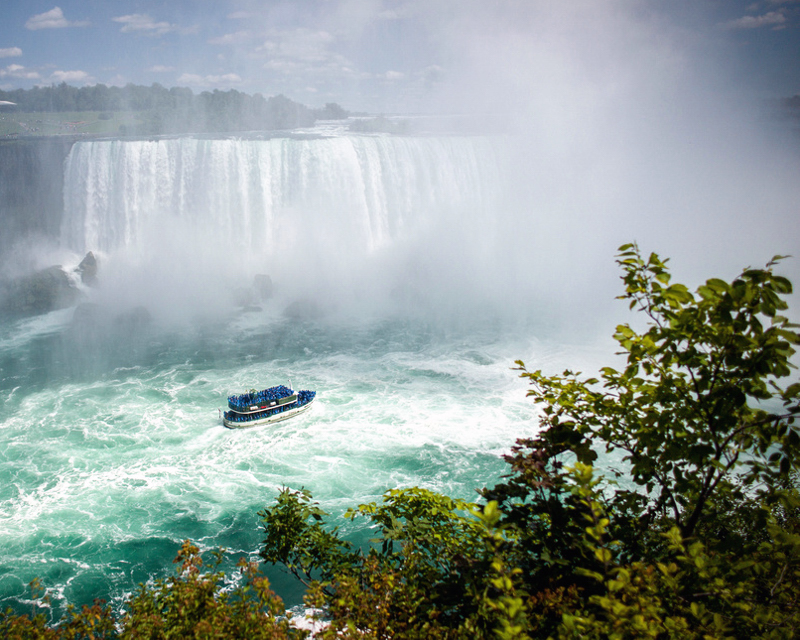
↑Leica M9 and Leica 24mm Summilux ASPH @ f/1.4.
Exhalation.
Barbados, Inspiration, Leica 24mm Summilux ASPH f/1.4, Print
↑Leica M9 and Leica 24mm Summilux ASPH @ f/4.
Time Painting.
2014, Barbados, Favourite, Inspiration, Leica 24mm Summilux ASPH f/1.4, Portrait, Print
↑Leica M9 and Leica 24mm Summilux ASPH @ f/1.4.
About a horse (cinematic).
Barbados, Inspiration, Leica 24mm Summilux ASPH f/1.4, Print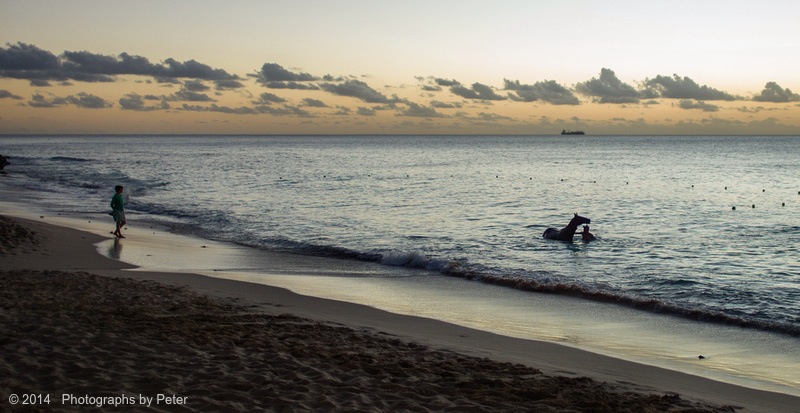
↑Leica M9 and Leica 24mm Summilux ASPH @ f/1.4.
Apparitions in the Apparatus.
Inspiration, Leica 75mm Summarit f/2.5, Portrait, Print, Street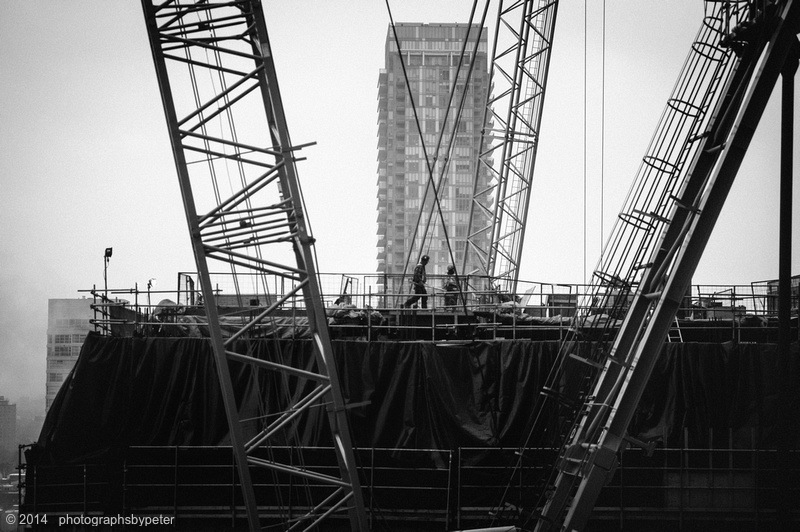
↑Leica M9 and Leica 75mm Summarit @ f/2.5.
–
—
If you haven’t already done so, please consider signing my open letter to Leica.
–

___
Related posts:
Bajan Tapestry.
2014, Barbados, Favourite, Leica 24mm Summilux ASPH f/1.4, Portrait, Print, Street
↑Leica M9 and Leica 24mm Summilux @ f/4.
A New Perspective.
Barbados, Inspiration, Leica 24mm Summilux ASPH f/1.4, PrintBack from holidays!
Time away certainly alters one’s perception.
More images to follow, as well as some changes this year.
…Who knows where that will take us?
—Peter.

↑Leica M9 and Leica 24mm Summilux @ f/4.

