(please click on the image to view)

↑Leica M9 and Leica 75mm Summilux @ f/1.4.

(please click on the image to view)
↑Leica M9 and Leica 75mm Summilux @ f/1.4.
This one was challenging, but ultimately very rewarding.
He was constantly moving, with his back toward me most of the time, making a decent shot difficult (it’s always a struggle at this age when kids start getting mobile, but — on the positive side — they’re still “naturals” in front of the camera).
So, I tried a few times throughout the day to capture him… without success.
Then, at the time of the “golden hour“, he was once again looking out the window. As he turned here, and smiled, a shaft of soft light from outside acted as a gentle spotlight on his left face and shoulder.
As I couldn’t back up any further from where I was, I could just fit him within the 75mm frame lines. And I tried my best to hit focus, as this wonderful combination of expression, light, and composition would likely not repeat itself. Fortunately, it all came together.
A Life’s Little Moment to be cherished.
(please click on the image to view)

↑Leica M9 and Leica 75mm Summilux @ f/1.4.
This self-portrait represents my second lapse in judgment.
As an aside, I was experimenting here with achieving focus with the 75 ‘lux @ f/1.4 mounted on the M2. Ultimately, it’s no different than on the M9… you need to be equally careful in both situations, but it’s definitely doable. Focus here was on my eye.
This was the first frame of a 36 roll of Tri-X.
(please click on the image to view)
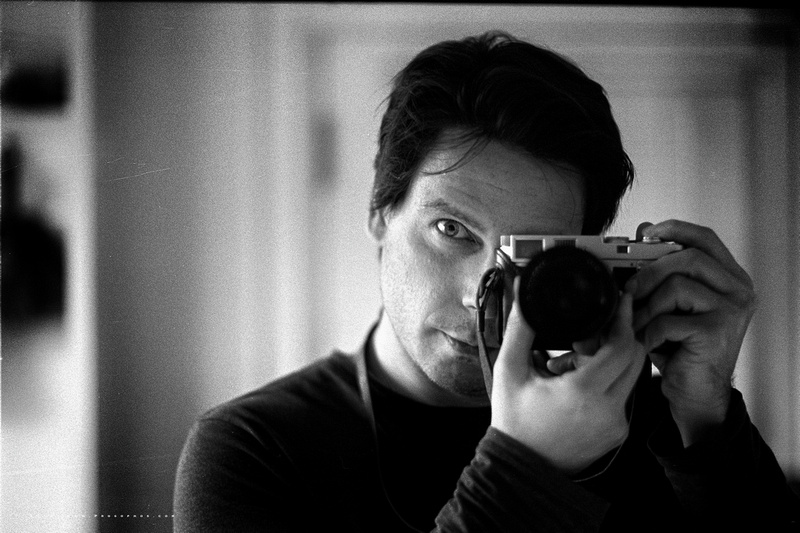
↑Leica M2, Kodak Tri-X 400, Leica 75mm Summilux @ f/1.4.
I have been trying to photographically capture the essence of Honey, since she entered our lives in December. The closest I’ve come with my M9 (digital camera) is with this shot, taken 3 months ago.
The image below represents my latest attempt.
Now,
…it may be because this time I was using a more than 50 yr old camera with no back LCD screen, no meter, no battery, not even an on/off switch…
…it may be because I then fumbled with the film in a changing bag, trying to blindly load it into a spool…
… it may be because it was then lovingly bathed in a series of mystery chemicals and finally in distilled water, before being hung in my basement-turned-sauna as the hot water ran in the sink, generating steam to get rid of dust in the air…
…it may be because I then delicately handled each strip and spent minutes scanning each frame into my computer…
…it may be because all of these things make me better appreciate the act of image creation…
…but…
…I believe this image has come close to capturing Honey’s soul.
If you don’t see it, that’s OK. I can’t explain it.
But if you do see it, then you know:
—Peter.
(please click on the image to view)
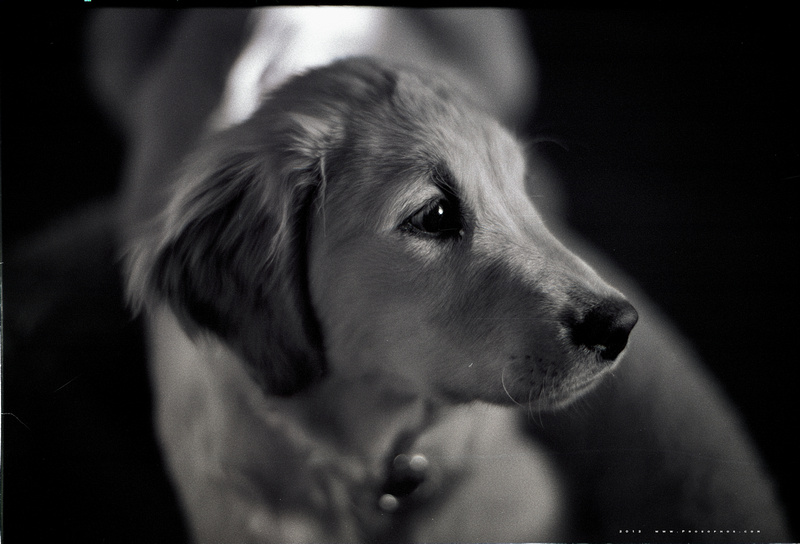
↑Leica M2, Kodak Tri-X 400, and Leica 75mm Summilux @ f/1.4.
Portraiture is where the Leica 75mm Summilux simply excels.
I actually refrained from sharpening his eyes, because they’re almost too sharp (as rendered by this lens) at f/1.4…
(please click on the image to view)

↑Leica M9 and Leica 75mm Summilux @ f/1.4.
[Full disclosure: I haven’t been paid a cent for this endorsement, I’m just a very satisfied customer.]
This is a special thank you post to Chris’ Coffee Service.
(please click on the image to view)
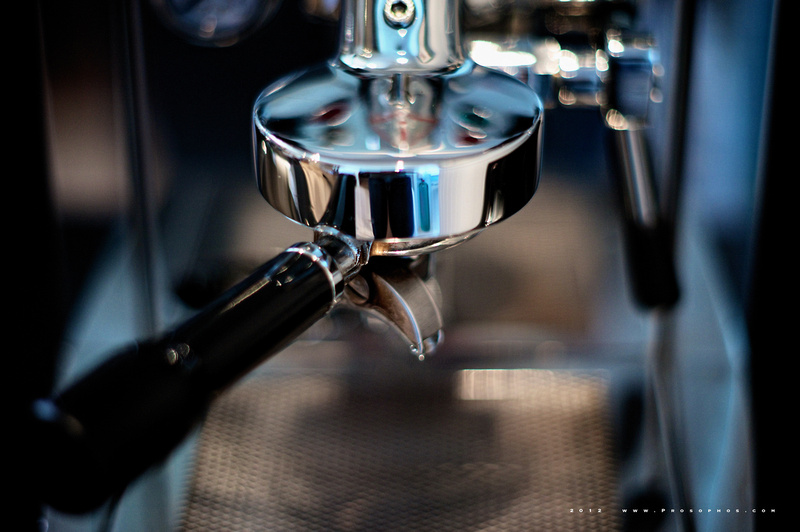
↑Leica M9 and Leica 75mm Summilux @ f/1.4.
That’s my 10 year old Isomac Millennium espresso machine in the above photo (taken yesterday), which was purchased brand new in 2002 from Chris’ Coffee Service. It just arrived back home, following being masterfully repaired by Tim in Chris’ service department (thanks Tim!).
As most of the viewers of this site know, I live in Toronto, Canada. However, when I was looking for my first espresso machine many years ago, I kept reading about Chris and his company in the various coffee fora. It seemed that they had an unblemished reputation for service that had people raving. So, even though they were located far from home and across the border in the USA, I didn’t hesitate to place my order with them.
Let me tell you that in all of the years I’ve owned this machine, the support provided by Chris’ Coffee Service has been astounding — from the people that answer the phones, to the service department, to Chris himself. Tim — in particular — in the service department has talked me through basic repairs and maintenance over the phone, which has saved me a great deal of time and money.
The good folks at Chris’ Coffee Service provide all of this service for free, because they understand that a happy customer is a repeat customer. Ironically, I’ve been prepared on more than one occasion (given the amount of wear-and-tear on my Isomac following daily use for a decade) to purchase a new machine, but every time I’ve dealt with Chris and Tim, they’ve never tried to sell me a new one. In fact, they’ve repeatedly convinced me to just get my trusty Isomac repaired.
Can you believe that?
In an age of disposable everything, it’s nice to know that some things — like my Isomac and the service at Chris’ Coffee Service — endure.
Thanks Chris, and a special thank you to Tim… you are the best at what you do!
—Peter.
(please click on the image to view)
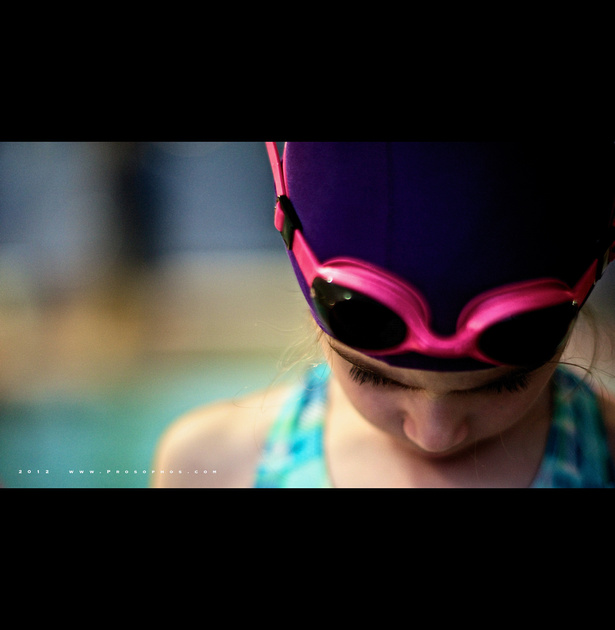
Leica M9 and Leica 75mm Summilux @ f/1.4; 1/60 sec, ISO 800.
Notice the beautiful window light, and the mirroring of his profile by the globe.
When you click to view the larger image, please also note how sharp his eye (the point of focus) appears, even wide open @ f/1.4. Everything else fades softly out of focus.
Those two qualities — biting sharpness and delicate out-of-focus rendering — are both courtesy of the Leica 75mm Summilux lens.
(please click on the image to view)

↑Leica M9 and Leica 75mm Summilux @ f/1.4.
[Note: This post is intended for novice, and not experienced, photographers.]
____________________________________
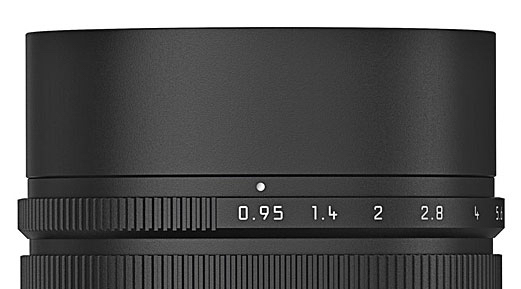
In photography, the aperture is the adjustable opening of a lens that determines the amount of light entering through it and onto a camera’s sensor, be it digital or film. If the aperture is large, a large amount of light will pass through the lens and enter the camera; if the aperture is small, a small amount of light will enter the camera.
Simple, right? But, it gets a little confusing…
The problem with using the entrance aperture size to communicate a lens’ light transmitting ability is the physical reality that a longer lens will require a larger aperture to achieve the same level of light transmission as a shorter lens. In other words, if “x” is the amount of light we wish to reach a camera’s sensor, a 75mm lens will require a bigger “hole” (aperture) at the entrance than a 50mm lens to achieve “x”.
To avoid confusion, and to standardize notation across all lens types, f-numbers — instead of actual aperture sizes — are used to communicate the light-transmitting ability of all lenses. An f-number (also known as an f-stop, or focal ratio) is defined as the focal length of a lens divided by the aperture diameter.
You’ll usually see f-numbers labelled on lenses as a sequence of fractions:
f/1, f/1.4, f/2, f/2.8, f/4, f/5.6, f/8, f/11, f/16, f/22, etc.
The important thing to remember is that because the f-number is a fraction, the smaller the denominator, the greater the light transmission.
(please click on the image to view LARGER)

Thus, when considering light transmission, f/1 > f/1.4 > f/2 > f/2.8 > f/4, etc.
In fact, for every step to the left in the sequence above, twice as much light is being transmitted as the preceding step. Thus, f/1 allows for twice as much light to hit the sensor as f/1.4, and f/1.4 allows for twice as much light as f/2, etc.
Incidentally, lenses that are able to achieve maximum f-numbers of f/1, f/1.4, or f/2 (or even f/2.8) are often loosely referred to as “fast” lenses because they allow photographers, for a given amount of light, to shoot at faster shutter speeds than so-called “slower” lenses (exactly twice as fast for each step up in the f-number ladder).
It follows from the above, then, that large aperture/f-number lenses are useful in low-light situations:
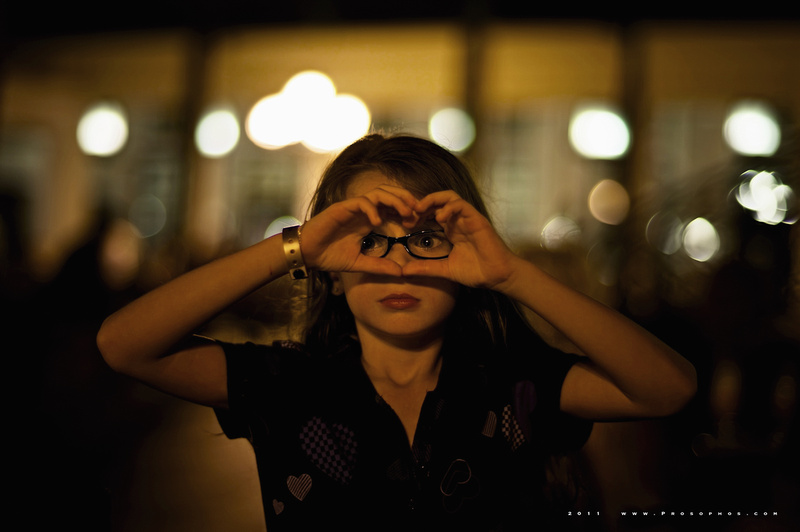
↑Leica M9 and Konica Hexanon 60mm @ f/1.2.
The other main use for large aperture/f-number lenses is to achieve subject isolation.*
Thus a lens of a given focal length set to f/1.4 (for example) will create a greater background blur than when set to f/4.:
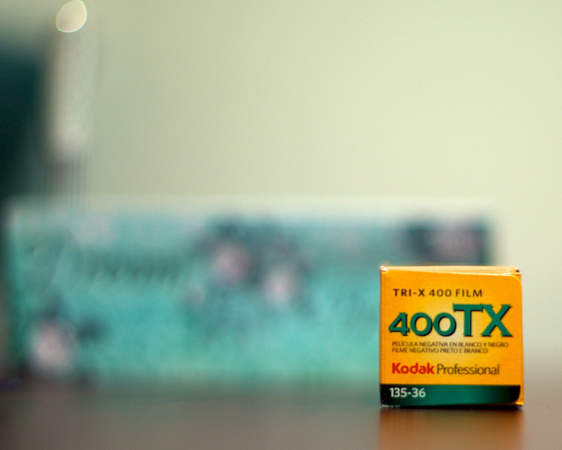
↑Leica M9 and Leica 75mm Summilux @ f/1.4
_
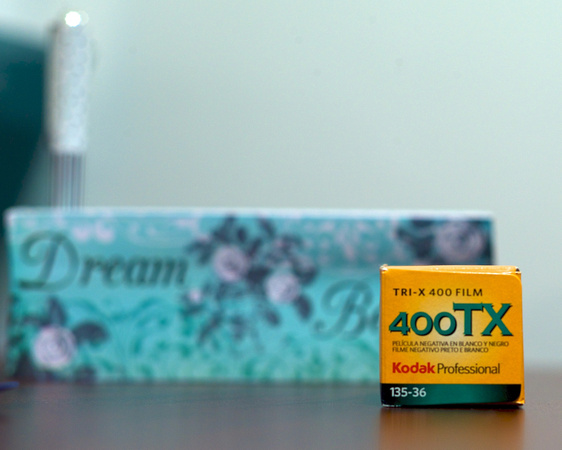
↑Leica M9 and Leica 75mm Summilux @ f/4.
_
I hope you found this useful,
—Peter.
______________________________________________
*The other way to achieve subject isolation is to shoot with a longer focal length.
Classic.
(please click on the image to view)
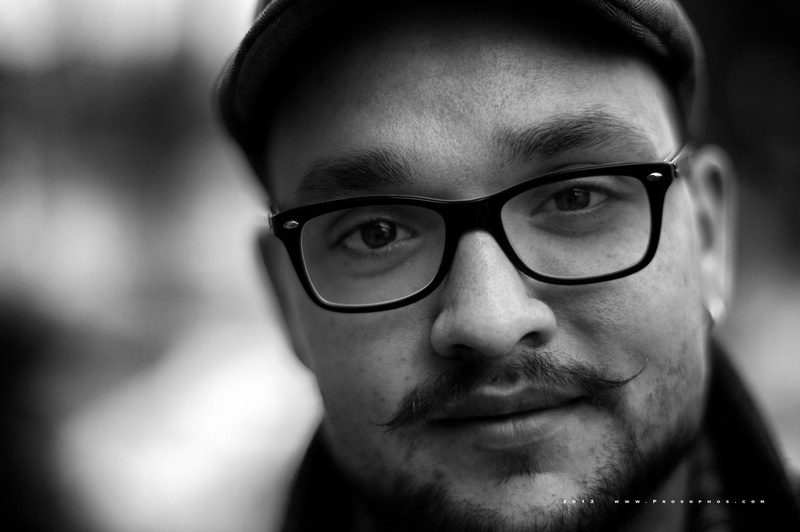
↑Leica M9 and Leica 75mm Summilux @ f/1.4.
Concentration of purpose.
(please click on the image to view)

↑Leica M9 and Leica 75mm Summilux @ f/1.4.
And into the light.
(please click on the image to view)
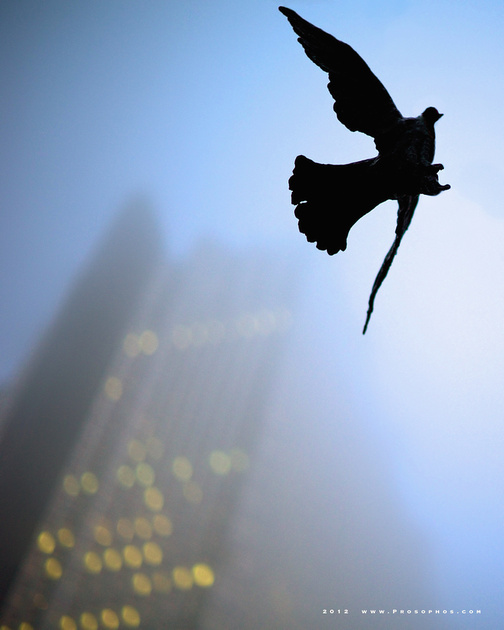
↑Leica M9 and Leica 75mm Summilux @ f/1.4.
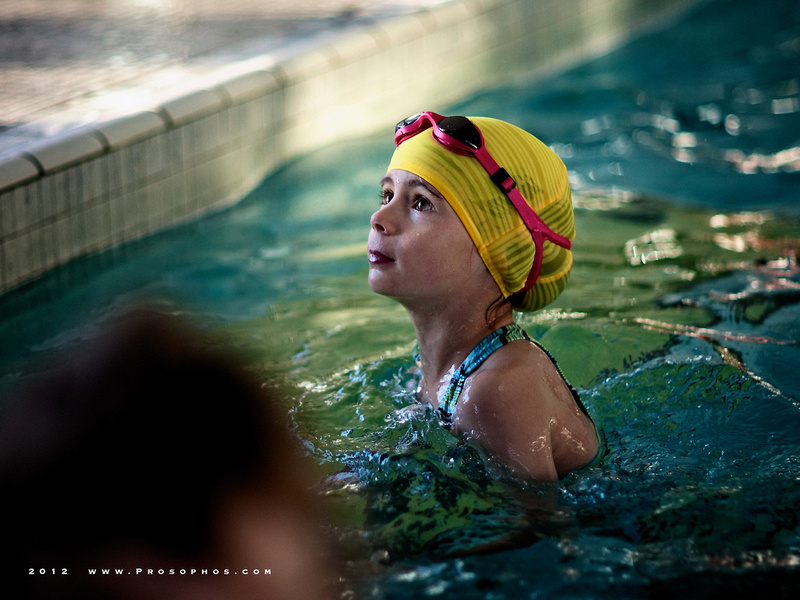
This is one of those moments that works. The moment before and the moment after just didn’t measure up, despite having identical lighting, composition, and subject matter.
So, what’s the difference? It’s her. It’s her head tilt and accompanying expression… the spark that illuminated her face the moment the camera shutter was released.
It’s an example of what I’ve previously referred to as one of Life’s Little Moments.
(please click on the image to view)

↑Leica M9 and Leica 75mm Summilux @ f/1.4.
Finding comfort in the soft nooks and crannies of each other.
(please click on the image to view)

↑Leica M9 and Leica 75mm Summilux @ f/1.4.



 Prosophos