The previously posted jumping-off-the-bench images are here and here.
(please click on the image to view)

↑Leica M9 and Leica 50mm Summilux ASPH @ f/1.4.

A capricious breeze passes, ruffling his hair as the image is taken.
This shot works on a personal level, but also because of the mirroring going on: the sprawling “limbs” of the metal bars echo the branching tree limbs on the opposite side of the frame.
(please click on the image to view)

↑Leica M9 and Leica 35mm Summilux FLE @ f/1.4.
_
Notice also that all of the “limbs” (metal bars, human arm, tree branches) connect and span the frame:
_

_
Of course, I wasn’t thinking about all of this when I saw and captured this moment.
In reality, I crouched down and peered through the viewfinder, taking advantage of the wide-ish perspective offered by my 35mm lens and dynamically composed my shot until things looked just right.
—Peter.
In this frame, they exist perpetually in motion, but frozen in time.
We often review the images of our memories this way… in stop-start sequences. Some frames are conjured from the darkest recesses of our minds — simultaneously blurry-and-sharp, complete-and-incomplete, and often… out of sequence.
(please click on the image to view)
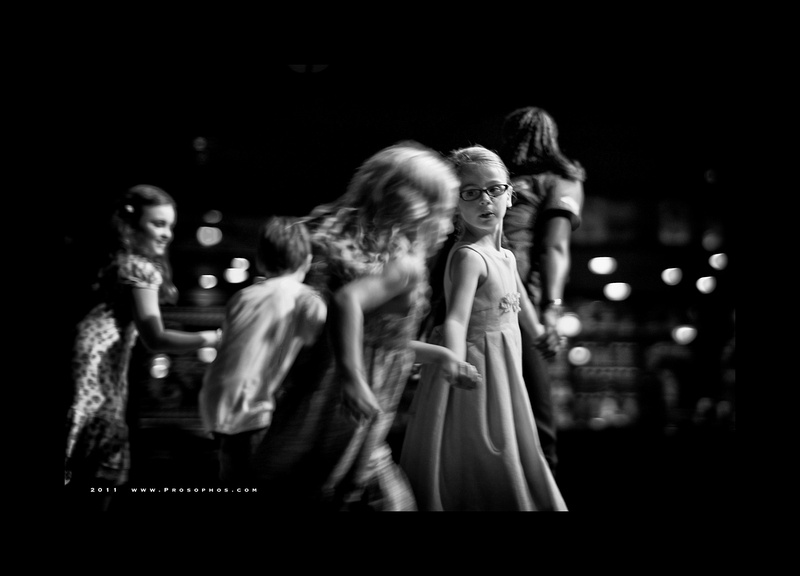
↑Leica M9 and Konica Hexanon 60mm @ f/1.2.
This is not an embryo, not a fish.
It’s an orange peel in a puddle of melted snow, illuminated by the morning sunlight.
(please click on the image to view)
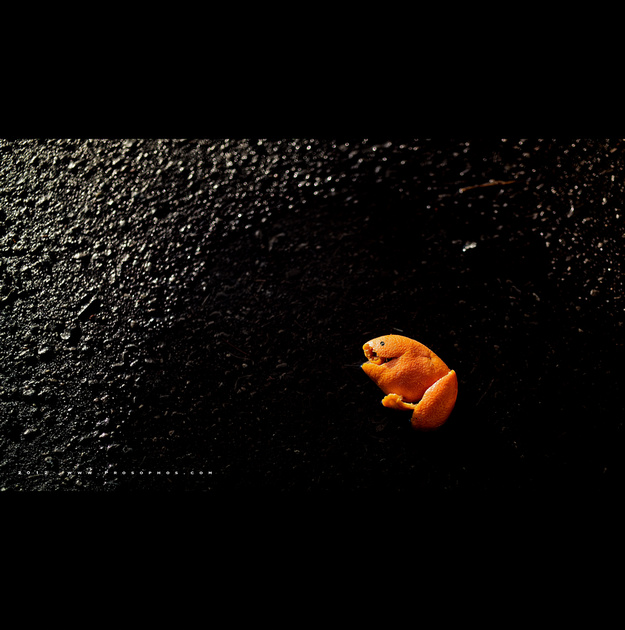
↑Leica M9 and Leica 35mm Summilux FLE @ f/1.4.

I received this via email this week and — because this is a question I’m often asked — I thought I would feature this as a Q&A post:
_
I’ve become a regular follower of your blog and I really love it! Respect to the fact that you manage to post a good and interesting photo each day. I try do to the same and sometimes it is hard to do so.
I’ve a question however. I work with a M8 and M9 and do weddings and other documentary work, sometimes portraits, lots of editiorial work. Since I left my 5D2 at home, life began to be fun again (I mean photographically). However, sometimes I miss my 12.500 iso and 50/1.2 lens (which wasn’t sharp at all wide open btw).
I’m thinking of buying a low-light lens to use in case the light is really bad. My fastest lenses are the 35 and 50 summicron and I’m thinking about the 35/1.2 and the 40/1.4. The 50 is too quirky I think.
The difference between the two is ‘only’ a half stop, but the difference between 1/45th and 1/60th can be crucial. On the other hand, I won’t take the 35 as a daily to go lens in my bag, while the 40 will fit in very easily. The price difference is also quit big, but not that big a deal. It’s still cheap in Leica-terms.
It wouldn’t be a problem to take the 35 to important shoots as an ‘in-case’ lense, but would that half stop make the difference?Could you give me any advice in which of these two to choose? I hope I don’t bother you too much with this these questions.
kind regards,
Joeri
_
Hi Joeri,
Thanks for the nice note!
The Voigtländer 35/1.2 (either Version 1 or 2) is the technically better lens with a desirable mix of both modern sharpness and classic rendering. It does not focus shift, so it won’t frustrate your focusing attempts. And it’s maximum f/1.2 aperture, as compared to other 35 lenses with a maximum aperture of f/1.4, does make a difference — not so much with respect to the extra light collected, but more in the ability to isolate subjects and create a nice “3D” effect (see an example image here). If you don’t mind the size, it’s an all-around “better” lens than the Nokton 40/1.4.
The Nokton 40/1.4 on the other hand, is just so darn small and versatile, behaving in many ways like both a 35 and a 50 lens, but it’s the technically “inferior” lens: not as sharp wide open, flares more, has been known to focus shift.
In the end, both lenses are capable of producing great images, so it really depends on what you value most – small size and versatility (40/1.4), or technical excellence (35/1.2).
It seems from your question that you already know the pros and cons of each lens, so it’s really up to personal preference.
Hope that helps, and thanks again for the nice note!
[If you are looking for more detailed information on both these lenses, please see my previous user reports: Voigtländer Nokton 40mm f/1.4 and Voigtländer Nokton 35mm f/1.2]
—Peter.
In actuality, his mouth is just being wiped clean.
However, I can’t vouch for his thoughts…
(please click on the image to view)

↑Leica M9 and Konica Hexanon 60mm @ f/1.2.
Silhouettes before the sunrise.
(please click on the image to view)
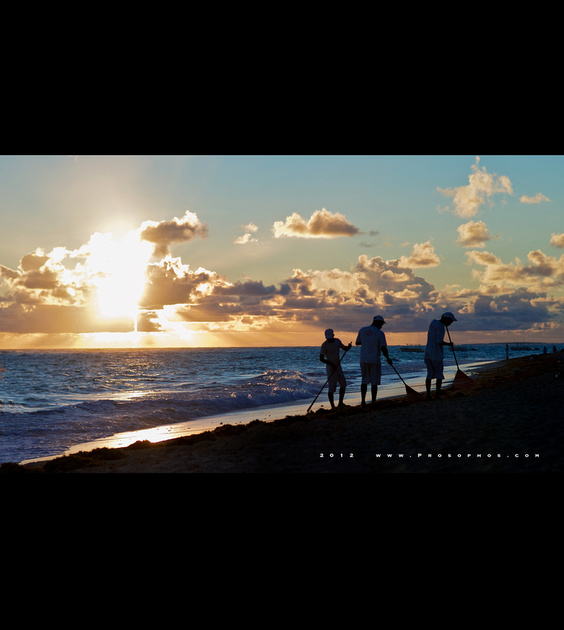
↑Leica M9 and Konica Hexanon 60mm @ f/1.2.
The original is here.
Not sure which one I prefer actually. The last time I was unsure, the comments were unanimously in favour of one image… although in that case the images were identical and they only differed in their processing.
(please click on the image to view)
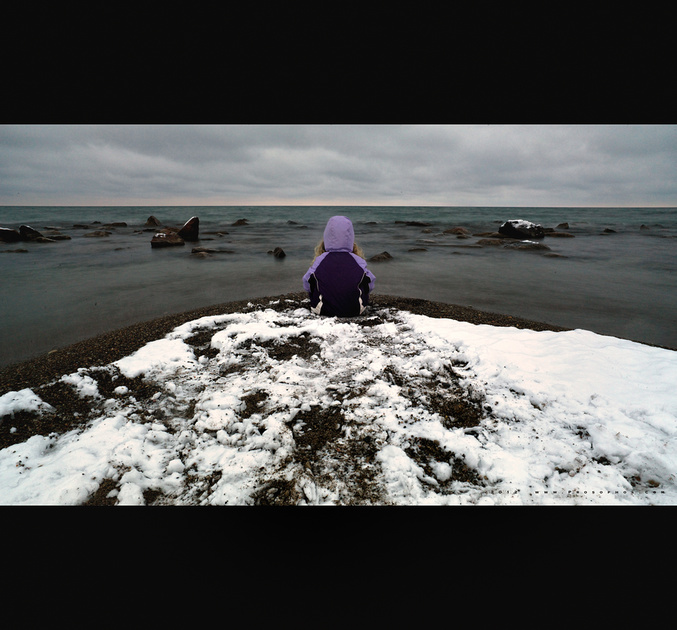
↑Leica M9 and Zeiss ZM 21/2.8 @ f/8.
8 sec exposure, 3-stop ND filter.
(please click on the image to view)
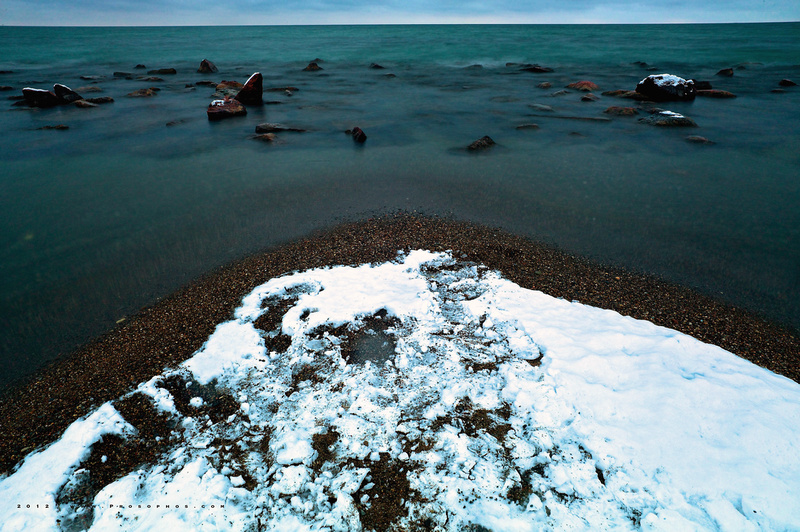
↑Leica M9 and Zeiss ZM 21/2.8 @ f/8.
Capturing the CN Tower, in the warm glow of the setting sun.
(please click on the image to view)

↑Leica M9 and Leica 35mm Summilux FLE @ f/1.4.
Seeking illumination in Toronto, on a dark winter’s morning.
St. James is, of course, located on Church and King Streets.
(please click on the image to view)

↑Leica M9 and Leica 35mm Summilux FLE @ f/1.4.
Trapped inside, looking out.
(please click on the image to view)
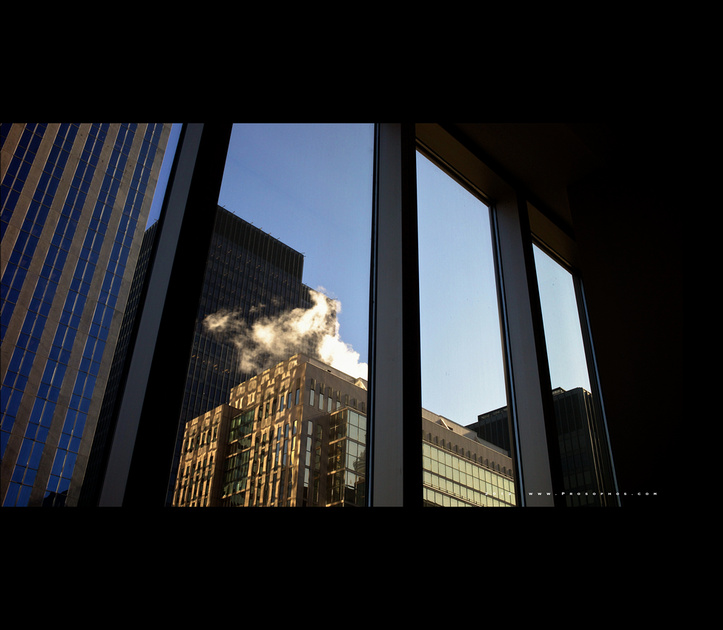
↑Leica M9 and Leica 35mm Summilux FLE @ f/1.4.
Playing in somebody’s life, near you.
(please click on the image to view)
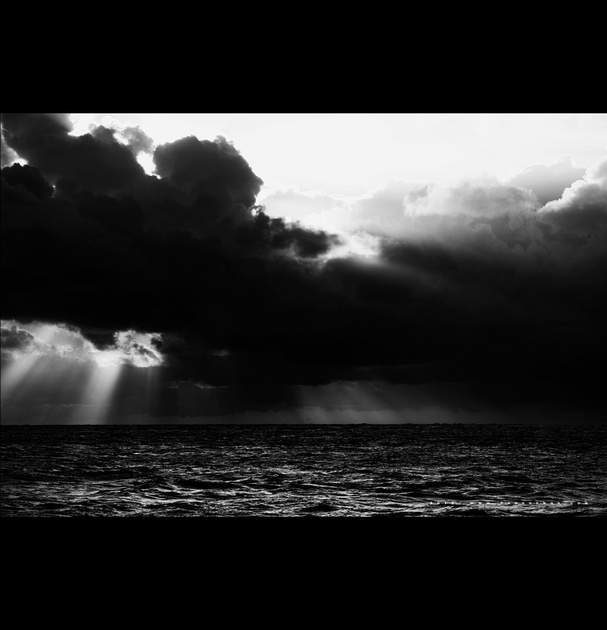
↑Leica M9 and Leica 135mm Tele-Elmar f/4 @ f/5.6.
(please click on the image to view)
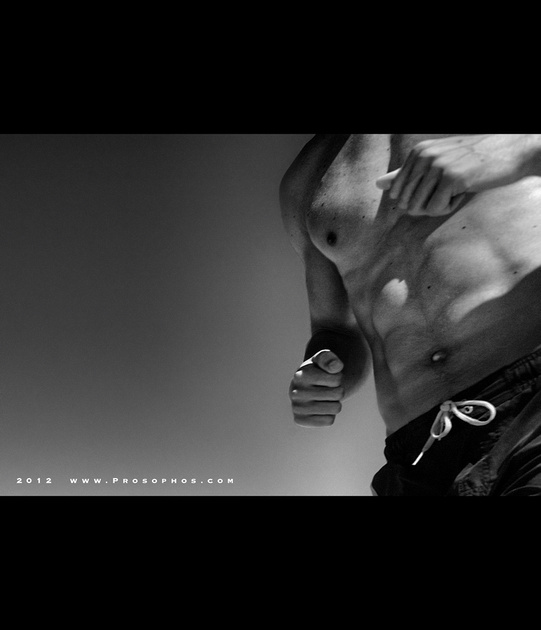
↑Leica M9 and Zeiss ZM 21mm @ f/2.8.
Notice once again the composition: her arms are forming a Strong Diagonal (it’s a bent diagonal, but rules are meant to be bent and/or broken ;)).
(please click on the image to view)

↑Leica M9 and Konica Hexanon 60mm @ f/1.2.
On a cold, cold February afternoon.
She’s growing up fast. To see how she looked only six weeks ago, please click here.
(please click on the image to view)

↑Leica M9 and Leica 50mm Summilux ASPH @ f/1.4.
Connecting, for just a split second.
(please click on the image to view)

↑Leica M9 and Leica 35mm Summilux FLE @ f/1.4.
 Prosophos
