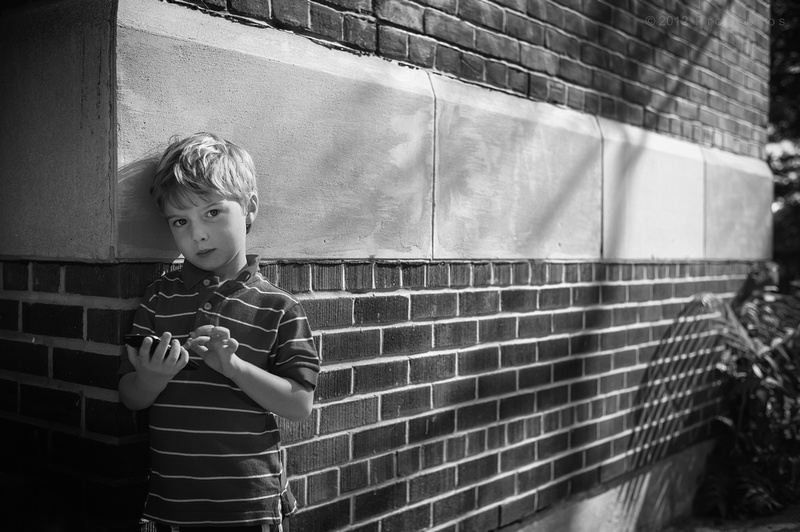
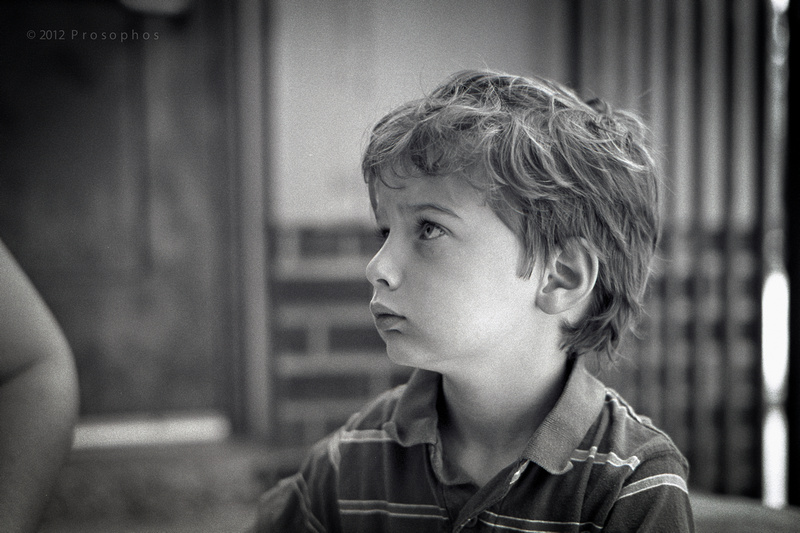
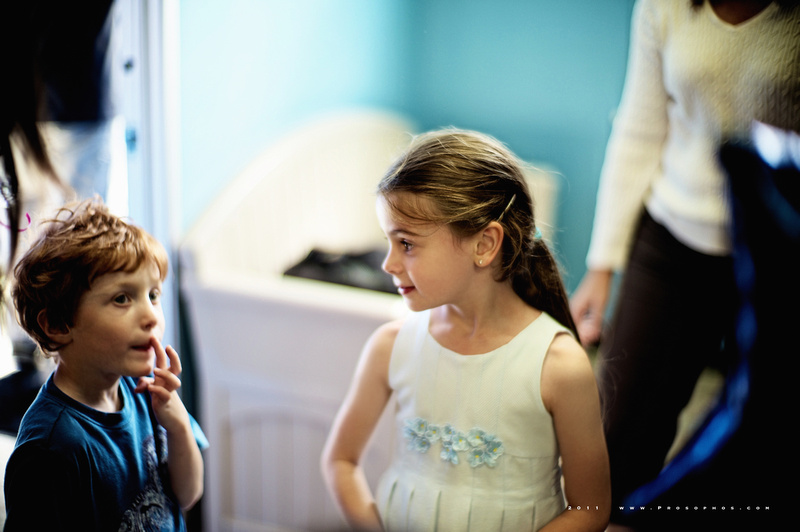
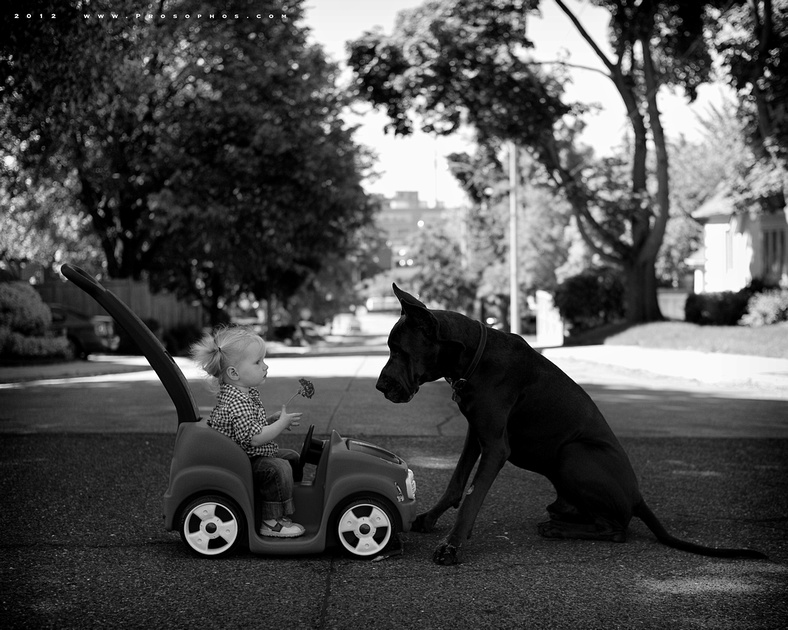
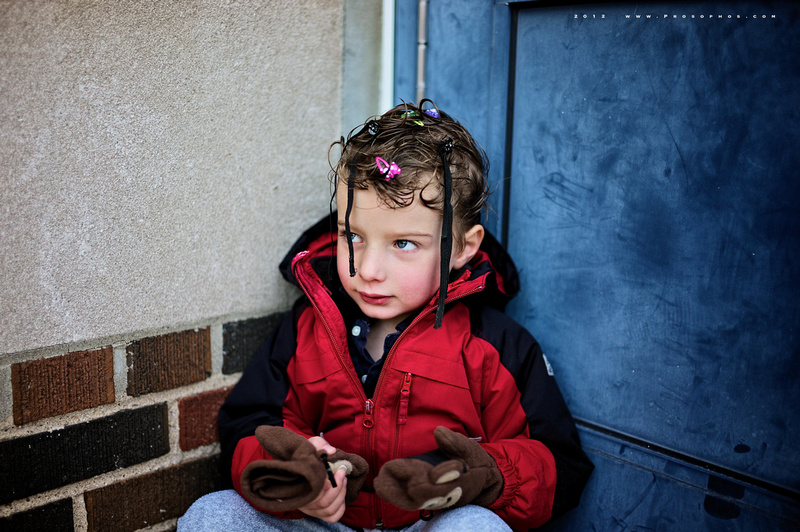
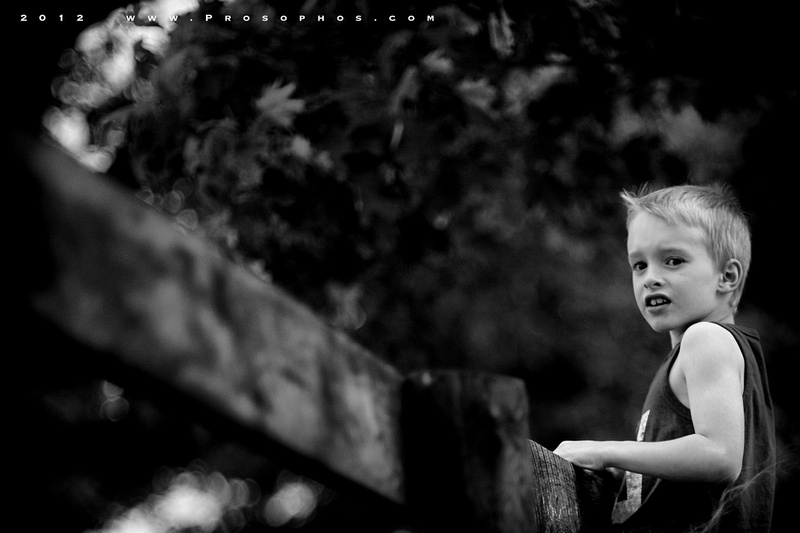
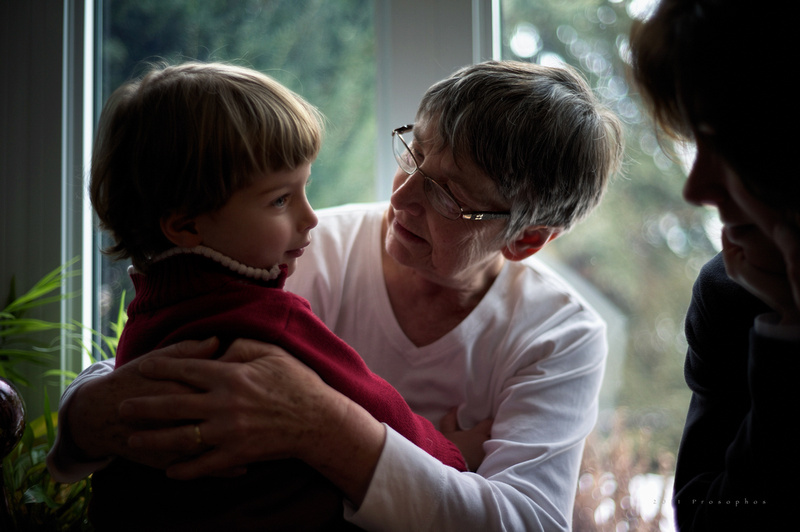
If you’re “just” photographing your family…

2012, Inspiration, Portrait, Teaching point

If you’re “just” photographing your family, get the BEST photo equipment you can afford (that you are able to use, or can learn to use).

— Peter | Prosophos.

___________

I was prompted to write the above after reading yet another, “if you’re just photographing your family, get a cheap point-and-shoot” comment on one of the internet forums.  It always leaves me shaking my head when I come across that sort of statement, not because I have anything against inexpensive cameras (which I’ve used and continue to use, and which can be used to take wonderful photos), but because of the implication behind the words, that – for whatever reason – your family is not worthy of the best* equipment.

Nonsense.

Documenting your family’s timeline – the various trials and tribulations, the tears, the joy, the exciting, the mundane, the…  the anything – is one of the most important things you can do with a camera.  The snobbery around exclusively using “pro” equipment (whatever that is) to photograph athletes, celebrities, or otherwise “important” individuals is laughable.  As if most of us are able to remember more than a handful of “pro” magazine cover images we’ve ever seen…

Instead, it’s all those images reminding us of the births, marriages, and deaths of our loved ones, that burn themselves into our brains.

—Peter.

[Note: I also posted this on SteveHuffPhoto.com]

___________

*Note:  best does not necessarily equate with biggest.

(Un)policed smiles.

2012, Inspiration, Konica Hexanon 60mm f/1.2, Portrait, Teaching point

The law wasn’t broken here, but a rule was.

A shallow depth of field was used to unconventionally blur the foreground figure (policewoman).  It’s an unconventional choice because your mind normally expects the most foreground elements to be in focus.  Violating this “rule” can prove for a distracting image, but I believe it works here because of the particular composition and because the two officers are mirroring each other with their expressions.

(please click on the image to view)

↑Leica M9 and Konica Hexanon 60mm @ f/1.2.

My “11 from 2011”.

Inspiration, Life's Little Moments

My 11 favourite images from 2011, with a couple of bonus images included.

—Peter.

1

2

3

4

5

6

7

8

9

10

11

12

13

_____________________________

Please donate to this site.

Please show your appreciation!

If you’ve been inspired by these images, or any of my articles, please consider making a contribution to help me run this site.  Whether it’s $5, $10, or $15… it all helps.

Donate to this site (button)

This site is a labour of love, but any help I receive will help me devote more time to running it.

Thanks,

—Peter.

Q and A: Voigtländer Nokton 40mm f/1.4.

2012, Q&A, Teaching point, Voigtländer 40mm f/1.4 Nokton

This arrived via email this morning and I was about to respond as I usually do, but then realized, I often get this question, so why not turn my response into a post that will hopefully be of help to other readers?


Hi. I read your review for the The Voigtländer Nokton 40mm f/1.4. and found it very helpful. I have this lens with a Leica M9 and don’t seem to be getting the results you pictured. Did you alter your M9 shots in Lightroom or do you have the lens detection set a specific way in the M9 for the The Voigtländer Nokton 40mm f/1.4? My shots tend to come out overexposed when I use it open to 1.4. Any suggestions would be appreciated. Thanks and keep up the good work. Your photos and reviews are great.

– Adam.

First of all, thank you Adam for your very kind words.

Now, regarding your questions…  I post-process all of my files in Apple’s Aperture and then do my final colour tweaking in Nikon’s Capture NX2.  On the M9, I have lens detection set to “auto”, but I do not code any of my uncoded lenses, so for lenses like the Nokton 40/1.4 the camera isn’t recognizing anything and is therefore NOT making any adjustments.  For focal lengths longer than 35mm, there really is no need for coding anyway, unless you’re hoping to correct for vignetting or are interested in generating focal length EXIF data.

Finally, I always shoot in manual mode (controlling for aperture and shutter speed) and often manually set the ISO.   I never rely on the camera’s metering.  I’ve done this with ALL of my cameras, including Nikon, Canon, Sigma, etc., because no camera – not matter how sophisticated – truly understands what your “mind’s eye” is seeing when you attempt to create an image, and it’s better that you take full control of all the variables.

I hope this helps.

Thanks again for writing Adam, and Happy New Year,

—Peter.

The top 5 posts of 2011, and thank you.

Inspiration

According to the stats, these were the Top 5 most viewed posts of 2011:

  1. My top 25 photos of 2011.
  2. The Voigtländer Nokton 40mm f/1.4.
  3. The Voigtländer Nokton 35mm f/1.2.
  4. The Leica M9… for sports?
  5. Over-processed, not.

Honourable mention goes to the post, The Konica Hexanon 60mm f/1.2, Special Edition, as a late year write-up that proved to be quite popular.

This site started as a personal project in April of 2011 and I only started posting regularly in late June.  In the subsequent six months, I uploaded over 1,000 images and attached brief commentary to most of them (my feeble attempt to see beyond the images and offer some insight into the moment captured).  In the same period, there were over 100,000 views from all over the world…

The truth is, I’d continue posting and writing even if nobody was watching, but it’s nice to know that I’m not operating in a vacuum 🙂

So, to those of you who have stopped by and graced the site with a comment or two, I would like to offer my sincerest gratitude and convey a heartfeltThank you.” 

—Peter.