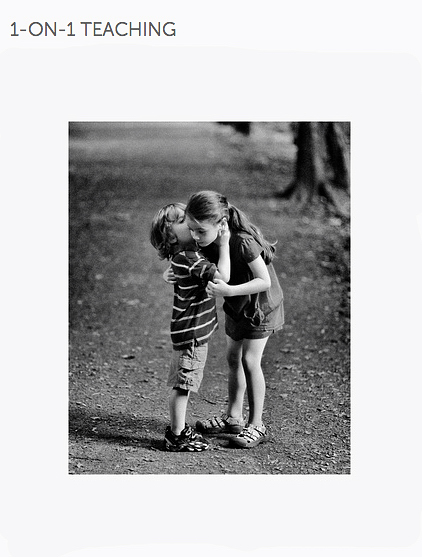
Q&A: 1-on-1 Teaching Sessions for post-processing?

Inspiration, Q&A, Teaching point

_______________________________

“Hi Peter,

I love your work.

Read your article about shooting your family with the best gear on Steve Huff. I am located in [USA] and wonder if you have any private sessions on editing digital photos rather than walking sessions. Just wondering what that might cost… Thanks a ton.

Pete.”

________________________

I’m often asked about my post-processing (see a previous Q&A here) and sometimes get a request — like the one from Pete above — to use my  1-on-1 teaching sessions as a tutorial for post-processing.

I therefore thought it might be useful to post my response to Pete:

_

Hi Pete,

Thank you for writing.

To answer your question, I’ve always thought of the 1-on-1 teaching as an opportunity to teach anything… and I often do.

The only problem with teaching my post-processing is that I don’t follow a “cookbook” approach.  It’s a creative thing, so it doesn’t lend itself well to a “Step1, Step 2…” approach.

Having said that, I do have some techniques that I’ve developed over the years.

I’d be open to teaching them, but I would need you to supply a laptop loaded with Apperture (or Lightroom) and some of the Nik plug-ins (not absolutely necessary).  My fee would have to be the same for 2 hours, as I charge for time and not content.  And then you’d have to figure in your own travel costs.

So, as you can see, it would be pricey for you.  I will leave it up to you as to whether you think it’s worth it.

Either way, thanks again for writing, and for your kind words.

Cheers,

Peter.
Answer to: Film or Digital?

Inspiration, Leica 35mm Summilux ASPH FLE f/1.4, Teaching point

Yesterday, I posted an image and posed the question: Film or Digital?

To those of you who submitted a guess, thank you.  I know it’s difficult to go out on a limb like that, especially when you have the option of safely viewing the proceedings from a distance.

For what it’s worth, the final tally of guesses was:

___________

Digital: 10

Film: 8

___________

An almost even split!  Moreover, some who chose digital stated that the image looks like film, and vice versa.  This confirms what I suspected: this was a difficult image to identify.

So, without further delay, the answer is:

Digital

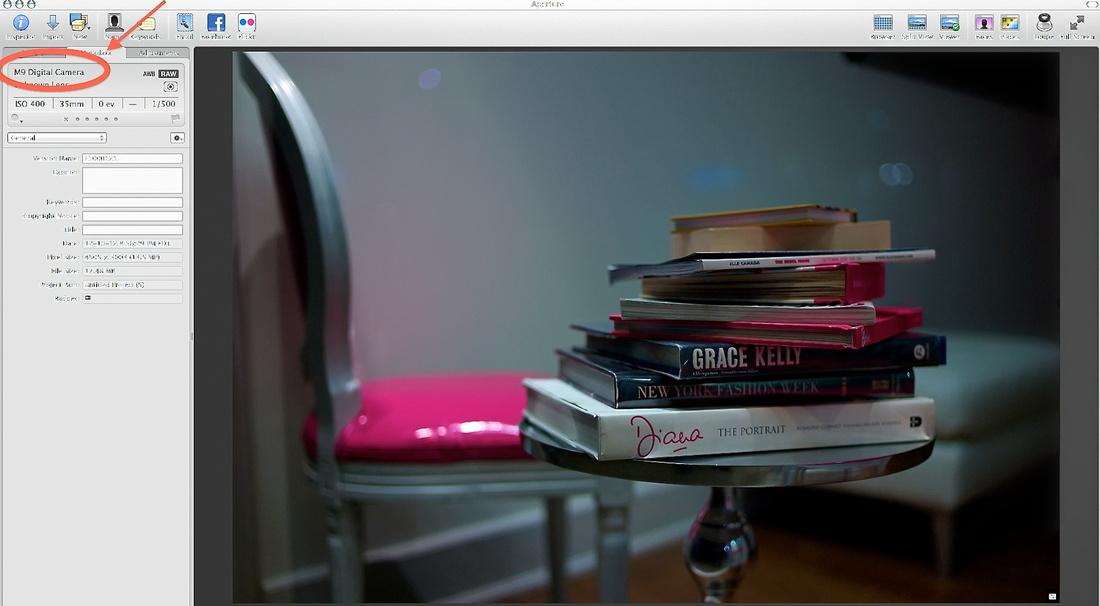
↑Leica M9, ISO 400, and Leica 35mm Summilux FLE @ f/1.4.

The above screen shot is of the original M9 file, opened in Aperture.

To stack the odds towards conveying a film look, I chose a scene in which the subject matter had a retro vibe about it.  Then I post-processed the image to B&W.  The “grain” seen in the finished image (to the right, in the shadows) is actually digital noise that has emerged from selective lightening, and that has been post-processed to look like film grain.  More or less.

Some of you were impressed by it.  Some of you commented that it did not “feel” like film grain, and so guessed digital.  I believe it’s in fact the quality of film grain, among a few other things, that usually identifies the medium… but I have occasionally been fooled.

Once again, I thought the simulation in this example was pretty good.

As an aside, a few of you remarked that you were viewing yesterday’s post on a phone screen, which means that the process of evaluating for any nuances in image quality would have been difficult, if not impossible.

I guess many of our photos are being viewed on smartphones or tablets these days, so it’s something I should keep in mind when posting such comparative-type evaluations.

—Peter.

Just for fun: film or digital?

Inspiration, Teaching point

Simple question really.

I’ve always asserted that most of the time the answer is readily apparent, but is that the case here?

Now, I know many of you will assume that — since I’m asking — it must be digital.  Others of you will identify a hint of reverse-psychology at play, and you’ll choose film.

So, for you brave ones out there, what’s it going to be? 🙂

—Peter.

↑Camera and lens information withheld.

[Update: Answer is here.]

The Noctilux f/0.95 (50% and 100% crops).

Inspiration, Leica 50mm Noctilux f/0.95, Portrait, Teaching point

Yesterday, I posted the image Father Figure, which was taken with the Leica Noctilux f/0.95.

I know many of you — in addition to being interested in viewing photographs taken with the Noctilux f/0.95 — are also interested in the technical aspects of this lens.

So, I’ve decided to display the central portion of the Father Figure image at 50% and 100% magnification.  Note that the photo was shot at f/0.95, at the minimum focusing distance of 1 meter, and therefore any conclusions you draw should be considered in the context of this aperture and distance.

First the 50% crop

I’ve chosen the 50% crop because it nicely displays the quick — but extremely smooth — transition between the in-focus and the out-of-focus elements (I’ve used the word “rounded” to describe this exquisite rendering):

(please click on the image to view the large version)

↑Leica M9 and Leica Noctilux @ f/0.95 (50% crop).

Now the 100% crop

I’ve chosen the 100% crop to illustrate the level of central sharpness available at f/0.95:

[Note: the point of focus was his right eye; minimum sharpening was added during post-processing.]

(please click on the image to view the large version)

↑Leica M9 and Leica Noctilux @ f/0.95 (100% crop, minimum sharpening).

I hope you’ve found the above useful.

—Peter.

The Noctilux @ f/0.95 and “rounded” rendering.

Inspiration, Leica 50mm Noctilux f/0.95, Portrait, Teaching point

This slightly cropped image is a good example of the pleasingly “rounded” rendering this lens is capable of @ f/0.95 (see my comment under yesterday’s post).

What I’m referring to is the gentle 3D effect, that — unlike the slightly more “cut out of the scene” 3D effect you get with the 50 Summilux ASPH — is exceptionally smooth, very organic.  Specifically, his face is gently simultaneously emerging from, and blending into, the background.

Despite this, the point of focus (the nearest edge of the sunglasses) is bitingly sharp.

Incidentally, it’s this level of sharpness at 1 meter (the near focus limit) and the exceptionally smooth bokeh that separate this Noctilux from the previous f/1 version, which renders in a slightly softer way, and which depicts backgrounds in a thick-brush-painterly manner.

—Peter.

↑Leica M9 and Leica Noctilux @ f/0.95.