On a cold, cold February afternoon.
She’s growing up fast. To see how she looked only six weeks ago, please click here.
(please click on the image to view)

↑Leica M9 and Leica 50mm Summilux ASPH @ f/1.4.

On a cold, cold February afternoon.
She’s growing up fast. To see how she looked only six weeks ago, please click here.
(please click on the image to view)
↑Leica M9 and Leica 50mm Summilux ASPH @ f/1.4.
Connecting, for just a split second.
(please click on the image to view)

↑Leica M9 and Leica 35mm Summilux FLE @ f/1.4.
It’s unusual for me to post two versions of an image, but this time I couldn’t decide.
—Peter.
(please click on both image to view)
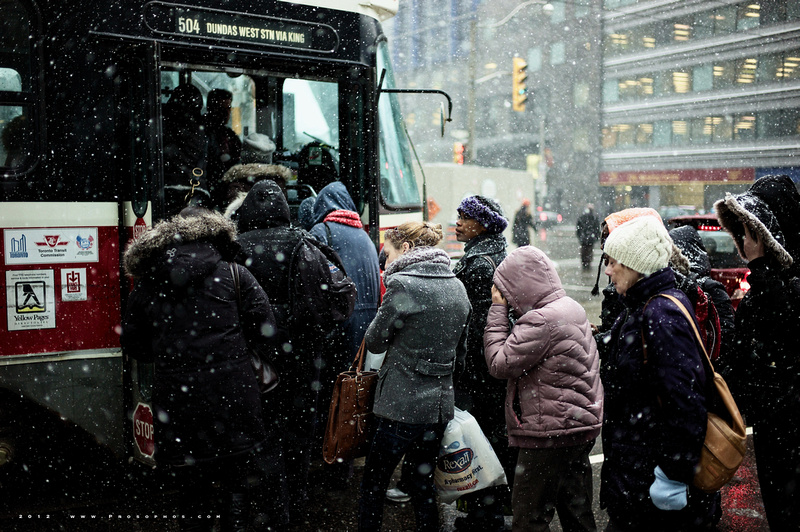
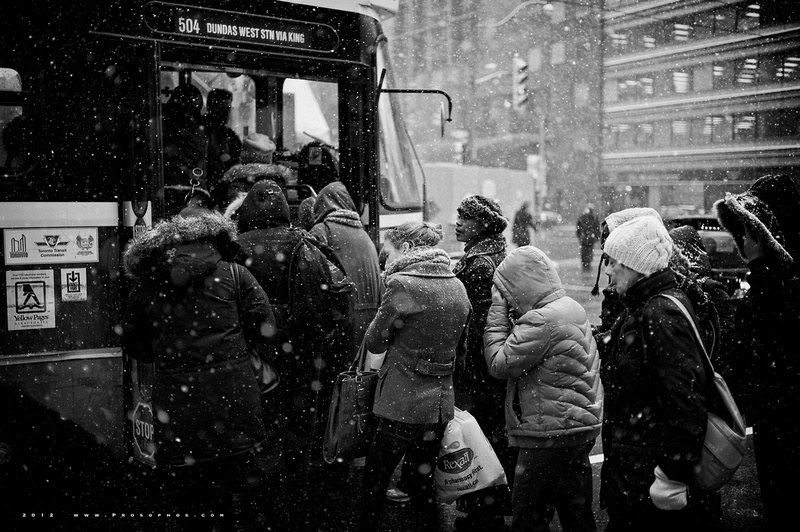
↑Leica M9 and Leica 35mm Summilux FLE @ f/1.4.
I’ve previously written about achieving simplicity in one’s images, and of finding inspiration in the little moments.
Here’s an example of both.
This image was captured on the way back from work. The seats had just emptied of passengers and the train was sitting still for a few minutes with its doors wide open. I became aware of a movement to my left and looked to find the pages of a discarded newspaper fluttering with the air current.
The simplicity of the scene was beautiful, as was the illumination provided by a single incandescent lamp from just outside the window — like a spotlight.
I raised the camera to my eye and clicked the shutter.
Soon after, the seats quickly filled up, the newspaper was taken away, and the doors closed.
The moment had come and gone.
(please click on the image to view)
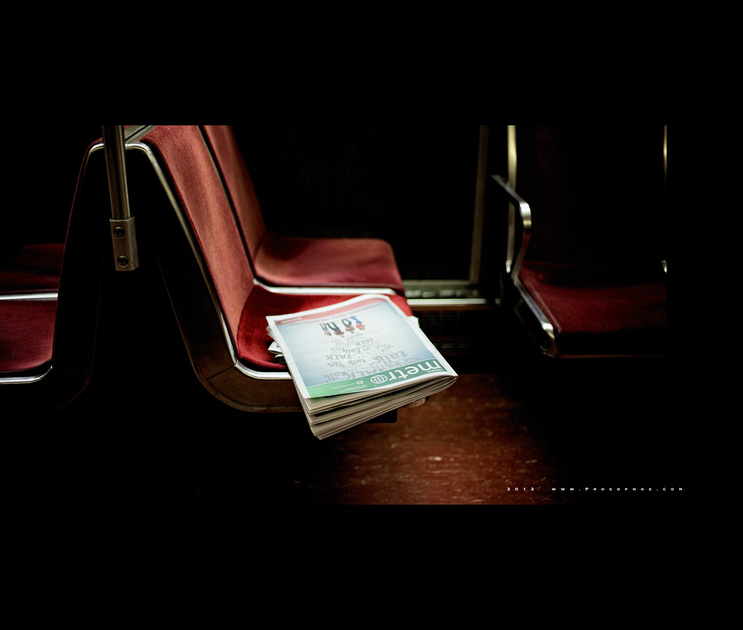
↑Leica M9 and Leica 35mm Summilux FLE @ f/1.4.
Maybe.
It turns out, their conversation was not about love — they were discussing the financial markets.
Still, I’m going to let the body language speak for itself.
(please click on both images to view)
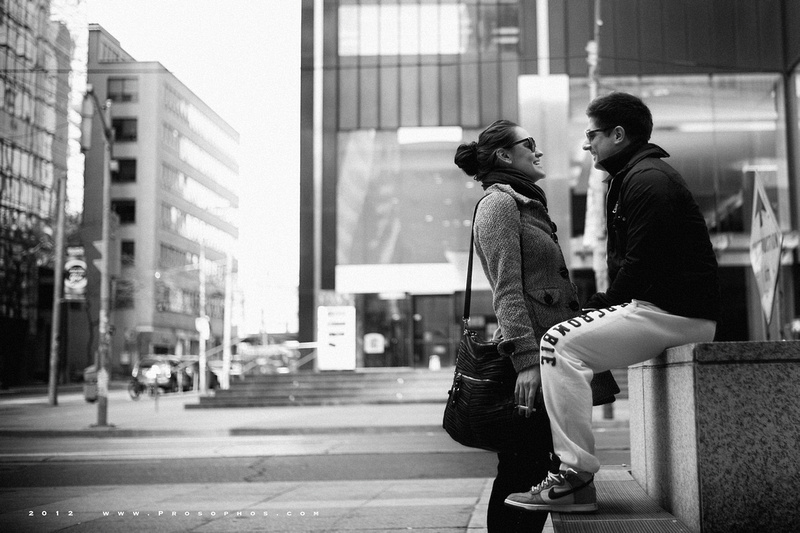

↑Leica M9 and Voigtländer Nokton 40mm @ f/1.4.
I’ve just introduced a Customized Post-Processing Service via Email.
If you like the way I digitally post-process my images and would like for me to work on some of yours, please read more about my service here.
Now, I can’t work miracles, but I promise I will try to improve or enhance your images to the best of my ability.
—Peter.
This is a grab shot, taken yesterday during one of my Practical Photography – Teaching sessions.
At the time, I was discussing the importance of Strong Diagonals in images, as well as the importance of pre-focusing to nail shots like these at wide Apertures — in this case f/1.4.
Fortunately, this woman walked by, allowing me to illustrate the above points, as well as allowing me to demonstrate the importance of capturing an ambulating figure in mid-step.
And yes, this image was taken with the lovely little Voigtländer 40mm Nokton 40/1.4 — an extremely underrated lens.
(please click on the image to view)

↑Leica M9 and Voigtländer Nokton 40mm @ f/1.4.
Matt signed up for one of my one-on-one teaching sessions a few weeks ago and I had the pleasure of meeting him this morning. During our two hour walkabout, we discussed photography and did some shooting. Oh yes… I tried to pass on some photographic pearls of wisdom too :).
Thanks Matt and have a safe flight this afternoon!
[Just a reminder, if you’re interested in a practical, one-on-one photography teaching session, please have a look here, or contact me here].
—Peter.
Of snow and sounds.
(please click on the image to view)

↑Leica M9 and Leica 35mm Summilux FLE @ f/1.4.
(please click on the image to view)
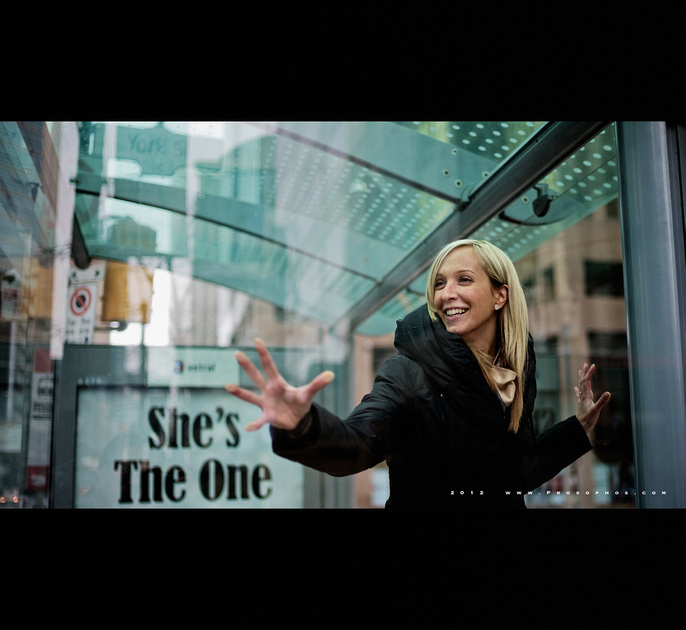
↑Leica M9 and Leica 35mm Summilux FLE @ f/1.4.
An infectious moment, as caught on film.
(please click on the image to view)
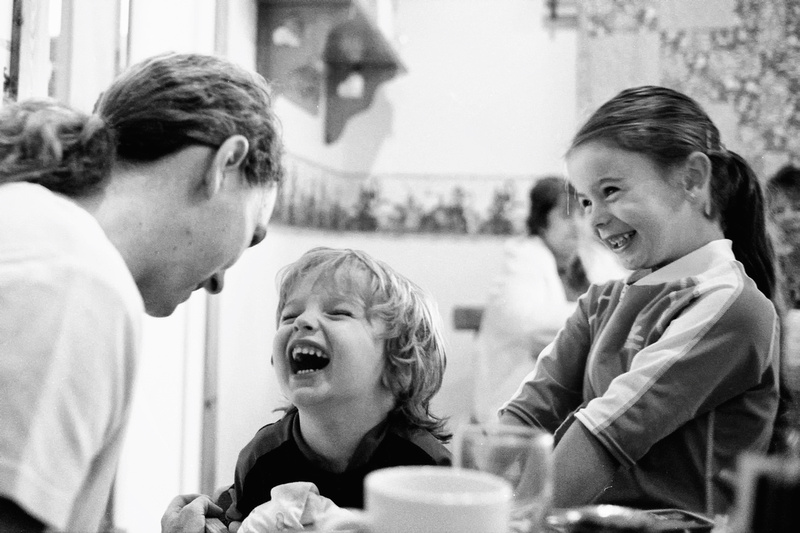
↑Leica MP and Leica 35mm Summicron @ f/2.
He looked at me and asked,
Why are you taking my picture?
After I told him, he smiled and said,
Oh Good!… I thought you were my ex-wife’s lawyer.
I knew he was a character.
(please click on the image to view)
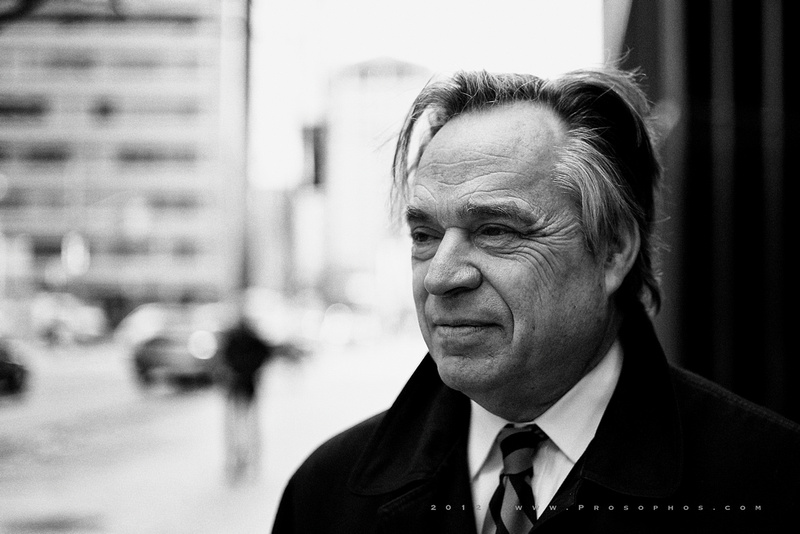
↑Leica M9 and Leica 35mm Summilux FLE @ f/1.4.
Our hero in the opening scene of a story that will never be told.
(please click on the image to view)
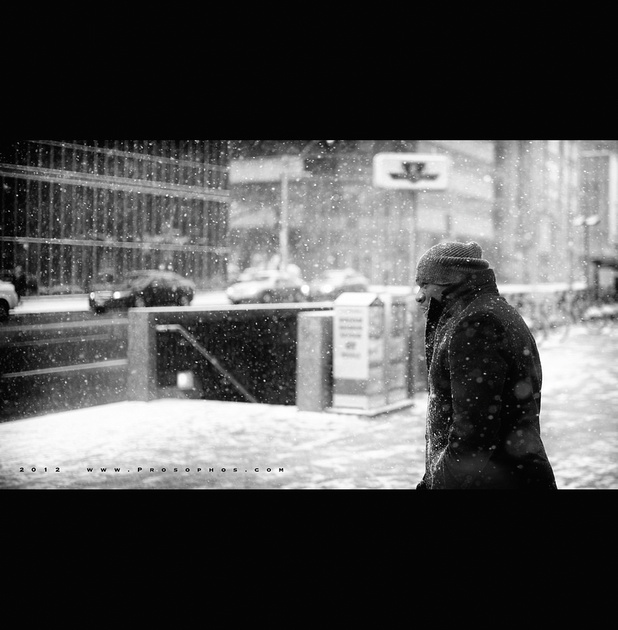
↑Leica M9 and Leica 35mm Summilux FLE @ f/1.4.
[Note: This post is intended for novice, and not experienced, photographers.]
____________________________________
In photography, the aperture is the adjustable opening of a lens that determines the amount of light entering through it and onto a camera’s sensor, be it digital or film. If the aperture is large, a large amount of light will pass through the lens and enter the camera; if the aperture is small, a small amount of light will enter the camera.
Simple, right? But, it gets a little confusing…
The problem with using the entrance aperture size to communicate a lens’ light transmitting ability is the physical reality that a longer lens will require a larger aperture to achieve the same level of light transmission as a shorter lens. In other words, if “x” is the amount of light we wish to reach a camera’s sensor, a 75mm lens will require a bigger “hole” (aperture) at the entrance than a 50mm lens to achieve “x”.
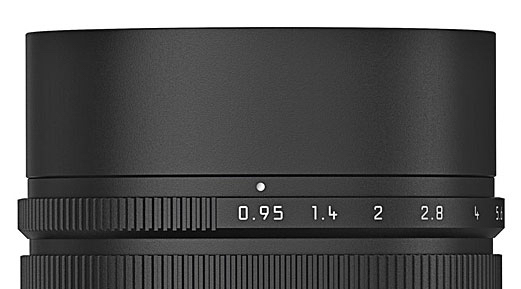
To avoid confusion, and to standardize notation across all lens types, f-numbers — instead of actual aperture sizes — are used to communicate the light-transmitting ability of all lenses. An f-number (also known as an f-stop, or focal ratio) is defined as the focal length of a lens divided by the aperture diameter.
You’ll usually see f-numbers labelled on lenses as a sequence of fractions:
f/1, f/1.4, f/2, f/2.8, f/4, f/5.6, f/8, f/11, f/16, f/22, etc.
The important thing to remember is that because the f-number is a fraction, the smaller the denominator, the greater the light transmission.
(please click on the image to view LARGER)

Thus, when considering light transmission, f/1 > f/1.4 > f/2 > f/2.8 > f/4, etc.
In fact, for every step to the left in the sequence above, twice as much light is being transmitted as the preceding step. Thus, f/1 allows for twice as much light to hit the sensor as f/1.4, and f/1.4 allows for twice as much light as f/2, etc.
Incidentally, lenses that are able to achieve maximum f-numbers of f/1, f/1.4, or f/2 (or even f/2.8) are often loosely referred to as “fast” lenses because they allow photographers, for a given amount of light, to shoot at faster shutter speeds than so-called “slower” lenses (exactly twice as fast for each step up in the f-number ladder).
It follows from the above, then, that large aperture/f-number lenses are useful in low-light situations:
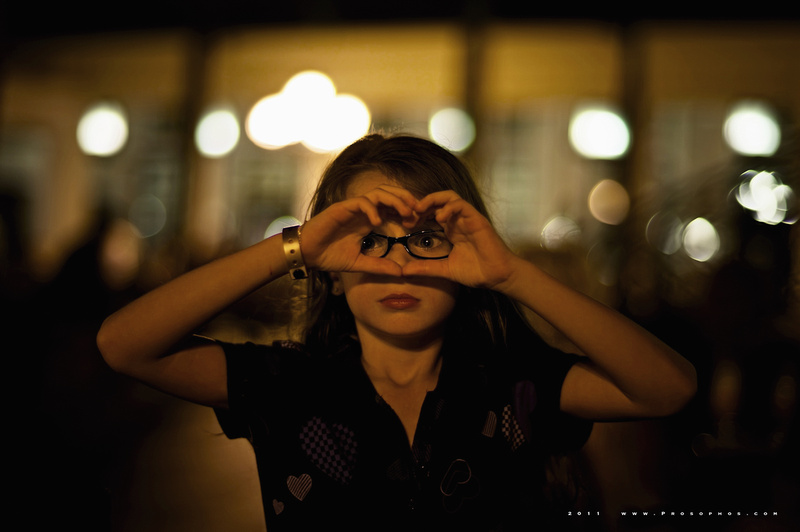
↑Leica M9 and Konica Hexanon 60mm @ f/1.2.
The other main use for large aperture/f-number lenses is to achieve subject isolation.*
Thus a lens of a given focal length set to f/1.4 (for example) will create a greater background blur than when set to f/4.:
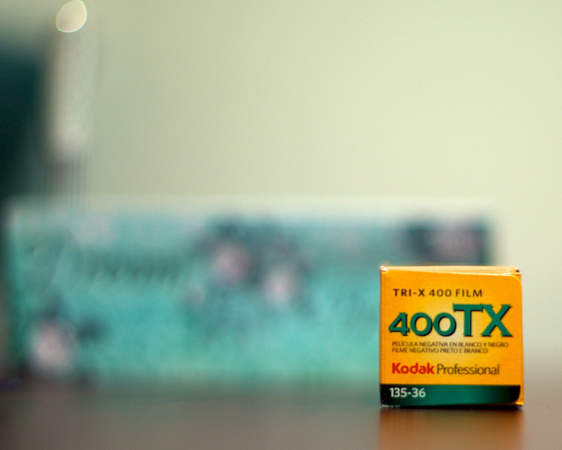
↑Leica M9 and Leica 75mm Summilux @ f/1.4
_
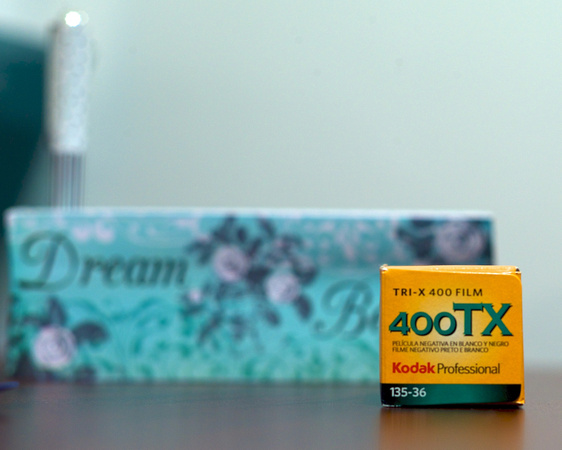
↑Leica M9 and Leica 75mm Summilux @ f/4.
_
I hope you found this useful,
—Peter.
______________________________________________
*The other way to achieve subject isolation is to shoot with a longer focal length.
Raymond kindly obliged with a spontaneous street portrait.
(please click on the image to view)

↑Leica M9 and Leica 75mm Summarit @ f/2.5



 Prosophos