
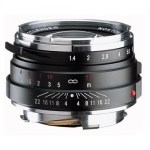
This arrived via email this morning and I was about to respond as I usually do, but then realized, I often get this question, so why not turn my response into a post that will hopefully be of help to other readers?
Hi. I read your review for the The Voigtländer Nokton 40mm f/1.4. and found it very helpful. I have this lens with a Leica M9 and don’t seem to be getting the results you pictured. Did you alter your M9 shots in Lightroom or do you have the lens detection set a specific way in the M9 for the The Voigtländer Nokton 40mm f/1.4? My shots tend to come out overexposed when I use it open to 1.4. Any suggestions would be appreciated. Thanks and keep up the good work. Your photos and reviews are great.
– Adam.
First of all, thank you Adam for your very kind words.
Now, regarding your questions… I post-process all of my files in Apple’s Aperture and then do my final colour tweaking in Nikon’s Capture NX2. On the M9, I have lens detection set to “auto”, but I do not code any of my uncoded lenses, so for lenses like the Nokton 40/1.4 the camera isn’t recognizing anything and is therefore NOT making any adjustments. For focal lengths longer than 35mm, there really is no need for coding anyway, unless you’re hoping to correct for vignetting or are interested in generating focal length EXIF data.
Finally, I always shoot in manual mode (controlling for aperture and shutter speed) and often manually set the ISO. I never rely on the camera’s metering. I’ve done this with ALL of my cameras, including Nikon, Canon, Sigma, etc., because no camera – not matter how sophisticated – truly understands what your “mind’s eye” is seeing when you attempt to create an image, and it’s better that you take full control of all the variables.
I hope this helps.
Thanks again for writing Adam, and Happy New Year,
—Peter.
 Prosophos
I’m surprised that none had any follow up questions .. 🙂
Nice change to your site, seems to flow a bit better than the first one (and it was time for a refresh I think). I do hope that you get the image magnification to work without having to ope a new page.
Yes, no follow-up questions, and no acknowledgment from Adam that I answered his question.
Guy, I won’t be able to get the image magnification to work on the WordPress site, unless I port the blog to a 3rd party host, which at this point is more trouble than it’s worth. As you know, I write this blog during my spare time, and I only have so much of that…
Thanks Guy for the comments about the new site, and I agree, it was time for a re-fresh…
That’s a real shame Peter as there are so many cool plugins available for wordpress. I am not a wordpress expert (but I do have a degree in CS) and have found setting up wordpress sites surprisingly easy (but surprisingly time-consuming as you know). Yet I think in the end you will move to a wordpress.org hosted site. I can’t imagine them being more work than wordpress.com really, and they almost all allow you to install your own plugins.
I came across this link on the wordpress.com site for moving off them. http://en.support.wordpress.com/moving-a-blog/
And I liked this page for an example of zoom plug-ins.
http://www.tripwiremagazine.com/2011/10/jquery-zoom.html
regards
Guy
Peter thank you for sharing the information on your site, as someone using rangefinders for the first time its so helpful. In the above article you say you never rely on the camera’s metering, could you expand that alittle. Do you use a hand held meter or is it more a case of camera meter plus experience.
Thank you
Floyd
Thanks Floyd. Believe it or not, I rely on the camera LCD to tell me what I want to know. Even with LCDs that are less sophisticated (like the M9), your eyes are the best judge of exposure. I look at the image after taking it, and decide if I need to make adjustments. The longer one uses a particular camera, the more able one is of “reading” the LCD. Please note, I’m not referring to histograms, just the image. Having that immediate feedback with digital is actually a powerful learning aid. Hope that helps…Peter.
Peter thank you for the reply, I’ve a day off tomorrow if the weather improves in the UK I shall go out and give it ago.
Thanks
Hi Peter, one thing that I have noticed, and Love, about your photography, is a slight elemnt of geometry that I see in your images. It’s hard to describe, but your portaits almost all have it…a sense of structure that is very unique and beautiful…. Even the slightly OOF regions have that, and I think that you may choose your lenses closely to acheive this (Hex 60, Nokton 40)….but maybe there’s an element of processing that brings it out? Regardless, marvelous work as usual!
Hi Ashwin! Wow, you are an observant man. I never really articulated it before, but you’re right – the Hex 60 and Nokton 40 behave in a similar manner with respect to rendering (although the Hex is somewhat more refined and can dive in more and extract more detail). The truly brilliant observation on your part is the “geometry” thing… I’ve never thought about that at all. I think it’s really why I find these lenses more interesting than more “refined” lenses… there’s this almost subconscious rendering at work, beneath the obvious visual cues we look at when evaluating images. I’ll have to think about it some more… Thanks, dear Ashwin. I appreciate your thoughtful comments.
Thought I’d drop in on this thread and say thanks for your comments and opinion on your Voight 40mm lens experiences.
I’ve just purchased the Ricoh GXR A12 M Mount and have been investigating the different lens options that I can actually afford and be afraid to use too.
I’ve been shooting the kit with the Ricoh 28mm module and wanted to add a 50 prime lens. I could buy the Ricoh 50mm module but I wanted to take advantage of the lack of AA filter on the M mount and the many lens options this offers.
I had pretty much decided I wanted the Voight 35mm f/1.4 but then came across your review of the 40mm and a couple other places suggested it too. Through further research I’ve learned about the Leica 40mm f/2.0 from the 70s.
I want to keep my kit as small and light as possible since I travel for my job almost 180 days out of the year.
Your review has me thinking more in favor of the 40mm and would be curious if you’ve ever shot with the Leica 40mm?
BTW, I’m now following your blog and look forward to see what you see!
Thanks Duane!
I’ve written a number of times that you really can’t go wrong with most M mount lens options, and I will reiterate that fact here. In the end, the lens you choose is really up to you and your intended goals. That’s my short answer.
My long answer is as follows…
(At the risk of repeating my article) I appreciate the Nokton 40/1.4 because of its small size and versatility. It can behave like a 35mm or a 50mm, depending on how close you get to your subject (I sometimes find 35mm too wide for portraiture – unless limited to environmental portraiture – and I sometimes find 50mm too long for indoor shooting… the 40mm focal length seems to handle both situations nicely). And, once again, I find having a lens that can shoot at f/1.4 very handy.
I have no direct experience with the Leica 40mm Summicron, but know from viewing sample images that it is an incredibly sharp lens with great micro-contrast and resolving power. Its bokeh, however, can often be more harsh than the Nokton 40/1.4…. there is a direct comparison on the ‘net between these two lenses, shooting identical subject matter, that convincingly demonstrates this… I don’t have the link handy but I’m sure a Google search will turn it up for you. And, it’s maximum aperture is f/2… which is good, but not as good as f/1.4 😉
If you’re a collector, you’ll do better from a resale point of view with the Leica, but if that doesn’t concern you then you can get a brand new Voigtlander Nokton 40/1.4 for less than a used Leica 40mm Summicron.
But, as I wrote above, you really can’t go wrong with either. Hope that helps…