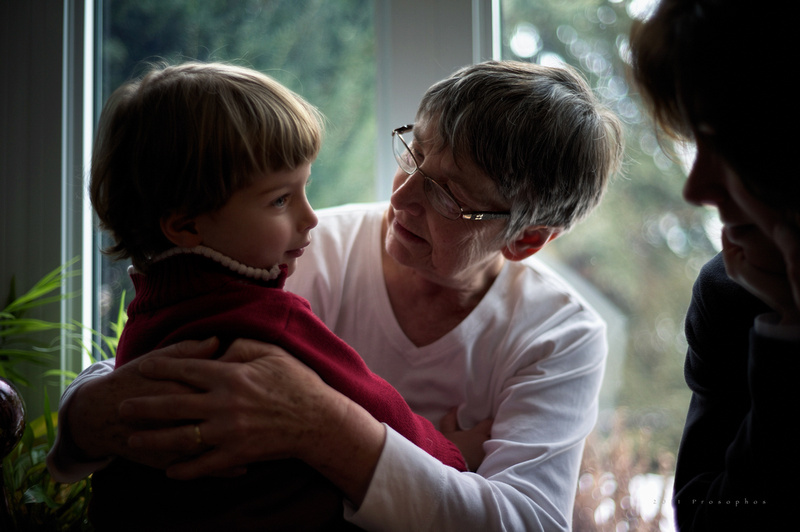
He may be young, but he is definitely older.
Look at him, as he was a year ago.
_
“Time keeps on slipping, slipping… into the future.”
_
(please click on the image to view)
↑Leica M9 and Voigtländer Nokton 40mm @ f/1.4.

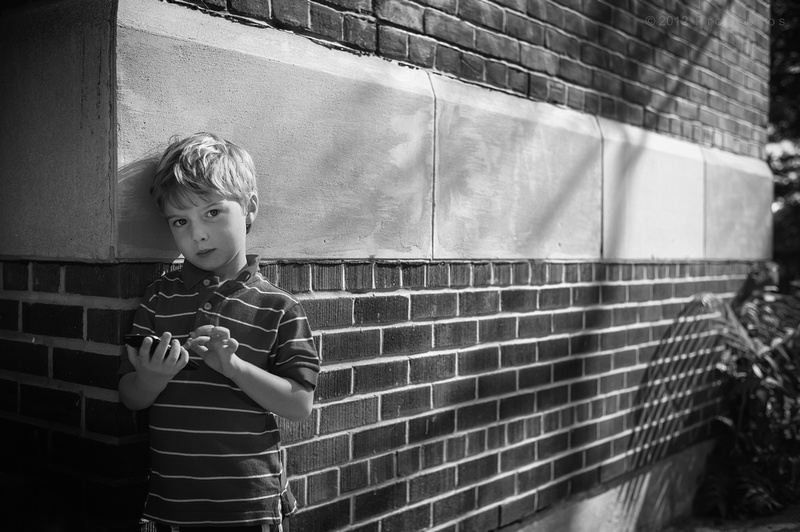
He may be young, but he is definitely older.
Look at him, as he was a year ago.
_
“Time keeps on slipping, slipping… into the future.”
_
(please click on the image to view)
↑Leica M9 and Voigtländer Nokton 40mm @ f/1.4.
When they’re not here.
(please click on the image to view)

↑Leica M3, Kodak Tri-X 400, and Voigtländer Nokton 40mm @ f/1.4.
“He wanted to recover something, some idea of himself perhaps, that had gone… His life had been confused and disordered since then, but if he could once return to a certain starting place and go over it all slowly, he could find out what that thing was.”
— F. Scott Fitzgerald, The Great Gatsby.
(please click on the image to view)

↑Leica M3, Kodak Tri-X 400, and Voigtländer Nokton 40mm @ f/1.4.
A few years ago, I realized I had never captured her on film.
It was important to me for some reason.
So I started shooting film again.
_
(please click on the images to view)

↑Leica M3, Fuji X-tra 400, and Voigtländer Nokton 40mm @ f/1.4.
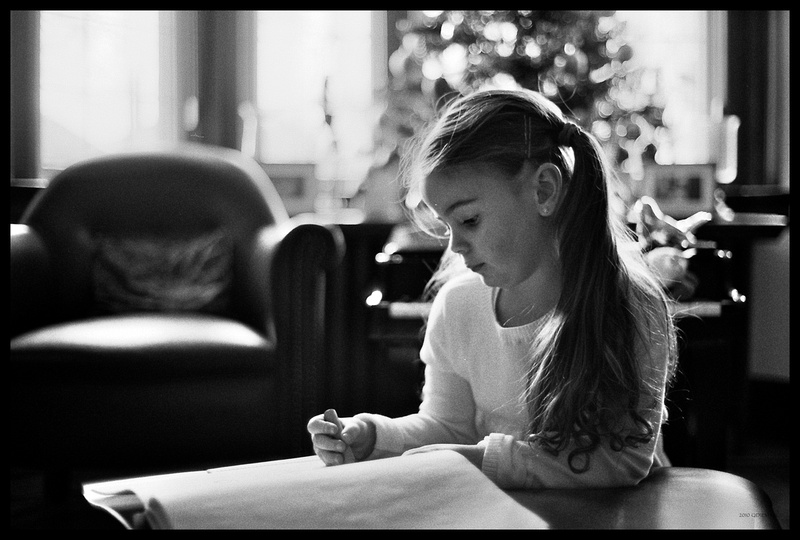
↑Leica MP, Ilford HP5 Plus 400, and Voigtländer Nokton 40mm @ f/1.4.
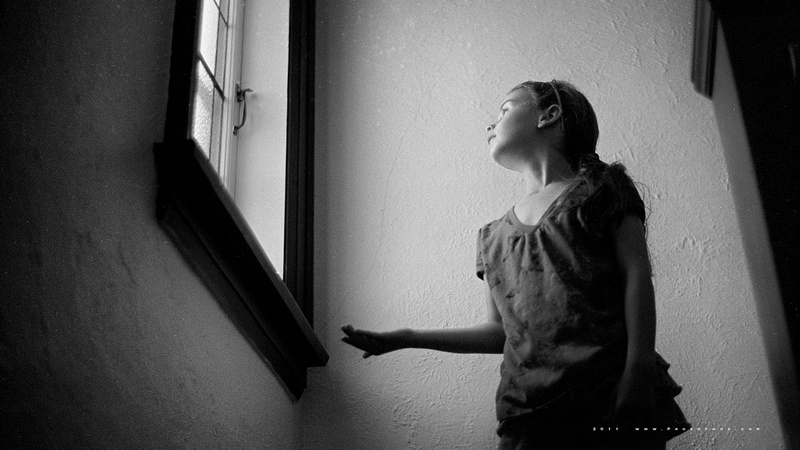
↑ Leica M2, Ilford HP5 Plus 400, and Voigtländer Nokton 40mm @ f/1.4.
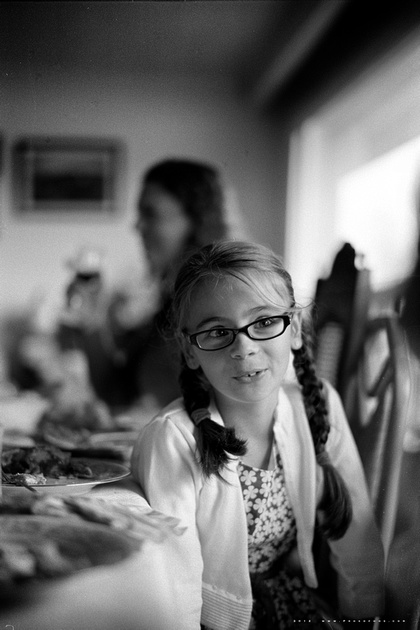
↑Leica M2, Kodak Tri-X 400, and Leica 50mm Summilux ASPH @ f/1.4.
_
I look at these images now, and follow the path of light:
originating from the late afternoon sun,
filtering through the window,
touching her face before reflecting off,
traversing the distance between us,
bending in the glass elements of a lens,
and finally etching her image onto an organic emulsion.
_
The film, like the viewer, is forever altered.
And it all happens in a fraction of a second — just like growing up.
—Peter.
Michael Snow’s sculptures, inside the Eaton Centre, Toronto.
(please click on the image to view)

↑Leica M2, Kodak Tri-X 400, and Voigtländer Nokton 40mm @ f/1.4
I thought this would be most appropriate for a Monday morning post, but it was pushed aside with all of the announcements yesterday.
Tuesday morning will do nicely however :).
As an aside, I really like the little iPhone Pocket Light Meter app – I’ve been using it for just over a year with my M2 for situations like this, where the lighting is tricky, and it’s done very well.
(please click on the image to view)

↑Leica M2, Kodak Tri-X 400, and Voigtländer Nokton 40mm @ f/1.4
(please click on the image to view)

↑Leica M9 and Voigtländer Nokton 40mm @ f/1.4.
The coalescing of moving figures into a foreground-midground-background composition, the interaction with the observer… the split-second alignment of it all before it vanishes like a dream.
I live — photographically speaking — for moments like this.
(please click on the image to view)
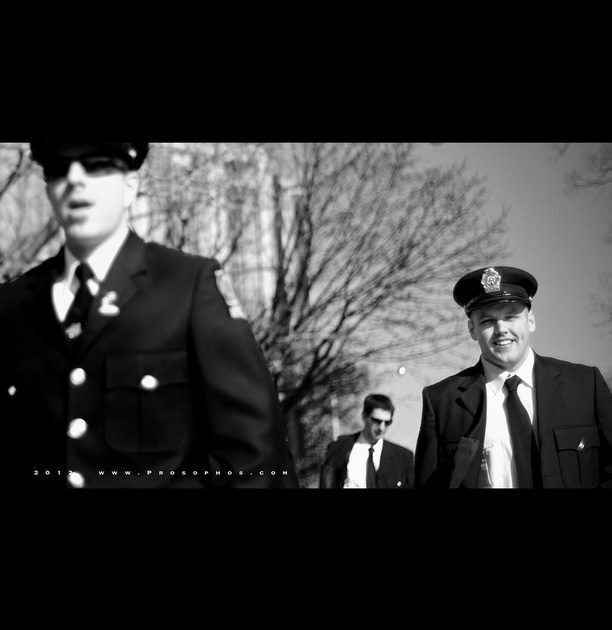
↑Leica M9 and Voigtländer Nokton 40mm @ f/1.4.
I spotted these two when I met Dominic for our 1-on-1 Photography Teaching Session, and they generously allowed us to intrude upon their intimate morning meal.
Winter is thawing, spring is arriving, and the light is finally returning… and you can see it on everybody’s face.
(please click on the image to view)
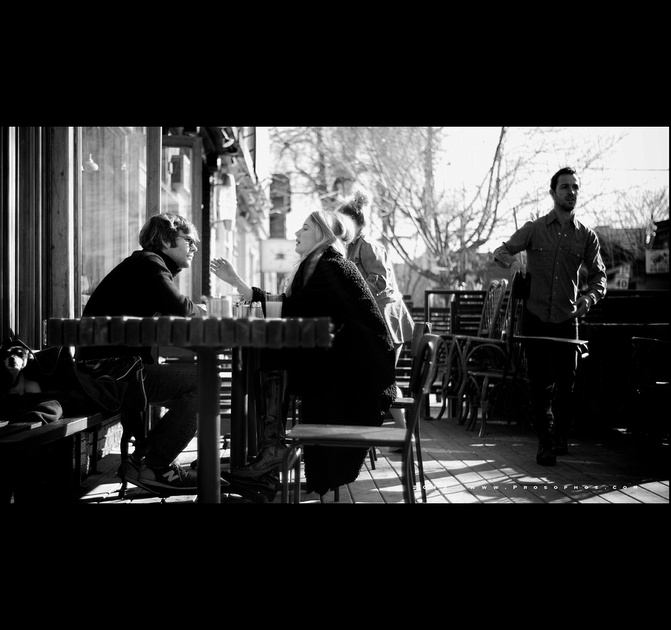
↑Leica M9 and Voigtländer Nokton 40mm @ f/1.4.

I received this via email this week and — because this is a question I’m often asked — I thought I would feature this as a Q&A post:
_
I’ve become a regular follower of your blog and I really love it! Respect to the fact that you manage to post a good and interesting photo each day. I try do to the same and sometimes it is hard to do so.
I’ve a question however. I work with a M8 and M9 and do weddings and other documentary work, sometimes portraits, lots of editiorial work. Since I left my 5D2 at home, life began to be fun again (I mean photographically). However, sometimes I miss my 12.500 iso and 50/1.2 lens (which wasn’t sharp at all wide open btw).
I’m thinking of buying a low-light lens to use in case the light is really bad. My fastest lenses are the 35 and 50 summicron and I’m thinking about the 35/1.2 and the 40/1.4. The 50 is too quirky I think.
The difference between the two is ‘only’ a half stop, but the difference between 1/45th and 1/60th can be crucial. On the other hand, I won’t take the 35 as a daily to go lens in my bag, while the 40 will fit in very easily. The price difference is also quit big, but not that big a deal. It’s still cheap in Leica-terms.
It wouldn’t be a problem to take the 35 to important shoots as an ‘in-case’ lense, but would that half stop make the difference?Could you give me any advice in which of these two to choose? I hope I don’t bother you too much with this these questions.
kind regards,
Joeri
_
Hi Joeri,
Thanks for the nice note!
The Voigtländer 35/1.2 (either Version 1 or 2) is the technically better lens with a desirable mix of both modern sharpness and classic rendering. It does not focus shift, so it won’t frustrate your focusing attempts. And it’s maximum f/1.2 aperture, as compared to other 35 lenses with a maximum aperture of f/1.4, does make a difference — not so much with respect to the extra light collected, but more in the ability to isolate subjects and create a nice “3D” effect (see an example image here). If you don’t mind the size, it’s an all-around “better” lens than the Nokton 40/1.4.
The Nokton 40/1.4 on the other hand, is just so darn small and versatile, behaving in many ways like both a 35 and a 50 lens, but it’s the technically “inferior” lens: not as sharp wide open, flares more, has been known to focus shift.
In the end, both lenses are capable of producing great images, so it really depends on what you value most – small size and versatility (40/1.4), or technical excellence (35/1.2).
It seems from your question that you already know the pros and cons of each lens, so it’s really up to personal preference.
Hope that helps, and thanks again for the nice note!
[If you are looking for more detailed information on both these lenses, please see my previous user reports: Voigtländer Nokton 40mm f/1.4 and Voigtländer Nokton 35mm f/1.2]
—Peter.
Maybe.
It turns out, their conversation was not about love — they were discussing the financial markets.
Still, I’m going to let the body language speak for itself.
(please click on both images to view)
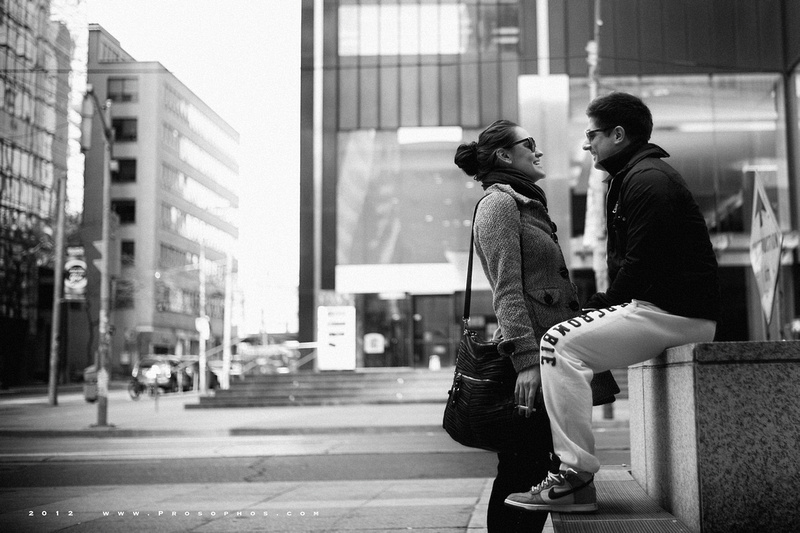

↑Leica M9 and Voigtländer Nokton 40mm @ f/1.4.
This is a grab shot, taken yesterday during one of my Practical Photography – Teaching sessions.
At the time, I was discussing the importance of Strong Diagonals in images, as well as the importance of pre-focusing to nail shots like these at wide Apertures — in this case f/1.4.
Fortunately, this woman walked by, allowing me to illustrate the above points, as well as allowing me to demonstrate the importance of capturing an ambulating figure in mid-step.
And yes, this image was taken with the lovely little Voigtländer 40mm Nokton 40/1.4 — an extremely underrated lens.
(please click on the image to view)

↑Leica M9 and Voigtländer Nokton 40mm @ f/1.4.
(please click on the image to view)
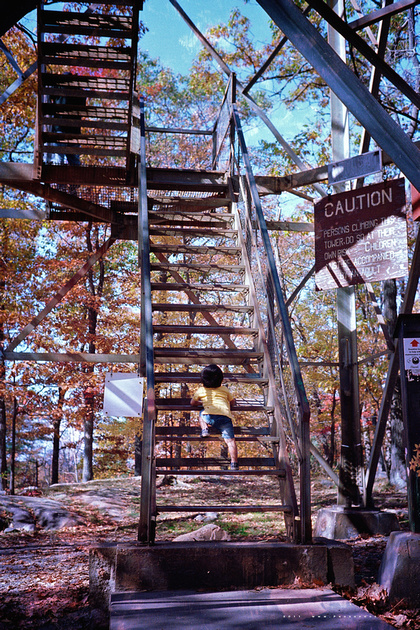
↑Leica M2 and Voigtländer Nokton 40mm @ f/1.4.
This arrived via email this morning and I was about to respond as I usually do, but then realized, I often get this question, so why not turn my response into a post that will hopefully be of help to other readers?
Hi. I read your review for the The Voigtländer Nokton 40mm f/1.4. and found it very helpful. I have this lens with a Leica M9 and don’t seem to be getting the results you pictured. Did you alter your M9 shots in Lightroom or do you have the lens detection set a specific way in the M9 for the The Voigtländer Nokton 40mm f/1.4? My shots tend to come out overexposed when I use it open to 1.4. Any suggestions would be appreciated. Thanks and keep up the good work. Your photos and reviews are great.
– Adam.
First of all, thank you Adam for your very kind words.
Now, regarding your questions… I post-process all of my files in Apple’s Aperture and then do my final colour tweaking in Nikon’s Capture NX2. On the M9, I have lens detection set to “auto”, but I do not code any of my uncoded lenses, so for lenses like the Nokton 40/1.4 the camera isn’t recognizing anything and is therefore NOT making any adjustments. For focal lengths longer than 35mm, there really is no need for coding anyway, unless you’re hoping to correct for vignetting or are interested in generating focal length EXIF data.
Finally, I always shoot in manual mode (controlling for aperture and shutter speed) and often manually set the ISO. I never rely on the camera’s metering. I’ve done this with ALL of my cameras, including Nikon, Canon, Sigma, etc., because no camera – not matter how sophisticated – truly understands what your “mind’s eye” is seeing when you attempt to create an image, and it’s better that you take full control of all the variables.
I hope this helps.
Thanks again for writing Adam, and Happy New Year,
—Peter.
And carry a big stick.
(please click on the image to view)

↑Leica M2 and Voigtländer Nokton 40mm @ f/1.4.
Well, it’s a search anyway.
(please click on the image to view)

↑Leica M2 and Voigtländer Nokton 40mm @ f/1.4.
Ever since I wrote a piece about the Voigtländer Nokton 40mm f/1.4 back in July, it’s become one of my more popular posts.
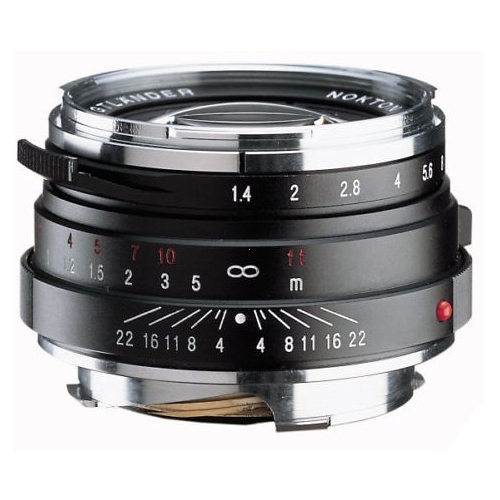
It’s no wonder, since this little gem of a lens has always been underrated but is increasingly gaining its share of admirers as people explore the various mirrorless camera platforms (as well as classic rangefinder photography, of course).
One of those admirers of the little Nokton 40 is my friend Jean Bardaji, the distinguished owner of Leica Boutique in Montreal, Canada. Jean is very knowledgeable and passionate about photography and has long appreciated the little Nokton Classic MC 40/1.4.
So, when Jean recently decided to link to my write-up on the Leica Boutique Voigtländer page of his website (click into Voigtlander Nokton Classic MC F1.4/40mm), I was quite honoured.
Jean has actually sold me two copies of this lens, as I have always found his prices on Voigtländer (and Zeiss) lenses to be the most competitive in the market. More than that, his service has always been exceptional.
So I wish to thank Jean, for all of his help and would not hesitate to recommend the services of Leica Boutique to anyone looking for this lens (or any other).
– Peter | Prosophos.
Communing with nature, communing with each other in Algonquin Park.
(please click on the image to view)
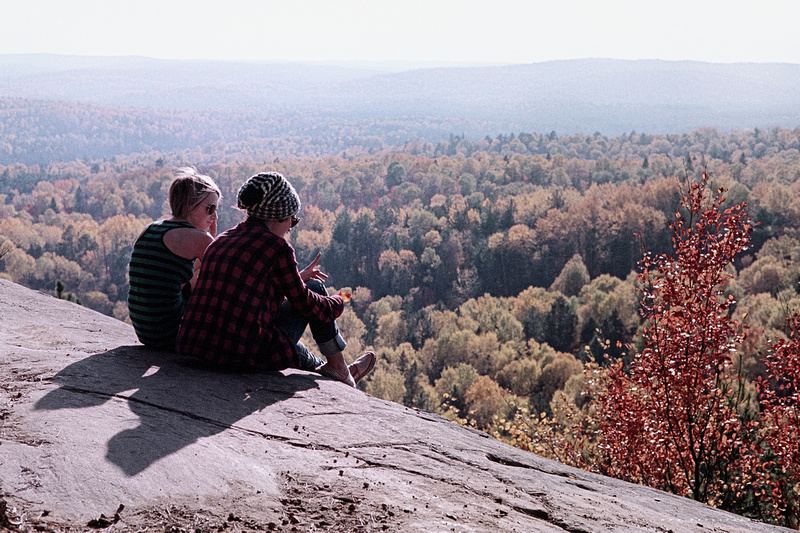
↑Leica M2 and Voigtländer Nokton 40/1.4.
 Prosophos