C and H.

Favourite, Film, Inspiration, Kodak Tri-X 400, Life's Little Moments, Portrait, Scanner - Plustek 120, Teaching point, Voigtländer 40mm f/1.4 Nokton

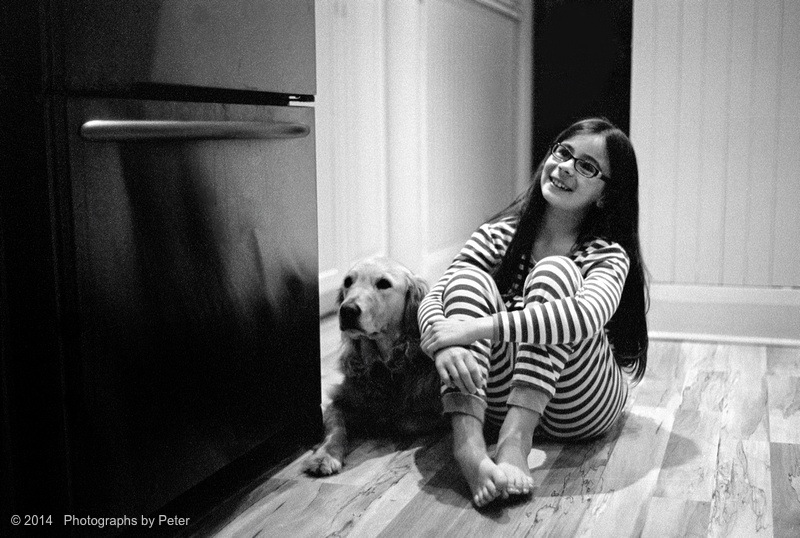
(About a girl and her dog)

This was taken at bedtime, under very dim light.  The film was therefore pushed quite a bit during post processing to lighten things (I should have instead “pushed” it during development).

I’m actually amazed that I ended up with an image that I like, given my previous attempts to capture such scenes in my kitchen without the aid of daylight have never produced satisfactory results, with digital cameras (M9, M8, D3S, D3, D700, etc.) anyway.  Although film doesn’t make up for poor lighting, it certainly is more forgiving.

—Peter.

C and H

↑Leica M3, Voigtländer Nokton 40mm @ f/1.4, and Kodak Tri-X 400.

Work Station.

Inspiration, Leica 50mm Summilux ASPH f/1.4, Print, Teaching point

1/25 sec, ISO 640, f/1.4.

Despite this being a hand-held image at a reasonably slow shutter speed, the in-focus areas readily display the “crisp” rendering we get from CCD sensors.

The colours are remarkable too, considering this was photographed under incandescent light.

(DNG file converted to JPG with no post-processing)

—Peter.

Work Station

↑Leica M9 and Leica 50mm Summilux ASPH @ f/1.4.

The Ship of Theseus, and my Leica M3.

Film, Inspiration, Leica M3, Life's Little Moments, Q&A, Teaching point

Theseus' Ship

In Greek mythology, Theseus was the the hero who slayed the Minotaur in the Labyrinth of Knossos.

He then sailed home, on a ship that — having long been in service — was in obvious need of repair.  Wooden planks were therefore removed and replaced.

Theseus’ Paradox arises from the following thought experiment:  suppose, over time, more and more aging planks were removed and then replaced with new pieces of wood until — eventually — no original plank remained.

Would the ship still be the same ship?

Most people would still consider it Theseus‘ ship, but… Would it still be the same ship that served him so well?

There are several potential answers to this question, and one further wrinkle that involves taking all of the old discarded planks and re-fashioning another ship, thus creating two Theseus ships (the one with all of the replaced parts, and a new-old one with the old parts).  It’s very mind-bending.

So…what’s this have to do with photography?

Nothing.  But…

I recently purchased a 1963 Leica M3 in completely original condition, and sent it in for servicing.  Even though it was working well enough in most situations, several of its optical and mechanical parts were in poor condition and needed to be replaced.  The exterior covering was replaced too.

I’m currently waiting for its return.

While I’m waiting, the question I keep asking myself, after all of these changes is:

Is this the same M3 that allowed me take this image?

Or has my ship sailed?

—Peter.

Top 5 Images that I liked – but you didn’t :)

Favourite, Inspiration, Q&A, Teaching point

When you create things (like photographs) you become emotionally attached to them.  Consequently, you are often not in the best position to judge whether your creations are any good.

Having said that, I’m normally pretty accurate at predicting which of my images will be favourably received.

However, I still get fooled.  Sometimes, what I thought was good, you think is, well…

Here are 5 images I posted over the last few years that received minimal or no comments.  They were figuratively sucked into a vacuum and left for dead.

I realize that perhaps you may have been away when I first posted them.  Or, perhaps you were too pressed for time, and couldn’t leave a friendly comment.

But I am instead going to assume that you disliked these images.

How could you? 🙂

Top 5 Images that I liked — but you didn’t.

1. Bajan Tapestry.

This was photographed last month, so I admit I may be biased by the recency of my creation.  Yet, I believe this may be one of the best images I’ve ever created.

bajan-tapestry

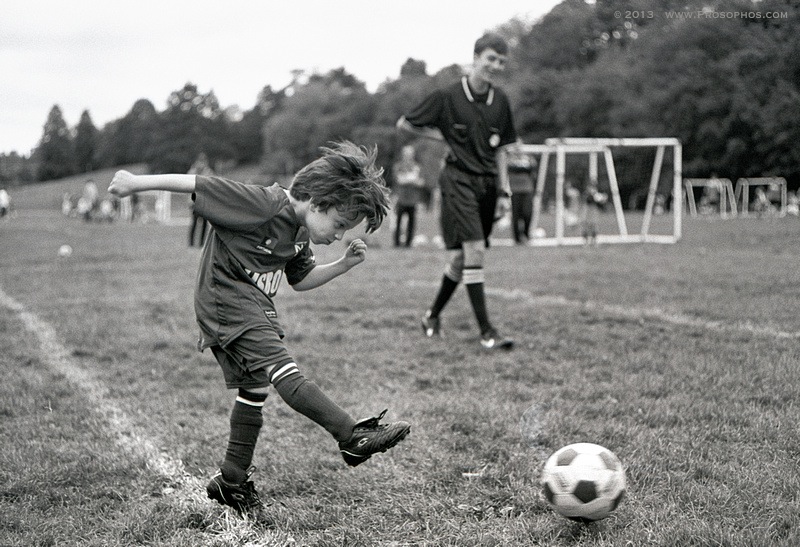
2. The Kick.

The proverbial decisive moment.  Caught on film, no less.  Whimsical, and perfectly composed with a dash of symmetry.  Tell me otherwise.

The Kick (film)

3. The Kiss.

It’s all about Love.  You would have to be heartless to ignore this one.  And you did.

The Kiss


4. The Window, Part 2.

Reflections, connections, and longing gazes.  Life as a dream.  Works for me.

The window, Part 2.

5. Portrait of an enigmatic young man.

So enigmatic, it confused you.  I guess.

portrait-of-an-enigmatic-young-man

There are other examples, but I won’t berate you any more.

Thanks,

—Peter.

Plustek 120 and Silverfast: Mark’s settings for dust removal.

Film, Guest Post, Q&A, Scanner - Plustek 120, Teaching point

I recently reported on the Plustek 120 scanner for scanning B&W film.

After reading about my positive experience with the Plustek 120, my friend Mark purchased one.  Mark, being a Master in film processing, develops both B&W and colour film.  While using the colour film dust removal feature of the Silverfast sofware, he initially found things weren’t working.   However, a few quick changes in Silverfast solved the problem.

Mark writes:

“I appear to have a fix for the problem… It seems that there is a setting under [Silverfast’s] “Preferences > Special > Maximum Offset for iSRD alignment” that is “Maxed Out” by default. I have decreased my value to 50 (from a default of 70) and decreased the detection threshold to 2 (in the iSRD Dialogue) and the resulting correction is PERFECT, with no alterations in the underlying grain structure of the resulting scan…I hereby declare this to be a FINE scanner

Thank you for this information Mark.

—Peter.

Keeping it real.

Inspiration, Q&A, Teaching point

I thought it might be a good time to link to an old post of mine, from over two years ago.

What prompted this?

Looking at some images from a popular website, where a guest photographer was sharing his experience with one of the latest cameras.  The images were beautiful, but the processing was over the top.  Too plastic.

When processing, my friends, you have to keep it real.

–Peter.

1963 M3 – Test Shot.

Film, Inspiration, Kodak Tri-X 400, Leica M3, Q&A, Scanner - Plustek 120, Teaching point

Completing my move back into shooting film is my acquisition of a Leica M3.

I’m revisiting an old friend, in that I’ve owned two of these previously (a couple of examples of my previous output with the M3 can be seen here and here) .

This one is from 1963, and it still has the “L” seal intact — which means it has never been opened to be serviced since leaving the factory in 1963.

How well does this 50+ year old camera fare?

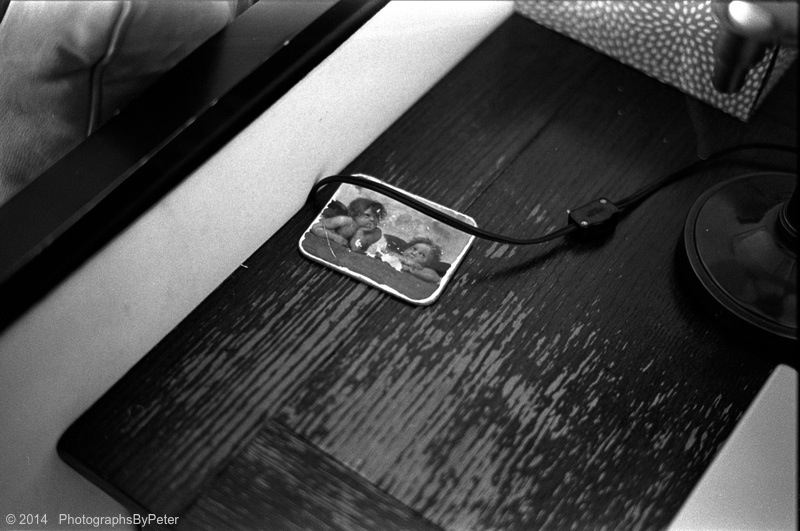
Here is a test shot from today (focus is on the angels):

1963 M3 Test Shot

↑Leica M3, Leica 50mm Summilux ASPH @ f/1.4, and Kodak Tri-X 400.

The focus is spot-on, and most of the shutter speeds are working perfectly.

Now, do I get it serviced to get the last ounce of performance out of it, or do I leave it untouched (with the L seal intact)?

Hmmm…

—Peter.

For some reason…

Inspiration, Q&A, Teaching point

For some reason, my open letter to Leica has been getting a lot of traffic today.

Who should sign it?

Anyone who wants an updated CCD sensor in a future Leica M model.  Anyone who places emphasis on rangefinder simplicity and also values high image quality at low-to-moderate ISO values.

Yes, Leica, incorporate the ergonomic improvements of the M240, but help differentiate the brand from the mediocre CMOS landscape by bringing back an updated CCD sensor.

Please bring back a superior, simple, and reliable still-photography camera worthy of the Leica brand.

(If you’re reading this and are in agreement, please click on the Dear Leica dot below and sign your name in the comments section.)

Thanks,

—Peter.

Prosophos Open Letter to Leica

___

Related posts:

The Plustek 120 has arrived!

Film, iPhone, Q&A, Scanner - Plustek 120, Teaching point

That was fast delivery!… ordered yesterday, here today.

(Thank you Canada Post)

Plustek 120-1

I still have the plastic protective sheet on the front 🙂

The footprint is certainly much smaller than the Epson V700.  Excellent.

For comparison purposes, here is the Plustek 120 from above, with a standard 3-hole punch and my recent Polaroid photo sitting on top of it:

Plustek 120-2

Now, the question is:

Will it perform as well as the V700?

—Peter.

Smile.

Film, Inspiration, Kodak Tri-X 400, Mamiya RZ 110mm F/2.8, Mamiya RZ67 Professional Pro II, Photo Shoot, Portrait, Q&A, Teaching point

Here is my first image from the first roll of Kodak Tri-X 120 put through the Mamiya RZ67.

I self-processed the film at home like this, and self-scanned on an Epson V700.

Looking at the tonality of this image, I want to weep tears of joy.

Nothing I’ve experienced with digital comes close.

People, all these years we have been duped.

Instead of constantly upgrading e-cameras,

We could have had this all along.

And now film is dying.

Shame on us.

—Peter.

Smile

↑Mamiya RZ67, Mamiya 110mm @ f/2.8, and Kodak Tri-X 400.

Test Shot 1 (answer).

Film, Fujifilm FP-3000B, Inspiration, Mamiya RZ 110mm F/2.8, Mamiya RZ67 Professional Pro II, Q&A, Teaching point

The answer to my Guess Which Gear question is:

Mamiya RZ67 Professional Pro II and Mamiya RZ 110mm F/2.8, using Fujifilm FP-3000B (Poloraid-type) B&W film:

Mamiya RZ67 with Polaroid Back

As the name implies, the Mamiya RZ67 is a 6 x 7 film format system.  Its film “sensor” size can be appreciated by looking at this comparison:

PhotographsByPeter Sensor Size Mamiya vs 35mm

This is a modular system and the Polaroid film back provides less “sensor” size (and less image quality) than 120 film, but I purchased it along with the 120 film back so that I could get instant results and feedback.  As you can see from my first Test Image, I messed up on my initial settings  (I had the ISO on the camera set to 800, while the Fuji FP-3000B is pegged at ISO 3000) so it was a good thing the damage was limited to only one image vs. an entire roll of 120 Kodak Tri-X.

[Incidentally, Fuji has recently announced that it is discontinuing this film 😦 . There’s an online petition asking Fuji to bring back the FP-3000B and so far there are over 10,000 signatures.  You can still find it in stock, but prices have jumped quite a bit.  If you’re interested in using it, buy it while you can — and sign the petition!]

Knowing my love of small Leica rangefinders, why did I even look at this behemoth of a camera?   One word:  PORTRAITURE.

If you look at the sample images online, you will be amazed.  Hopefully, I will produce something worthy of this camera.  The gear, for me, will be relegated to formal shooting, which means I will seldom use it.  However, given how easily and inexpensively one can obtain such capable film-based medium format systems, the decision was easy.

As a side bonus of first using the Polaroid back on the Mamiya, my kids were amazed at seeing “the pictures come out of the camera, like in the old cartoons!“.  It’s great to see that in this age of digital wizardry, something as old as this can fire up their imagination.

Now… off to dig up my old film developing equipment and brush up on…

My Method for Processing B&W film

Thanks for your interest.

—Peter.

Leica, please bring back an updated CCD sensor.

Inspiration, Q&A, Teaching point

I’m about to go on holiday.

While I’m gone, please help keep the momentum going, and consider signing my open letter to Leica.

Who should sign this letter?

Anyone who wants an updated CCD sensor in a future Leica M model.  Anyone who places emphasis on rangefinder simplicity and also values high image quality at low-to-moderate ISO values.

Yes, Leica, incorporate the ergonomic improvements of the M240, but help differentiate the brand from the CMOS-muddy-file-with-video/EVF-me-too landscape by bringing back an updated CCD sensor.

Please bring back a superior, simple, and reliable still-photography camera worthy of the Leica brand.

—Peter.

(and thank you to the over 150 individuals who have already signed)

Prosophos Open Letter to Leica

___

Related posts:

I came close to trashing all of my Leica gear this week.

Inspiration, Q&A, Teaching point

Prosophos - Leica Trashed

In frustration, I came close to selling all of my Leica equipment a few days ago.

After an ice storm that left this city without power (and some of our fellow citizens still have no heat!), the whole family became ill (and we still are…).

What does this have to do with Leica?

Well, the one day where everything was “normal”, thankfully, was Christmas Day — our power had been restored and we hadn’t yet gotten sick.  Naturally, I was looking forward to photographing.

After shooting some frames and reviewing the images, I realized the focus was off!  A few key moments were lost (or at least, rendered blurry).  I took a few test shots and realized my M9 was back-focusing by about an inch.  Enough to mess things up when photographing at f/1.4.

This is one of the charms of rangefinder ownership.  The rangefinder focusing mechanism, over time, can spontaneously (or with little provocation) deviate from spec.

No problem, I thought.  That’s why I have a back-up M9(P).

So I started photographing with it.  But I realized why this camera has been relegated to back-up status.  Its buffer chokes up after a few frames and it takes several seconds before I can start photographing again.  The outcome:  I missed a few more key moments.

A specific charm of Leica ownership is that one M9 can behave in a much different way from another — identical — M9 (with the same SD card and the same firmware!).  Leica still hasn’t mastered the whole electronics thing… which may be perceived by some as somewhat of a shortcoming in the digital age.

Back to the story…

Maybe it was because I had spent the weekend and some of the week re-enacting scenes from Pioneer Village, or maybe it was because I was getting sick, but I had had enough!

(I know, I know, these are “First World” problems, and — believe me — I know how fortunate I am.  I’m just venting).

I started packing away the M9s.

But what other camera(s) would I now use?

Out of everything currently out there, the only nonLeica camera that will accept my M lenses and give me a full frame sensor is the Sony A7(R).  And its CMOS sensor comes the closest to achieving my coveted M9 CCD sensor rendering (the Sony colour signature is another story).  But… Leica lenses (especially wide angle ones) don’t necessarily shine on other manufacturers’ platforms.  So my pricey Leica Summilux lenses would be worth little on the Sony.

No problem, I thought once more.  I’ll just sell my lenses too and start from scratch.

But, but… I used the Sony RX1R earlier this year and the computer-as-camera user interface left me cold.  That, and having to rely on the EVF:  through it, it didn’t feel like I was watching the world… it felt like I was watching TV.

So I turned my attention to DSLR cameras.

The only contender for me would be the Nikon Df.  Small for a DSLR, plenty of external controls for manual shooting, etc.  And I was close to purchasing it, despite the downgrade in base ISO image quality it would represent (high ISO functionality is another story).

But I prefer to manually focus.  And I’d been-there-done-that with the D3 and D3s, both coupled to a Noct Nikkor 58/1.2 AIS lens.  When photographing action wide open, the hit rate with this system is low (even when using the “green dot” focus aid).

Plus, I’ve grown accustomed to the “see the world outside of the frame” view of the rangefinder window.  With it, I can see elements outside of what the lens sees, and I can therefore better anticipate how a given moment may unfold.

Finally — believe it or not — I was once more tempted to switch to a new Leica M240.  Oh, but the image quality would be… (well, you know).  And don’t forget those electronic gremlins, which continue to plague Leica, even with their latest bodies…

In the end, I decided to keep my current gear.  Yes, I know… I’ve become predictable.

Which places my photography situation in a precarious position, with respect to any future “upgrade” path.

Hopefully, by the time my current M9 cameras die (or their sensors spontaneously crack — but that’s another story!), there will be other viable options out there for me).

I’m holding out hope for Sony to sort out its user interface, and I’m also closely watching for advances in EVF technology.

Or maybe Leica will finally produce a non-beta version of a camera.

Yes, it’s a love-hate thing.

—Peter.