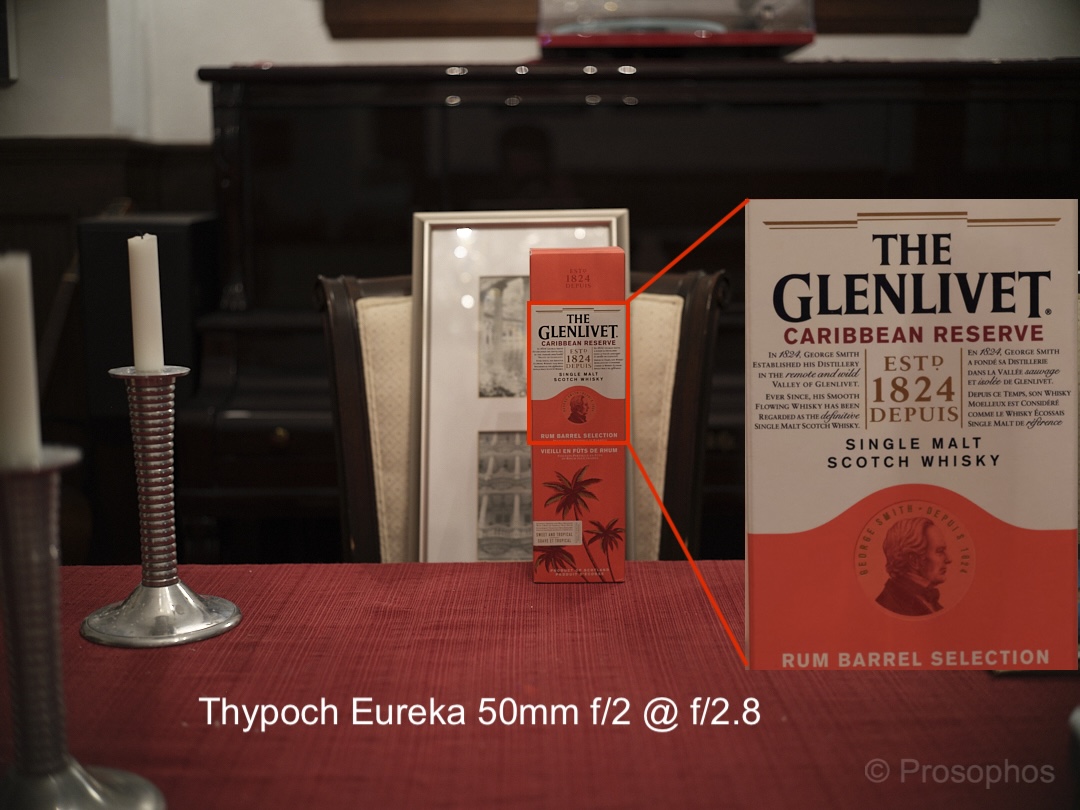
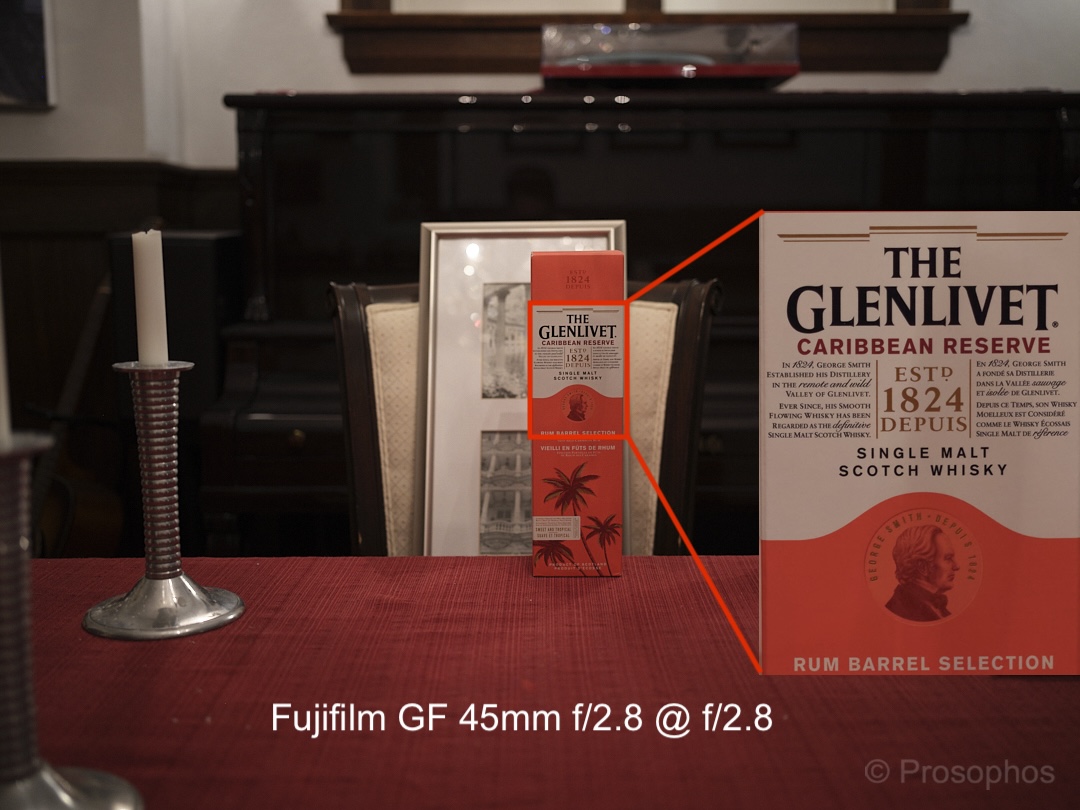
We’re testing for central sharpness, with both lenses at f/2.8, on a Fujifilm GFX100SII.
For the GF 45mm, this represents wide open performance. The Thypoch 50mm is slightly stopped down, which gives it an advantage.
Looking at the images, the GF 45mm wins. However, the result is much closer than I expected, even though I already knew the Thypoch performance is impressive.
With the Fuji lens, you also get autofocus, weather sealing, and less vignetting. With the Thypoch, you get a maximum f/2 aperture (not shown here), and a much, much smaller and lighter lens.
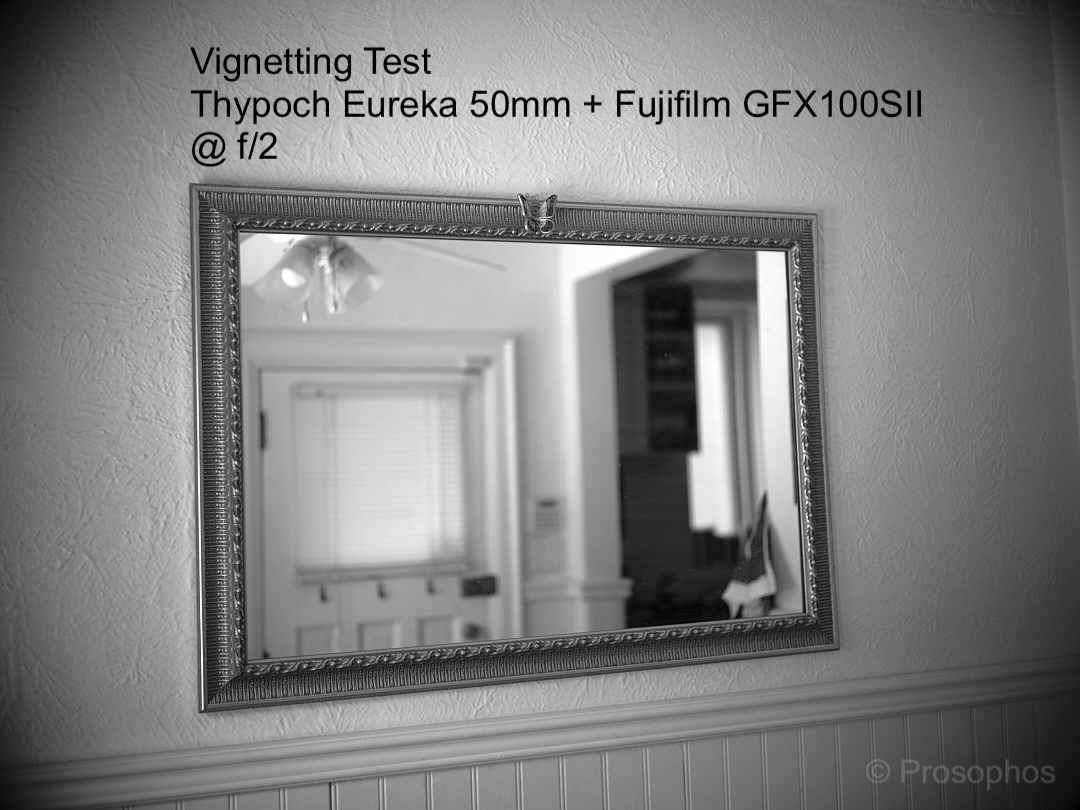
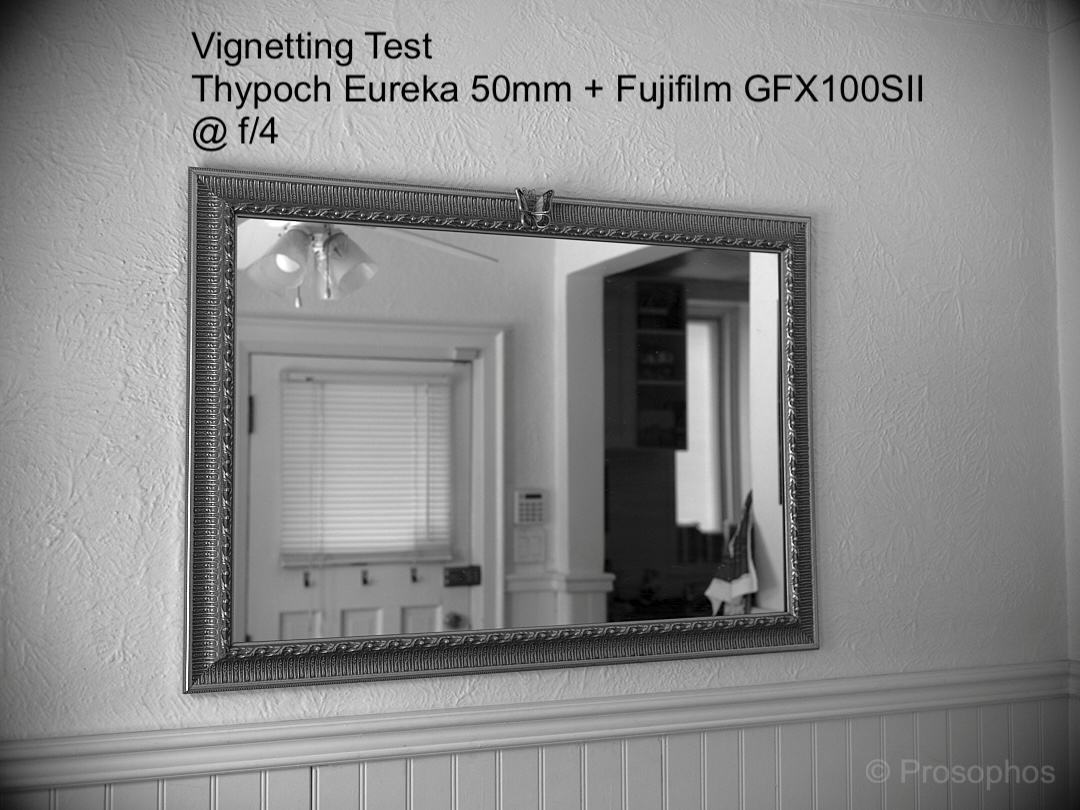
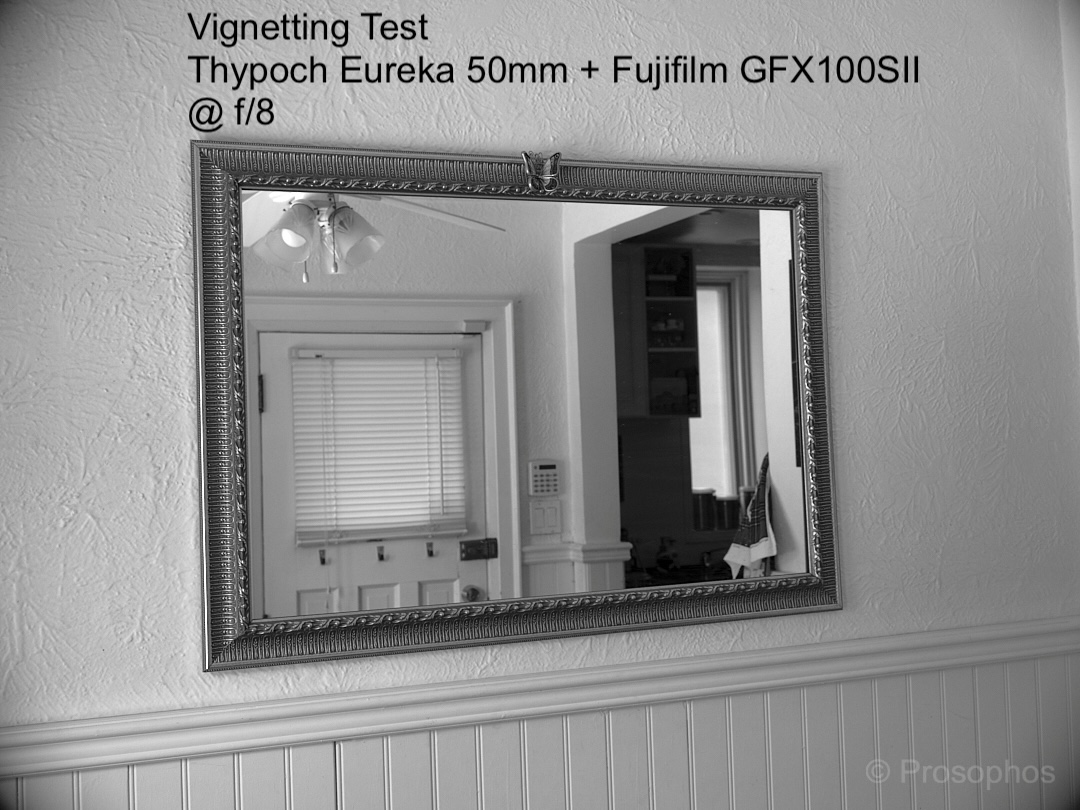
This sequence was shot with the Thypoch Eureka 50mm f/2 lens on the Fujifilm GFX100SII, using the camera’s native (4:3) aspect ratio (i.e., whole sensor, uncropped).
Although the vignetting improves as we close down, the dark corners do not fully disappear.
I don’t find it to be too troublesome for most photos, as a slight crop (or even correcting the horizon), excludes much of the troublesome bits from the final image. The rest of the vignetting can be largely corrected during post processing.
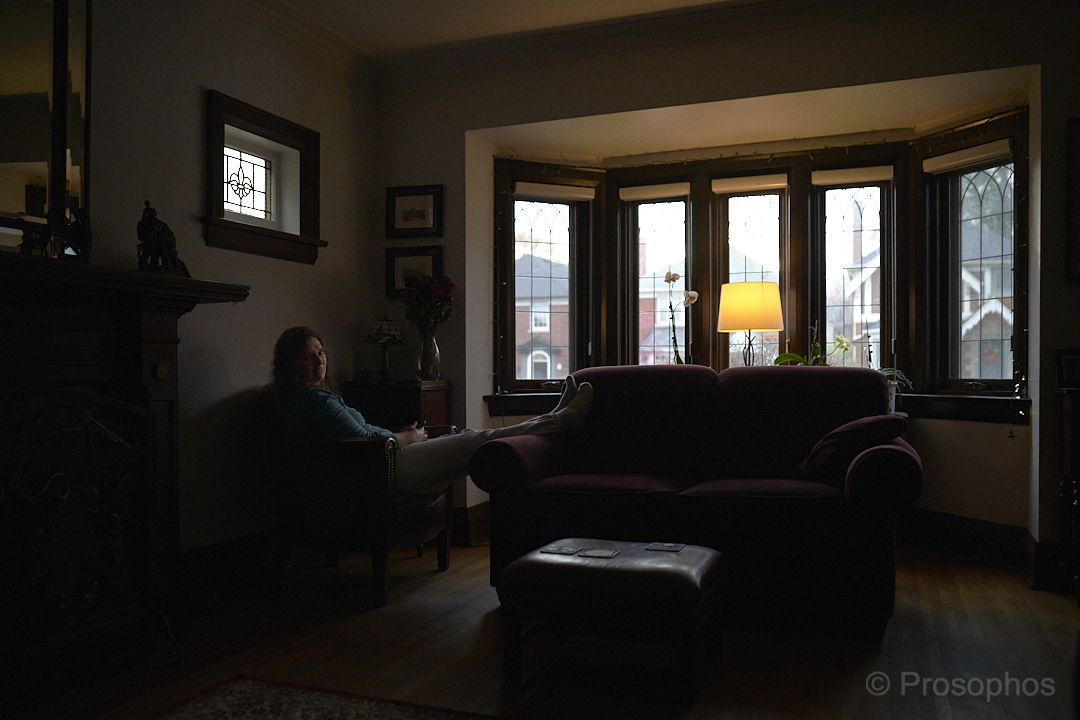
In dimly lit scenes, I find the that the vignetting/dark corners enhance the final image.
Considering how small the 50mm Eureka is, it is incredible how well it covers the GFX100SII medium format sensor. I’m also impressed that its sharpness is maintained throughout the frame and there is only the slightest dip in the edges.
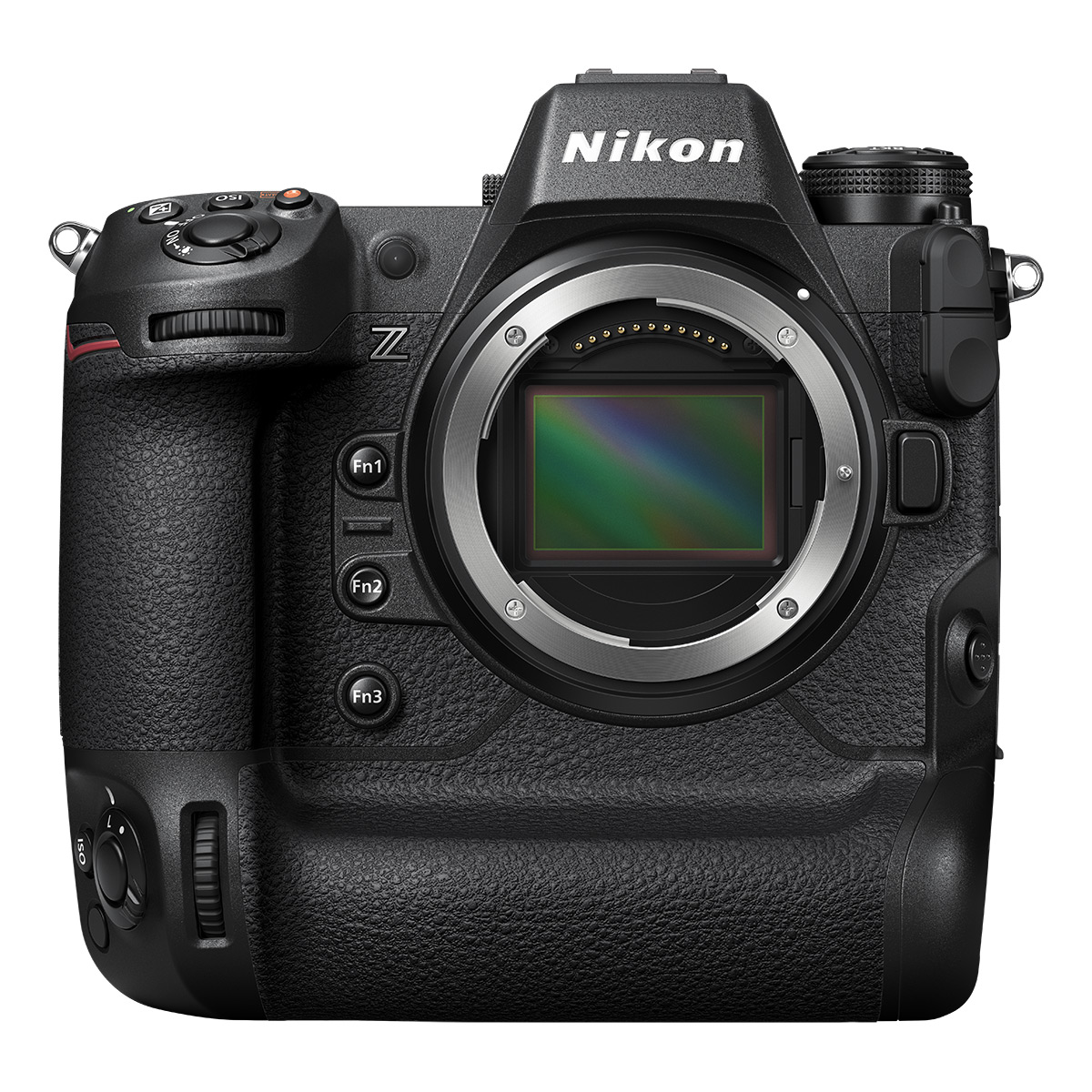
The Nikon Z9 is one of those rare cameras that I bought right at launch, so I’ve been using it for years now. Today Nikon released yet another firmware update and, needless to say, I am really excited about it.
Every year it seems that there is some major upgrade to the Z9’s already mature firmware, giving us essentially a brand new camera with respect to its functionality. I hadn’t expected another update so far along the product cycle, but voila! Nikon has given us an early Christmas present.
(For those keeping score, the only other two cameras I’ve ever, ahem, “clicked with” and kept for years were the Nikon D3 and the Leica M9.)
Overall photo.
You might like this image, or you might not. But if you do like it, it may be because of the composition.
–
Figure 1: Leading lines.
Here we see all the lines that converge and draw your eye to the subject. Specifically, the line of fountains ends with the woman and the curve of the outside arch and city hall “pod” also lead to her.
–
Figure 2: Harmony of extending lines.
The cardboard cutout and shadow on the taller city hall building blend to become a sweeping curve. Similarly, the arch extends to the woman’s back leg. Both converge to form an “X”.
–
Figure 3: Repeating triangles.
Within the main subject we see repeating triangles that are formed by her arm and cutout positioning, and the timing of her stride.
* * *
Hope you found that useful. Of course I didn’t plan any of it when taking the photo, but after seeing it I was trying to understand why I liked it. Maybe you have additional thoughts about what works… or maybe you just don’t like the image at all 🙂
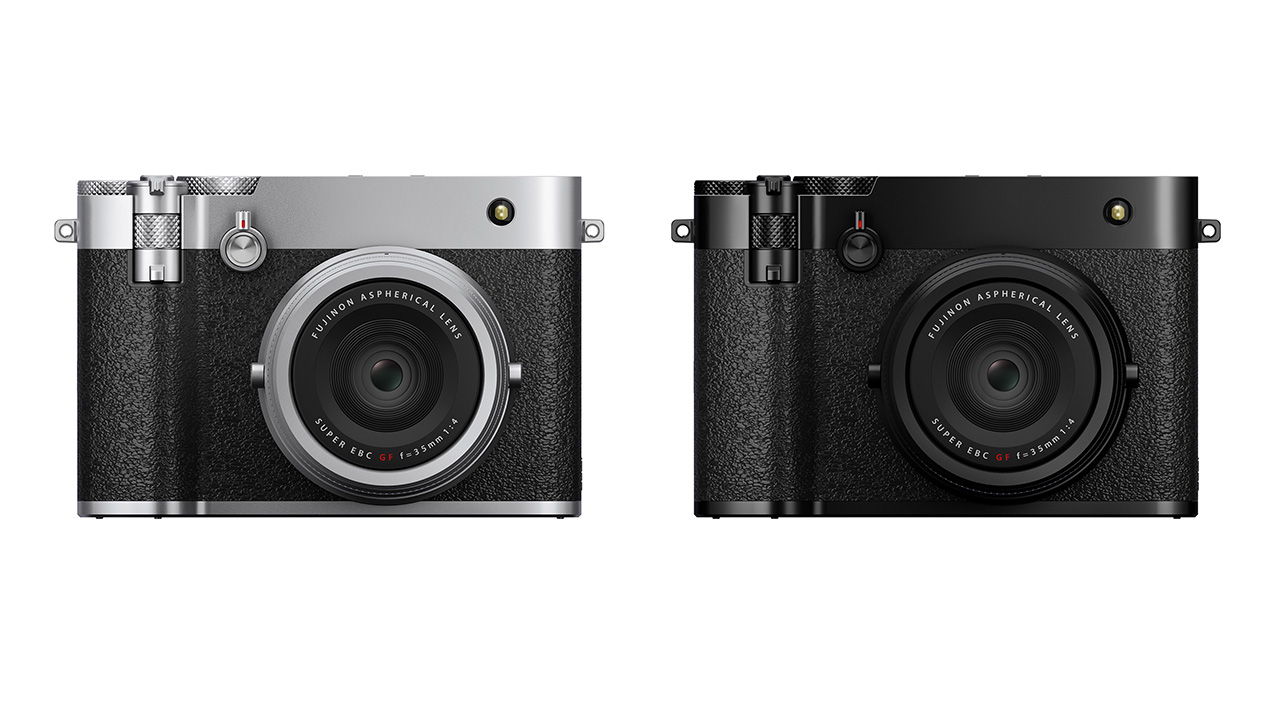
Fuji just released the GFX100RF and I’m going to state my bias right away:
–
This is the camera many of us have been waiting for, for many, many years.
–
The fact that it’s Fujifilm doing this is not surprising, since they already produce digital medium format cameras and they were the first to kick-start the whole premium fixed-focal-length-lens camera segment with the introduction of the X100 (with APS-C sensor) in 2010. Others followed: Sony with the RX1 (full frame) in 2012, Ricoh with the GR (APS-C) in 2013, and Leica with the Q (full frame) in 2016.
The furthering of this concept to include a medium format sensor is, in many ways, a natural evolution. But until now, no one has ventured to do it.
Congratulations Fuji! How’s (some of) the internet liking it so far? …
–
Most of the above can be distilled into two main criticisms:
(1) The lens is slow (f/4)
(2) The camera lacks in-body image stabilization (IBIS).
“Deal breakers” for many. These are valid concerns, I get it. Living in a country (🇨🇦) where it’s dark for half the year, fast (f/1.4) lenses and IBIS are very useful for extracting as much of that scarce environmental light as possible.
So why does Fujifilm have a winner in the GFX100RF?
–
Simply put, because Fuji has built a medium format camera that can be easily carried around.
–
Period. That’s it. “It’s the size, stupid“… and the size is stupidly small.
Fuji clearly made that the over-arching goal in all of their design choices (a.k.a. the aforementioned trade-offs), and they clearly stuck to their vision.
The people who will buy this camera want it to be part of their everyday life. They want to carry it with them everywhere they go.
They may own other cameras that do other things, or maybe not. They may have a lot of money to afford expensive gear, or maybe not. No IBIS?, no problem. They’ll make it work. Slow lens?, that’s okay. They’ll find a way to create the images they want. There are enough photographers out there who value what a medium format sensor brings to their photography who will buy this camera in droves and do whatever it takes, with a big grin on their face, to make it work for them.
I can’t believe these problems are still happening with the Leica M11. The main one being the intermittent freezing that will inexplicably occur, necessitating a stoppage of use and a battery removal to reset. Despite a few firmware updates from Leica to correct it, the problem (aka “fatal flaw”) persists.
The video above is a single data point but you can find many such accounts from frustrated photographers.
As you know, I love M rangefinders and used them for many years, documenting my trials and tribulations here. On the whole, my experiences were positive. With them, I have created some of my most cherished personal photos, and also content for paid/professional work. I still believe that Leica M digital cameras and their accompanying lenses are a wonderful piece of photographic kit… when things are working.
Over a year ago I switched back to Nikon and into a Z9. It’s obviously a completely different animal — the opposite end of the spectrum as far as cameras go. However, if I’m going to shoot with AF and use big lenses, I prefer a large, robust body. The output I’m getting with this set-up is simply wonderful.
But…
As expected, I no longer carry my camera everywhere I go. Not an insignificant penalty to pay.
This lack of portability has been tempered by the fact that I now have a system that just works. All the time. Moreover, despite its size, the Z9 gets out of my way in use. I’m no longer distracted by the camera (specifically, its bugs/limitations); it is completely transparent in use. Which is interesting, because that was the promise of the digital Ms, and that promise was not far-fetched, since it was already fulfilled by the film Ms before them.
People often wince at the price of Leica gear, but in years gone by the price was less bitter to swallow because you knew you were getting a premium product that would last a lifetime (and beyond). That’s of course no longer true with digital cameras. But is it too much to ask to have a camera that you can depend on?
I hope Leica fixes this. I’ve been silently hoping that since the M11 was released, and the bug(s) first reported. I haven’t commented about it until now. But something about the fanfare accompanying the release of the cosmetically nicer M11-P with, reportedly, the same internals (except for more memory) struck me as a little tone-deaf.
Maybe the reports are false and the M11-P has been quietly sorted out, with respect to whatever software/hardware issues plague the M11.
But first with digital, and now with AI, are we heading to a different destination… and to a point of no return? A process where photography is simply a “made up” thing… more like a sophisticated painting vs. a record of reality?
In which case, is film-based photography not only the first but also the only “authentic” form of photography?












 Prosophos