An infinitesimally small moment.
(please click on the image to view)
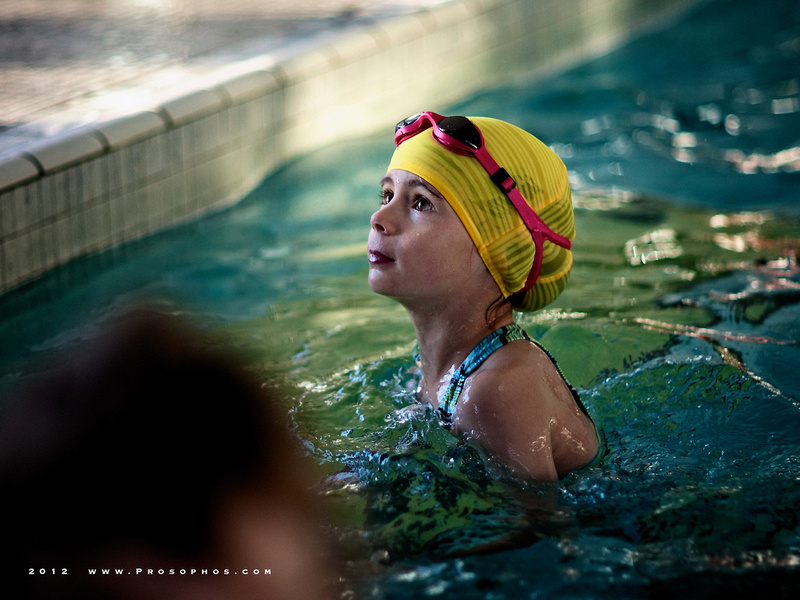
↑Leica M9 and Leica 75mm Summilux @ f/1.4.

This is one of those moments that works. The moment before and the moment after just didn’t measure up, despite having identical lighting, composition, and subject matter.
So, what’s the difference? It’s her. It’s her head tilt and accompanying expression… the spark that illuminated her face the moment the camera shutter was released.
It’s an example of what I’ve previously referred to as one of Life’s Little Moments.
(please click on the image to view)

↑Leica M9 and Leica 75mm Summilux @ f/1.4.

(Photo Source: L Camera LeicaWiki)
–
The Leitz (Leica) Tele-Elmar 135mm f/4 is a lens I’ve been seeking for a while.
When I moved away from DSLRs, I sometimes missed having a longish focal length for certain applications, like photographing sports (where shooting from a distance is often a reality). Telephoto lenses are also surprisingly useful for landscape photography, and for portraiture too.
However, 135mm represents a long focal length for a Leica M camera, because accurate manual focusing in this range can be tricky unless both camera and lens are in perfect calibration.
Knowing this, I nonetheless set out to find the venerable “T-E 135”.
The Tele-Elmar 135mm f/4 was manufactured from 1965 to 1990 before it was updated, first cosmetically, and then to the current Apo-Telyt 135mm f/3.4 form in 1998.
Why was I looking for the older model?
The current Apo-Telyt 135 approaches a cost of US$3300 (as of July, 2011), whereas a T-E 135 can be found for as little as $500, and the performance difference is said to be negligible! In other words, the older model represents one of the last true bargains of Leica optics. The other things in favour of the T-E 135 are its small size and light weight – these are qualities I value dearly.
Well, I finally secured an excellent condition Tele-Elmar 135mm f/4, manufactured near the beginning of its production cycle, in 1966. This makes my copy a 45 yr old lens!
Fortunately, manual focusing with the T-E 135 has been easy and accurate. The lens is a little soft at its widest aperture (f/4), but is quite sharp beyond that, with excellent contrast. Given the apertures involved, this lens will most likely be used in outdoor settings where plenty of light is to be found.
Funny enough, my first use of the T-E 135 occurred at an indoor pool, as I couldn’t wait to try it! The lack of light necessitated shooting at a relatively slow shutter speed of 1/125 sec and a high ISO of 2000. Here is the end result:
(please click on the image below)
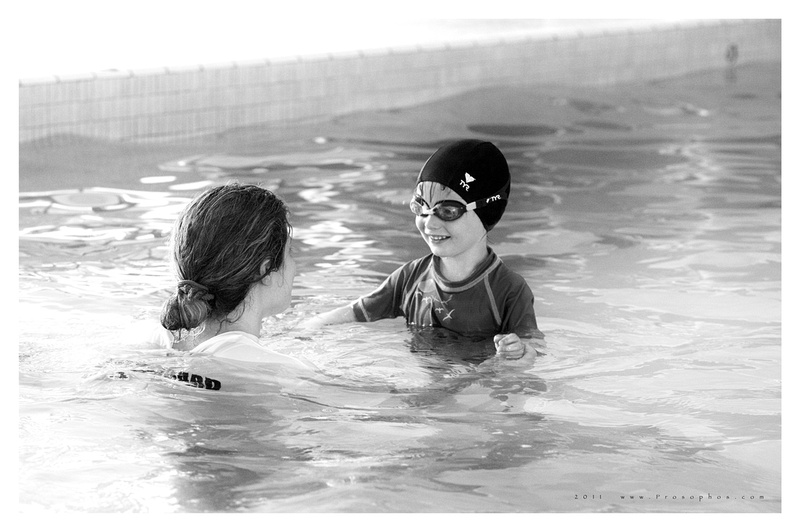
↑Leica M9 and Leica 1966 Tele-Elmar 135mm f/4 @ f/5.6.
_____________________________
Please show your appreciation for this article!
If you’ve been helped by this article, or any of my other articles, please consider making a contribution to help me run Prosophos.com. Whether it’s $1, $5, or $10… it all helps.

This site is a labour of love, but any help I receive will help me devote more time to running it.
Thanks,
—Peter.
I wrote this little piece for my good friend Steve Huff over at SteveHuffPhoto.com, and he was kind enough to publish it. The specific link to it is here.
For the non-photo geek, it’s somewhat unorthodox to use a fully manual camera like the M9 to try and capture action, especially in this world of auto-focus and auto-everything-else. But, as I write below, I’m able to anticipate better with this camera and – what’s more – there is no auto-focus system on the planet that will allow me to track the moving eye of a player at f/2.5 (or wider) better than my own eye. The Leica allows me to be in full control, which is what I want.
Anyway, the article is reproduced here for you:
The Leica M9… for Sports? by Peter | Prosophos
Hi Steve,
Sometimes, when I read the commentary on the various fora, I get the sense that many people view the Leica M series cameras as great for “static” scenes like portraits, landscapes, and bowls of fruit.
Yet, as you have demonstrated with your concert photography, Leicas are great tools for capturing dynamic moments, and I know of at least one person who shoots racecars with his M9!
Despite this, Leicas are not often linked to sports images, so I thought this would make an interesting “just for fun” posting for your fine website.
OK, so the “sports” I’m referring to involves kids, but this still qualifies as action, and it’s not typical of the usual photography most people associate with a Leica camera.
Would I recommend a Leica M as a sports camera?
No, not really. The various “pro” DSLR bodies in existence are weather-sealed, have great high ISO performance, lend themselves more naturally to shooting at telephoto distances, and can be machine-gunned for crazy high frame rates.
Yet, what would I choose to photograph sports (or anything else I shoot)?
Hands down, the M9.
My reasons?
That’s a long story, perhaps long enough for somebody else to write an article about it. For now, I’ll just say that an M camera allows me to shoot the way I want, and to anticipate the action better than any other kind of camera I’ve ever used.
Here are the images, and thanks for doing such a great job with this site!
Peter | Prosophos
(please click on any of the images below)
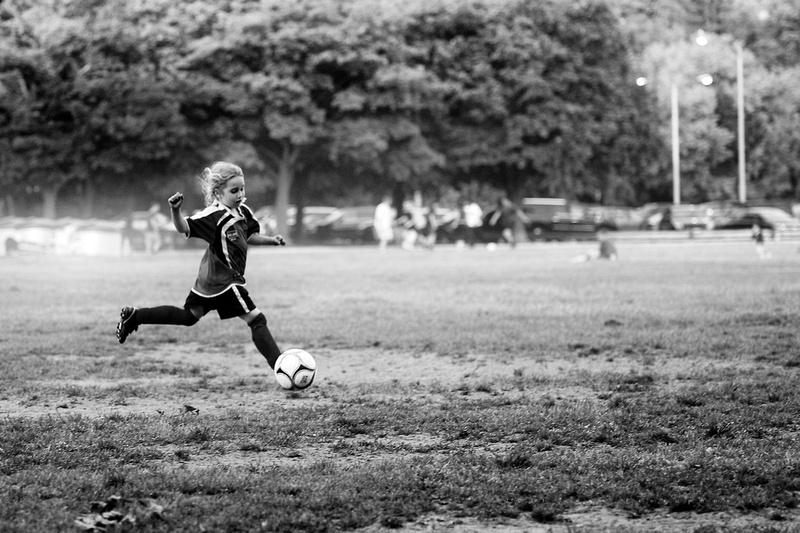
↑Leica M9 and Leica 75mm Summarit @ f/2.5.
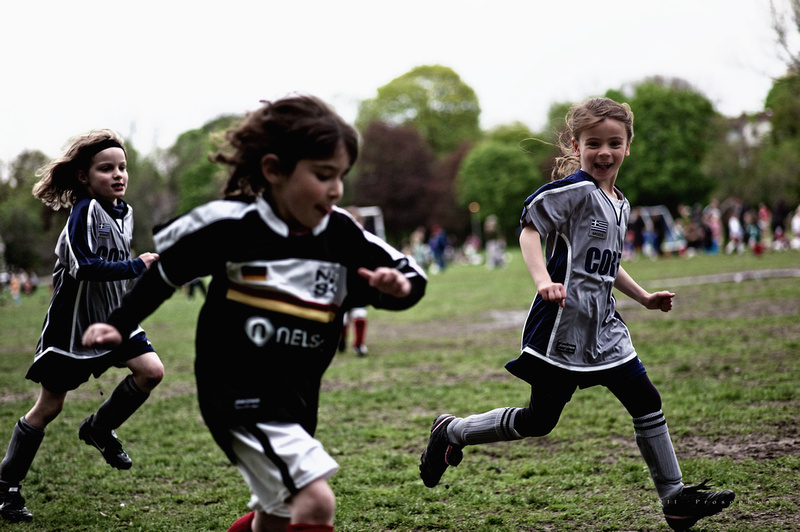
↑Leica M9 and Leica 75mm Summarit @ f/2.5.

↑Leica M9 and Leica 75mm Summarit @ f/2.5.

↑Leica M9 and Leica 75mm Summarit @ f/2.5.

↑Leica M9 and Leica 75mm Summarit @ f/2.5.

↑Leica M9 and Leica 75mm Summarit @ f/2.5.

↑Leica M9 and Leica 75mm Summarit @ f/2.5.

↑Leica M9 and Leica 75mm Summarit @ f/2.5.

↑Leica M9 and Konica Hexanon 60mm @ f/1.2.

↑Leica M9 and Leica 75mm Summarit @ f/2.5.
This last shot was taken with the Nikon D3S, but I’m including it here because I like it:

 Prosophos
