

Film
Love.
2014, Favourite, Film, Inspiration, Kodak Tri-X 400, Life's Little Moments, Mamiya RZ 110mm F/2.8, Mamiya RZ67 Professional Pro II, Portrait, Scanner - Plustek 120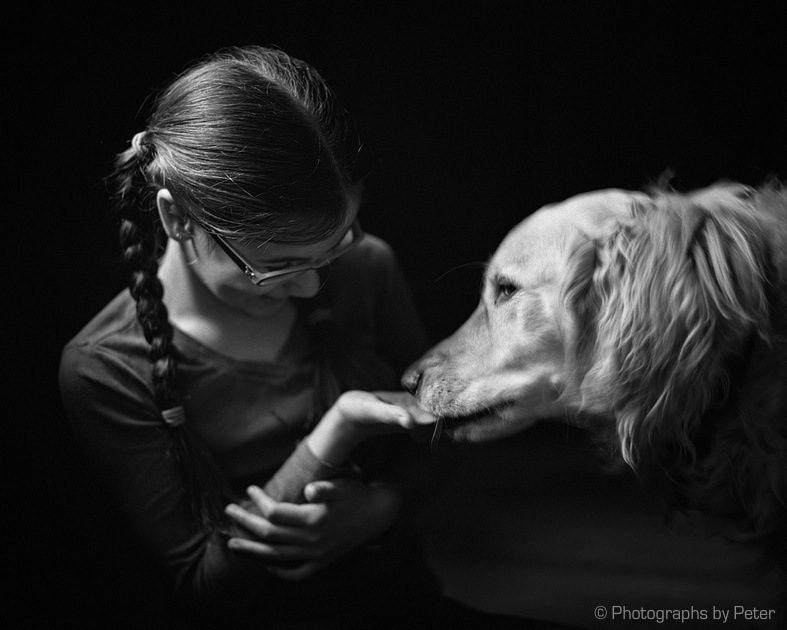
Aura.
2014, Favourite, Film, Kodak Tri-X 400, Mamiya RZ 110mm F/2.8, Mamiya RZ67 Professional Pro II, Portrait, Scanner - Plustek 120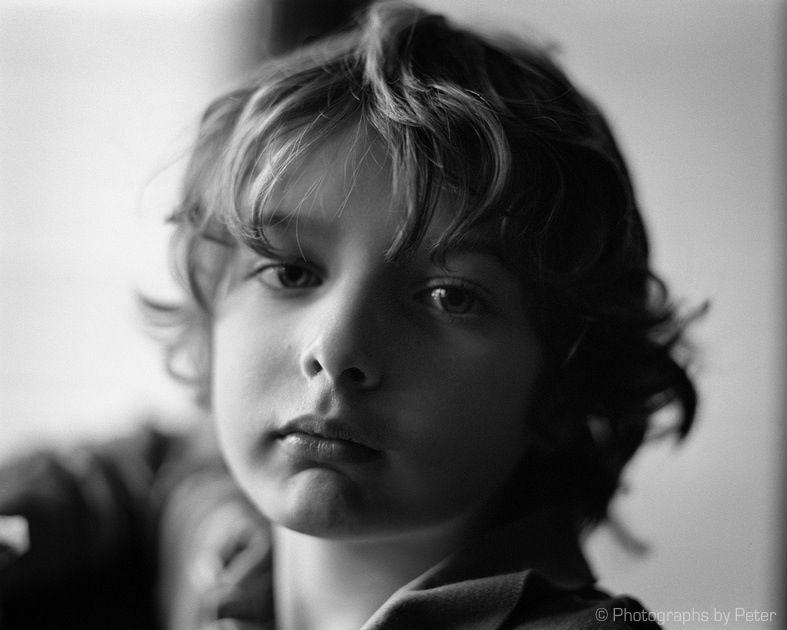
The life savour.
2014, Favourite, Film, Inspiration, Kodak Tri-X 400, Mamiya RZ 110mm F/2.8, Mamiya RZ67 Professional Pro II, Portrait, Scanner - Plustek 120, Teaching pointThere’s an ethereal quality in the image towards the right edge of the frame — caused by a bit of lens flare… but it appears as if the film grain is commingling with the very light that it’s trying to contain.
Don’t you just love film?
—Peter.

Film shots coming… let there be light.
Film, Inspiration, Teaching pointI’ve been busy developing Tri-X, shot with my Mamiya RZ67 and Leica M3, using my process for developing B&W film.
The moments captured reflect what I cherish the most: Life’s Little Moments.
Unfortunately, we’ve been thrust into darkness again, as winter doesn’t seem to want to go. If I was photographing with a digital camera, my output over the last few days would have been zero. But somehow, with a shutter speed of 1/15 (or less!) and a few rolls of Kodak, I’ve produced a few images worth keeping.
I’ll be posting some of them, starting tomorrow.
In the meantime… I wait for good light.
—Peter.
Springtime in Toronto, Part 3.
2014, Favourite, Film, Inspiration, Kodak Tri-X 400, Mamiya RZ 110mm F/2.8, Mamiya RZ67 Professional Pro II, Portrait, Scanner - Plustek 120Another “winter hat portrait”… it’s supposed to be spring, but it sure doesn’t feel like it.
On another note, I’m hooked on the look of medium format film.
All else doesn’t quite measure up.
Now I’m in trouble.
—Peter.

Eyes – Test Shot Portrait (Mamiya Tilt/Shift).
2014, Favourite, Film, Inspiration, Kodak Tri-X 400, Mamiya RZ 180mm F/4.5 Short Barrel, Mamiya RZ67 Professional Pro II, Mamiya Tilt/Shift Adapter, Portrait, Q&A, Scanner - Plustek 120, Teaching pointMy first portrait using the Mamiya 180mm f/4.5 Short Barrel lens with the Mamiya Tilt/Shift Adapter.
I really should be supporting this heavy and unwieldy gear with a tripod, but I’ve avoided tripods all my life (ahhh the undisciplined life of a candid photographer).
Not bad though. I see great potential with this set-up.
—Peter.

Springtime in Toronto, Part 2.
Film, Inspiration, Kodak Tri-X 400, Mamiya RZ 110mm F/2.8, Mamiya RZ67 Professional Pro II, Portrait, Q&A, Scanner - Plustek 120, Teaching pointYou have to love this city and its weather 😉 .
This image was taken using the Mamiya 110/2.8 at its near focus limit; even at f/4 (the aperture used for this shot), the depth of field is quite thin — perhaps too thin for this portrait, since only the near eye is in focus.
Still, I like it.
The look of the Tri-X film and the bigger 6 x 7 “sensor” of medium format is quite remarkable. Notice the true-to-life rendering of his face, texture of his hat, etc. Currently, high-end 35mm digital cameras may be able to out-resolve this antiquated gear (at least using the scanner I’m using), but they cannot duplicate the look of this image.
—Peter.

My film photos featured on SteveHuffPhoto.com
Film, Inspiration, Q&ASome of my film images were featured last Friday on Steve Huff Photo.com.
Thank you Steve Huff, for publishing them.
—Peter.

Before the grains of sand.
Film, Inspiration, Leica 50mm Summilux ASPH f/1.4, Life's Little Moments, Portrait, Q&AThe title is both figurative and literal, because I previously posted an image entitled Grains of Sand.
On the very same roll of Tri-X was this frame, taken moments earlier. I normally choose a favourite image to post, and when I developed the roll, I chose the more dynamic photograph.
Now — almost two years later — I wonder whether I prefer this more contemplative one.
—Peter.
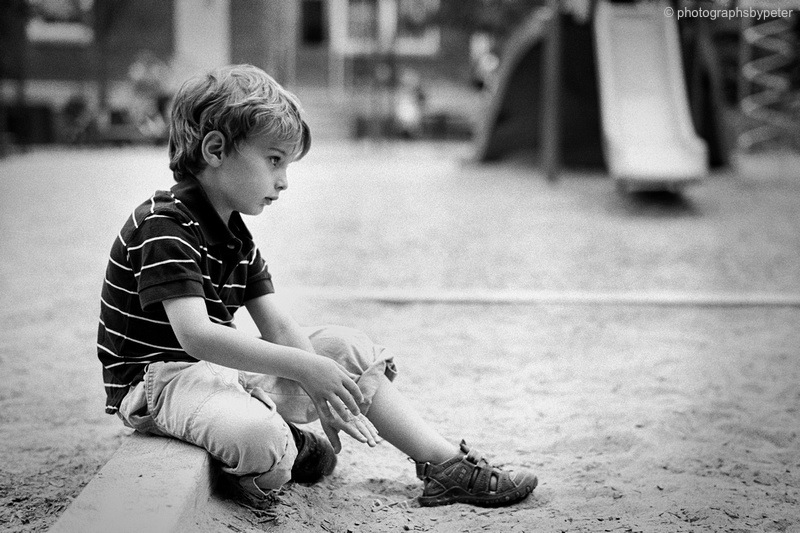
↑Leica M3, Kodak Tri-X 400, and Leica 50mm Summilux ASPH @ f/1.4.
Glenfiddich Window Portrait (Tilt-Shift test shot).
Film, Fujifilm FP-3000B, Inspiration, Mamiya RZ 180mm F/4.5, Mamiya RZ67 Professional Pro II, Mamiya Tilt/Shift Adapter, Portrait, Print, Q&A, Teaching pointThis is a test shot using my recently acquired used Mamiya tilt/shift accessory on Fuji instant (“Polaroid”) film.
No alcohol was harmed during the testing process.

↑Mamiya RZ67, Mamiya 180mm @ f/4.5, tilt/shift accessory, and Fuji FB-3000.
Winter Hat Portrait.
2014, Favourite, Film, Inspiration, Kodak Tri-X 400, Mamiya RZ 110mm F/2.8, Mamiya RZ67 Professional Pro II, Portrait, Scanner - Plustek 120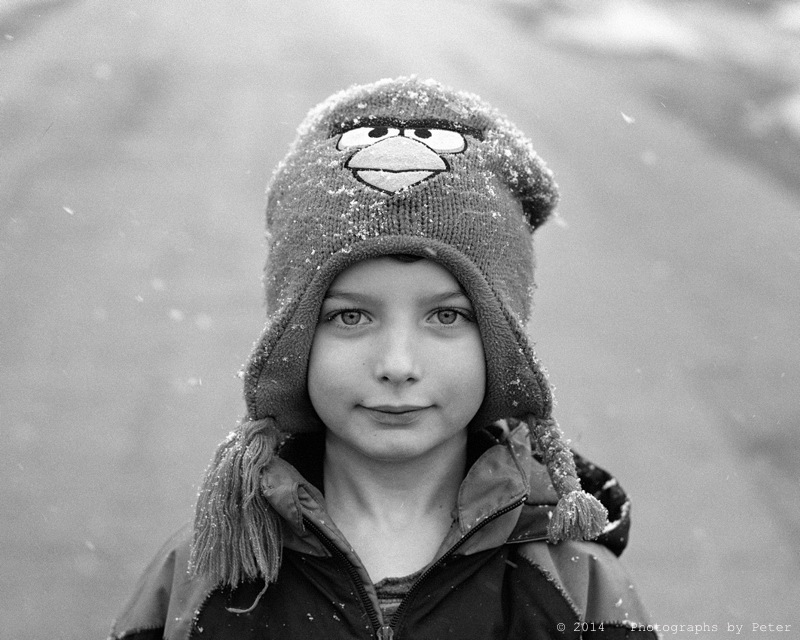
↑Mamiya RZ67, Mamiya 110mm @ f/5.6, and Kodak Tri-X 400.
Tasting Snow.
Film, Inspiration, Kodak Tri-X 400, Life's Little Moments, Mamiya RZ 110mm F/2.8, Mamiya RZ67 Professional Pro II, Portrait, Scanner - Plustek 120Springtime in Toronto: we’re not quite there yet.

↑Mamiya RZ67, Mamiya 110mm @ f/5.6, and Kodak Tri-X 400.
Brushing Honey.
2014, Favourite, Film, Inspiration, Kodak Tri-X 400, Life's Little Moments, Mamiya RZ 110mm F/2.8, Mamiya RZ67 Professional Pro II, Portrait, Scanner - Plustek 120, Teaching pointThis was shot wide open @ f/2.8, but required a relatively slow shutter speed of 1/30 sec to expose the foreground figures correctly. The camera was braced on the floor to reduce vibration and also to obtain the perspective I was seeking.
I was lucky to hit the shutter at just the right moment — the eye contact was brief.
I wasn’t sure how the 110/2.8 would deal with shooting into the light, but the lens has once again impressed me.
And, I am really enjoying the Mamiya RZ67… more so than I thought I would. Yes, it’s a large and heavy camera, but the system is so well thought out that it prevents you from “screwing up” while delivering exceptional results.
When I purchased my Mamiya equipment, the 180/4.5 lens was also included, but I haven’t yet photographed with it.
—Peter.

↑Mamiya RZ67, Mamiya 110mm @ f/2.8, and Kodak Tri-X 400.
C and H.
Favourite, Film, Inspiration, Kodak Tri-X 400, Life's Little Moments, Portrait, Scanner - Plustek 120, Teaching point, Voigtländer 40mm f/1.4 Nokton(About a girl and her dog)
This was taken at bedtime, under very dim light. The film was therefore pushed quite a bit during post processing to lighten things (I should have instead “pushed” it during development).
I’m actually amazed that I ended up with an image that I like, given my previous attempts to capture such scenes in my kitchen without the aid of daylight have never produced satisfactory results, with digital cameras (M9, M8, D3S, D3, D700, etc.) anyway. Although film doesn’t make up for poor lighting, it certainly is more forgiving.
—Peter.
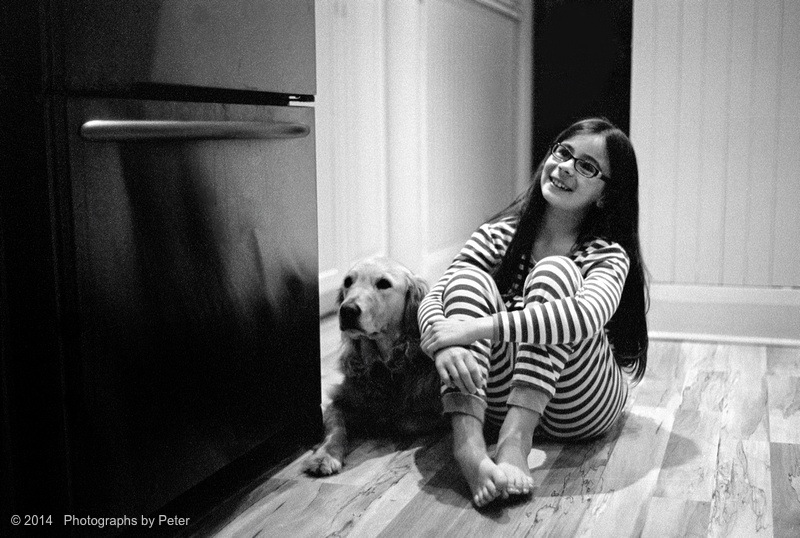
↑Leica M3, Voigtländer Nokton 40mm @ f/1.4, and Kodak Tri-X 400.
Bedtime Hair Brushing.
2014, Favourite, Film, Inspiration, Kodak Tri-X 400, Leica M3, Life's Little Moments, Portrait, Scanner - Plustek 120, Voigtländer 40mm f/1.4 NoktonMy M3 is back — repaired, rebuilt… reborn.
—Peter.
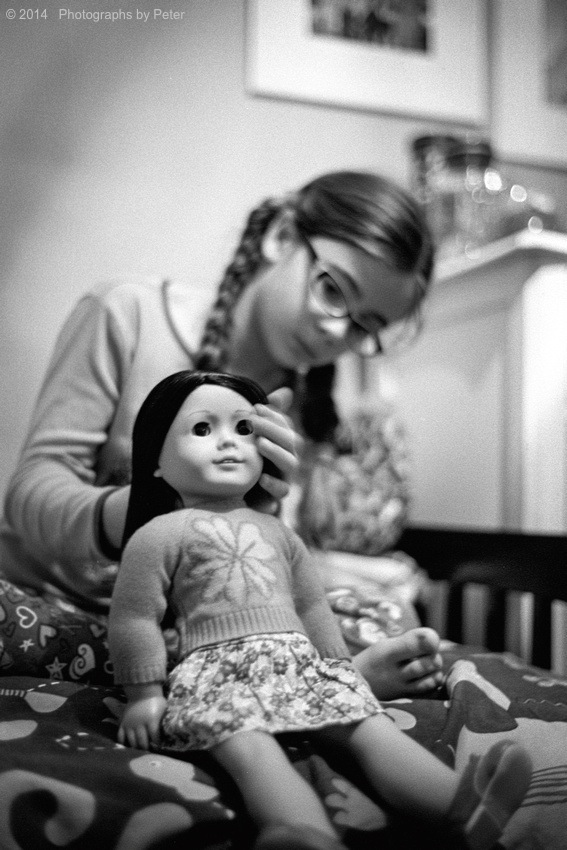
↑Leica M3, Voigtländer Nokton 40mm @ f/1.4 and 1/30 sec, Kodak Tri-X 400.
Twin Pearls.
Film, Inspiration, Kodak Tri-X 400, Mamiya RZ 110mm F/2.8, Mamiya RZ67 Professional Pro II, Photo Shoot, Portrait, Scanner - Plustek 120
↑Mamiya RZ67, Mamiya 110mm @ f/2.8, and Kodak Tri-X 400.
The Ship of Theseus, and my Leica M3.
Film, Inspiration, Leica M3, Life's Little Moments, Q&A, Teaching point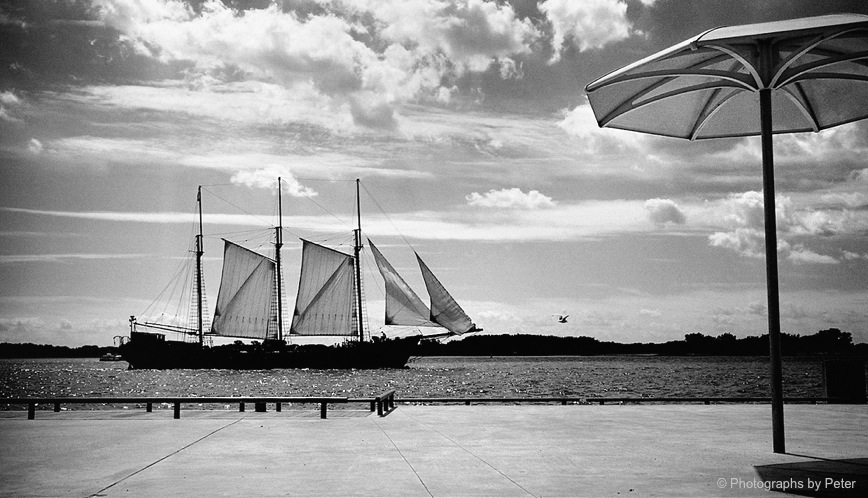
–
In Greek mythology, Theseus was the the hero who slayed the Minotaur in the Labyrinth of Knossos.
He then sailed home, on a ship that — having long been in service — was in obvious need of repair. Wooden planks were therefore removed and replaced.
Theseus’ Paradox arises from the following thought experiment: suppose, over time, more and more aging planks were removed and then replaced with new pieces of wood until — eventually — no original plank remained.
–
Would the ship still be the same ship?
–
Most people would still consider it Theseus‘ ship, but… Would it still be the same ship that served him so well?
There are several potential answers to this question, and one further wrinkle that involves taking all of the old discarded planks and re-fashioning another ship, thus creating two Theseus ships (the one with all of the replaced parts, and a new-old one with the old parts). It’s very mind-bending.
So…what’s this have to do with photography?
Nothing. But…
I recently purchased a 1963 Leica M3 in completely original condition, and sent it in for servicing. Even though it was working well enough in most situations, several of its optical and mechanical parts were in poor condition and needed to be replaced. The exterior covering was replaced too.
I’m currently waiting for its return.
While I’m waiting, the question I keep asking myself, after all of these changes is:
Is this the same M3 that allowed me take this image?
Or has my ship sailed?
—Peter.
–

