(Disclaimer: This is not a comprehensive analysis, but one user’s experience.)

I had been looking for, ruminating about, and scratching my head over the Voigtländer Nokton 35mm f/1.2 for almost a year. And, for various reasons, I never jumped at getting one.
Well then of course it was discontinued. Cosina Voigtländer was planning to build a new version [Edit: available as of late August 2011], which was to be somewhat more compact in size. But I learned a while ago that there are always trade-offs in lens design, and what finally convinced me to get the newly-old version was Cosina’s statement as to why it was being discontinued: that it was too difficult to procure the glass and too expensive/difficult for them to manufacture anymore.
Hmmm….well that certainly piqued my interest.
Having finally decided to get one, it was unfortunately out of stock in all the usual places I frequented.
However, one night back in February of 2010, I saw a new Voigtländer Nokton 35mm f/1.2 (Version I) on sale on one of the large USA retailer websites. I didn’t make the same mistake of hesitating.
Subsequently, my friendly UPS delivery man arrived late one evening with the 35/1.2 in hand. And of course – being insane – I headed outside into a freezing Canadian winter and took my first shot with it @ f/1.2.
Here is a sample image from that first night:
(please click on the image to view)

↑Leica M9 and Voigtländer Nokton 35mm @ f/1.2.
What I learned, almost immediately, was that this lens was going to change the way I photograph. The lens could be trusted in extremely low light situations and could produce a delicate bokeh that rivals its Leica counterparts.
(please click on the image to view)

↑Leica M9 and Voigtländer Nokton 35mm @ f/1.2.
Counterparts, what counterparts? Of course, there is no other 35mm rangefinder lens in production that can shoot at an aperture of f/1.2! Yes, the Voigtländer Nokton 35/1.2 actually gives you a half stop more light than the next fastest 35mm rangefinder lenses out there.
Truthfully though, I find that the practical benefits of a half stop light advantage are not that pronounced. If I’m shooting in a dark environment where f/1.4 is not enough, then chances are that f/1.2 will not be enough either… but, it sometimes helps!
However, putting aside low-light considerations, there is another tangible benefit to shooting at f/1.2: subject isolation.
Subject isolation with a 35mm lens? Not possible, you say.
Well, it is at f/1.2.
Is it better than what you get when shooting with another 35mm lens at f/1.4? I think so, or at least I’ve convinced myself of it. See for yourself:
(please click on the image to view)

↑Leica M9 and Voigtländer Nokton 35mm @ f/1.2.
What are the other benefits to the Voigtländer Nokton 35mm f/1.2?
It displays no focus shift! Check
It’s an M-mount lens that near focuses to the M rangefinder limit of 0.7 m. Check and check.
It has very little distortion, and even at its widest aperture, there is very little vignetting. It is also built very solidly and the focus ring is well weighted for focus precision. Check, check, and check.
And it’s got a bit of an “old school” look and feel to it (both the lens and the images it produces!) that I appreciate very much. This point cannot be emphasized enough as it’s the reason I own this lens vs. any other fast 35mm lens – I just like how the Voigtländer Nokton 35/1.2 draws. Period.
And finally – the part that totally shocked me: it’s sharp at f/1.2. No kidding, this thing is just razor sharp at its widest aperture, à la Leica. This is one of the reasons you buy Leica glass at 5 times the cost, but the Voigtländer Nokton 35/1.2 gives you wide open sharpness that would satisfy the most discerning lens aficionado:
(please click on the image to view)

↑Leica M9 and Voigtländer Nokton 35mm @ f/1.2.
Don’t believe me? The focus in on the near eye.
Here is the 100% crop (remember this is at f/1.2):
(please click on the image to view)

The Leica 35mm Summilux asphericals (I and II) may be sharper wide open, but not by much. In practical use, your own ability to focus correctly will have more impact on the final image.
So, why was I so resistant to getting this lens in the first place? In other words, what are the negatives?
It’s the size and weight that put me off this lens for so long. I kept reading about it. The internet kept warning me about it.
In the end, I guess I was so prepared to be overwhelmed by the size that I was pleasantly surprised when I finally got my hands on one. It actually handles and balances very well on the M9 and, although the size causes partial viewfinder blockage, it is manageable.
By way of comparison, here’s how it stacks up against the current version of Leica’s Noctilux and Voigtländer’s own smaller offering, the Voigtländer Nokton 40/1.4:
Voigtländer 35/1.2:
- Length = 3.1” (78mm)
- Maximum Diameter = 2.5″ (63mm)
- Weight = 1.1 lb (490 g)
Leica 50/0.95:
- Length = 3.0″ (75mm)
- Maximum Diameter = 2.9″ (73mm)
- Weight = 1.54 lbs (700g)
Voigtländer 40/1.4:
- Length = 1.2″ (30mm)
- Maximum Diameter = 2.2″ (55mm)
- Weight = 0.39 lbs (175g)
Fast glass with minimal optical compromises will always be heavy…
Other negatives? Well, similar to my previous Voigtländer Nokton 40/1.4 discussion, the Nokton 35/1.2 lacks the biting microcontrast of its Leica counterparts and exhibits purple fringing wide open at high contrast edges. Note, even the incredible Leica 0.95 Noctilux struggles with these, albeit at f/0.95! At other apertures, the Nokton 35/1.2 is a stellar performer, in line with Leica’s finest.
In summary then, the Voigtländer Nokton 35mm f/1.2 aspherical (Version I) is a stellar optic with the following attributes:
- Maximum aperture f/1.2 (equaled by no other M-mount 35mm lens).
- At f/1.2, can achieve subject isolation (unique for a 35mm lens).
- Incredibly sharp, even at f/1.2.
- As compared to other fast lenses, there is relatively little vignetting at wide apertures.
- There is no focus shift.
- Provides soft and delicate bokeh.
- Near-focuses to 0.7 meters.
- Built solidly and operates with fine precision.
- Comes in standard M-mount.
- Relatively Inexpensive.
On the downside:
- Large and heavy for an M lens, but there are larger and heavier ones out there (Leica 75/1.4, Leica 50/0.95).
- Causes partial viewfinder blockage.
- Less than class-leading microcontrast and resistance to purple fringing – but almost as good as Leica’s finest.
If the Voigtländer Nokton 35/1.2 was manufactured by Leica, I’m sure it would be priced many-fold higher. Given its actual price (if you can find one), it represents a relative bargain.
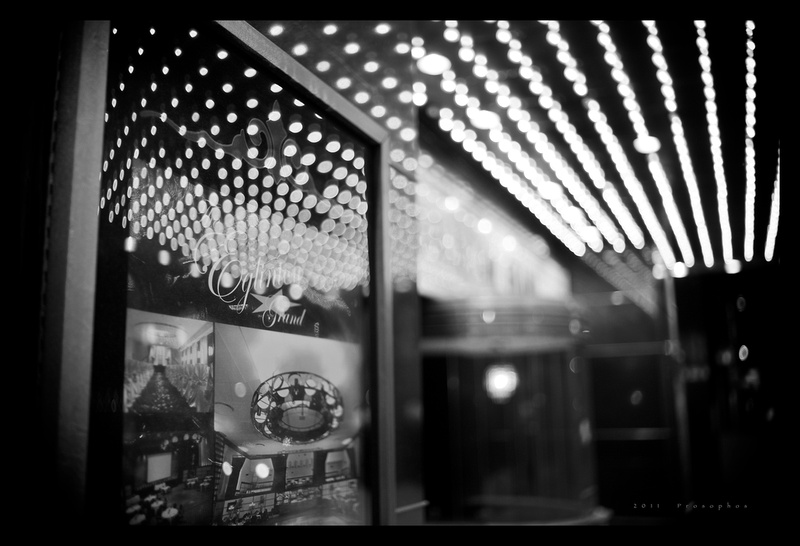
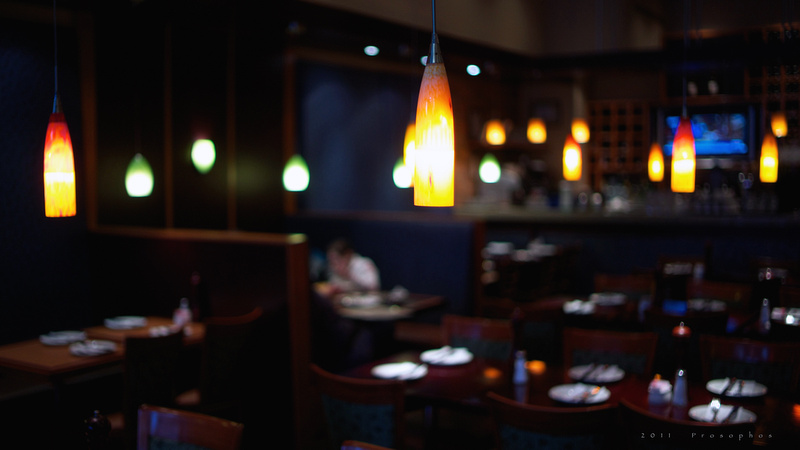
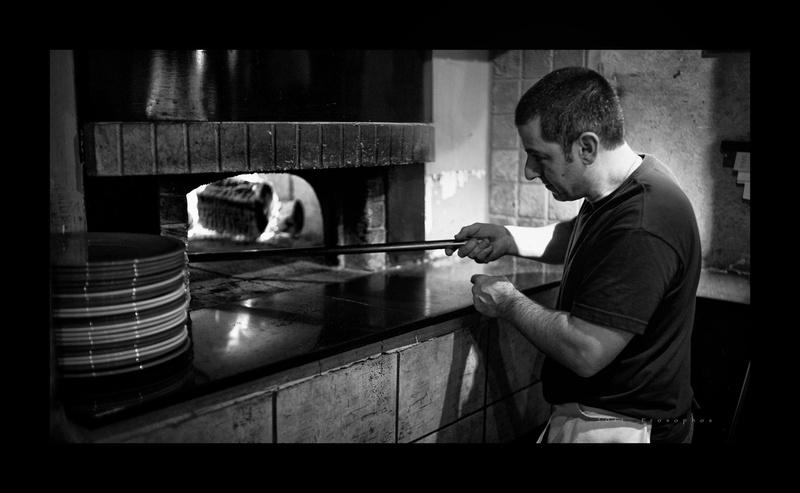
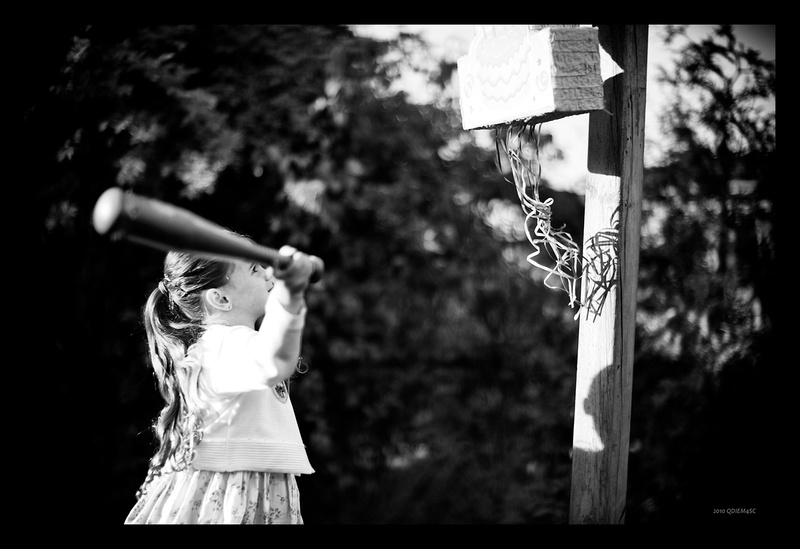
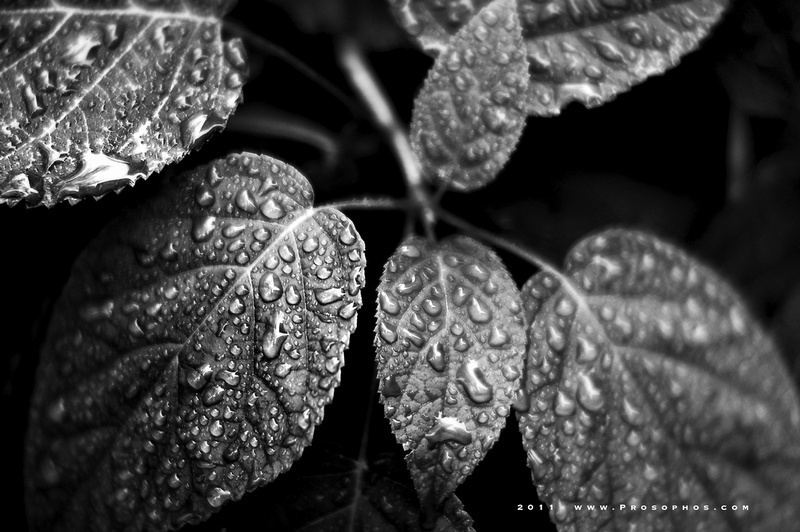
And finally, since a picture is worth (at least) a thousand words, I’ll end this discussion by posting several more images taken with this lens:
(please click on any of the images below to view)








All of the above images were taken with the Leica M9 and the Voigtlander Nokton 35mm @ f/1.2.
If you would like to see more of my images created with the Voigtländer Nokton 35mm f/1.2, please see here.
_____________________________
—Peter.



































 Prosophos