Alex, by the glow of the afternoon window light.
(please click on the image to view)

↑Leica M9 and Leica 35mm Summarit @ f/2.5.

Alex, by the glow of the afternoon window light.
(please click on the image to view)
↑Leica M9 and Leica 35mm Summarit @ f/2.5.
Communing with nature, communing with each other in Algonquin Park.
(please click on the image to view)

↑Leica M2 and Voigtländer Nokton 40/1.4.
The kid’s a natural.
(please click on both images to view)


Both images taken with the Leica M9 and Leica 50mm Noctilux f/1.0 @ f/1.0.
As seen in 1/6th of a second.
(please click on the image to view)

↑Leica M9 and Zeiss ZM 21/2.8 @ f22.
When at play.
(please click on the image to view)

↑Leica M9 and Leica 75mm Summilux @ f/1.4.
…and more so 48 hours later, after falling from the monkey bars and breaking her arm.
(please click on the image to view)

↑Leica M9 and Leica Noctilux f/1.0 @ f/1.0.
And reflecting on the possibilities.
(please click on the image to view)
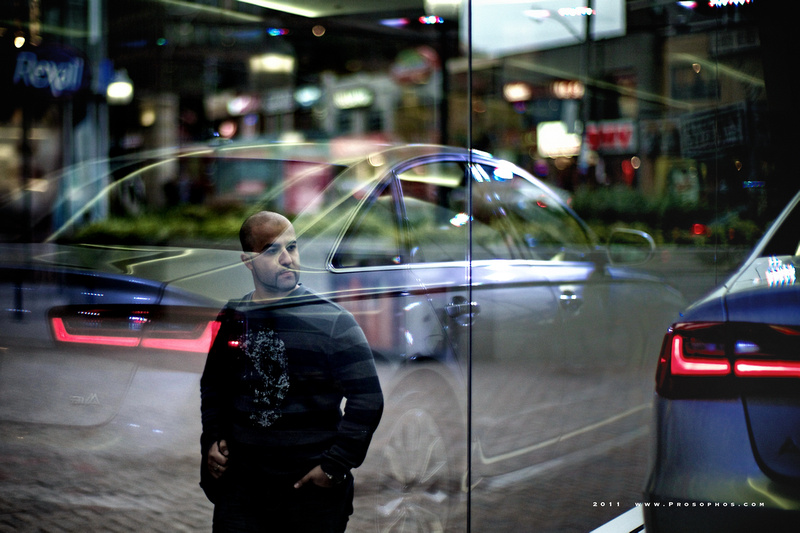
↑Leica M9 and Leica Noctilux f/1.0 @ f/1.0.
Catching spangles of light.
(please click on the image to view)

↑Leica M3 and Konica Hexanon 60mm @ f/1.2.
This is the final post of the series, which began here.
Here the morning light traces over the simple and the mundane… the light shifts imperceptibly and even the inert is now living, now breathing, now pulsating.
(please click on the image to view)

↑Leica M9 and Zeiss ZM 21/2.8.
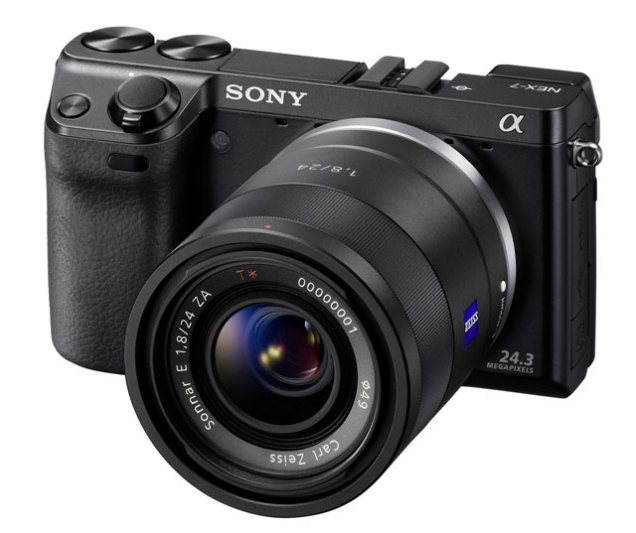
Lenses, they say, are forever. Not so with camera bodies… especially in the digital age. They are essentially electronic devices, ultimately to be disposed of – regardless of the initial purchase price.
Despite this, last year I purchased a Leica M9 – a decidedly expensive digital camera. The obvious question, in light of the above, is: Why?
Well, the M9 has the form factor, sensor size, rangefinder focusing, performance at base ISO, and accompanying M lenses that make it a formidable photographic tool. To the point: it was the only camera currently out there that had all the traits I valued… it was the only game in town, so to speak.
But I know that one day it will fail beyond repair.
And, as an avid Leica “M” platform shooter, one of the things I think about is whether I’ll be able to afford another Leica M camera when my M9 eventually fails. Every year, the good folks at Leica increase their prices and – in one fell swoop – prove wrong all those reasonable folks who believed the gear was overpriced in the first place. I don’t know when the M10 will arrive, but I can guarantee you that it will cost more than the M9P, which cost more than the M9, which cost more than M8.2, which cost more than the M8… you get the “picture”, right?
Given this, I’ve tried to build some security into – tried to future-proof – my M camera system by securing film Leica M bodies that will last “forever” (or at least my lifetime… or for as long as film continues to be manufactured 🙂 ), but let’s face it, sometimes the convenience of digital calls out like a siren song.
But now is an exciting time for photographers. New mirrorless interchangeable lens camera systems are being introduced at a quick pace that – via an appropriate adapter – will work with all of my beloved M lenses (Leica, Voigtlander, and Zeiss). The camera in this class that is currently getting the most attention, for a variety of good reasons, is the upcoming Sony NEX-7. Yup – upcoming, as in: it hasn’t even been released yet.
So this is a long preamble to get to the crux of this post, but here it is: I’m not buying into any of the announced systems. Not yet, anyway.
No thank you Olympus, no thank you Panasonic, no thank you Samsung, no thank you Ricoh, and no thank you Sony. All of you are tempting me, but… no thank you.
However, the truth is, you guys are the future and I will eventually turn to you.
Why am I not buying now?
Admittedly, Sony’s NEX-7 and Ricoh’s A12 “Leica M-mount” module represent exciting developments in digital photography. I am genuinely excited about what these manufacturers are doing because – first and foremost – they appear to be listening to the enthusiasts out there. But I’m not buying into any of these systems yet because I believe Sony, Ricoh, and the others can and will do better.
In what way?
At some point, somebody will release a NEX-7-like camera with a “full-frame” (24 x 36) digital sensor – the kind that, similar to the M9, will take full advantage of the optics in the M lenses I value.
Regardless of whether I’m using my lenses on a camera body with a micro four thirds, APS-C, or larger “full” frame sensor, they remain the size they are, so I may as well use them on a body with a 24 x 36 sensor that will exploit them to their full potential. And as good as the new crop of APS-C sensors are, the same technology in a larger sensor will yield better image quality – that’s a physical reallity.
The first manufacturer, other than Leica, who places a 24 x 36 sensor in a mirrorless interchangeable lens camera can count me in as a customer. I have no doubt that at some point, somebody will do it.
Until then, I will resist the temptation to buy. I mean, I already have an M9 so I have no immediate need to purchase another camera body… although I understand the attraction for those who are without a digital M and are just itching to use their old beloved M lenses on a digital sensor, or for those without legacy lenses who plan on buying the new lenses that are being offered with the new platforms.
Yes, I’ll continue to shoot with my M9 – and hope that it doesn’t fail…
…at least until Sony, Ricoh, or somebody else, finally does what we’ve all been waiting for.
Golden light suffuses into the dying autumn foliage – a silent intermingling of life and death.
(please click on the images to view)


Both images taken with the Leica M9 and Zeiss ZM 21/2.8.
A lone fisherman stands above a silent liquid mirror.
(please click on the image to view)

↑Leica M9 and Zeiss ZM 21/2.8.
A view of adjacent frames on a roll of film, scanned together in the Plustek 7600.
Two incomplete frames in the flow of life’s film strip.
(please click on the image to view)

↑Leica M2 and Voigtländer Nokton 40mm @ f/1.4.
Two souls bathed in light.
This photo was chosen as a Leica Fotografie International (LFI) Master Shot.
(please click on the image to view)
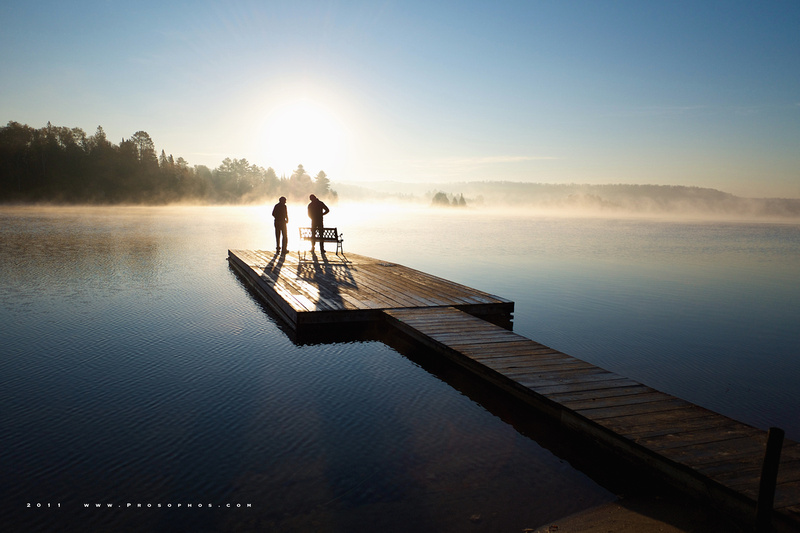
↑Leica M9 and Zeiss ZM 21/2.8 @ f/4.
This post is meant to serve as a little bit of an interlude from the Sunrise at Oxtongue Lake series…
DISCLAIMER: This is not intended to be an analysis of these two lenses. Not even close! I shot these for my own curiosity and am simply posting the results for your viewing pleasure and/or interest. You may choose to draw you own conclusions, and that’s fine (in fact, I’m interested in reading your comments). But please, please, don’t write that “this is not a valid comparison, because…“. I know it’s not a valid comparison.
Below, the Konica Hexanon 60/1.2 and Leica Noctilux 50/1.0 (E60) were shot wide open on the M9 (the reason one buys these exotic lenses is to shoot them wide open, so that’s the comparison that interested me).
The M9 was set to manual mode. Focus bracketing was used and the sharpest images from each lens were taken for the comparison (NOTE: despite doing this to ensure that the images were in focus, sharpness was not the only thing I was interested in).
Finally, the original DNG files were converted to JPG in Aperture. No post-processing whatsoever was used, other than the conversion.
So, here is the overall scene… focus was on the word “TATiRi” on the guitar head (the differences in the field of view are attributable to the 50mm and 60mm focal lengths).
(please click on the images below to view)

↑Konica Hexanon 60/1.2 @ f/1.2.

↑Leica Noctilux 50/1.0 @ f/1.0.
That famous peripheral “swirly” pattern of the Noctilux f/1.0 is certainly evident above (as an aside, the Nikkor Noct 58/1.2 is also famous for this).
And now I’m including several 100% crops from the above scenes. The first pair of crops are meant to demonstrate central sharpness.
(please click on the images to view)
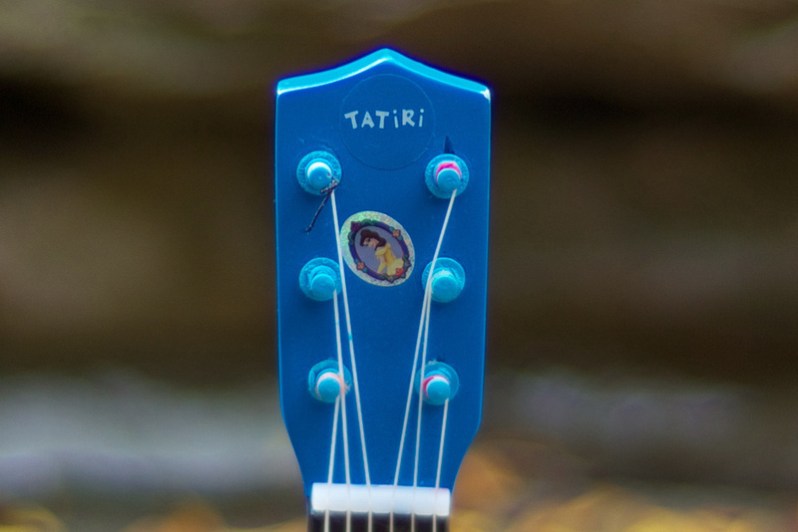
↑Konica Hexanon 60/1.2 @ f/1.2 (centre 100% crop)

↑Leica Noctilux 50/1.0 @ f/1.0 (centre 100% crop)
The next several pairs of crops are meant to demonstrate the character of the bokeh, as seen in two different regions from the main scene.

↑Konica Hexanon 60/1.2 @ f/1.2 (bottom left 100% crop)

↑Leica Noctilux 50/1.0 @ f/1.0 (bottom left 100% crop)

↑Konica Hexanon 60/1.2 @ f/1.2 (top centre 100% crop)

↑Leica Noctilux 50/1.0 @ f/1.0 (top centre 100% crop)
As I wrote above, I’d be interested in reading any commentary generated from this.
Parts I and II of this series are here and here.
(please click on the image to view)
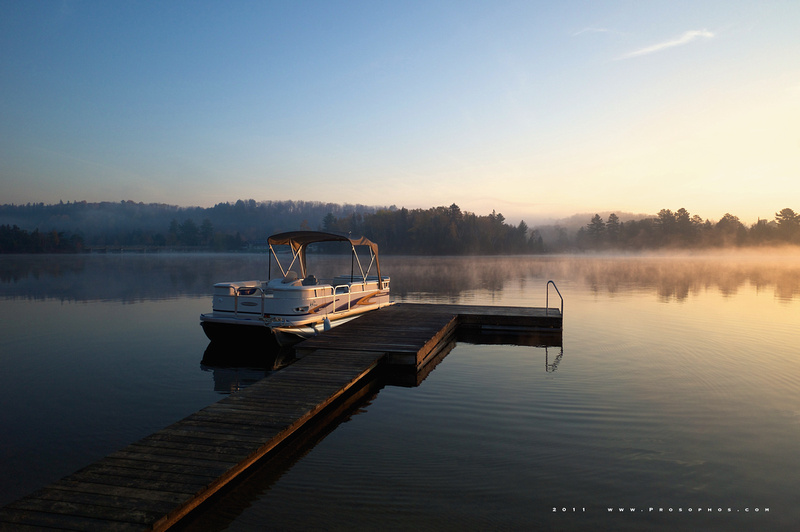
↑Leica M9 and Zeiss ZM 21mm @ f/2.8.
The focus was on the boat, of course, and you can see the out-of-focus treeline and fog in the background. Just how sharp is the Zeiss ZM 21/2.8?
Here is the 100% centre crop @ f/2.8 – this is the original file with no sharpening:
(please click on the image to view)
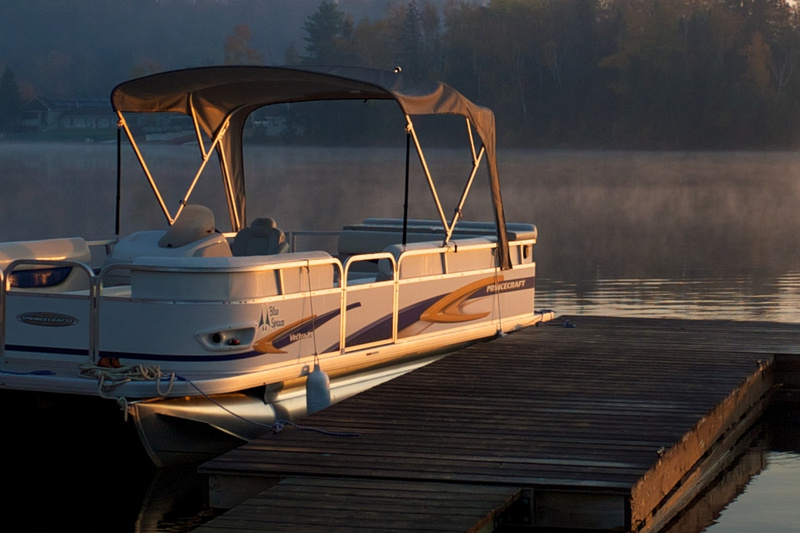
↑ Zeiss ZM 21mm @ f/2.8 (100% crop, no sharpening)
Clearly the Zeiss, beyond being sharp and possessing incredible resolving power – beginning at f/2.8 – renders in a contrasty and substantial way (for lack of a better term)… elements seem to jump out of the image (the so-called 3D effect) despite the large depth of field a wide angle lens normally affords.
A truly remarkable lens.
(please click on the images to view)

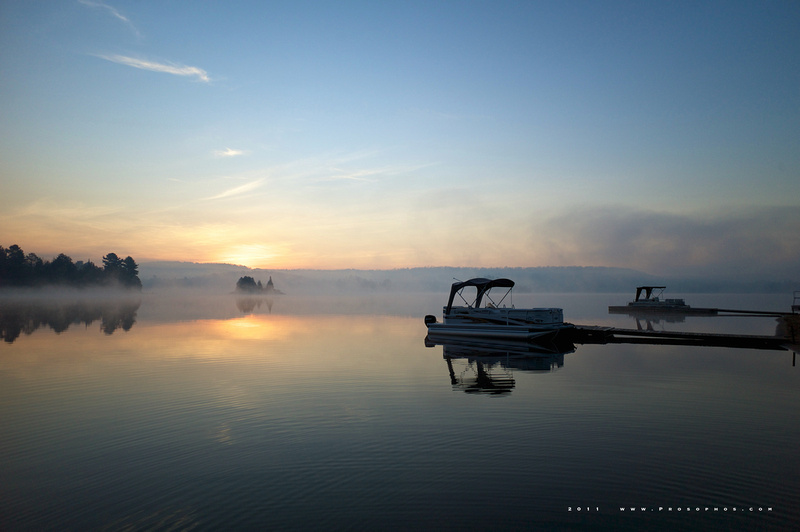
↑Leica M9 and Zeiss ZM 21mm f/2.8.
The sun appears and burns the fog off the surface of Oxtongue Lake.
(please click on the image to view)
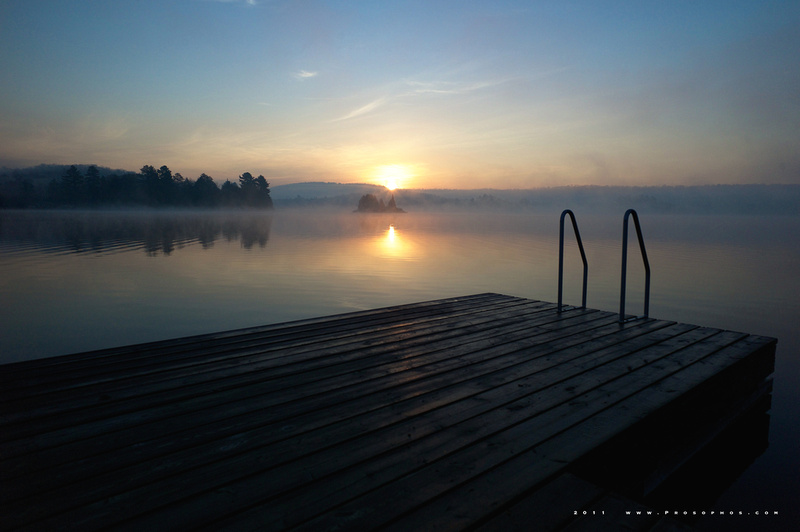
↑Leica M9 and Zeiss ZM 21mm f/2.8.
Concentration is necessary so that accidents don’t happen, in Pony Park.
(please click on the image to view)

↑Leica M9 and Leica 50mm Noctilux @ f/1.
 Prosophos