Moon and Rainbow over Barbados.

2013, Barbados, Favourite, Inspiration, Leica 50mm Summilux ASPH f/1.4, Life's Little Moments, Print

Moon and Rainbow over Barbados

↑Leica M9 and Leica 50mm Summilux ASPH @ f/4.

This was taken in the early morning, at first light.

The scene was beautiful enough, with the moon over the palm trees, but as I was setting up to photograph, a rainbow appeared and stayed long enough for me to fire off a few shots… and then it disappeared as quickly as it had emerged.  It never came back.

Definitely one of Life’s Little Moments.

—Peter.

Leica Monochrom – test shot surprise(s).

Leica 50mm Summilux ASPH f/1.4, Q&A, Teaching point

M1

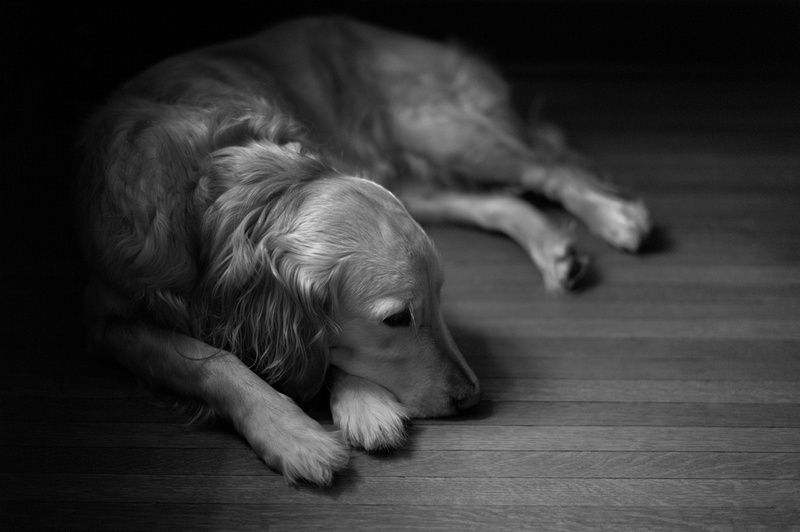
↑Leica Monochrom and Leica 50mm Summilux ASPH @ f/1.4, ISO 2000.

______________________

I finally had an opportunity to evaluate a Monochrom.  I can’t say I was surprised with the output, as it delivered what I expected:  the goodness of the CCD sensor found in the M9 (with more “bite”) and the ability to shoot at high ISO.  Of course, all of this goodness comes in only one flavour:  B&W.

The other thing I expected and observed was that the output is not like B&W film.  It really is different — not better or worse, just different.

Having said that, there was one surprise with this particular camera:

M2

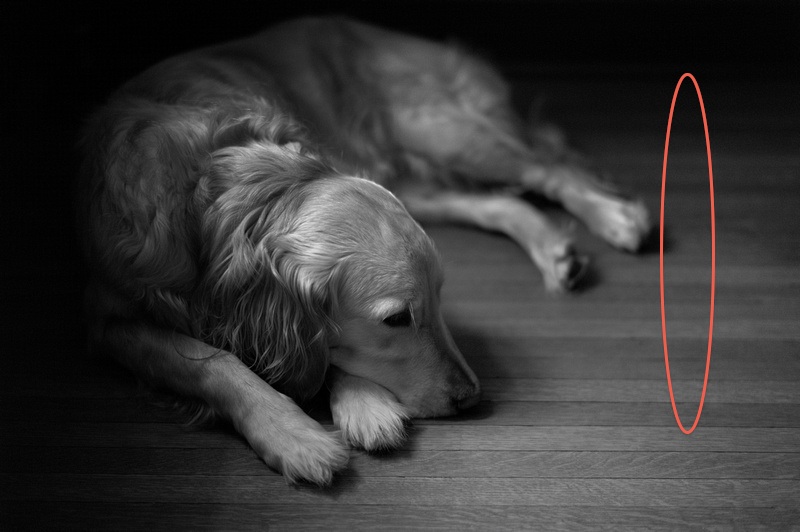
Don’t see it?

Let’s look a little more closely:

(click on the image to view at MAXIMUM size and sharpness)

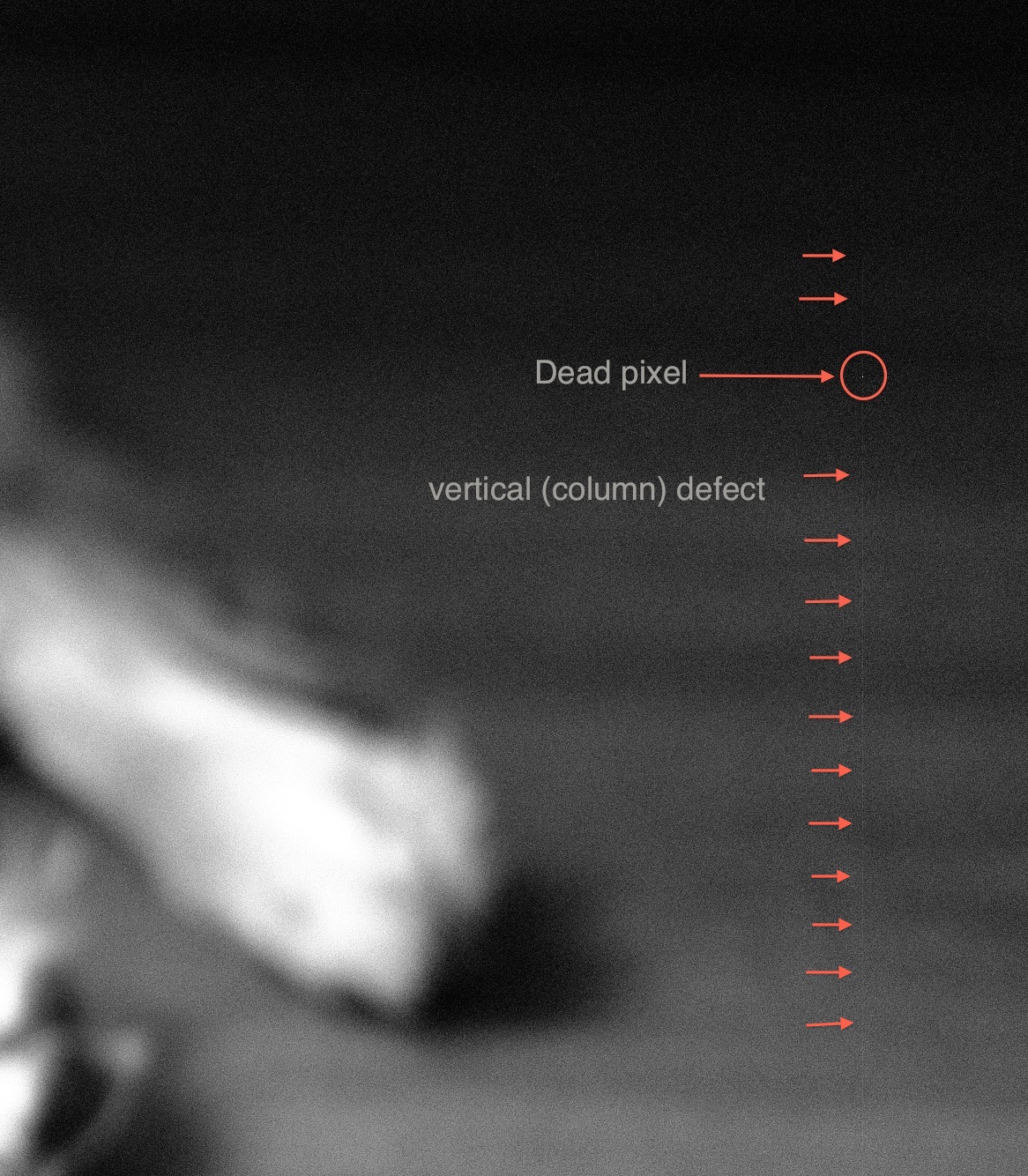
Defective Monochrom sensor (dead pixel 1)

That’s a dead pixel on the sensor with an associated column defect.  It won’t show up in web-size images but will show up on large prints.

Ouch.

Did I say there was one surprise?

Actually, there was a second:

(please click on the image to view at MAXIMUM size and sharpness)

Defective Monochrom 2nd dead pixel

Yes, that’s a second dead pixel.

The camera is currently in transit, back to Leica.

—Peter.

The Leica M(240) – Ming Thein’s review.

Q&A, Teaching point

Leica M.

I’m posting this now because I’ve had a number of people email me today asking my opinion of the sample images provided in Ming Thein’s review of the new Leica M (240).  Thus far, I’ve been responding to the questions individually, but given my previous comments about the whole CCD vs. CMOS issue I thought I should at least go on written record on this site.

First of all, full credit should go to Ming for posting (as always) a well-written and polished review.  If you haven’t previously checked out his website, you should.

Now, about the images.

These are the first set of images coming from the M(240) that I actually like.  I don’t know whether early versions of this camera (with early firmware) lacked a certain je ne sais quoi in the files, but either way Leica should take note for future product launches:  call Mr. Thein first to generate your sample image gallery.

Finally, the dynamic range looks to have expanded relative to the M9, making for very “rich” files.  All good stuff.   Still to be sorted out are colour issues and banding (seen in some other reviews) at higher ISO values.

In any case, it looks like things are moving in the right direction.

—Peter.

Featured Photographer: Jose Salcedo

Guest Post, Inspiration

Featured Photographer-Jose Salcedo

“…for me photography is important for being whole.”

—Jose Salcedo.

__________________________________________

Jose Salcedo

__________________________________________

About.

62 yrs old.  Lives in Porto, in northern Portugal, at the confluence of the river Douro with the Atlantic Ocean, although he spends much time on airplanes.  A PhD from Stanford University, his professional life has everything to do with light: lasers and fiber optics. About 15 years ago, he quit his tenured full professor position at the University of Porto to become an international entrepreneur, having founded several industrial high tech companies in the US, Portugal and Norway.

Cameras and lenses.

Leica M3, Leica MP, Leica MM and Sony RX-1. An assortment of Leica lenses: 21/1.4 Asph, 24/2.8 Asph, 28/2.0 Asph, 50/0.95 Asph, 50/1.4 Asph, 50/2.0, 75/1.4, 75/2.0 Asph and 90/2.0 Asph; Voigt 35/1.2 II.

What’s important.

“My family. Our family is scattered – Daughter in Lyon, France, and Son in San Francisco, US – but distance only brings us closer. Freeing younger people so that they can reach their full potential. Always learning, asking hard questions and providing simple answers. Balancing professional and personal life with as much wisdom as possible. Having fun. Being whole. And for me photography is important for being whole.”

Interesting fact.

“I built my first high power laser at age 19, in an old home annex turned into laboratory. The wooden door started burning but I only noticed that the burnt smell was coming from the door and not the laser when the flames were already fairly intense! But that work – and the good grades – gave me a couple of years later the Fulbright and NATO fellowships that I needed to go to Stanford for my MSc and PhD. And I did, barely 3 days after graduation.”

__________________________________________

It is with great pleasure that I present my first Featured Photographer for 2013, the great gentleman, scholar, and entrepreneur, Mr. Jose Salcedo.

As he mentions above, Jose has had an intimate connection with Light his entire professional life.  It is not surprising, then, that his images masterfully convey this understanding, and illustrate with deceptively “simple answers” the difficult task of capturing the essence of our world inside of a two dimensional photograph.

What follows, then, is the luminous work of Mr. Jose Salcedo.

—Peter.

_

__________________________________________

Words and images, courtesy Jose Salcedo.

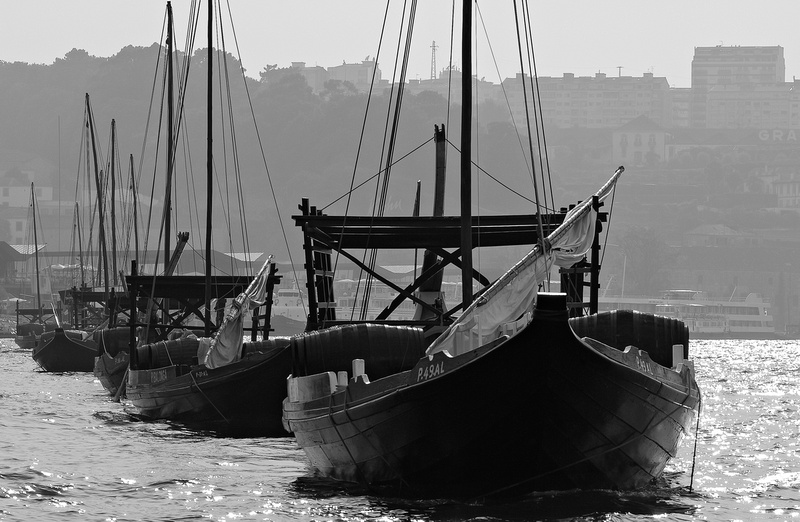
On the river Douro, at Porto, “Rabelo” sailboats now stand as an attraction. Years ago, they were the transport to carry casks of Port Wine (the world-class wine of Porto) from the Douro region 150km up river to Porto, for aging, storage, and export:

1

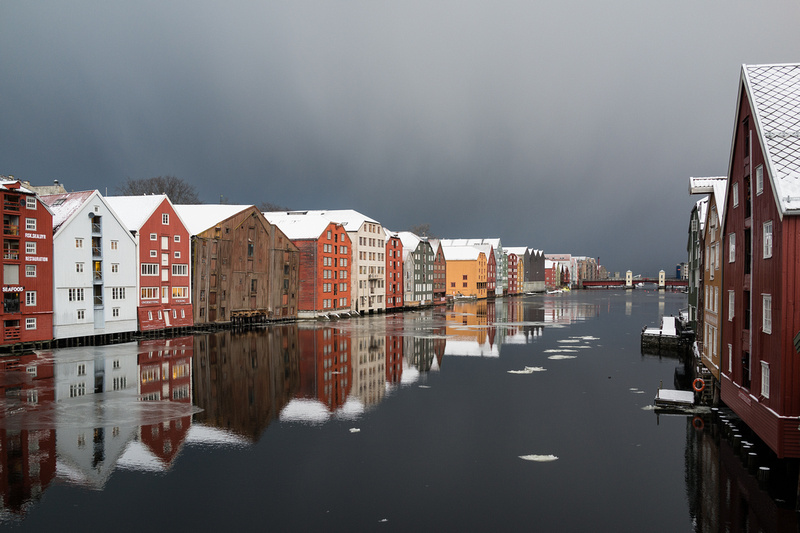
Trondheim, Norway, minutes before a huge snow storm hit:
2

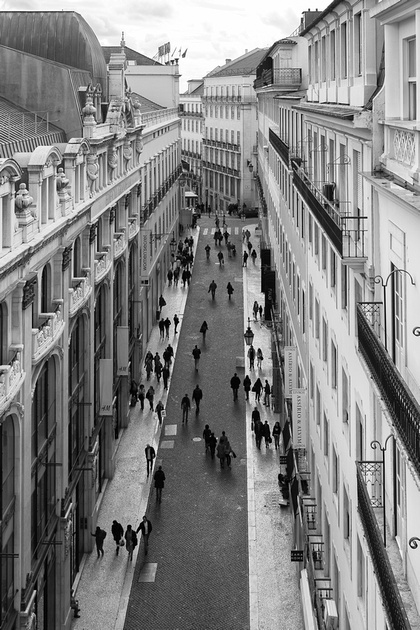
Carmo St. in Lisbon, from a nearby elevator:
3

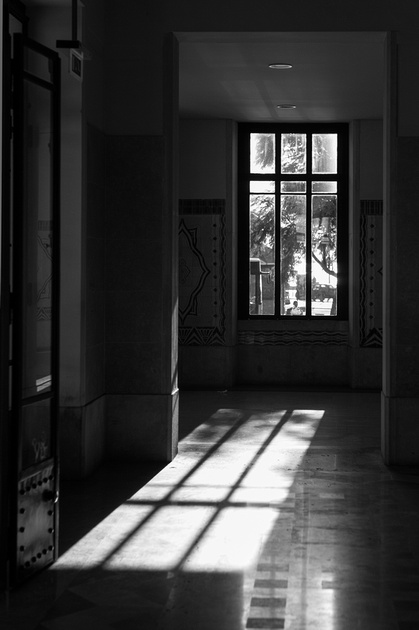
When I walked into the old Algés Train Station, in Lisbon, I saw this intimate corner and window to the left:
4

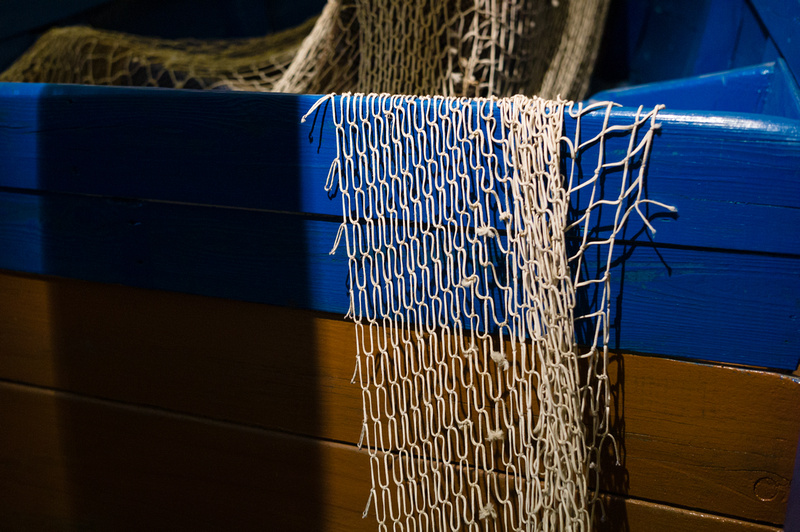
At Aveiro, about 50 km south of Porto, colourful fisherman’s boats and nets wait for another day:
5

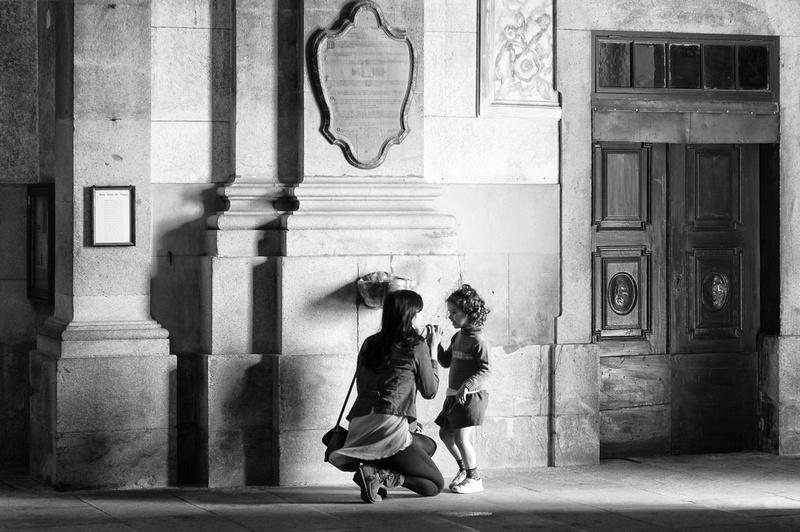
As I entered the Sameiro church in Braga, north of Porto, I noticed the young mother instructing her child:
6

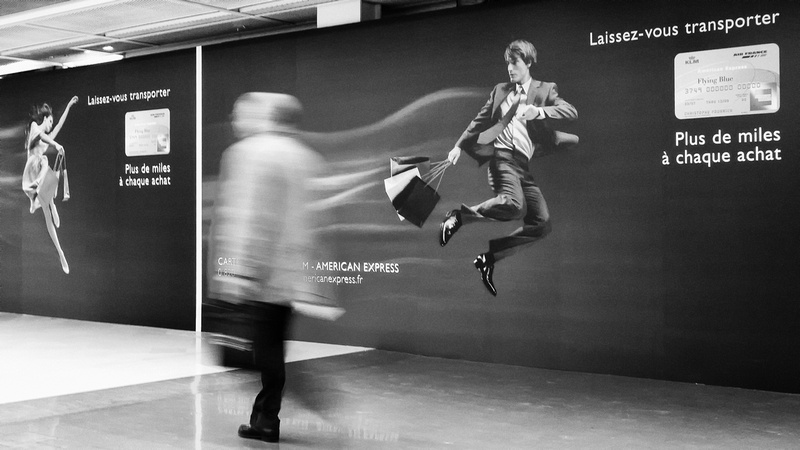
While waiting for a flight connection at Orly Airport, in Paris, I noticed people walking by this ad. I held the camera steady and used a slow exposure to depict a type of movement that matched the ad. This photograph was published in the charity ‘Leica User Forum Book’, 2010:
7

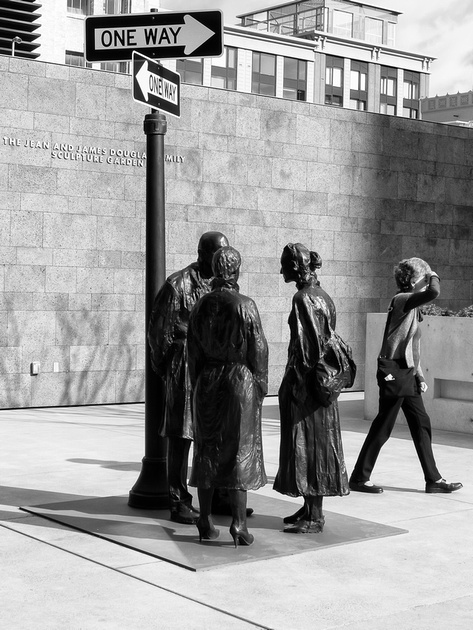
The upper patio at MOMA, in San Francisco, has beautiful life-size bronzes. When I raised the camera, this lady started walking away from the group. This photograph was published in the charity ‘Leica User Forum Book’, 2012:
8

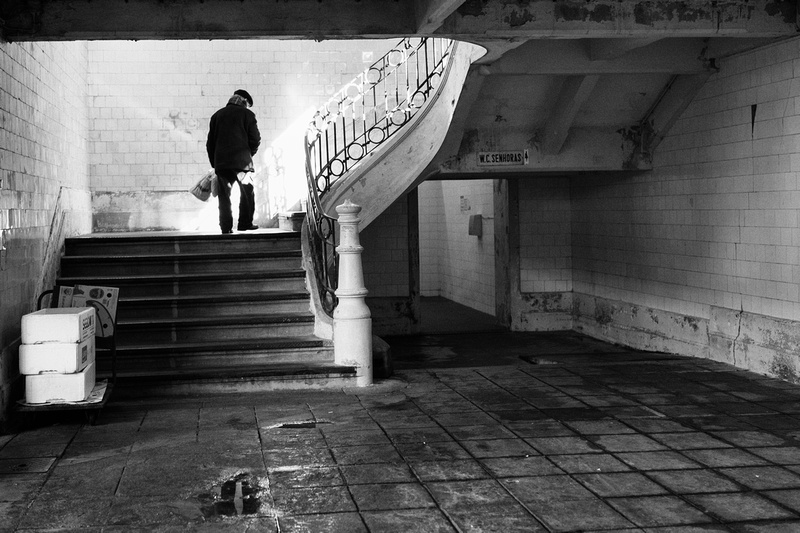
At the old Bolhão Market, in Porto, an old gentleman walks slowly up the stairs:
9

At the S. Bento Sanctuary, near the National Park of Gerês, one hour drive north of Porto, a man places a burning candle in memory:
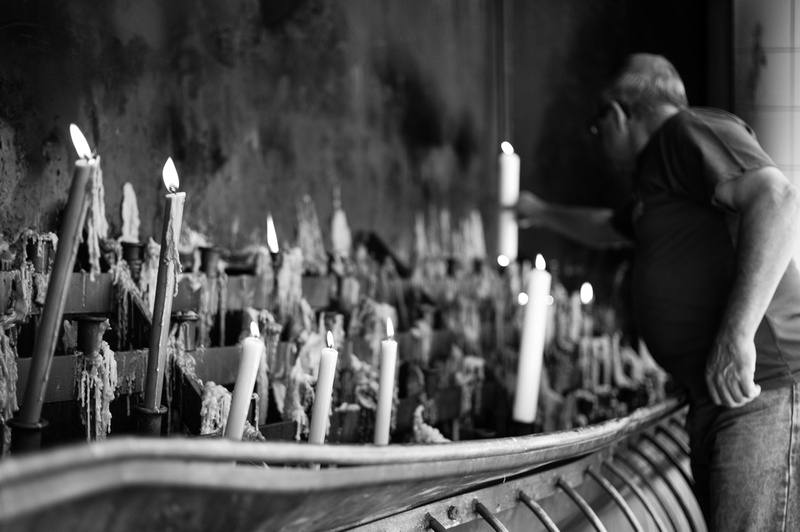
10

You need water inside to keep water outside: ‘Pateira de Fermentelos’ is a beautiful lake and bird sanctuary about 35km south of Porto. Fishermen keep their boats soaked when not in use so that the soft wood swells and does not leak when in use:
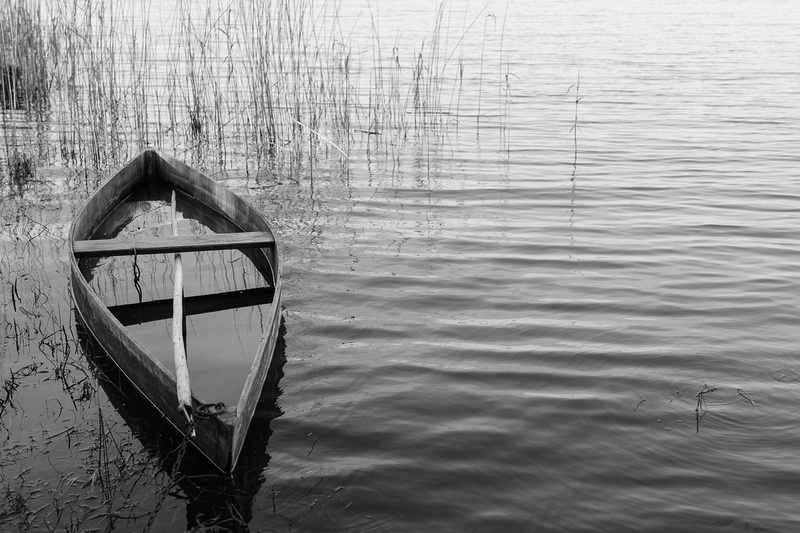
11

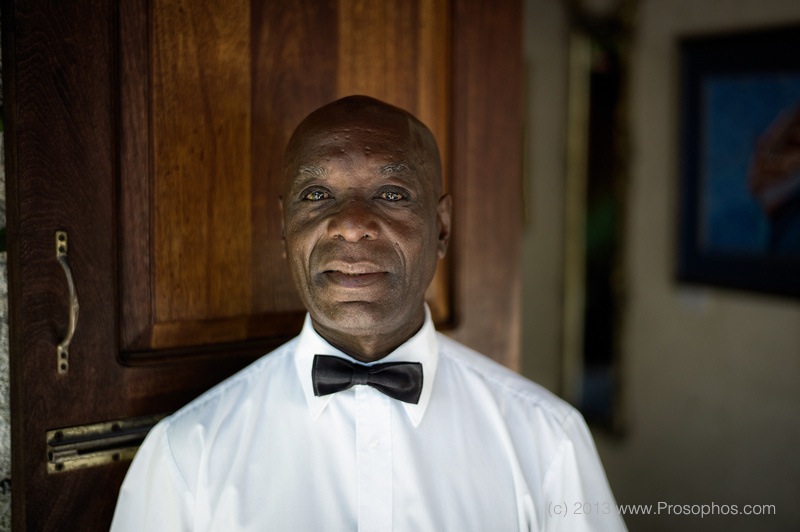
Eyes are the window to the soul. This is a dear friend whom I photographed with the ‘Pateira de Fermentelos’ lake behind:
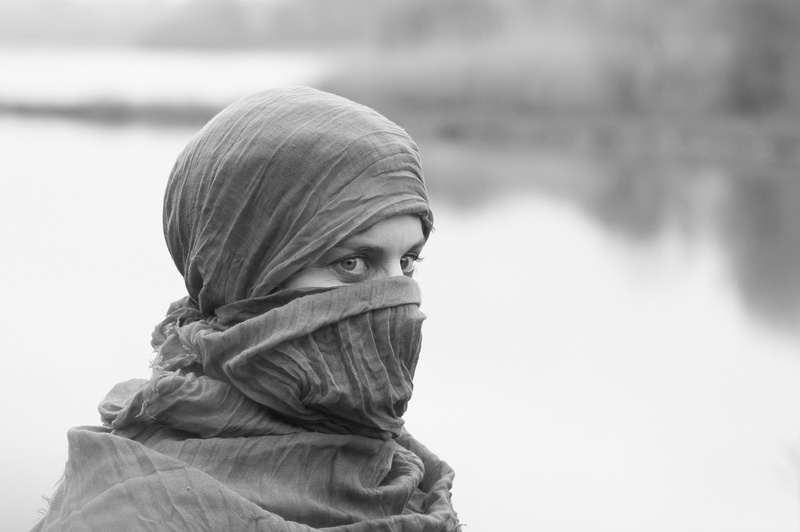
12

My sincere thank you, once again, to Mr. Jose Salcedo for sharing his work.

—Peter.

__________________________________________

[Previous Featured Photographers may be found here.]

Q&A: Peter asks about new Leica M vs. M9P/ME, and lenses.

Inspiration, Leica 35mm Summarit f/2.5, Leica 35mm Summilux ASPH FLE f/1.4, Q&A

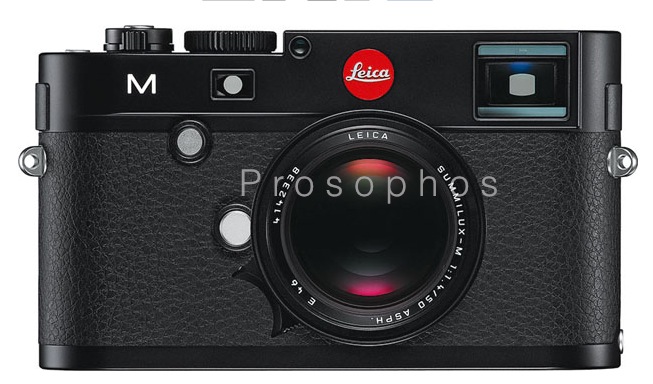
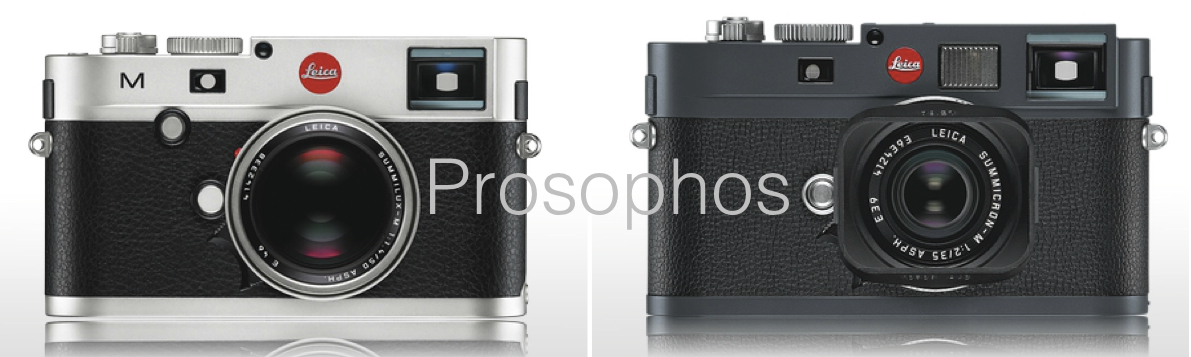
Leica M and M-E - Prosophos.

Hi Peter,

I wonder if you would want to give me your personal opinion about my next photographic step.

I adore the way you placed life’s little moments in the picture. As a physician too I already know how fragile life can be and that we have to live it by enjoying or at least inhaling every little good moment. Your photos are wonderful.

I mostly make pictures of people who I care about and when I am abroad for meetings or holidays. I am a hobbyist but invest in my eye and technique. As an interventional cardiologist I also developed an eye for quality materials and technique and therefore I recently decided to go for my childhood dream camera, an M…no snob-ism involved.

Initially I used a second hand M9P for a day to see if I would like it, and I did. The colors and clarity are stunning. I came from a Nikon D700 with 24,35,50,85 primes. I kept the D700 and a 50 mm since sometimes I will likely need AF or high ISO capabilities and its not a bad camera at all. However the M has something special. It forces me more to make a perfect composition and exposure and the results seems very nice.

I always said I would keep my budget within certain constrains so now I would like your opinion on how to spend my money best:

  • new M + 35 summarit, 50 summilux, 90 elmarit / summicron preASPH

  • ME or M9P + 35 summilux 35, 50 summilux, 90 elmarit / summicron preASPH

I do not need video or live view but I am a bit worried about the M9P/ME high ISO capabilities and its re-activeness. The new M also will be more responsive and more silent.

Did you experience the high ISO quality or responsiveness of the M9 as a creatively limiting factor? I tend to use the lowest ISO setting I can and do not do a lot inside but as you do, sometimes I do. However I would like to have wide aperture lenses usable at full aperture or slightly stopped down. That way I guess I will rarely need higher than ISO 800 and I guess than image quality is still OK. I still have the Nikon D700 when really low light performance counts but I expect me to not have it with me anymore…
I tend to go for the extremely expensive summilux 35 more then a more expensive camera (new M). Do you like its character and can you comment on the difference with the rendering of the summarit 35?

Also did you have any troubles with skintones on the M9? What is your workflow there? Do you set your white balance ad hoc or later?

Many thanks

Peter.”

Hello Peter,

So many questions!  I’ll be concise, but hopefully comprehensive, in my responses.

In a nutshell, given you already have a D700, I would recommend:

  • M-E or M9(P) with EITHER 35 or 50 Summilux*.

(*i.e. one lens.  I wouldn’t bother with any other for now.  And really, it will free you.)

I should also inform you that I am biased towards CCD sensor-based cameras, even though the new “M” will have many features, the “older” technology wins out for me at base ISO (at least until I’ve seen evidence to the contrary).

Your question about the 35 Summilux vs. 35 Summarit:   Both are capable, but the 35 Summilux is the optically “superior” lens (sharpness, micro-contrast, etc), however it tends to “paint” with bold strokes which is desirable for some subject matter but may be too harsh for others.  The 35 Summarit, on the other hand, is a little more classic/delicate in its rendering with a smoother bokeh.   It’s a lovely little lens.  You may view examples from both the 35 Summarit and 35 Summilux on my site:

https://prosophos.com/category/leica-35mm-summarit-f2-5/

https://prosophos.com/category/leica-35mm-summilux-asph-fle-f1-4/

Ultimately, which you prefer is really a matter of personal taste, but if you opt for an M9 (vs. the new M), you really should purchase a Summilux lens for low light work.  Also, the Summilux (50 or 35) lenses are something special and need to be experienced at least once in a lifetime.

As for your question regarding whether the low ISO constraints of the M9 limit creativity, I’ll let my images speak for themselves.  I don’t mean this in an arrogant way, but as a practical answer.

Finally, I shoot in DNG (RAW) format and am able to make minor colour adjustments easily during post-processing, so I do not have any issues with “skin tones”.

I hope this helps, and I thank you for your very kind comments regarding my work.  Despite my answer above, I really do think the new M will be a terrific camera, so I believe you can’t go wrong either way.

Respectfully,

—Peter.