One more for today.
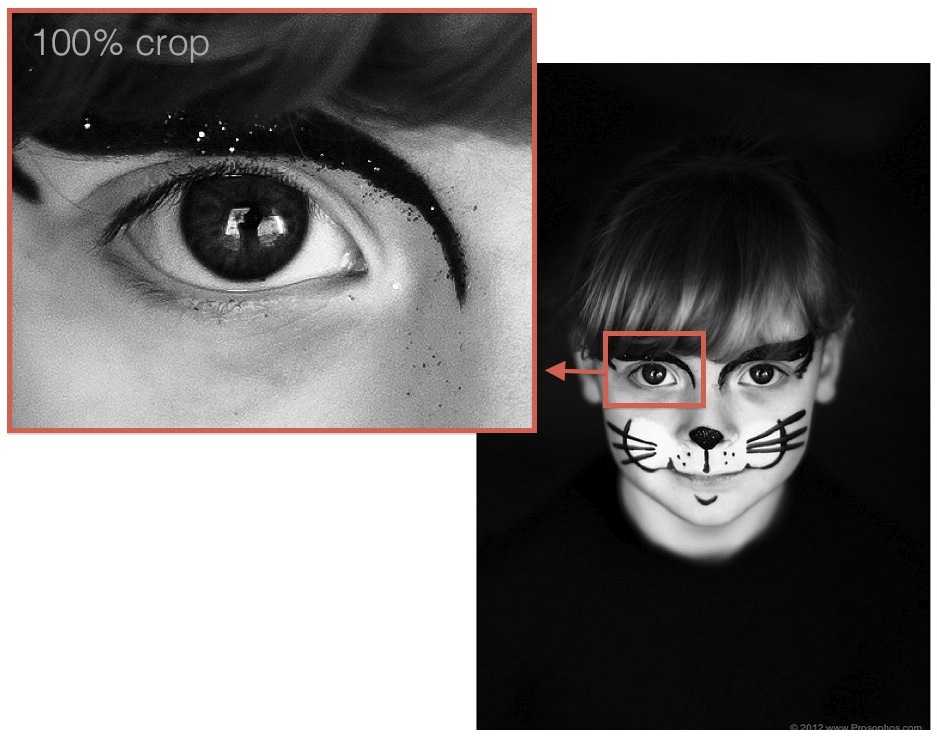
The light was exquisite.
(please click on the image to view)
↑Leica M9 and Leica 50mm Summicron @ f/2.
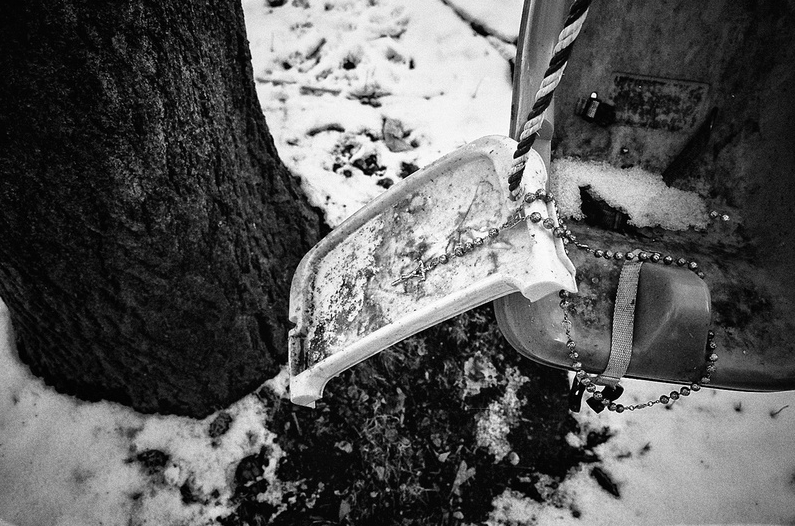
Not that long ago, she was Honey on Ice.
(please click on the image to view)
↑Leica M9 and Leica 50mm Summicron @ f/2.
Capturing a walker/jogger/runner in mid-stride is always desirable, as it adds a dynamic component to the image, and it opens up the figure for a more pleasing composition.
In this case, when I zoom in, I can see that both of his feet are off the ground… this serves no real purpose (for this particular image), but it’s an example of the sort of “freezing” of time that photography does so well.
(please click on the image to view)
↑Leica M9 and Leica 50mm Summicron @ f/2.
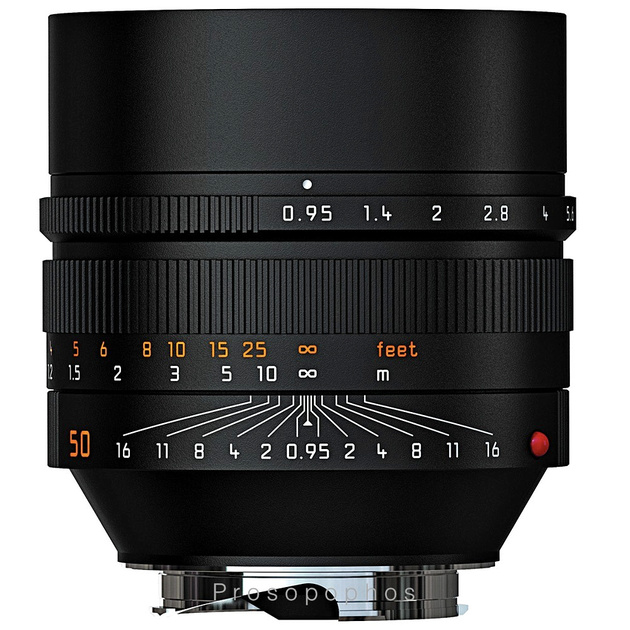
One of the more frequent email questions I receive is:
Most of the time, it’s easy to tell if you follow my daily posts, because I list the specific lens (and camera) used beneath each image.
However, I’ve been known to frequently re-jig my set-up — as I’ve done recently.
So, currently, I’m using:
And…
If you want to view images taken with any of the equipment I’ve ever used, you can search for specific lenses in the Category Cloud. It looks like this:
You can find it on the bottom of the page…
Just click on a specific category (link) and all the images associated with it will be displayed.
Hope that helps,
—Peter.
Yesterday, I posted this image, taken with my Leica M9…
(please click on the image to view)
…and asked you to guess which lens was used. Many of you were generous with your time and responded.
I appreciate the effort (and guts!) of all of you who took the time to record your best guess.
Moreover, reading the analysis behind each choice was very interesting and educational (I urge those of you who haven’t read through the comments of the original post to please do so).
So now, without further delay — the answer.
And the answer is…
_
_
Yes, the little Voigtländer Nokton 40mm.
(If you want to read an old write-up of mine on this lens, please see here.)
Thanks for playing :),
—Peter.
Later today, I’m posting the answer to yesterday’s post.
If you haven’t already done so, you still have time to attempt a guess.
Even though this exercise is just for the fun of it, I’m really interested in learning the reasoning behind each selection. As photographers, we are all biased (negatively or positively) when viewing an image — when we are aware of the equipment used — and exercises such as this help us, a little bit, to understand our biases.
As I wrote yesterday, if the roles were reversed I’m not sure I’d be able to correctly identify the lens, especially without the aid of 100% crops. Still, the image I posted was larger than usual for a typical web image, so it may be possible.
—Peter.
This image, Smooth, was taken with the Leica M9 and one of these lenses:
Just for fun, can you guess which lens was used?
Now — knowing me — you may think I’m trying to make a point about the Voigtländer lenses being quite good (or at least “good enough”), but then again, I may be using reverse psychology ;).
Either way, I’d be grateful to have you play this guessing game.
(please click on the image for a LARGER view)
_
If you want to view images I’ve taken with the various lenses on the list, please click on these links:
I’ll reveal the answer tomorrow… feel free to share this.
—Peter.
Well, there was only one of her.
(please click on the image to view)
↑Leica M9 and Voigtländer Nokton 40mm @ f/2.8.
Taken partially against the light — wide open — with the “bargain” 75 Color Heliar.
The 100% crops (not shown) are quite impressive; the detailed rendering is obvious, even in this web-sized image.
More than the sharpness, I really appreciate how this lens is handling the light in this scene.
(please click on the image to view)
↑Leica M9 and Voigtländer 75mm Color Heliar LTM @ f/2.5.
I’m beginning to see some magic from this Voigtländer 75mm f/2.5 Color Heliar… I may have to revise my opinion that the Leica 75mm Summarit bests it.
If this lens is even close to its Leica equivalent, I would call it a remarkable achievement at 25% of the price.
It’s a shame it’s discontinued.
—Peter.
As I mentioned in yesterday’s post, this lens is pretty impressive — beginning wide open @ f/2.5.
For my own comparison purposes, I shot this test scene to evaluate central sharpness.
Focus is on the leaves inside the red box:
[Note: these are DNG files converted directly to JPG using Aperture 3, with no sharpening added.]
(please click on the image to view)
↑Leica M9 and Voigtländer 75mm f/2.5 Color Heliar LTM.
_
Here is the 100% crop of the above @ f/2.5:
(please click on the image to view)
↑Voigtländer 75mm f/2.5 Color Heliar LTM @ f/2.5 (100% crop, no sharpening).
_
And here is the 100% crop @ f/4:
(please click on the image to view)
↑Voigtländer 75mm f/2.5 Color Heliar LTM @ f/4 (100% crop, no sharpening).
Amazingly sharp, don’t you think?
—Peter.
____________________________
The test image below marks the debut of my Voigtländer 75mm f/2.5 Color Heliar LTM.
The lens was discontinued a while ago, but I was fortunate enough to find a “new-old stock” one, which arrived yesterday.
Over the years, I’ve read quite a bit about this lens and how it compares quite favourably to the Leica 75mm Summarit (a wonderful lens in its own right — please see my user report here).
What piqued my interest was the reported performance-to-size ratio — I’m always looking for small and lightweight lenses that are capable of powerhouse performance (which, as far as I’m concerned, represents the ethos of the Leica M system).
Having now seen it, I can definitely state that the Color Heliar is indeed incredibly light and and incredibly small. Some performance trade-off must have been made in order to achieve this state of airiness, but in my limited time with it, I just don’t see it.*
In a word, the Color Heliar’s performance @ f/2.5 is impressive.
I’ll try and post another test shot — including 100% crops — tomorrow.**
—Peter.
(please click on the image to view)
↑Leica M9 and Voigtländer 75mm Color Heliar @ f/2.5.
_
*More often than not, the more sought after — and more expensive — Leica counterpart lenses will excel in the areas of build quality, micro-contrast, flare resistance, sharpness wide open, corner performance, etc… but sometimes the differences are very subtle and some of those qualities, for my type of shooting, are not critical.
**Please note that I have no intention of writing a review, I’m just sharing the information I gather during my evaluation of this lens.